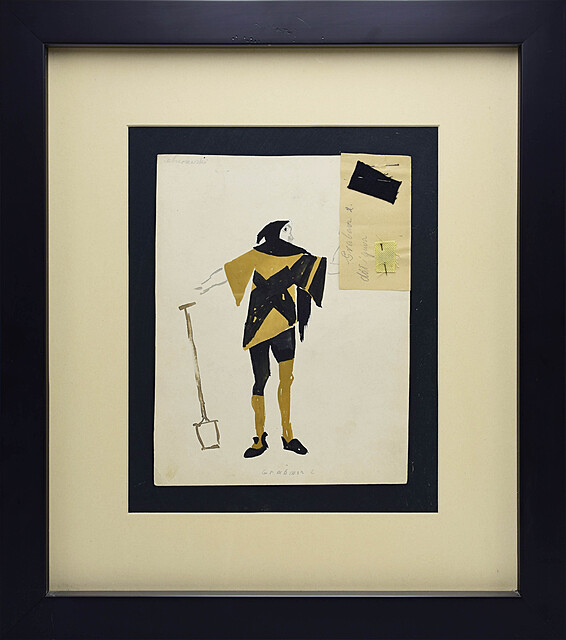
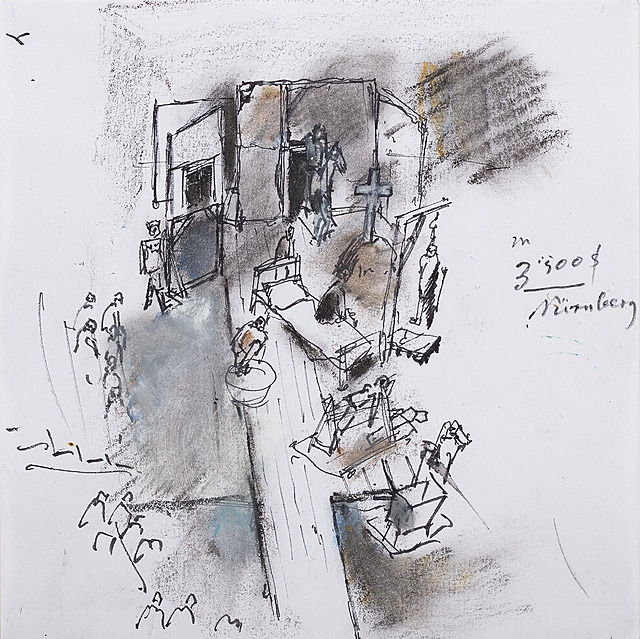
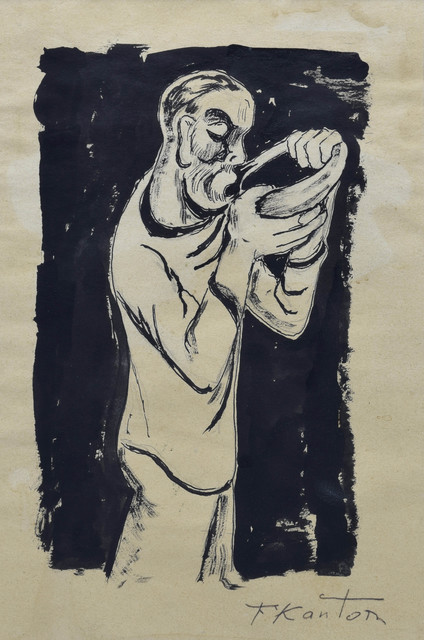
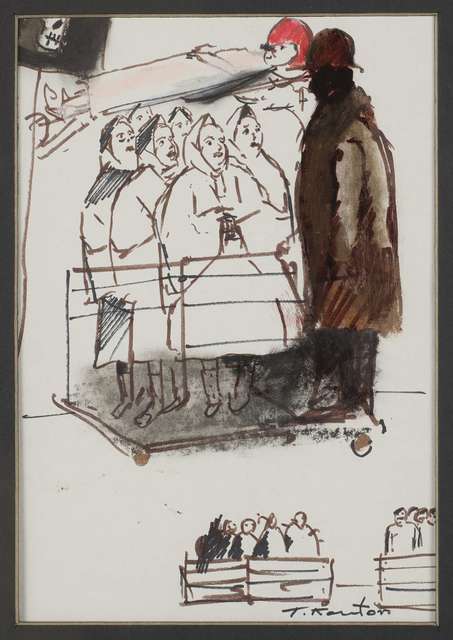
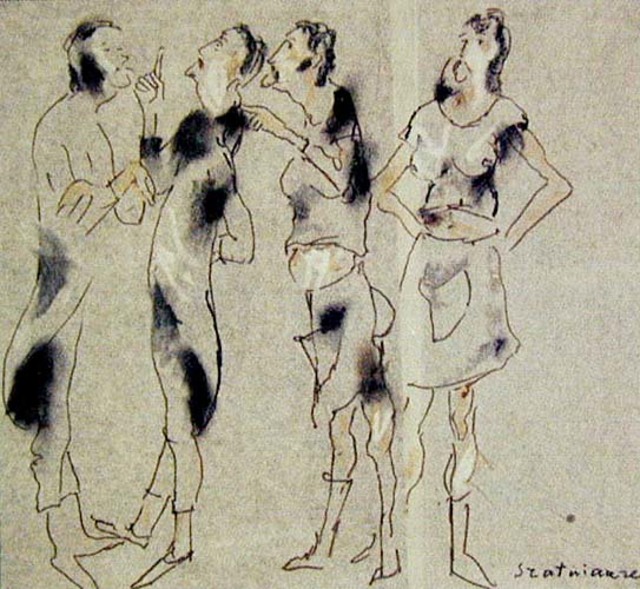
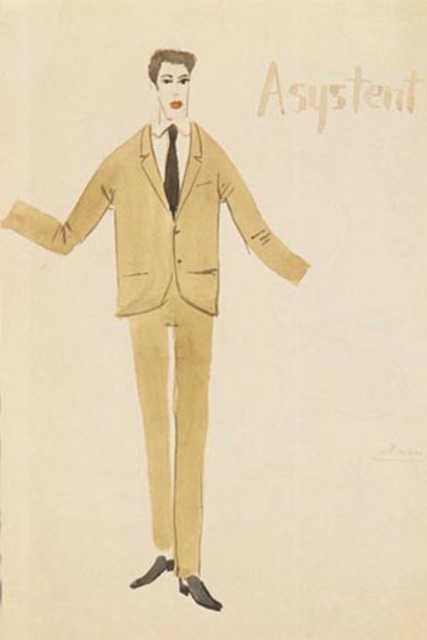
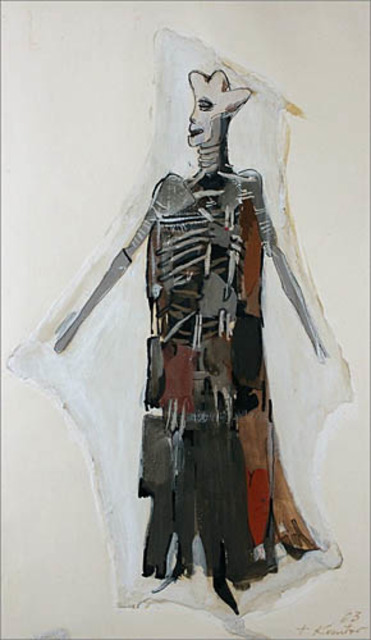
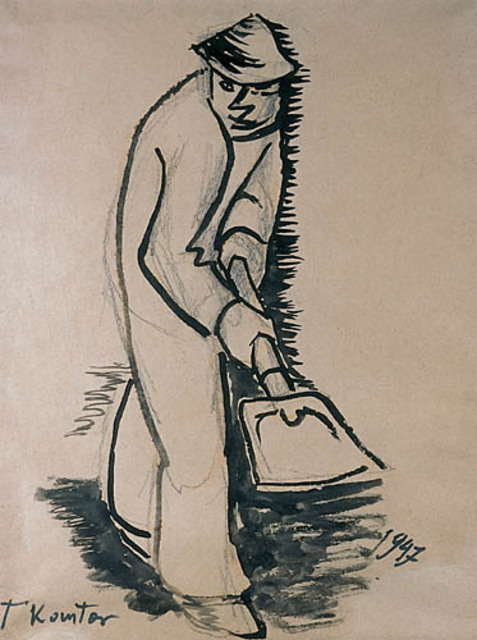
Director, creator of happenings, painter, stage designer, writer, art theorist, actor in his own plays, lecturer at the Academy of Fine Arts in Krakow. Born in 1915 in Wielopole Skrzyńskie in Tarnowskie Voivodeship, died in 1990 in Cracow.
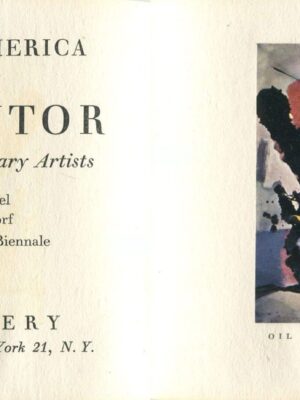
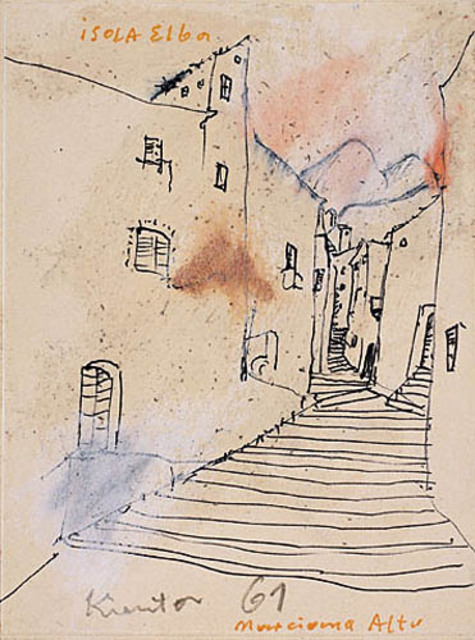
Kantor studied at the Academy of Fine Arts in Cracow (1934-39), where his teacher included Karol Frycz, painter and stage designer. He himself, intermittently, later worked as a teacher at the same academy (1948-49, 1967-69). Throughout almost his entire life, he tried to combine different types of activity: he was an animator of artistic life, an art theoretician and practitioner, including a painter (among others, an enthusiast and promoter of Tashism) and one of the first creators of happenings in Poland, and above all he was a man of the theater: author, director, stage designer, actor.
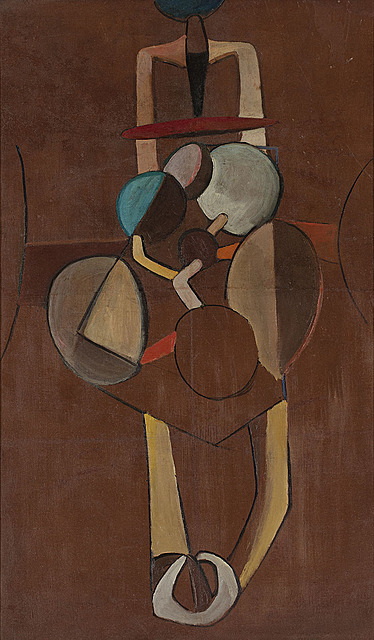
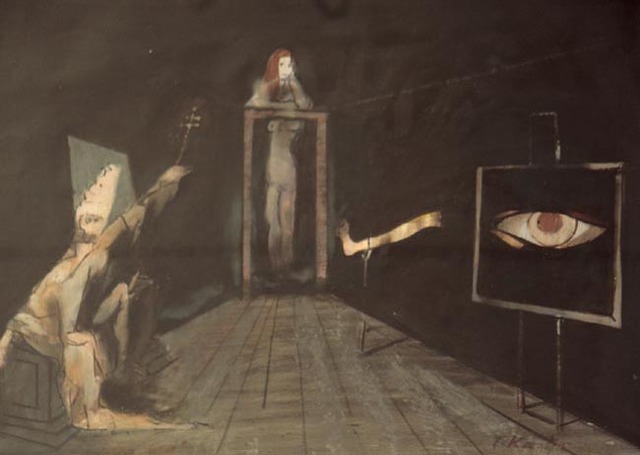
As a painter, he served for a long time as a medium, processing artistic impulses coming to Poland from Western Europe (in 1947 he visited Paris), so his own work in this field is not quite independent. Just after the war, he briefly painted figurative pictures,
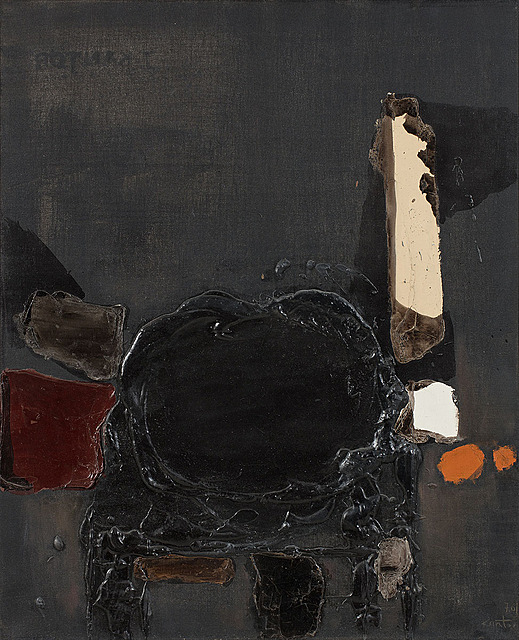
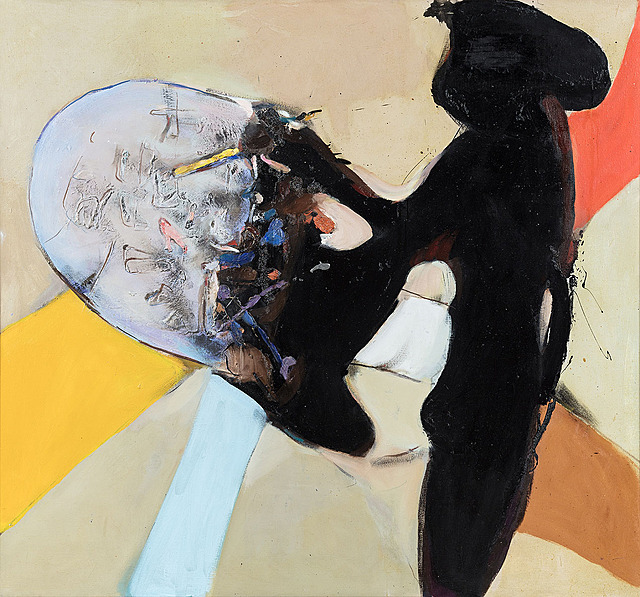
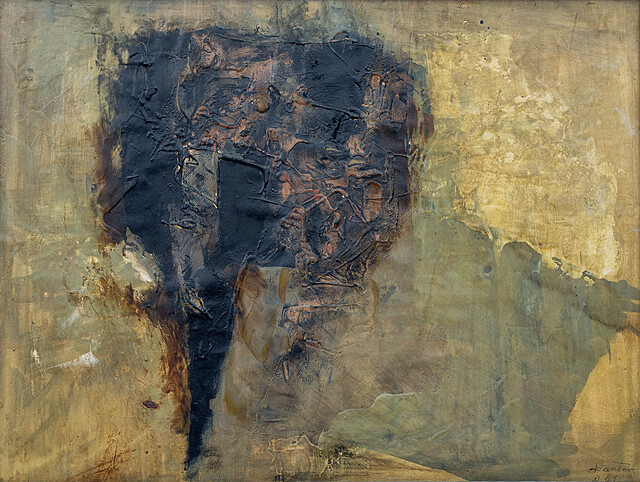
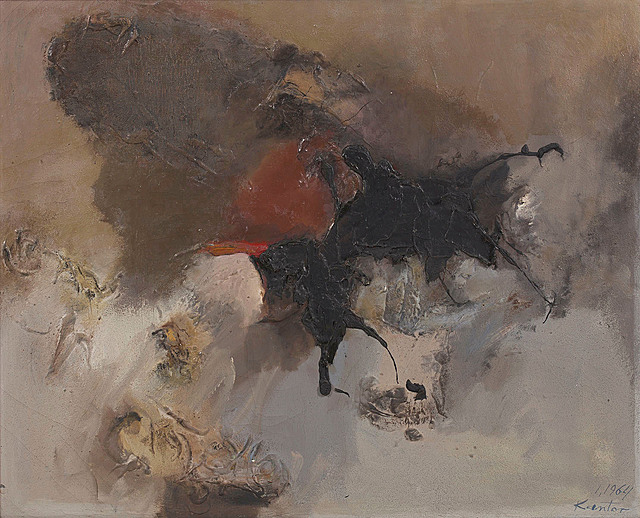
The second half of the 1950s saw the creation mainly of the aforementioned violently painted Tashist canvases. These paintings were captivating in their own way with their visual side: vibrations of spots, lines, colors; at the same time, however, they gave the impression as if the author approached the painting matter in a “utilitarian” way.
A little later, the artist created numerous assemblages and ambalages – semi-spatial compositions in which used, often damaged objects (envelopes, bags, umbrellas) were applied to canvas
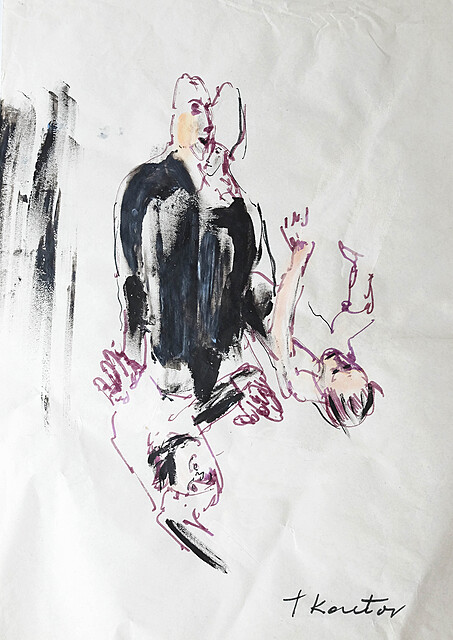
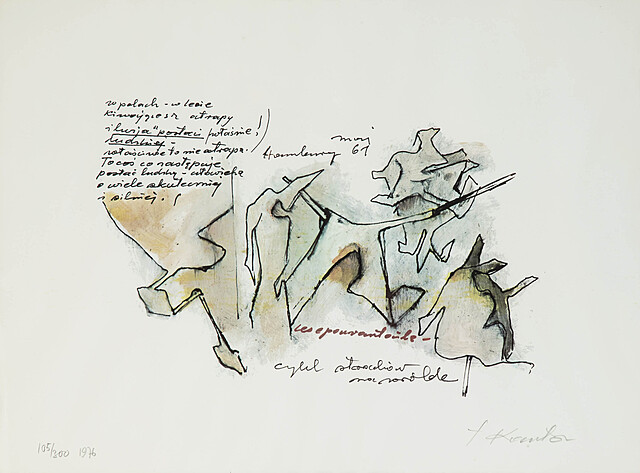
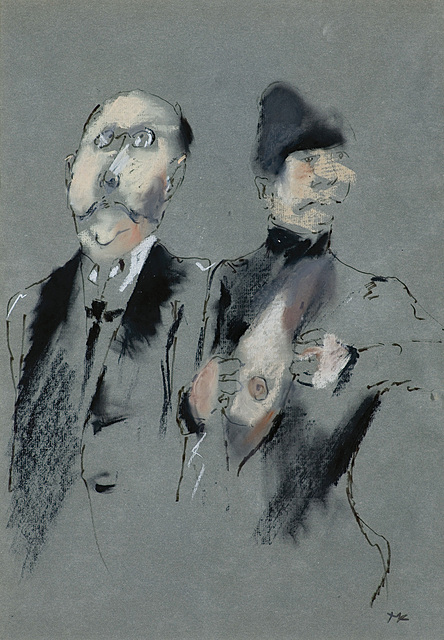
Kantor’s numerous painting series from the 1970s and 1980s show a strong connection with his parallel theatrical activities.
Kantor drew inspiration from Constructivism and Dadaism, Informel painting and Surrealism.
Key
- 1976 – Honorary award for the performance of The Dead Class at the 17th Festival of Polish Contemporary Plays in Wrocław.
- 1976 – Boy Award for The Dead Class.
- 1977 – Norwid critics’ award for The Dead Class.
- 1978 – award for best performance of The Dead Class, Caracas
- 1978 – Rembrandt Prize awarded by the international jury of the Goethe Foundation in Basel for real contributions to the art image of our era
- 1980 – OBIE Award (USA) – New York critics’ award, given for the best play played on Broadway, as well as off- and off-Broadway – for the 1979 production of The Dead Class
- 1981 – Prize of the Minister of Culture and Art of the First Degree in the field of theater for stage design work
- 1982 – Diploma of the Minister of Foreign Affairs for dissemination of Polish culture abroad
- 1985 – Legion of Honor, France
- 1986 – “Targa Europea” prize awarded to outstanding representatives of culture and science in Europe, Italy
- 1986 – New York critics’ award for best performance on Broadway (direction and acting)
- 1989 – Commander of the Order of Arts and Letters, France
- 1990 – Grand Cross of Merit of the Federal Republic of Germany for the significant influence exerted on contemporary art in Europe and for his contribution to the revival of Germany’s cultural image.