Kazimierz Mikulski – Painter, Set Designer
Born in 1918 in Krakow, died in 1998 in Krakow.
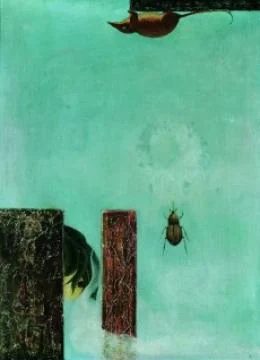
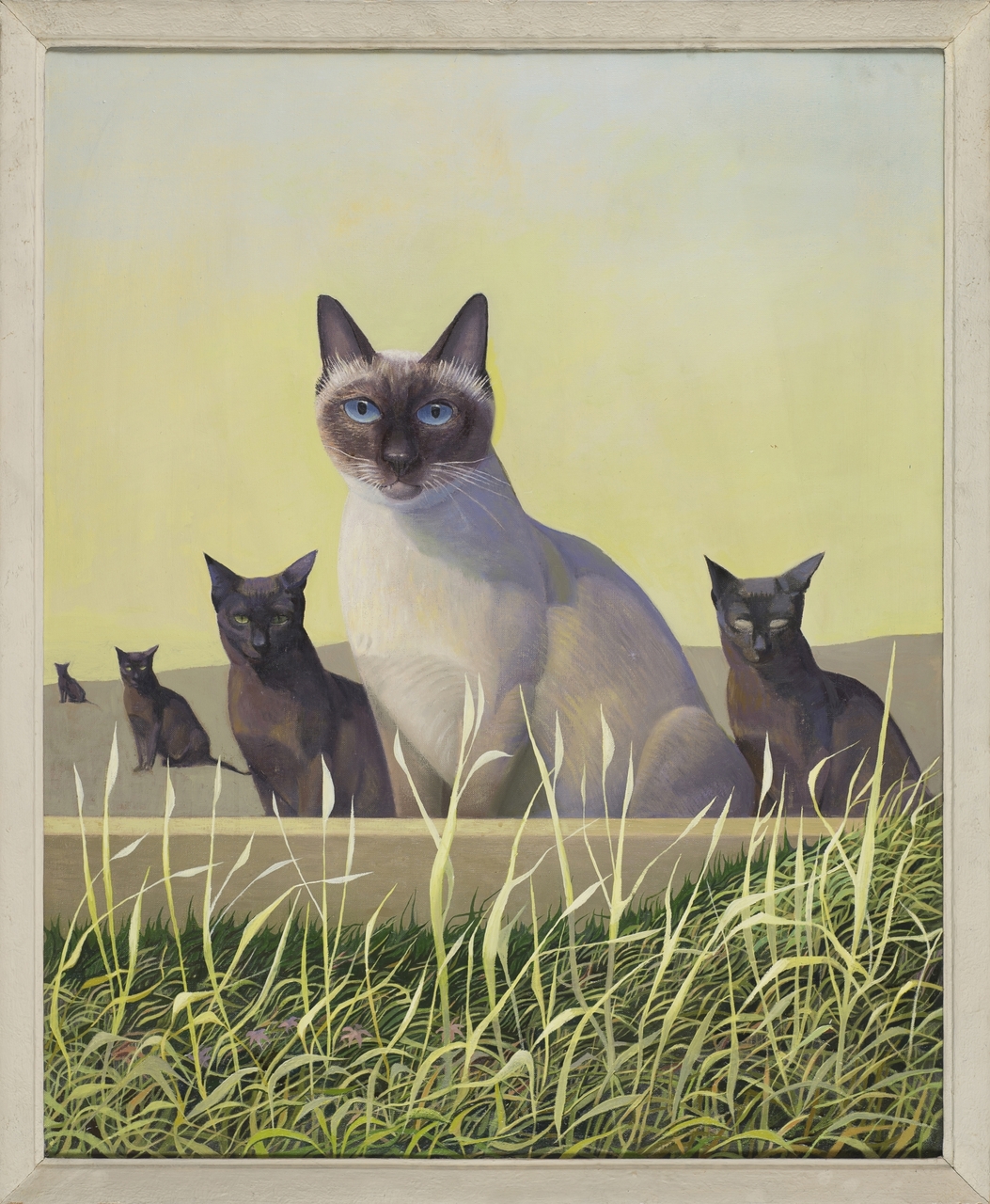
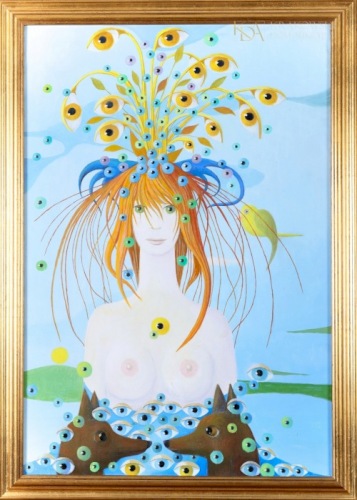
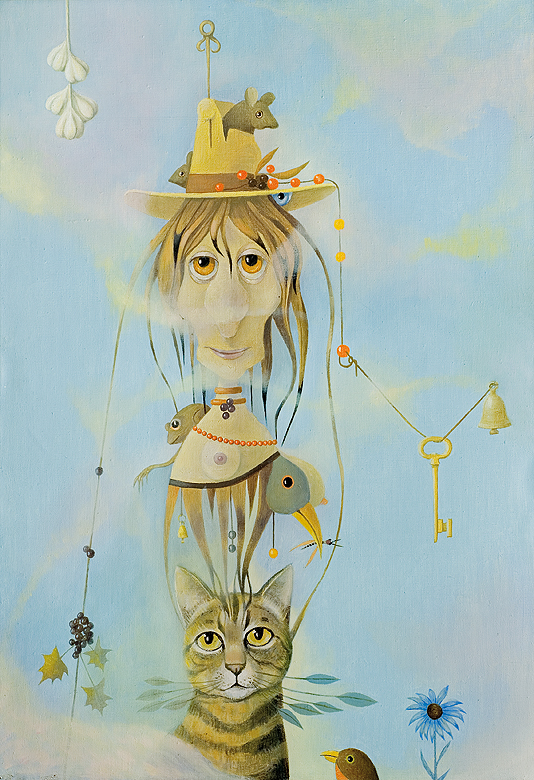
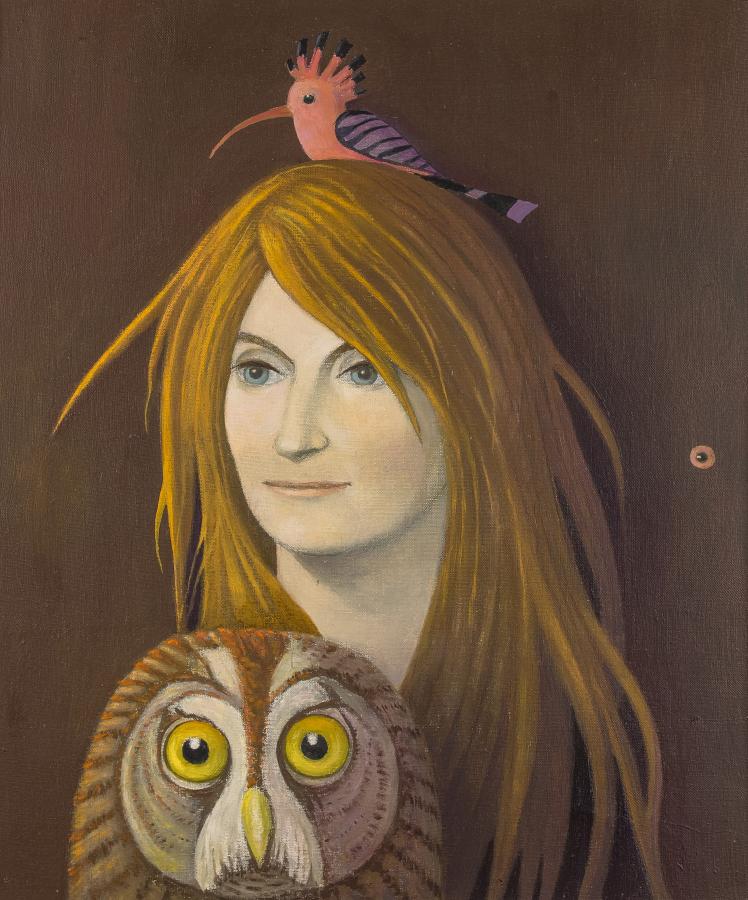
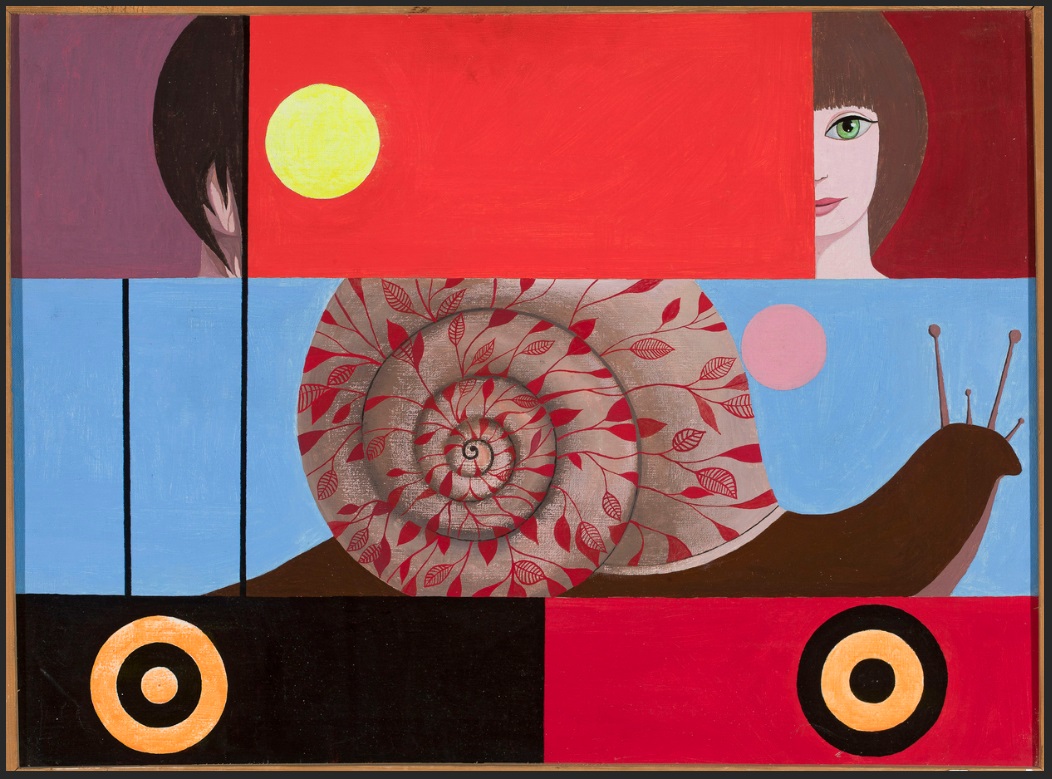
He is considered one of the most consistent representatives of Polish metaphorical painting, or even surrealist and poetic painting, imbued with a strong lyrical charge.
In 1938, he began studying painting at the Krakow Academy, under the guidance of the relatively unknown Paweł Dadlez and the far more renowned Kazimierz Sichulski. During World War II, he continued his education at the officially operating Kunstgewerbeschule under Fryderyk Pautsch. After the war, in 1945-46, he studied acting and directing at the Drama Studio of the Old Theatre in Krakow.
Immediately after the liberation, he joined the Young Artists Group, and in 1957, he became a member of the reactivated Krakow Group. Like other artists associated with both groups, particularly those gathered around the leading figure Tadeusz Kantor, he participated in all the Exhibitions of Modern Art (Krakow 1948-49, Warsaw 1957 and 1959).
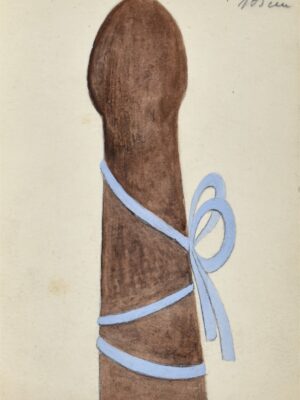
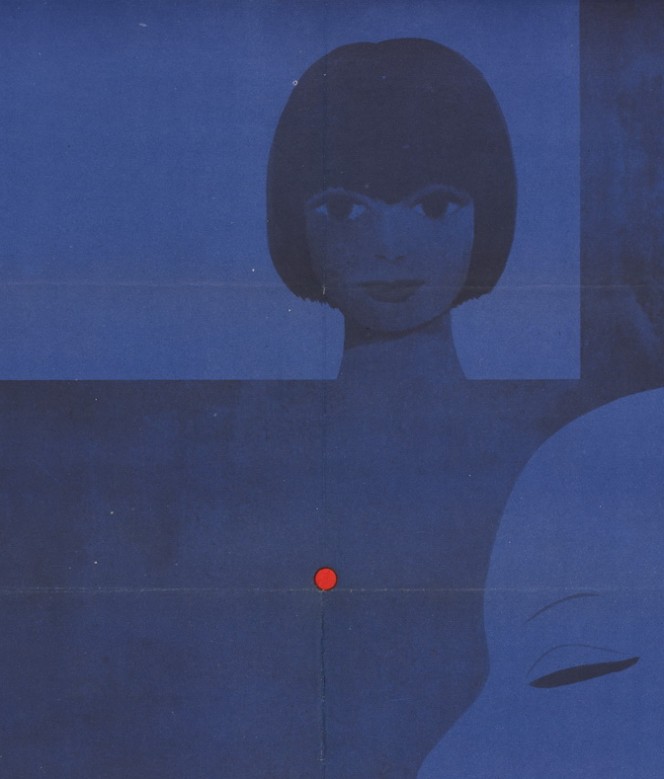
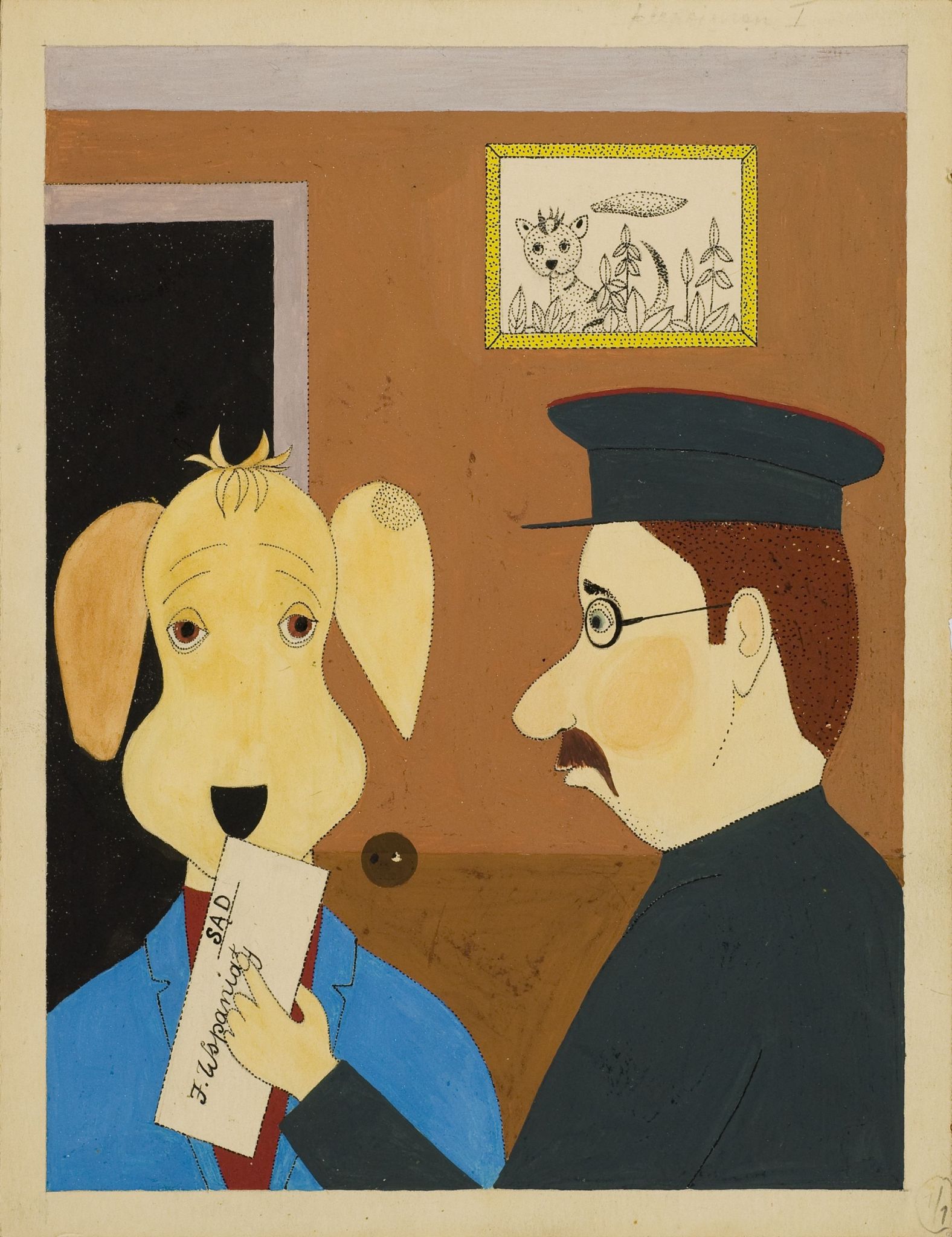
Aside from painting, which was his primary focus, he also engaged in drawing, including illustrative work.
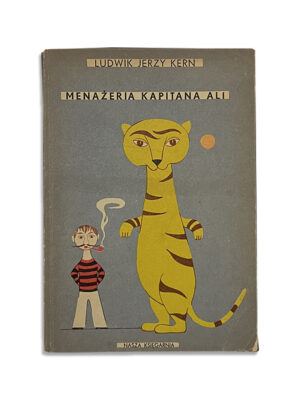
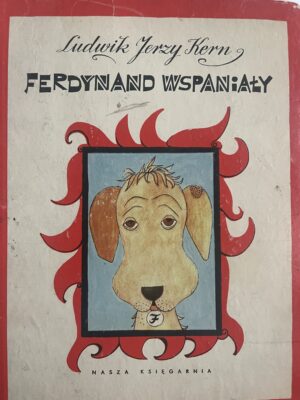
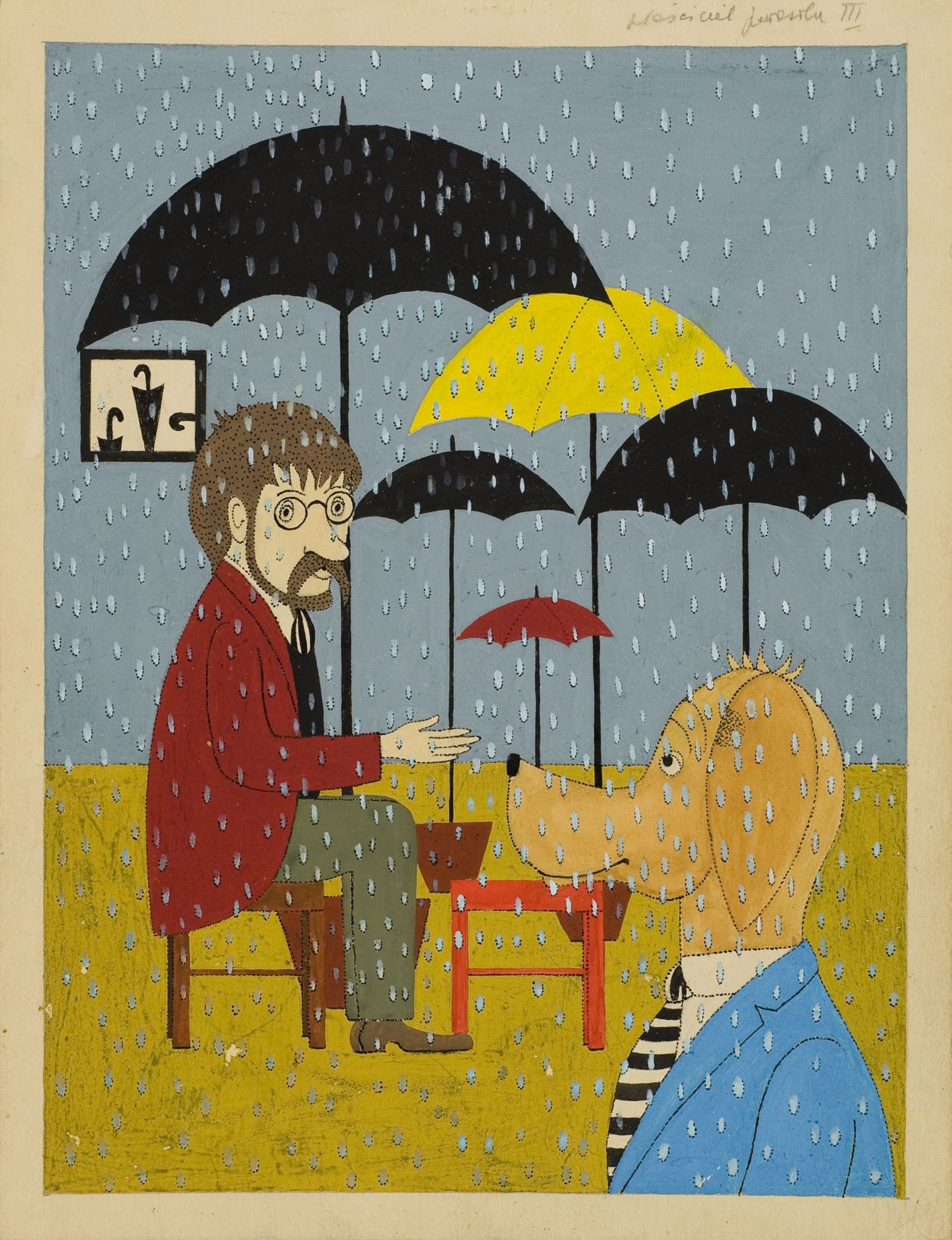
The animated series Ferdynand the Great was based on Kazimierz Mikulski’s illustrations for a book by Ludwik Jerzy Kern.
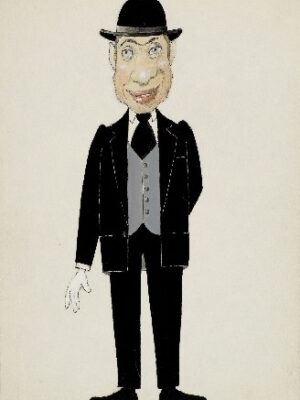
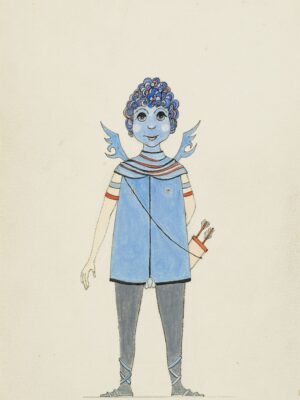
For many years, he also collaborated as a set designer with the Groteska Puppet and Mask Theatre in Krakow. He performed as an actor in Kantor’s theatre—both during the wartime occupation and later in Cricot 2. He also wrote poetry, which was slightly less lighthearted than his painting, employing a grotesque style.
Above all, however, he was a prominent and colorful figure in the Krakow art scene, where he was known as “Balzac”.
Style
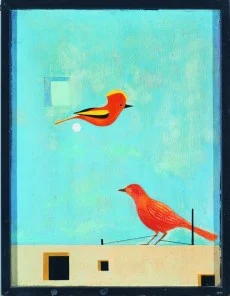
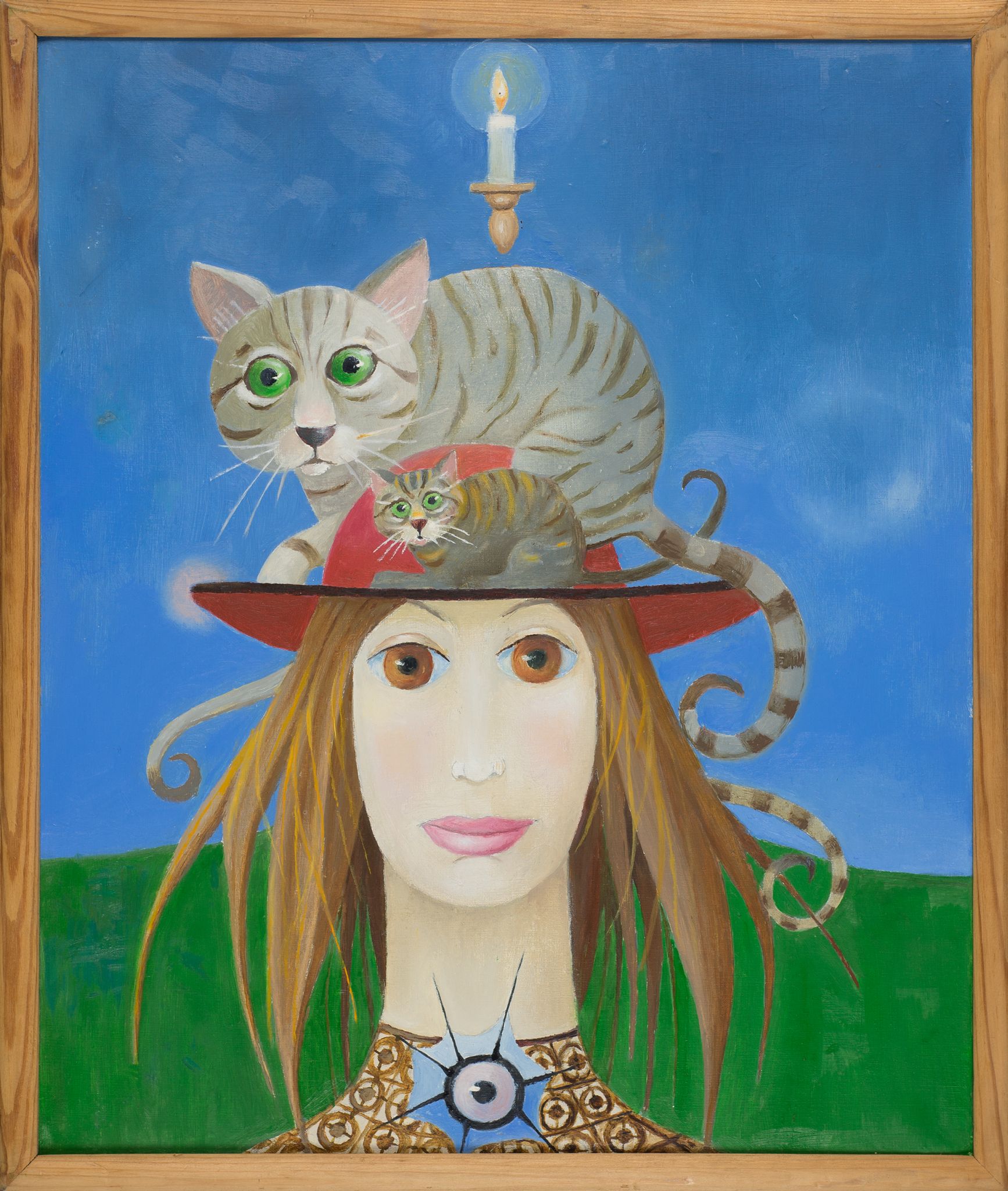
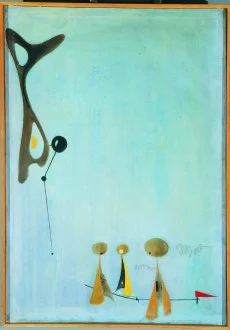
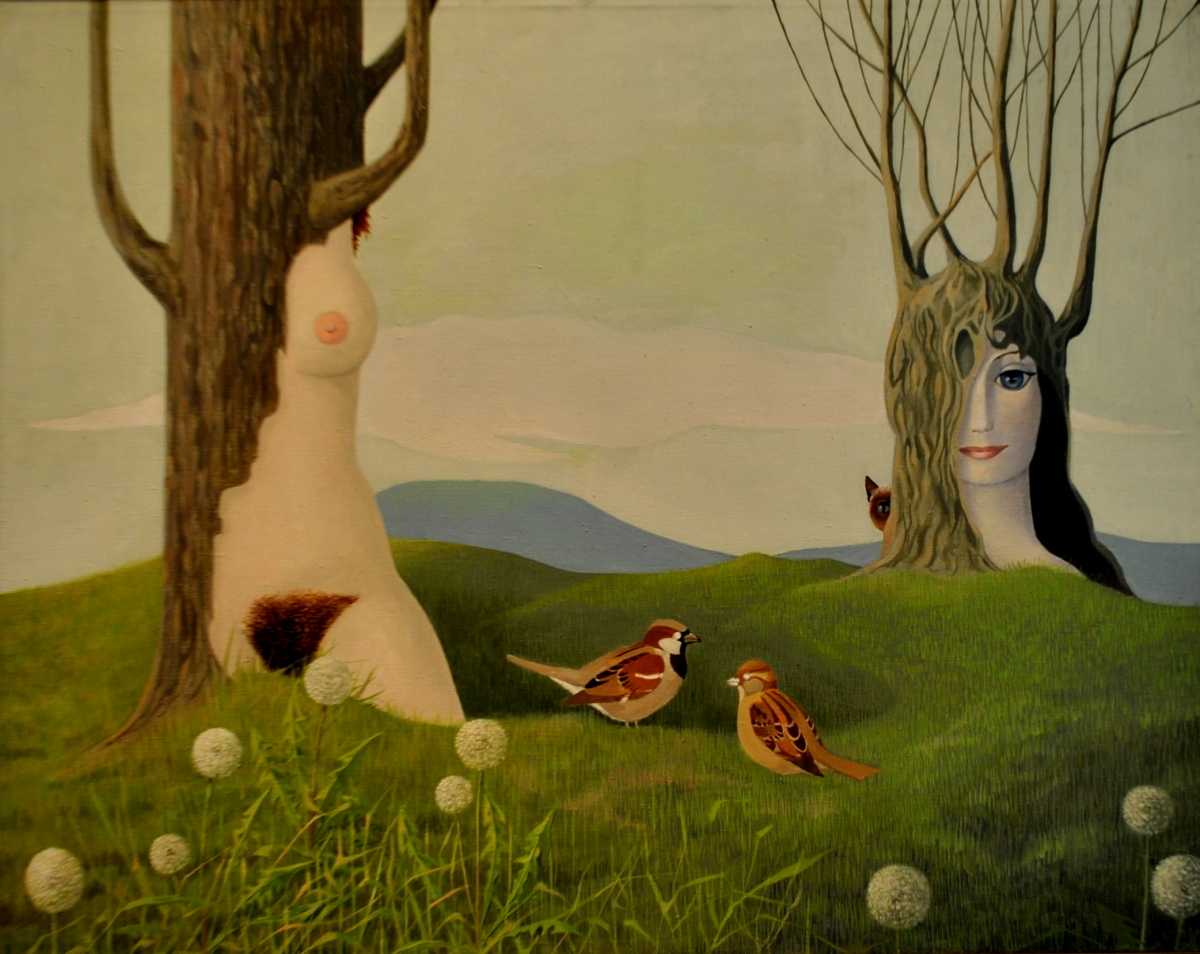
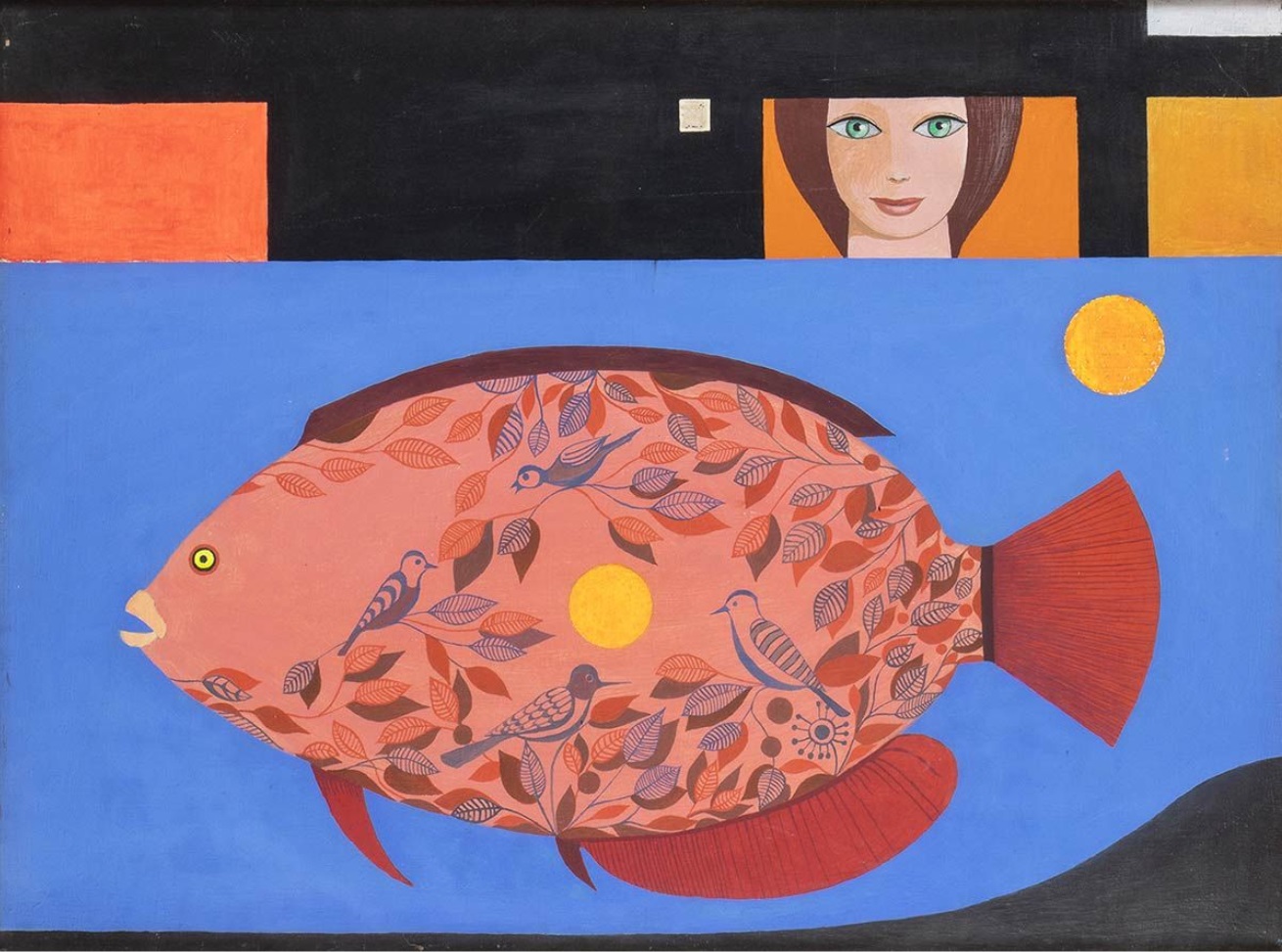
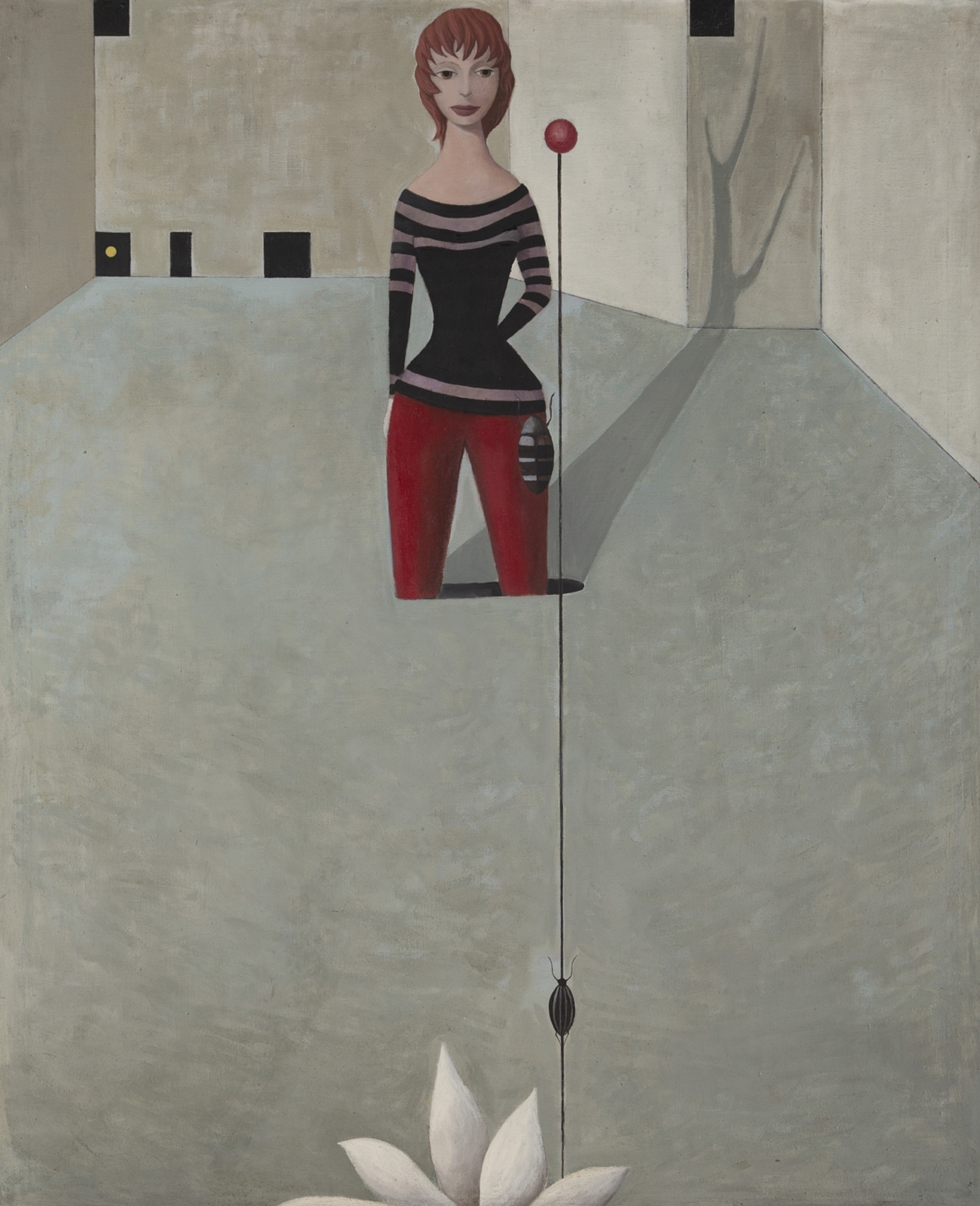
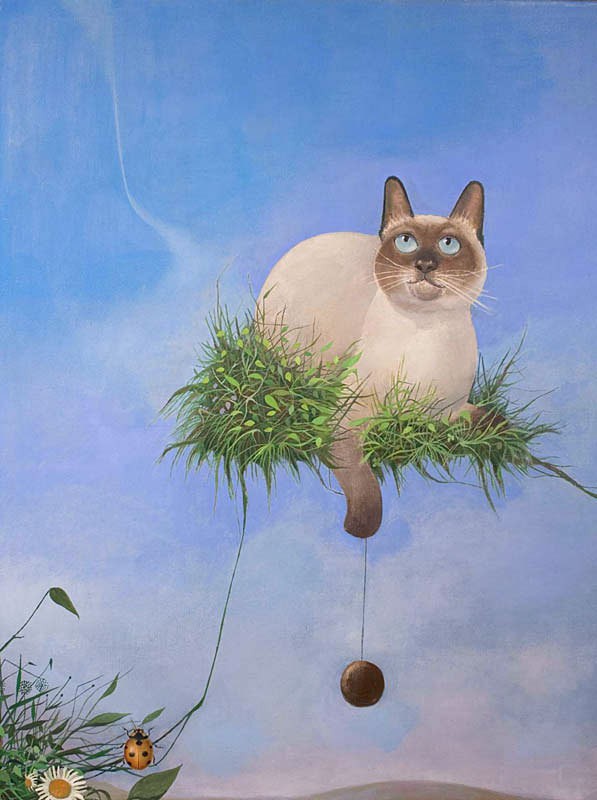
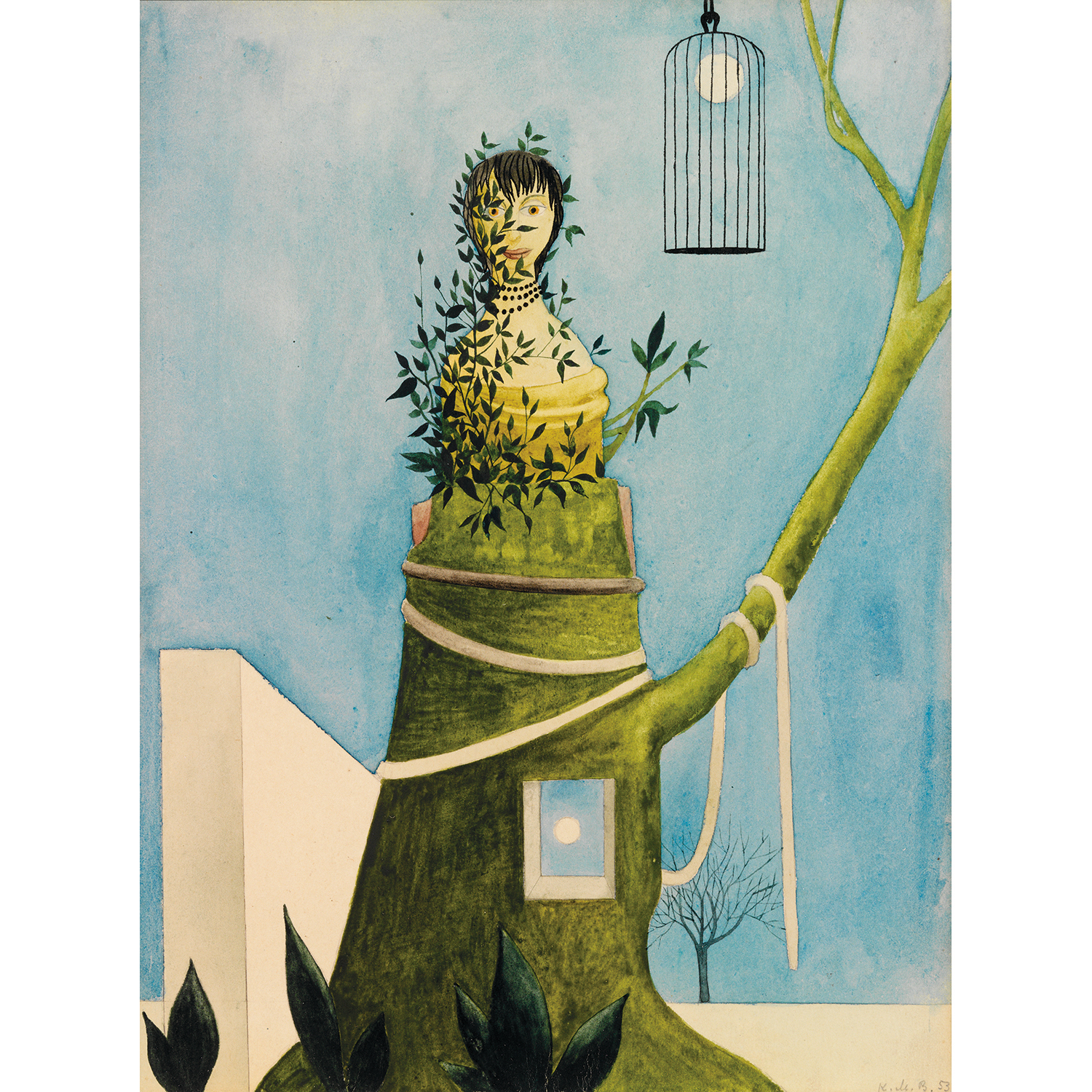
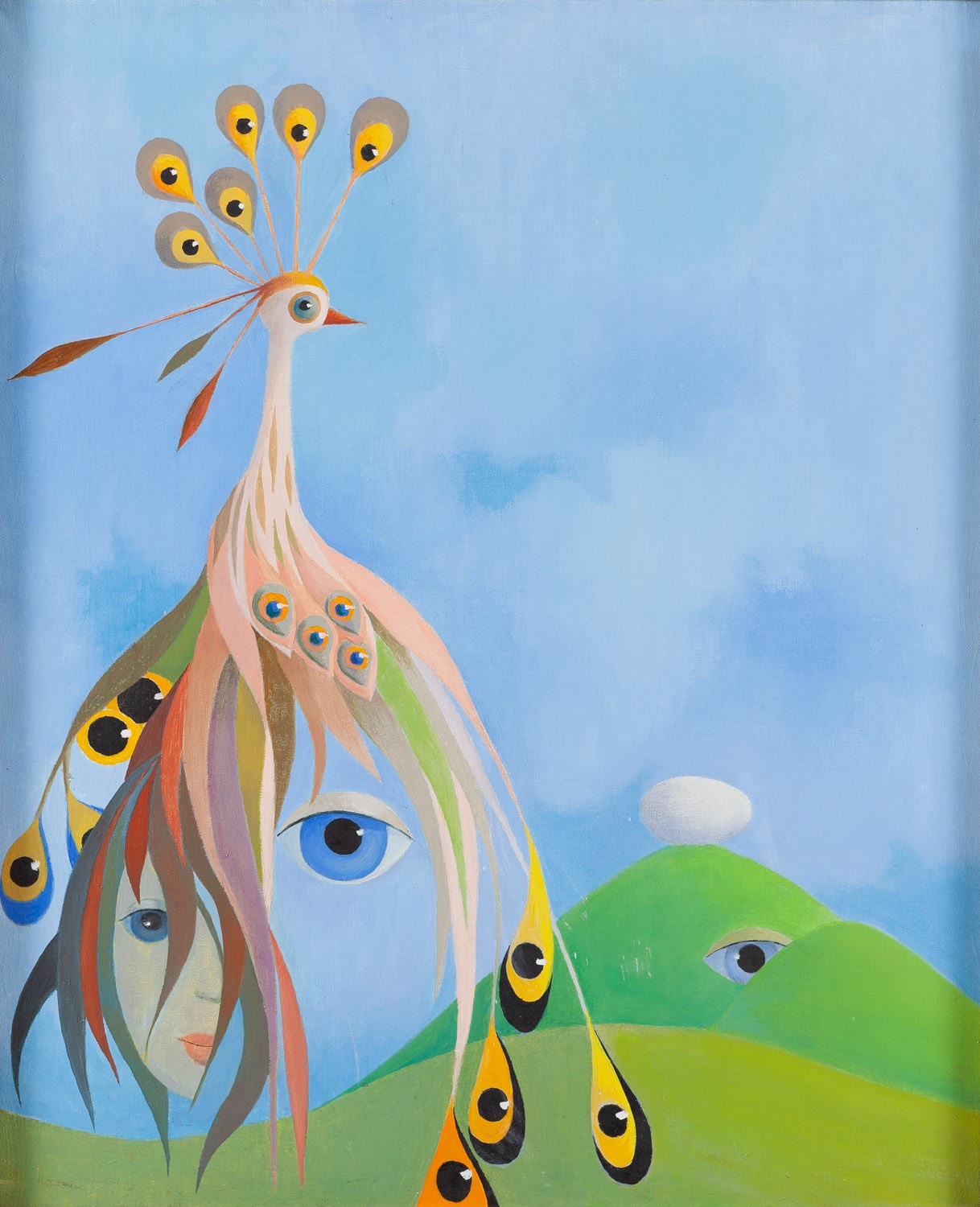
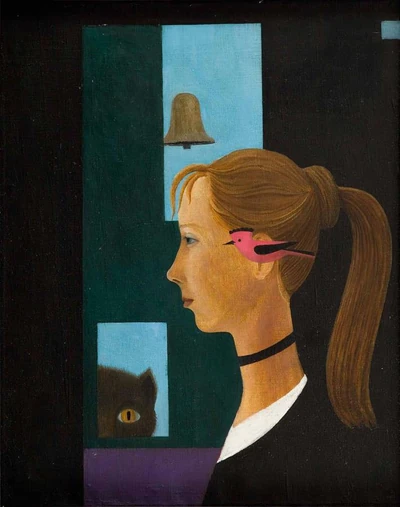
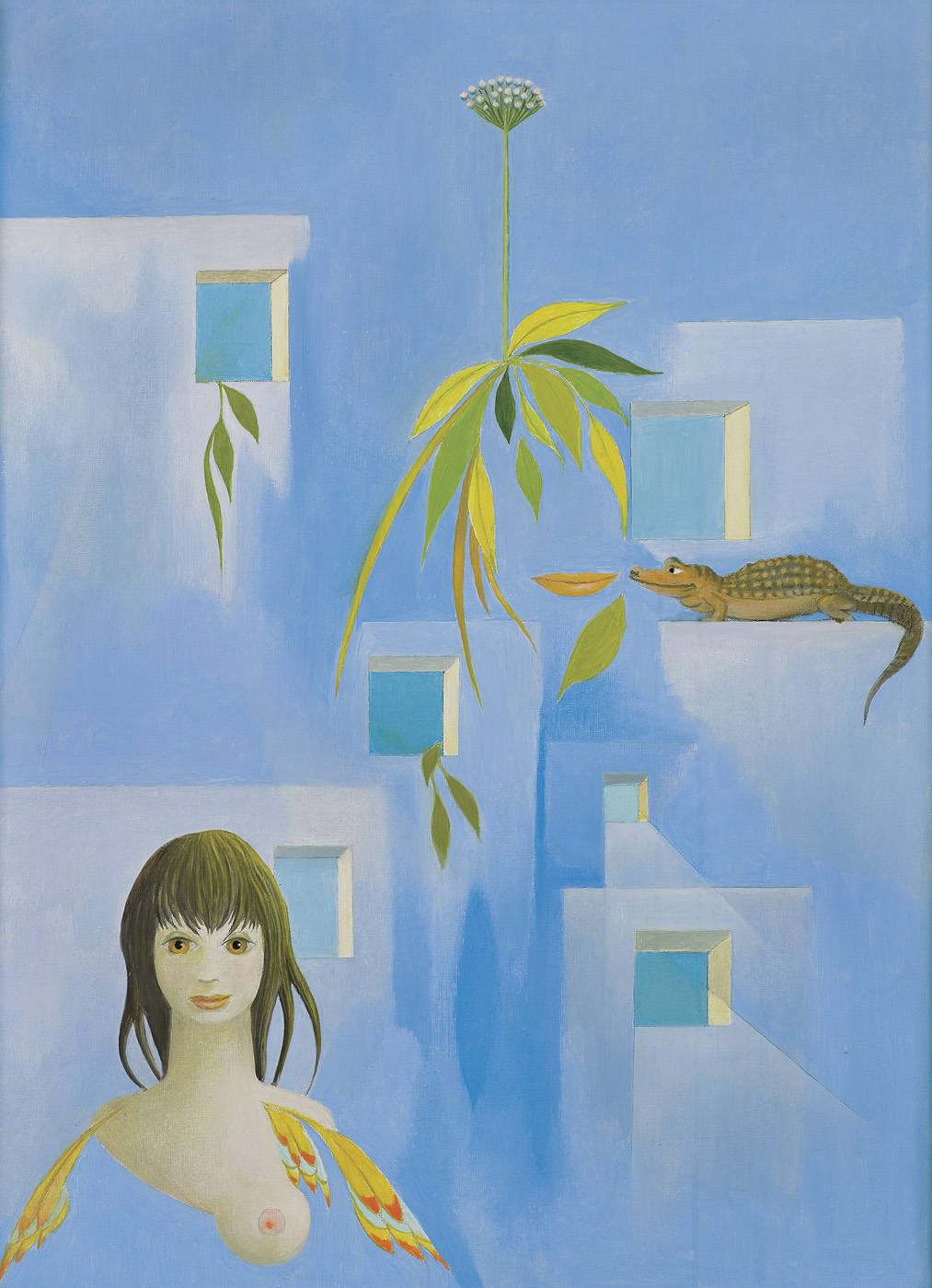
In his painting, Mikulski liked to combine various elements based on associations suggested by imagination rather than reality. He referred to the “logic” of a dream (often with erotic undertones), to fantasy, the poetics of fairy tales or fables, and to images recorded in memory and recreated in a spontaneous, artistically driven manner.
He particularly liked to use a set of favorite motifs, including slim, often nude, charming young girls, birds, butterflies, and stylized plants—trees, grasses, or flowers.
Kazimierz Mikulski – Exhibitions, Awards, and Collections
Kazimierz Mikulski’s exhibition debut took place in 1945 at the first exhibition of the Young Artists Group in Zakopane. In 1948, he participated in the First Exhibition of Modern Art at the Palace of Art in Krakow.
In the following years, he exhibited his works in over 50 solo exhibitions in cities such as Leipzig, London, Paris, Stockholm, and Vienna, as well as in more than 250 group exhibitions in Poland and around the world.
Mikulski was the recipient of several awards, including:
Third Degree Award of the Minister of Culture and Art for Achievements in Set Design (1962)
Golden Badge of the City of Krakow (1965)
Knight’s Cross of the Order of Polonia Restituta (1964)
Krakow City Award (1979)
Honorary Award of the Polish Culture Foundation (1996)
Kazimierz Mikulski’s works are part of numerous private and museum collections, including:
National Museum in Krakow
National Museum in Warsaw
National Museum in Wrocław
Upper Silesian Museum in Bytom
Lubuskie Museum in Zielona Góra