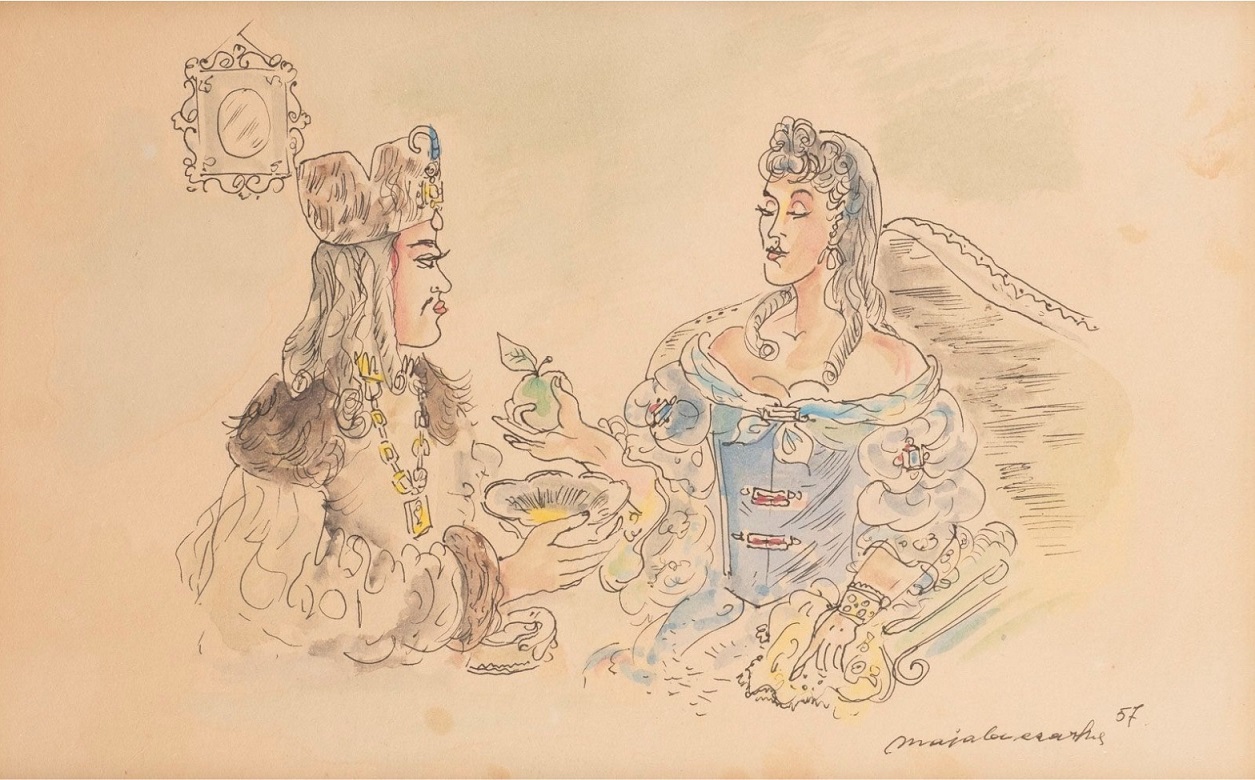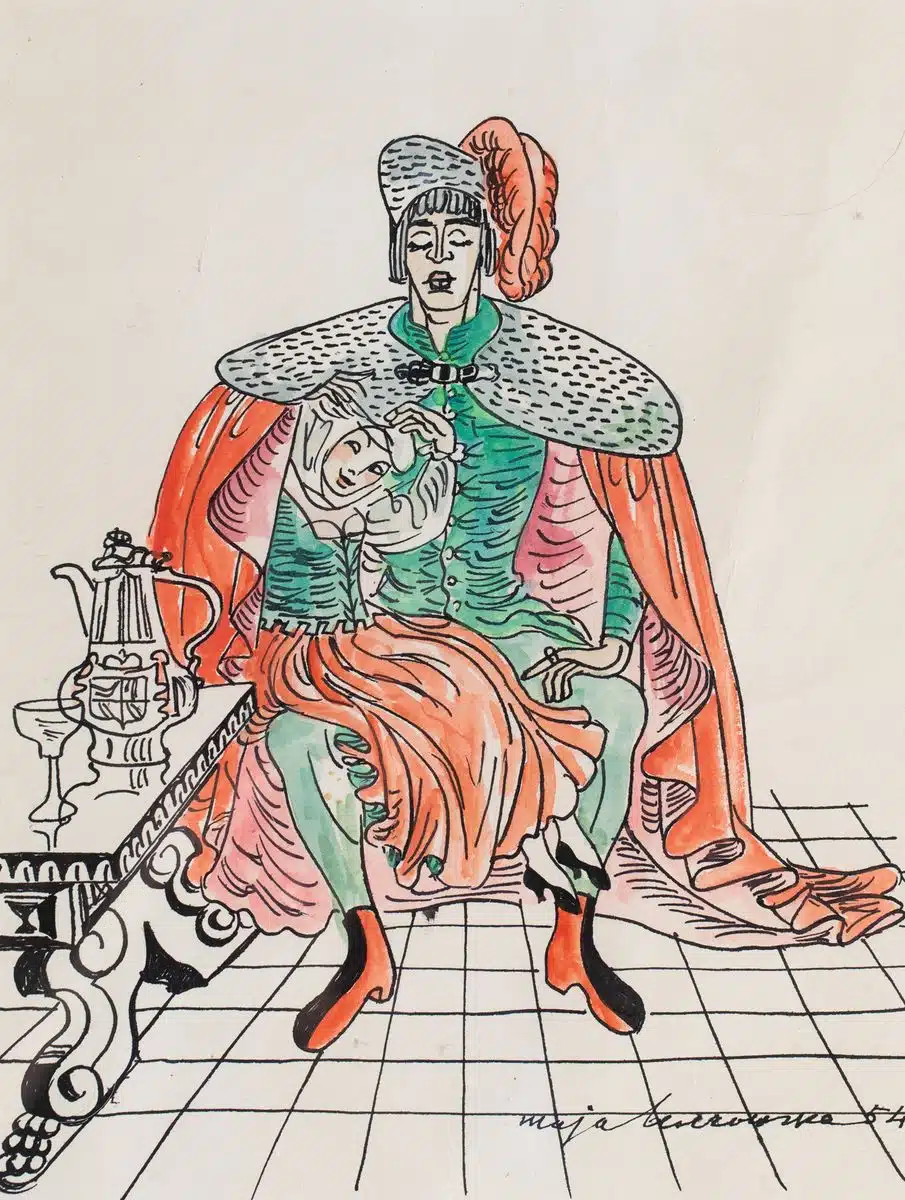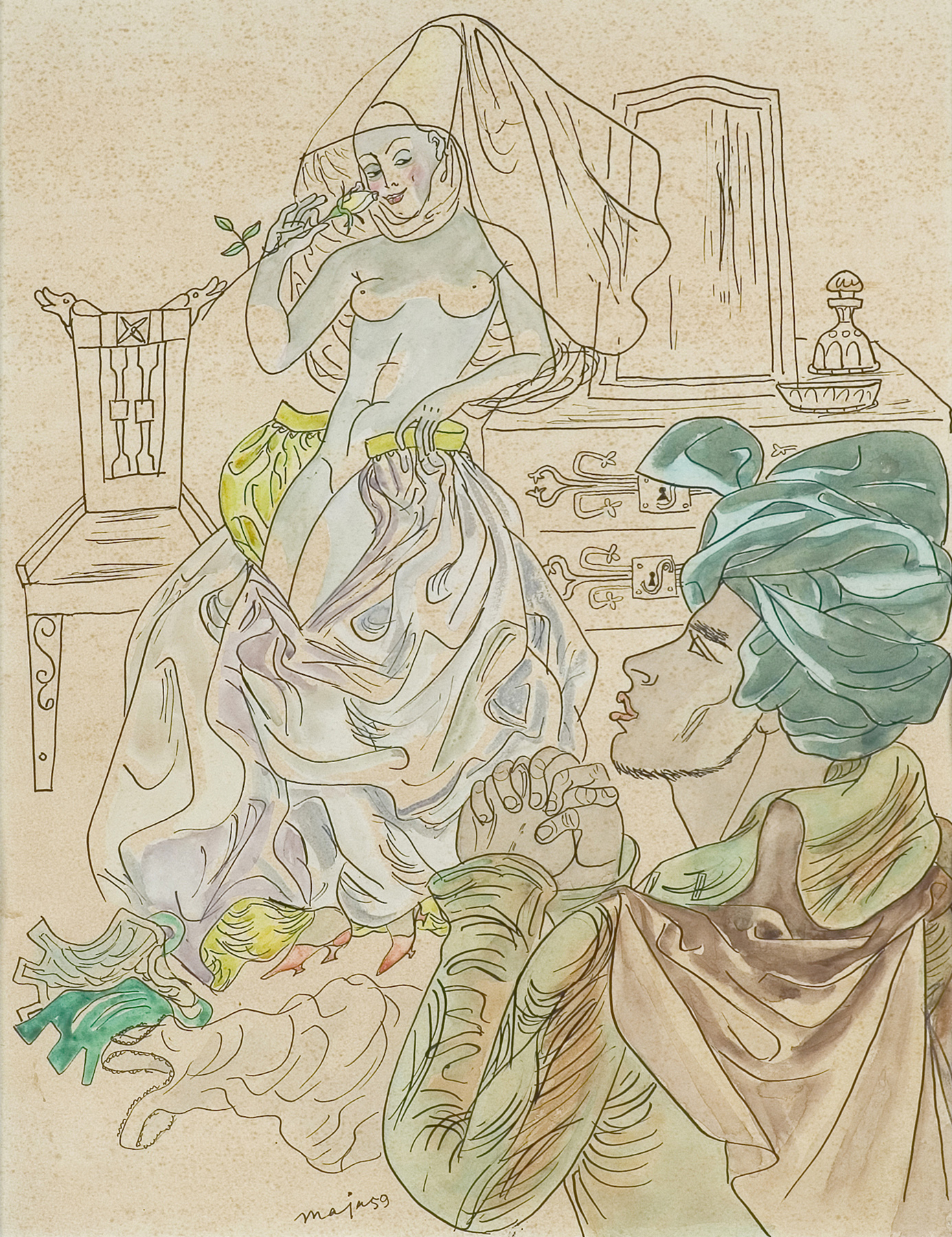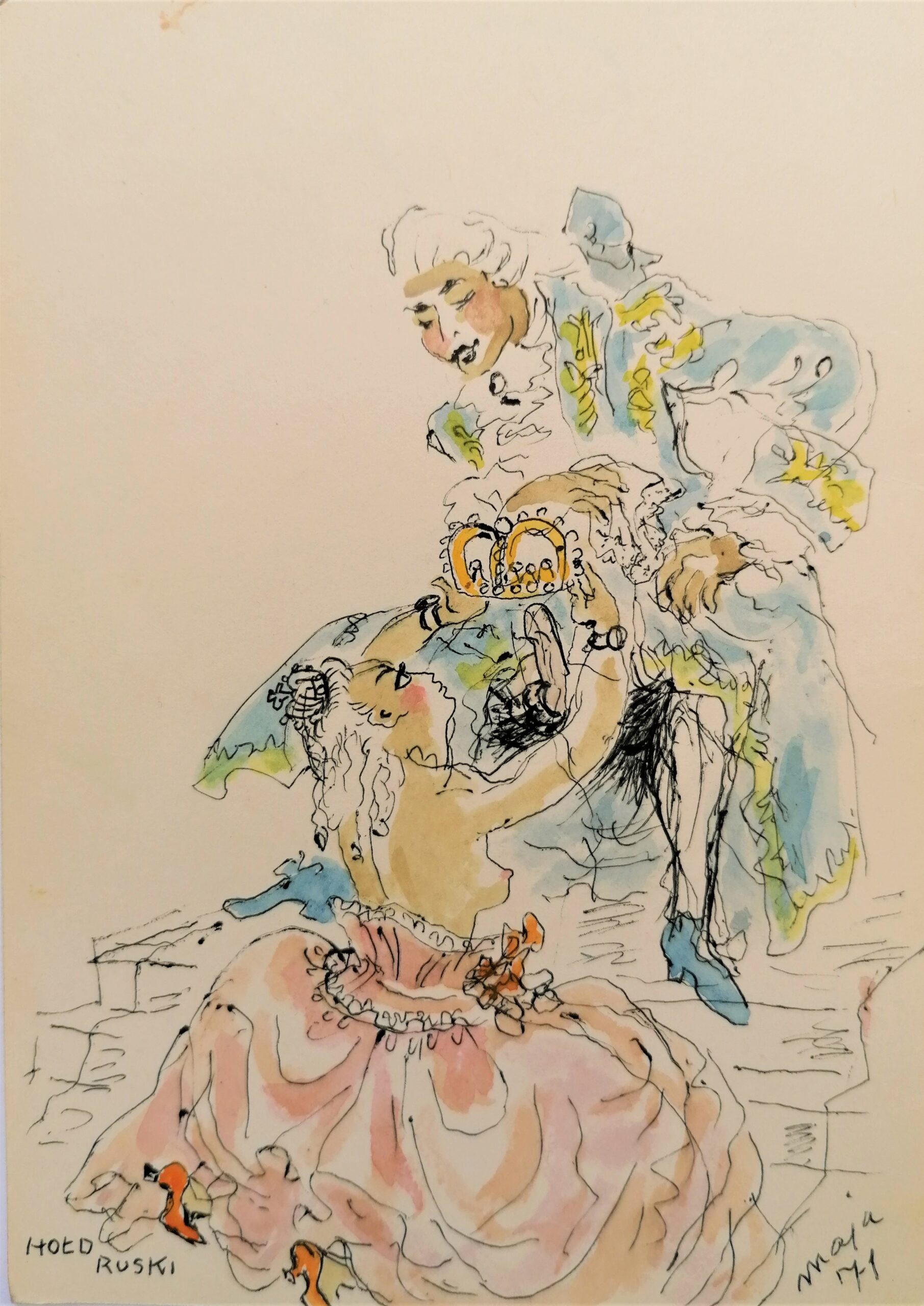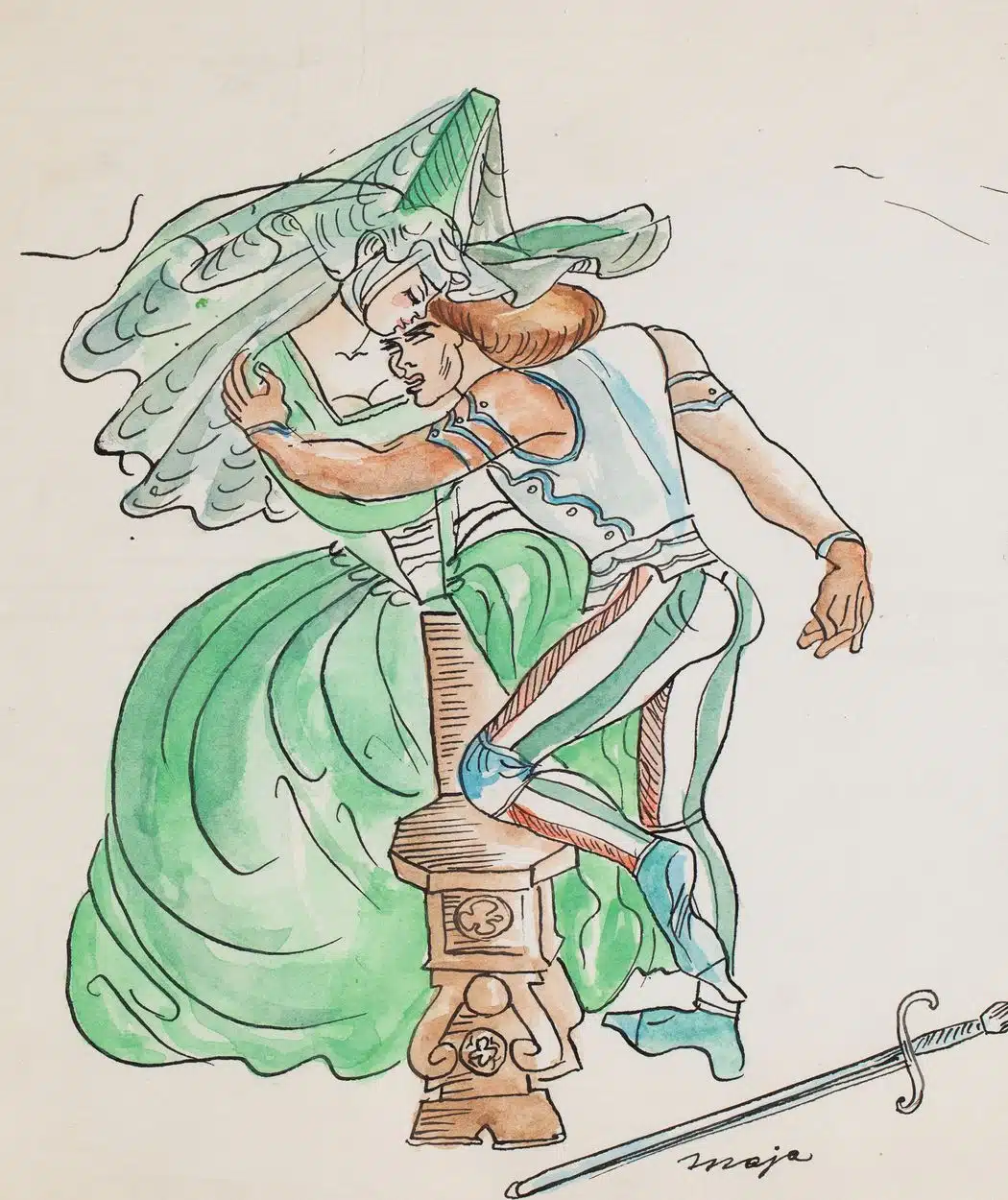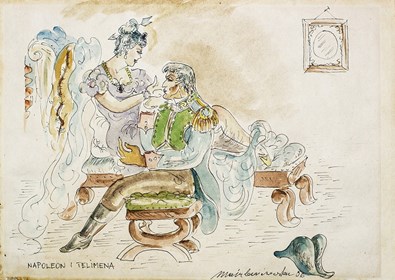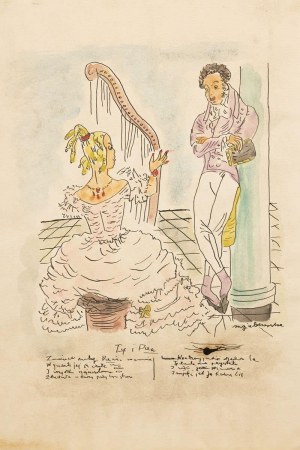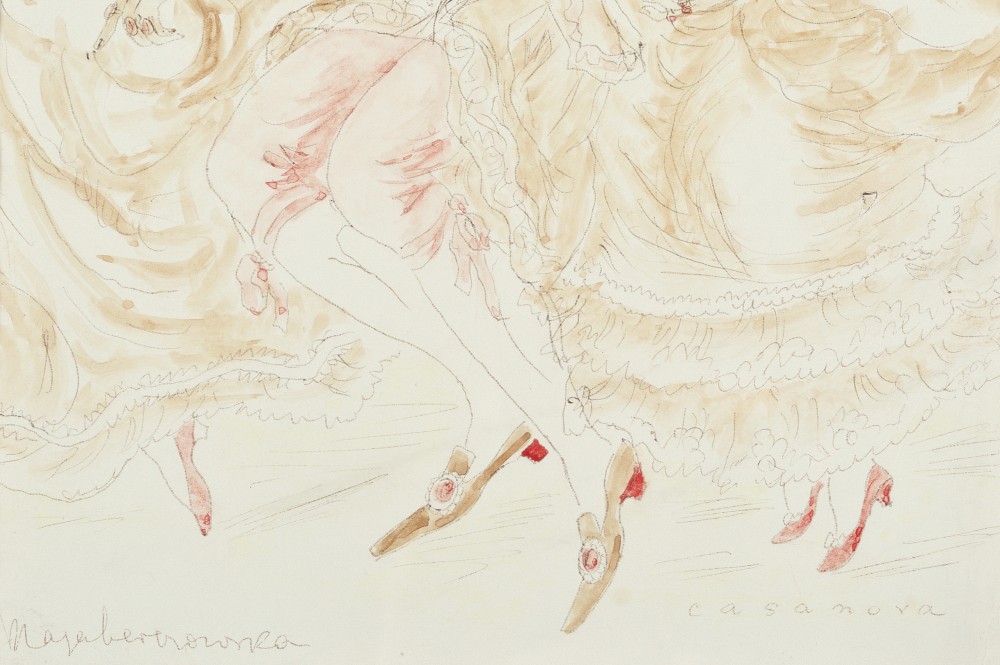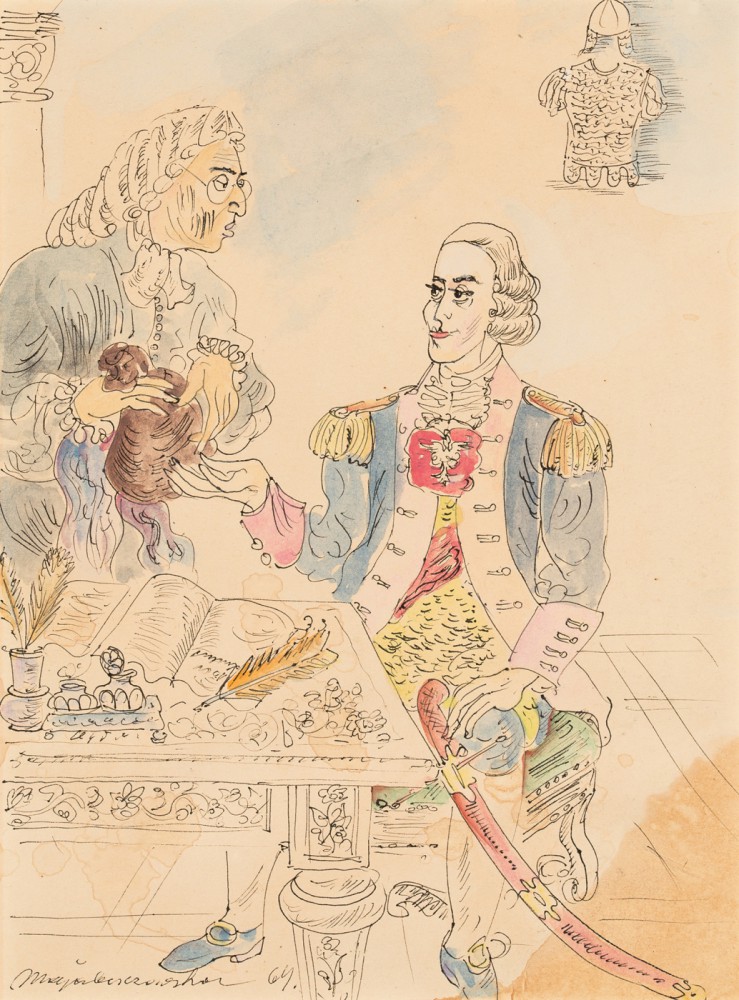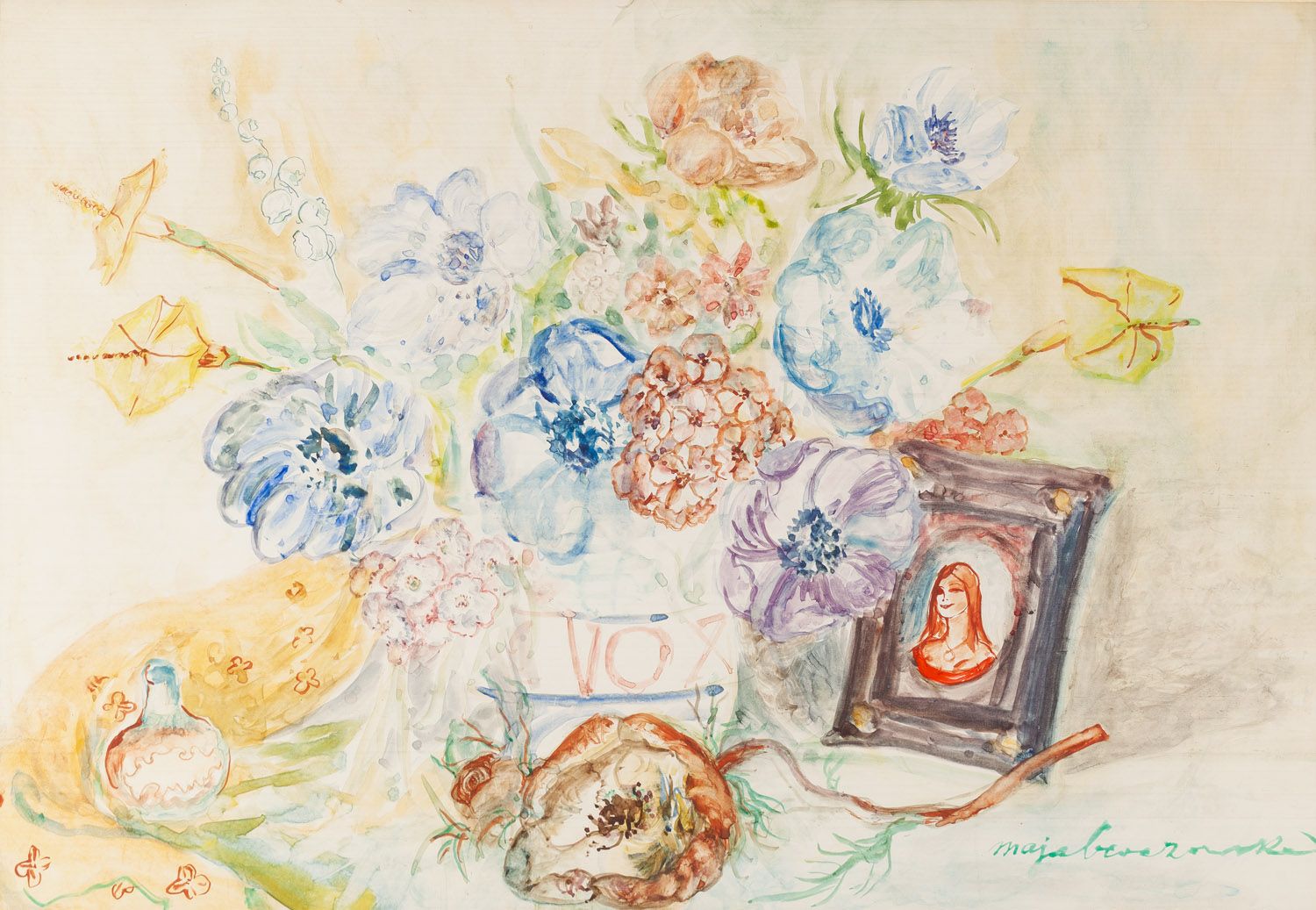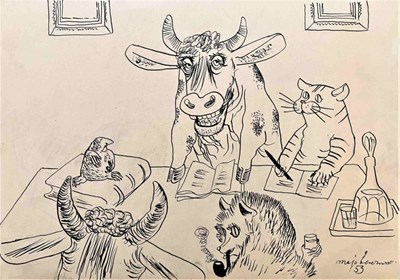
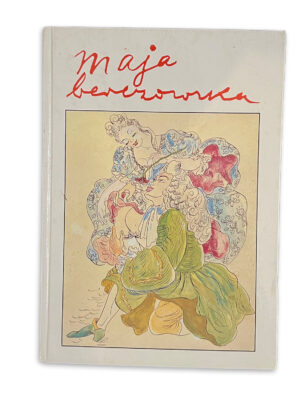
Maja Berezowska (born April 13, 1892, in Baranavichy – died May 31, 1978, in Warsaw) was a Polish painter, graphic artist, caricaturist, and set designer.
From a young age, Berezowska demonstrated a strong artistic talent. Her father was a Polish engineer and officer in the Russian Imperial Army, one of the builders of the Trans-Siberian Railway, and a man of considerable means. This allowed Maja to receive an excellent education in prestigious private art schools. She first studied under renowned artists such as Nicholas Roerich in Saint Petersburg (1908–1909) and later Józef Pankiewicz and Leon Wyczółkowski in Kraków (1910–1912). She continued her studies in Munich and Paris. Her artistic debut came in 1916, when she illustrated a short story by Kornel Makuszyński.
She attended private art school in Saint Petersburg (1908–1909), the Women’s School of Fine Arts run by Maria Niedzielska in Kraków (1911–1913), and studied in Munich in 1913.
In 1918, she married painter, caricaturist, and stage designer Kazimierz Grus, though they divorced around 1926. (You can also find more information about Kazimierz Grus on our website.)
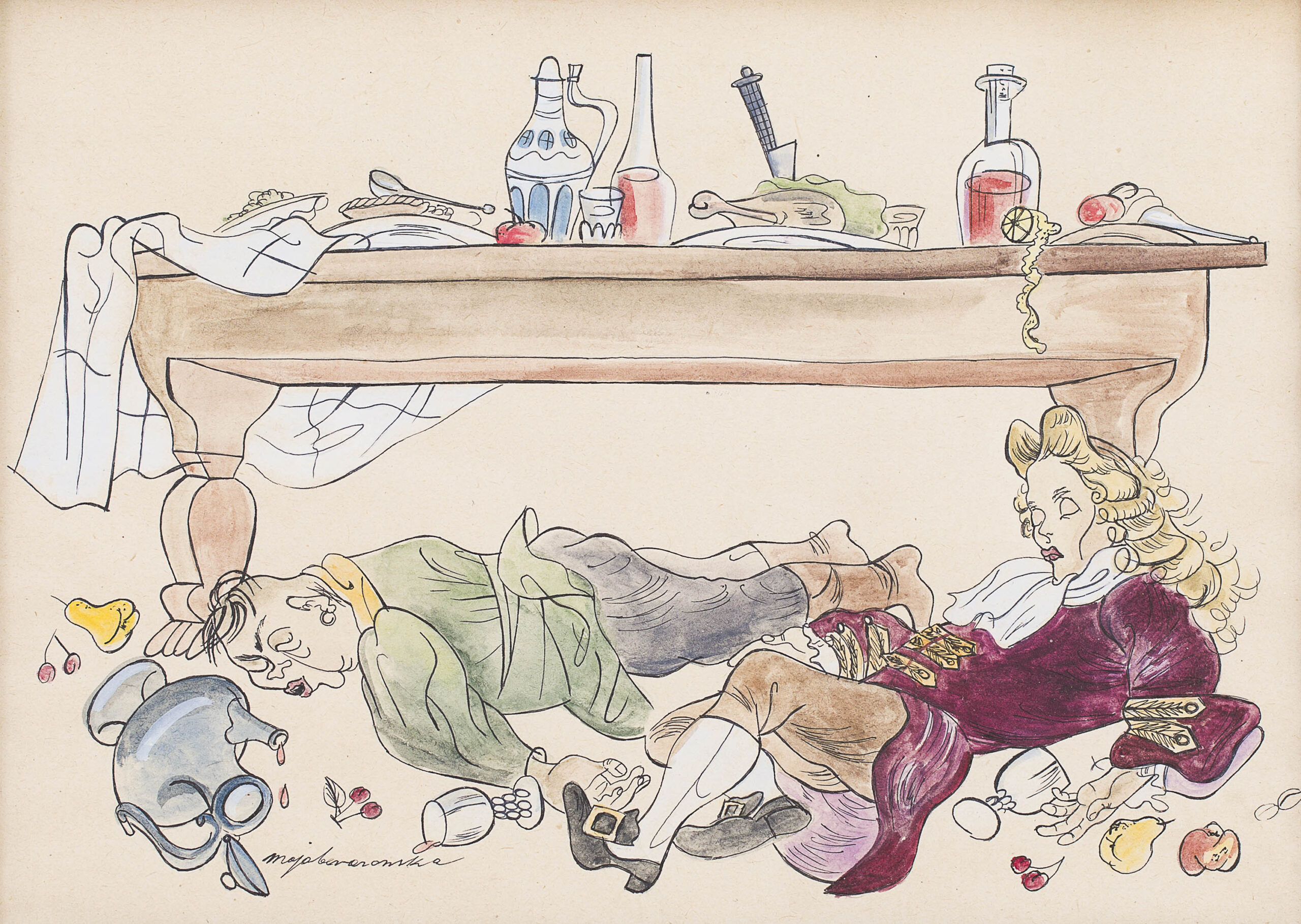
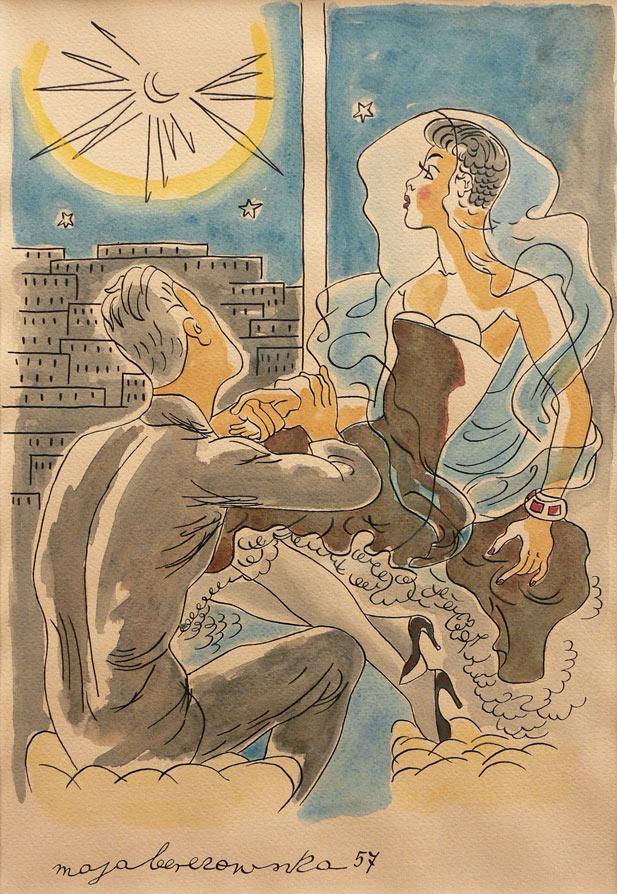
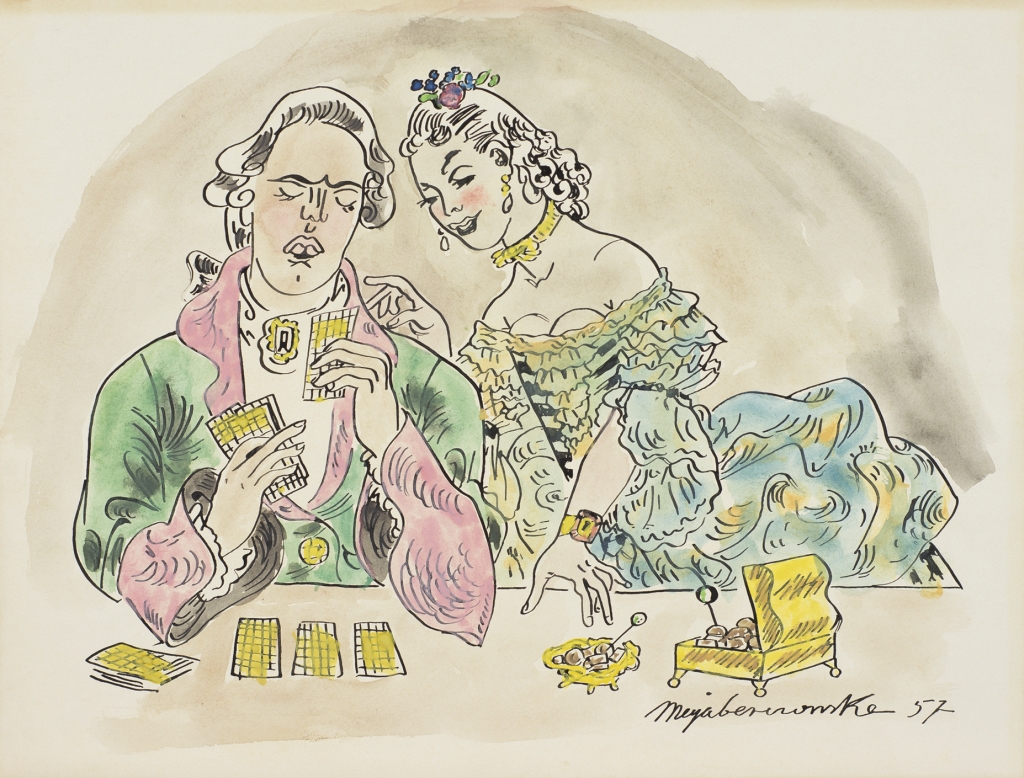
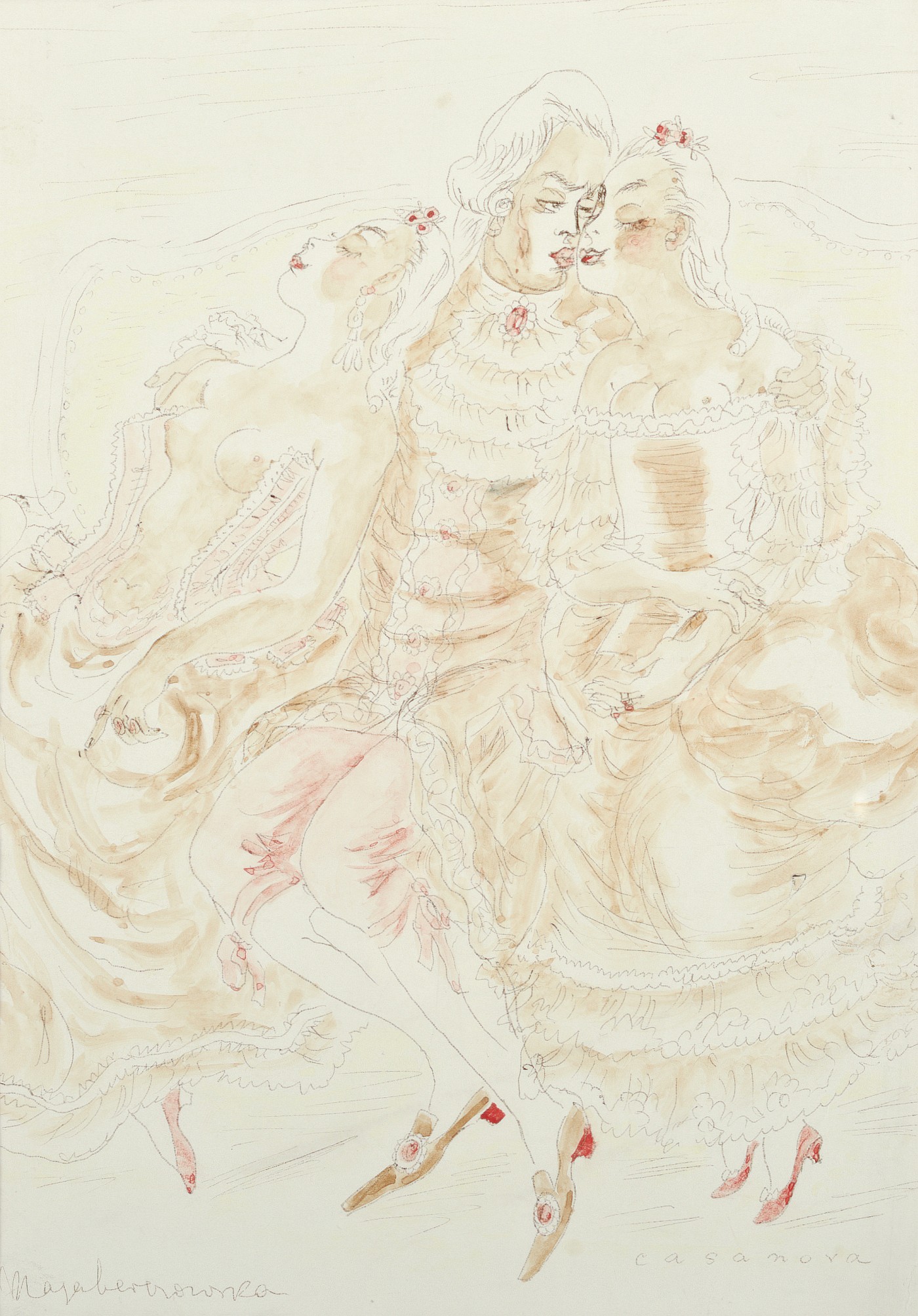
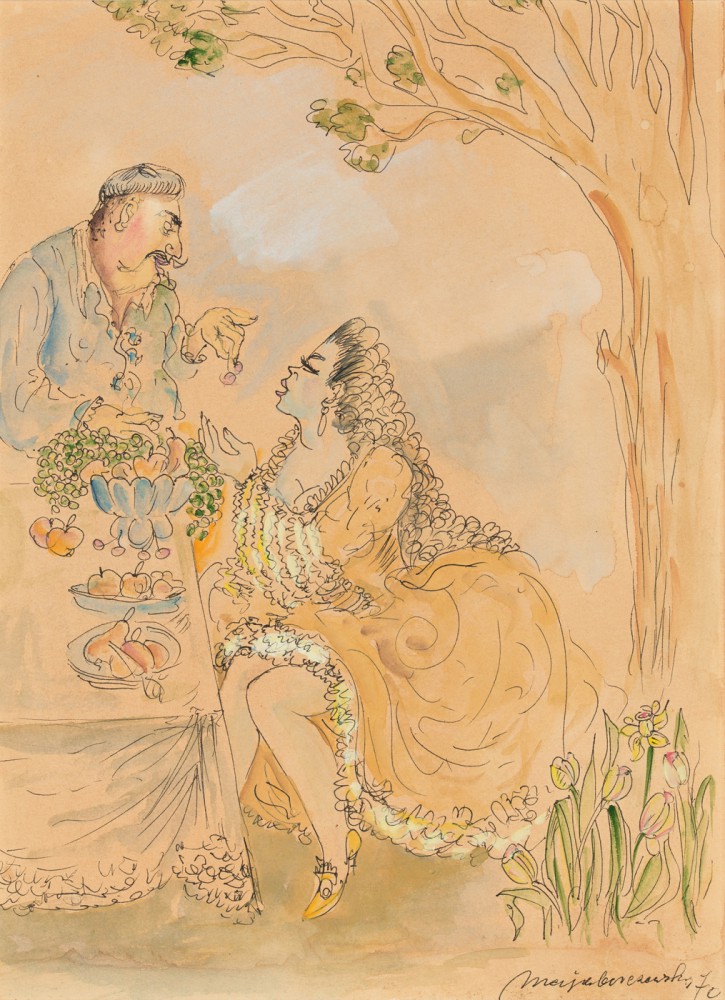
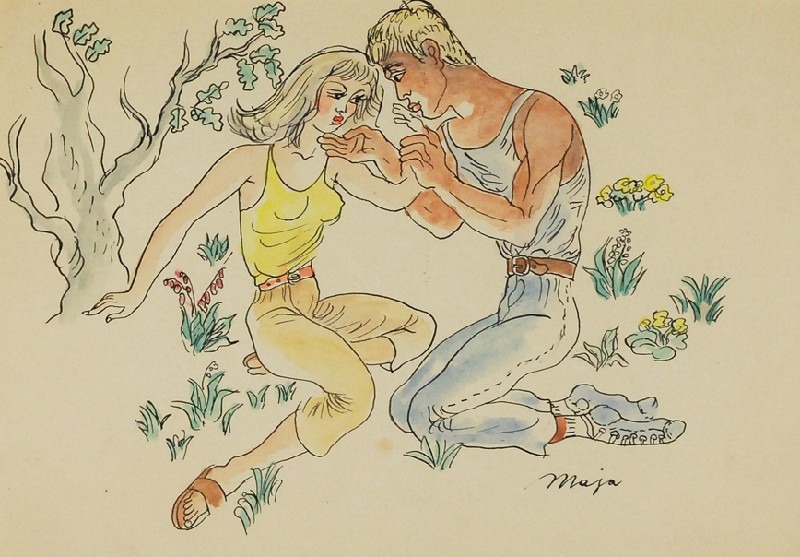
Even before World War II, Berezowska gained recognition for her refined, often erotic drawings. The themes of human emotion and the act of love remained central to her work throughout her life. The 1956 publication of Piórka by Jan Sztaudynger, featuring her boldly sensual illustrations, became a symbol of the political thaw and cultural shift in post-Stalinist Poland. In 1977, she stated:
“Without love, there is no life. For me, nothing is more magnificent than the human body, and as long as I live, I will draw it—as beautifully as I can!”
Her first solo exhibition took place in Kyiv in 1916. By 1939, her caricatures, drawings, and illustrations were regularly featured in popular satirical magazines such as Cyrulik Warszawski, Szpilki, and Szczutek (published in Lviv). She also participated in Poland’s propaganda campaign during the Upper Silesian plebiscite. In the interwar period, she published numerous caricatures, including many that were overtly antisemitic—some of which were later exhibited in 2013 by the Jewish Historical Institute in Warsaw.
Berezowska continued collaborating with Szpilki after the war, particularly during the 1960s. However, her contributions became less frequent following the dismissal of editor-in-chief Arnold Mostowicz during the 1968 antisemitic purges. Her work also appeared in other cultural publications such as Teatr, Nowa Kultura, and Przekrój.
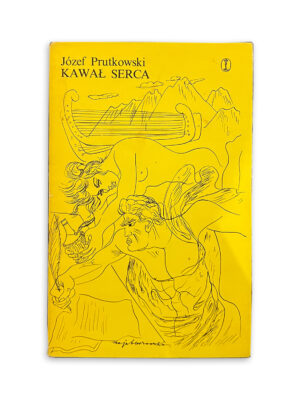
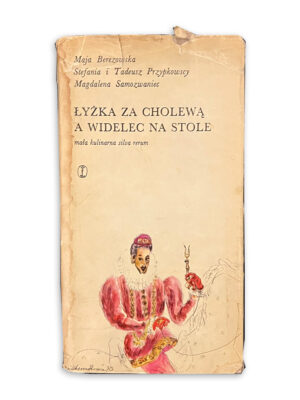
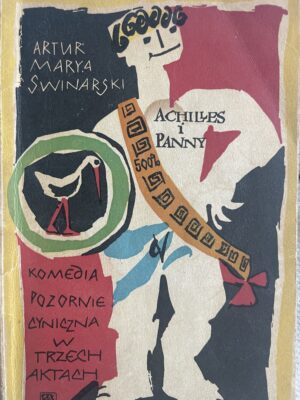
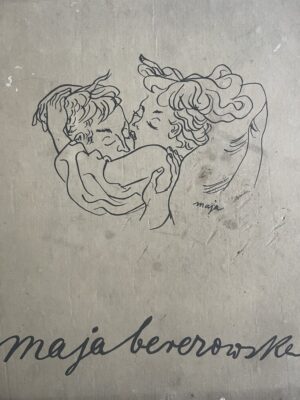
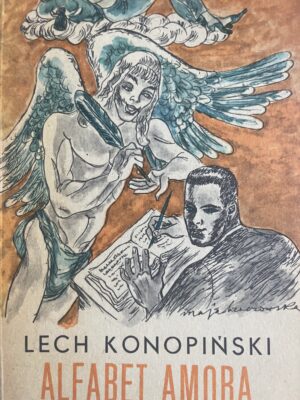
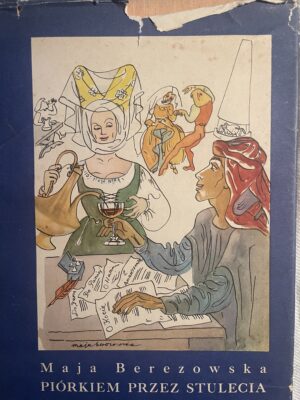
During the communist era, she illustrated numerous books—primarily poetry collections and satirical works—but also niche publications, such as chess-themed books including Szach i mat and Lancelot i królowa za szachownicą by Ludwik Niemojowski, as well as the novel Żywe kamienie by Wacław Berent. Exhibition catalogs of her work were published as early as 1947 and 1950, but comprehensive monographs only appeared posthumously, including Piórkiem przez stulecia (1985) and Maja Berezowska: Antologia twórczości (1994).
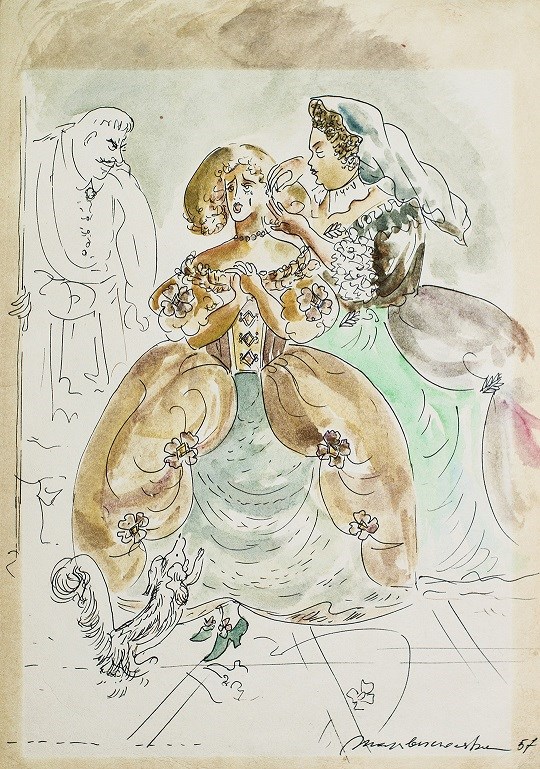
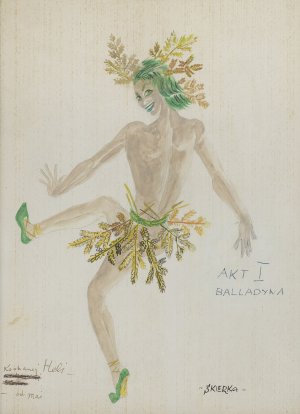
Berezowska’s first professional involvement in the theatre was in 1919, when she co-created the stage design for the literary-artistic cabaret Czwórka in Lviv. In the 1930s, she designed costumes for revue stars like Zula Pogorzelska and Hanka Ordonówna, as well as for operettas and cabarets in Warsaw and Poznań. After returning from Paris, she worked as a full-time set designer for the cabaret Teatr 13 Rzędów during the 1936/1937 season.
In 1933, she moved to Paris to pursue a career as an illustrator. During her three-year stay in the French capital, she held three solo exhibitions and found success working with renowned publications such as Vogue, Le Figaro, Le Rire, and Ici Paris. It was in Ici Paris that she published a series of satirical drawings in 1935 that would later have a lasting impact on her life.
After World War II, she focused primarily on scenic and costume design. She worked for the Łódź Opera, the Kameralny and Komedia Theatres in Warsaw, the Polish Theatre in Poznań, the Theatre of the Łódź Region, the Artistic Ensemble of the Polish Army, and the United Artistic Enterprises “Estrada” (1964–1977).
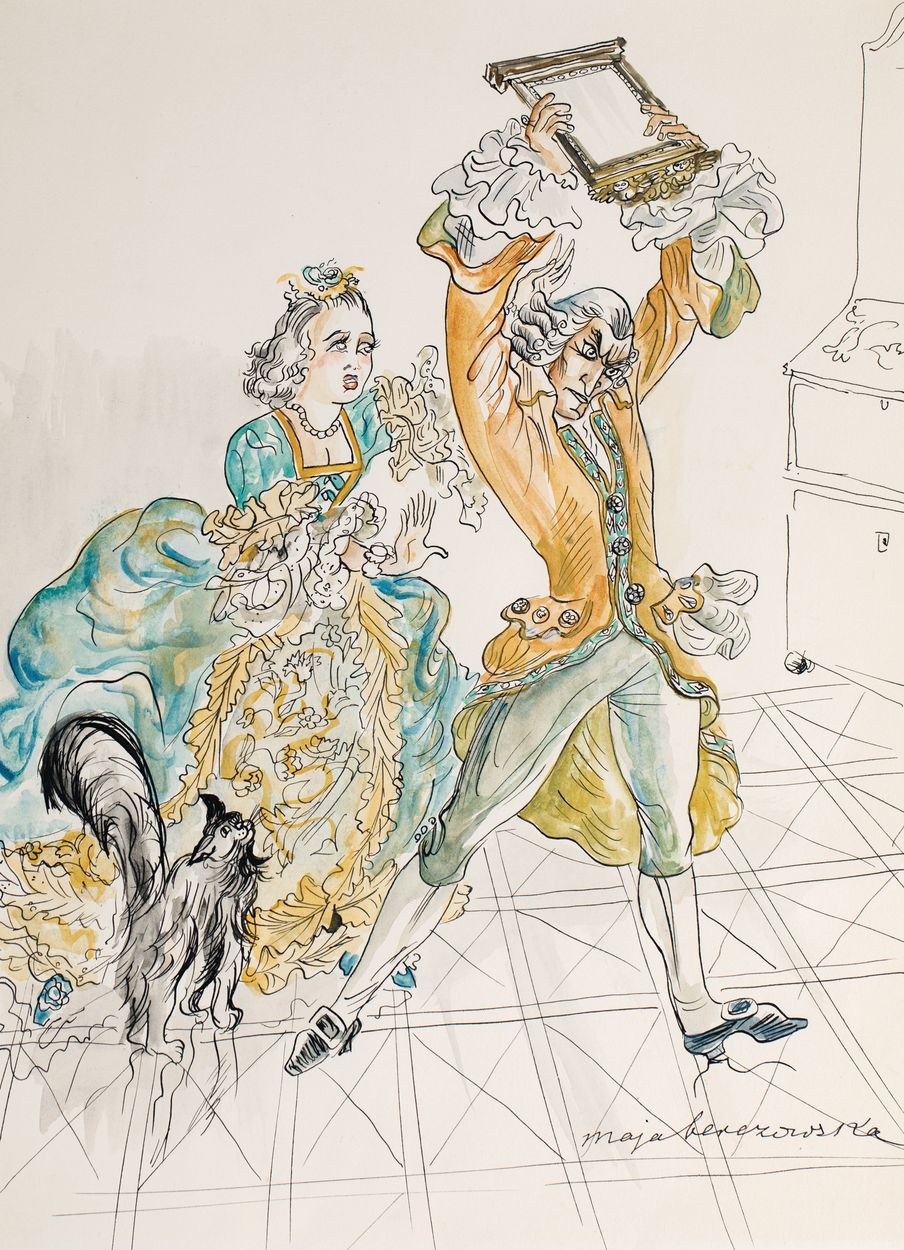
Although Berezowska’s drawings were often bold and provocative, they were never vulgar. Her work consistently challenged social norms and sparked controversy in both interwar Poland and the communist era. Eroticism, sensuality, and love—often with a distinct sense of humor—were recurring themes in her art. She was particularly fond of subverting traditional conventions and celebrating human beauty with a unique, graceful style.
While living in Paris from 1933 to 1936, Berezowska collaborated as a cartoonist with publications such as Le Figaro, Le Rire, and Ici Paris. In 1935, she published a series of caricatures titled The Love Affairs of Sweet Adolf, lampooning Adolf Hitler. Shortly after publication, the German Embassy in Paris filed an official complaint, accusing her of insulting the head of state. She was defended in court by lawyer and politician Albert Sarrault. Although initially fined 500 francs, Sarrault appealed the ruling and gave a passionate defense, proclaiming, “It is a disgrace for the City of Light to sentence an artist for her work!” The fine was eventually reduced to a symbolic amount.
The Nazis would later retaliate after the war began. Aware of the danger she faced, Berezowska went into hiding in the countryside. In January 1942, a year after returning to Warsaw, she was arrested by the Gestapo following a denunciation. She was imprisoned in the notorious Pawiak prison and then deported to the Ravensbrück concentration camp in May, officially for insulting Hitler, and sentenced to death.
While in Ravensbrück, Berezowska continued creating art as much as conditions allowed. She drew portraits of fellow prisoners and documented camp life by making puppets and costumes for Christmas nativity plays. She later recalled:
“Even in Ravensbrück, I searched—though it was difficult—for moments of joy. (…) I knew that the women I drew would send those portraits to their families, and I wanted to comfort those families. I also wanted the women to feel good about themselves, even if just about their appearance.”
After the camp was liberated by Soviet forces in May 1945, Berezowska traveled to Stockholm with a group of Polish women to recover under the care of the Swedish Red Cross. She exhibited her work in Sweden and Denmark during this time. In June 1946, she returned to Poland.
Two of Art | KvK: 94351813 | Teilingen 79, 1082JR Amsterdam, Netherlands