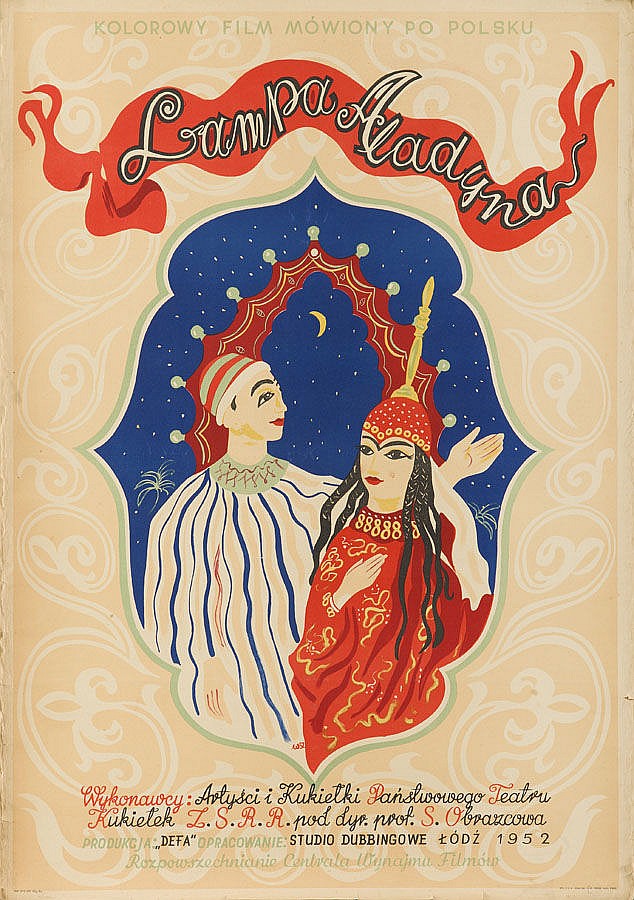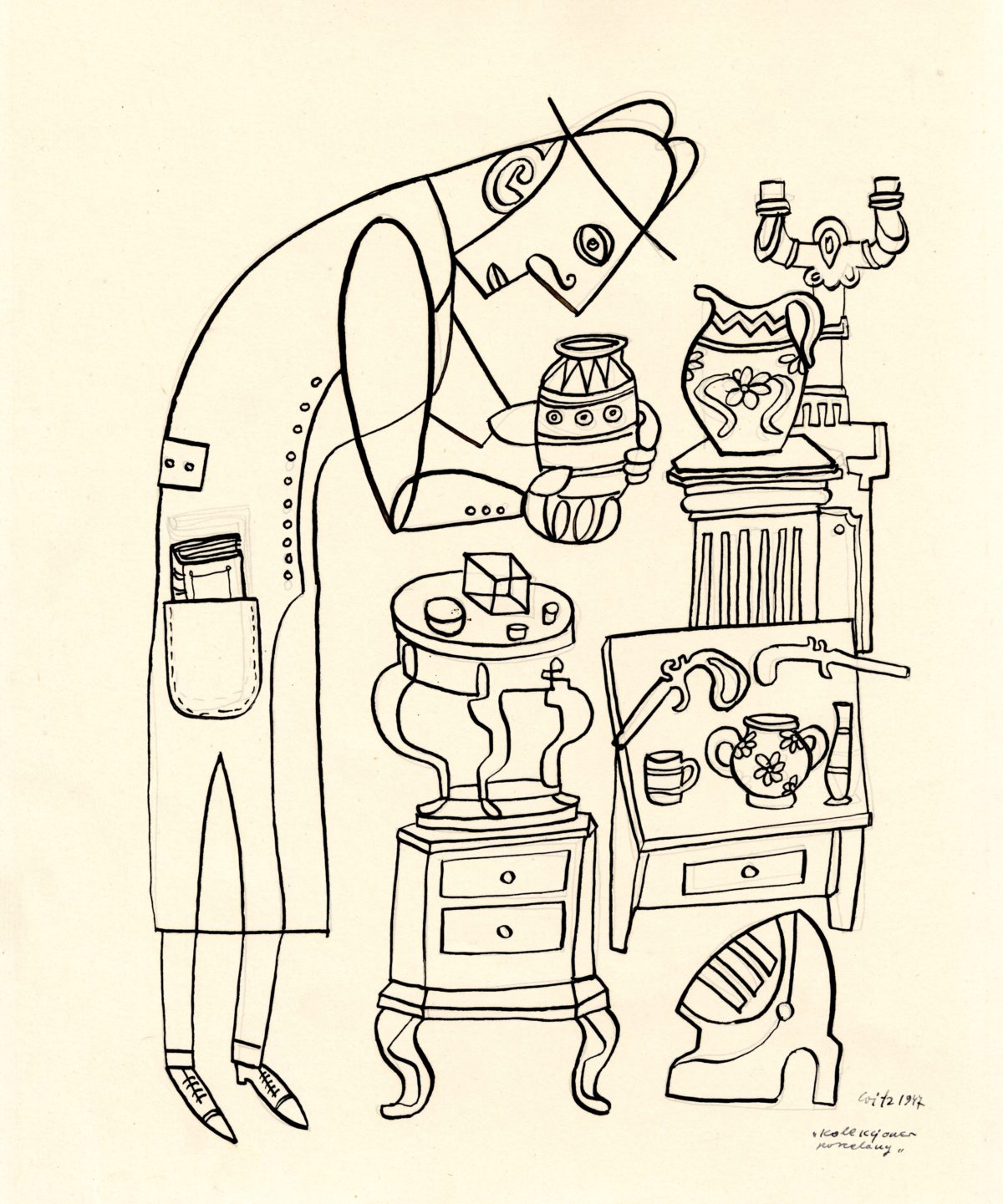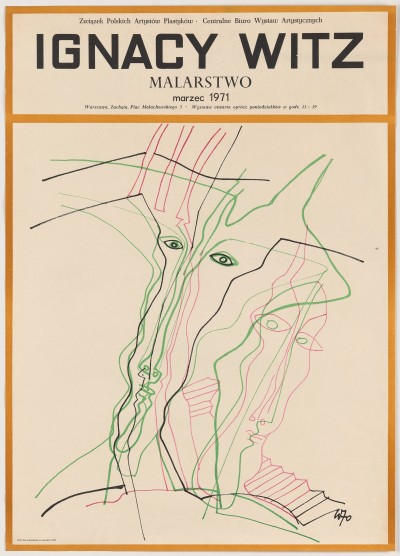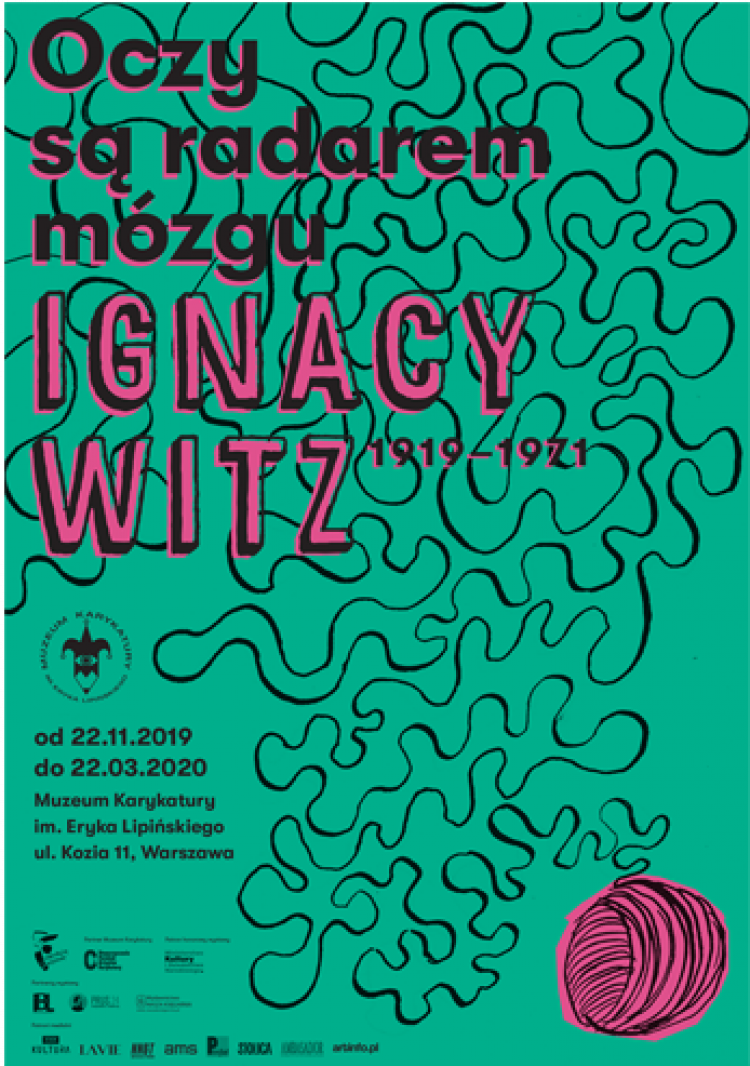
Ignacy Witz (born March 20, 1919, in Lviv – died July 9, 1971, in Kazimierz Dolny, Poland) was a Polish painter, illustrator, poster artist, and art critic.
He graduated from the State Institute of Fine Arts in Lviv. He made his debut in 1938 as a satirical cartoonist for Lviv-based magazines Kontratak and Omnibus. In 1940, while still in Lviv, he was conscripted into the Red Army.
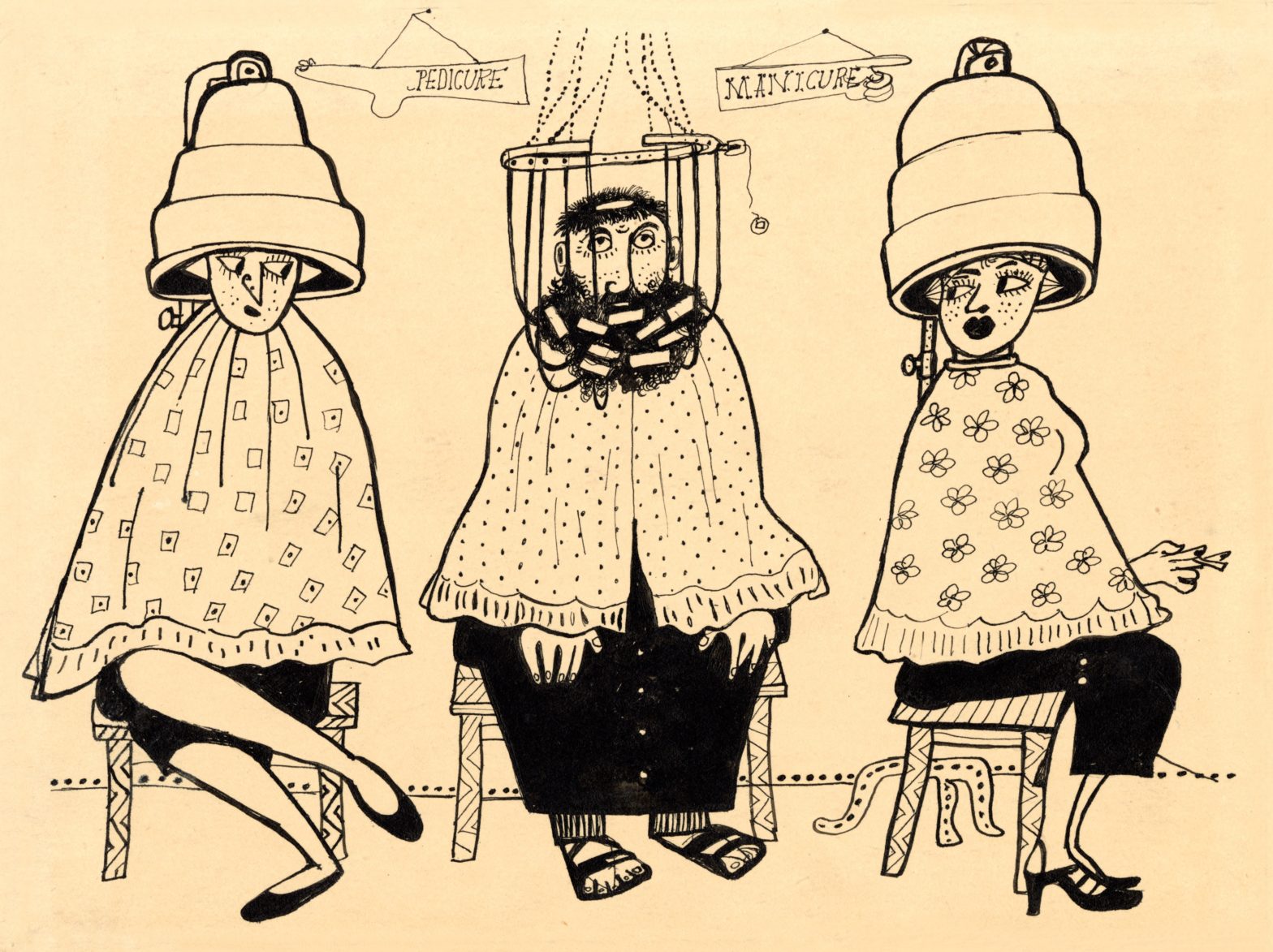
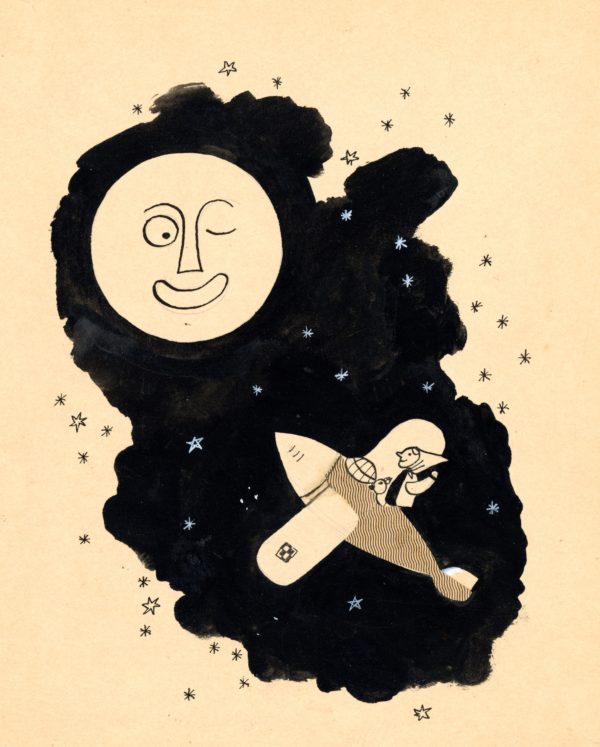
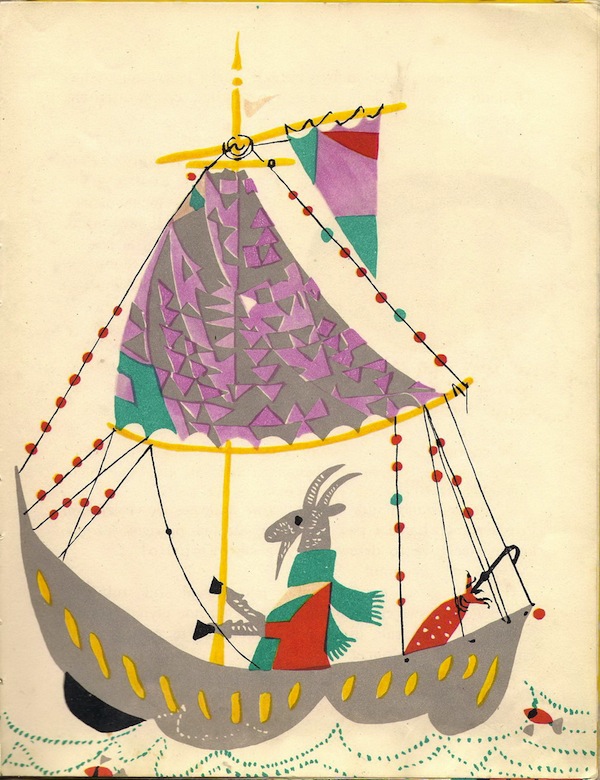
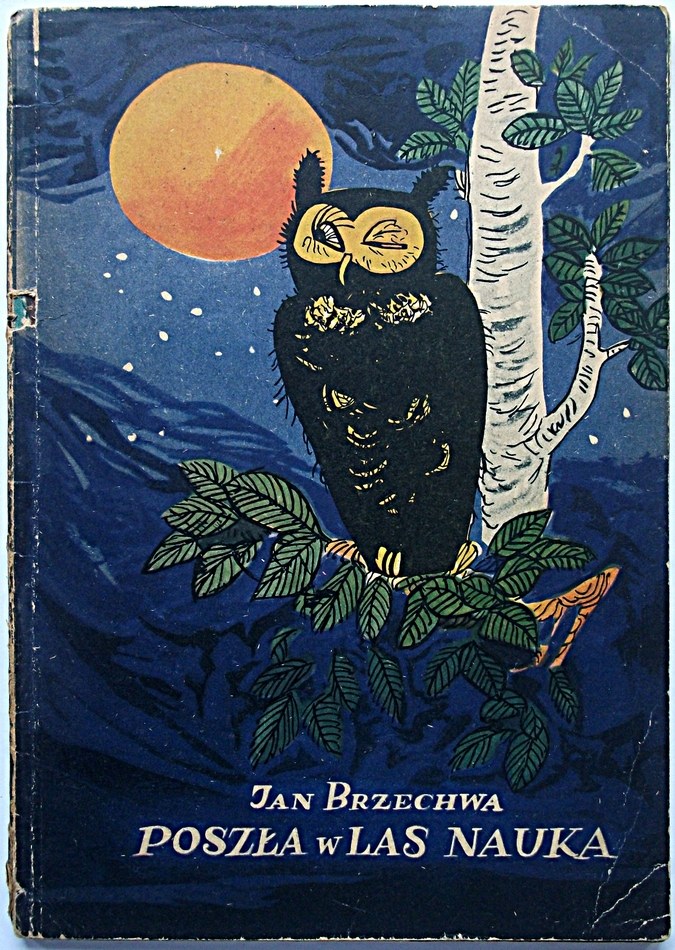
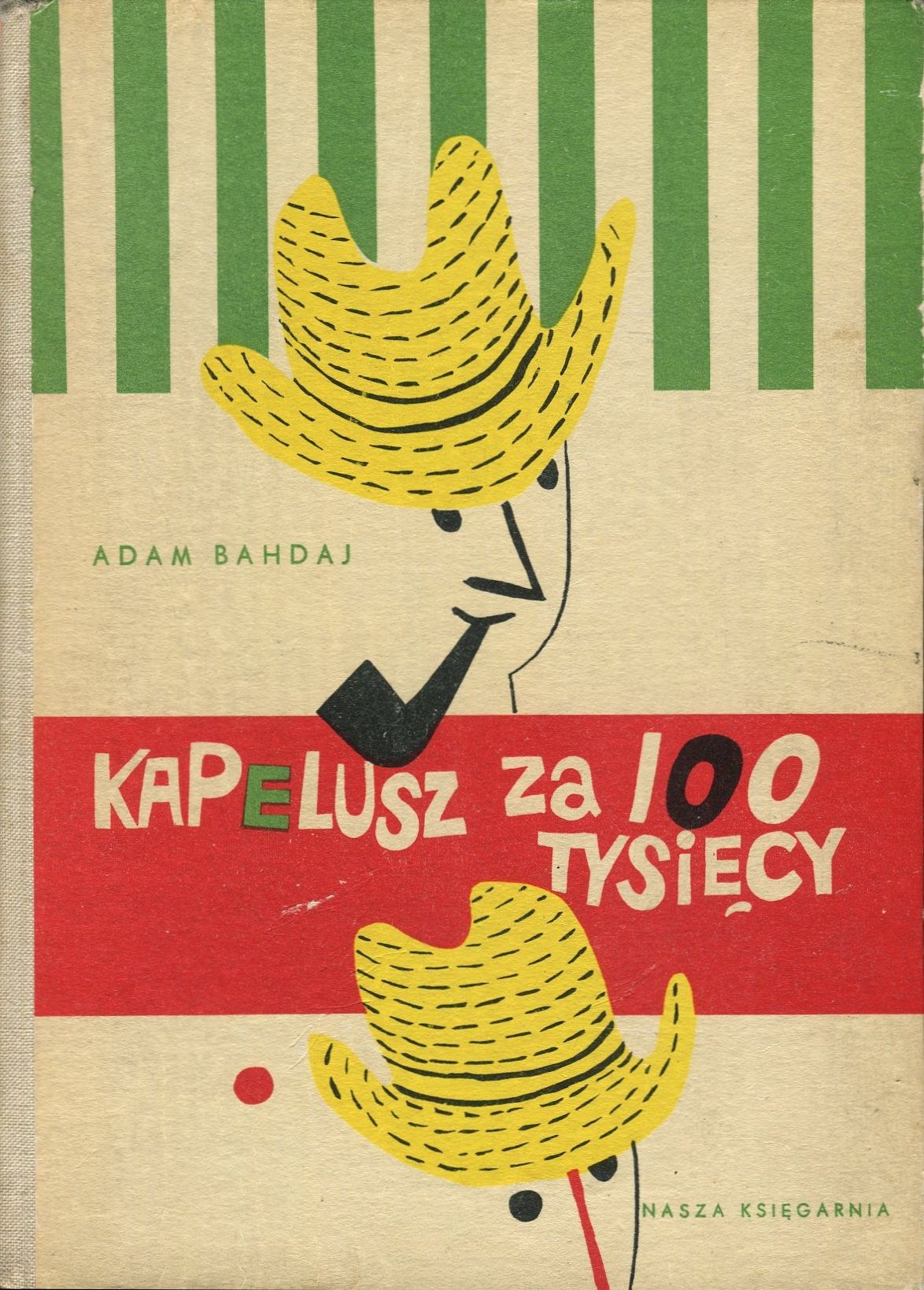
After the war, he settled in Warsaw. He created posters, satirical drawings, book illustrations, and graphic designs for publishers such as Książka i Wiedza, Nasza Księgarnia, and Iskry. In addition to his artistic work, he was also an art critic. He published articles in postwar press outlets, including Odrodzenie and Kuźnica in the late 1940s. For nearly two decades, he was a regular contributor to Życie Warszawy.
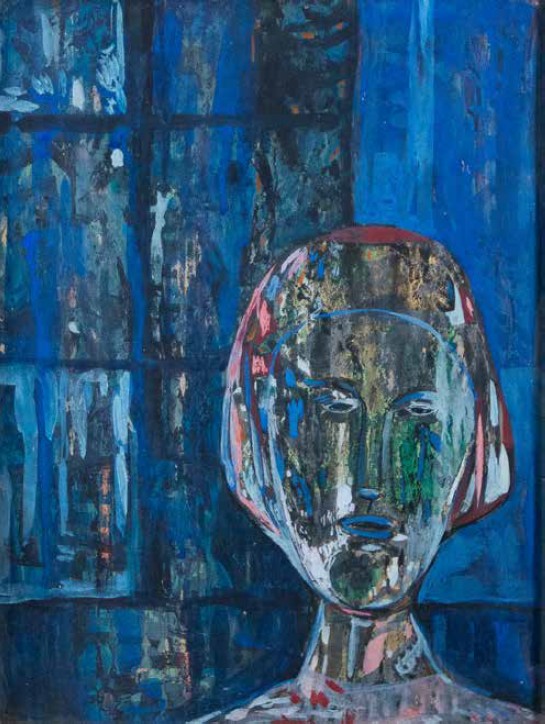
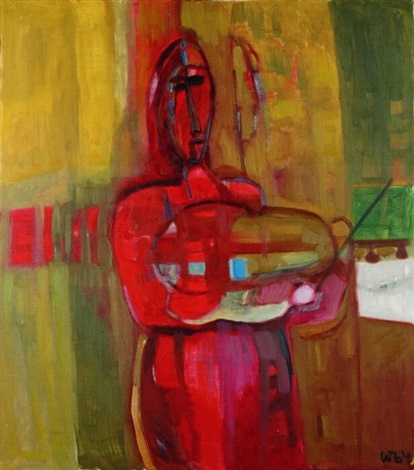
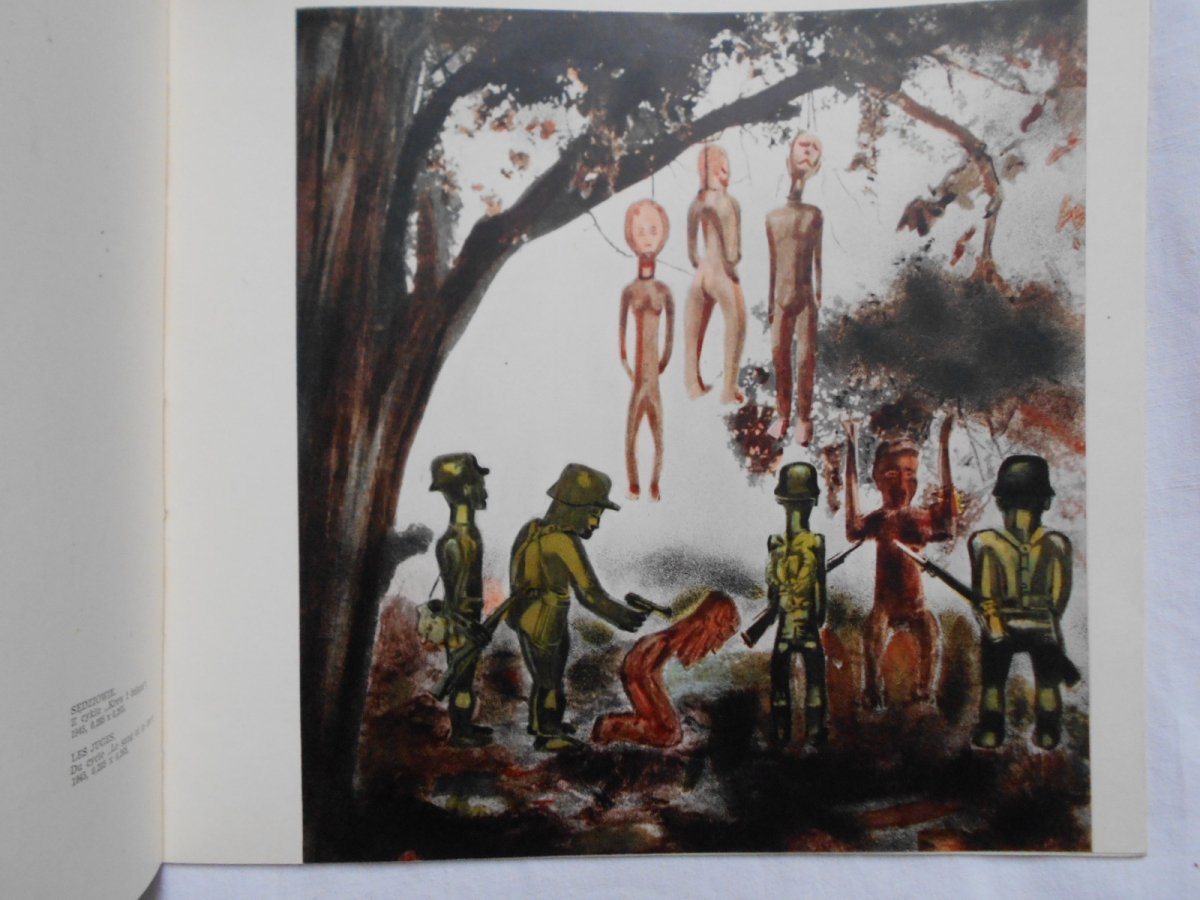
Witz was the author of several books on the visual arts and participated in exhibitions in Poland and abroad, earning numerous awards. His work spanned graphics, easel painting, and lithography. In the later years of his life, he suffered from depression.
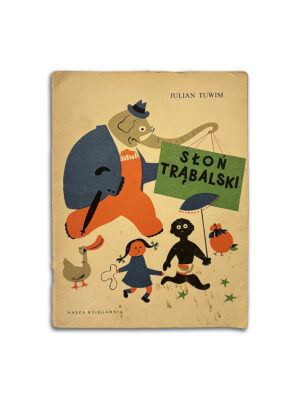
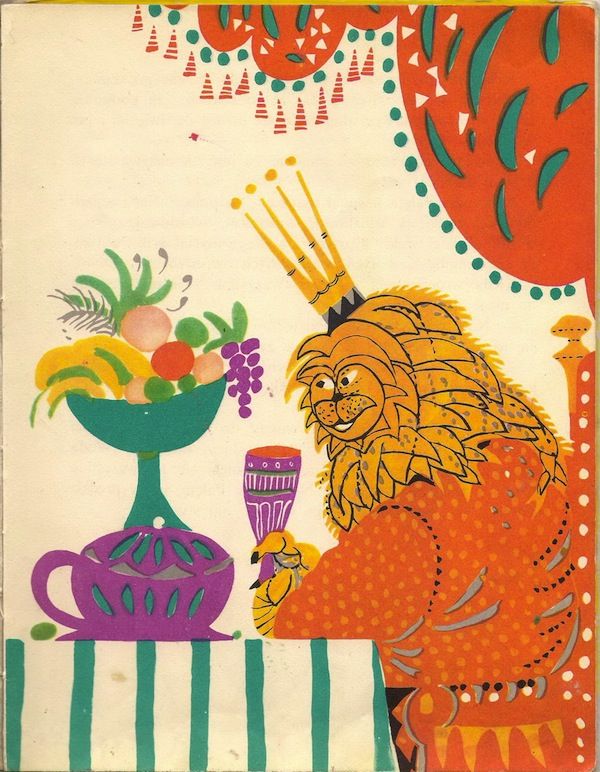
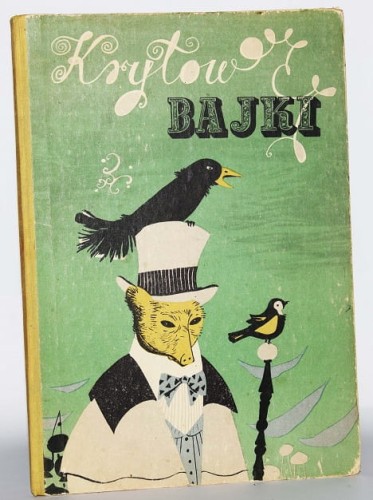
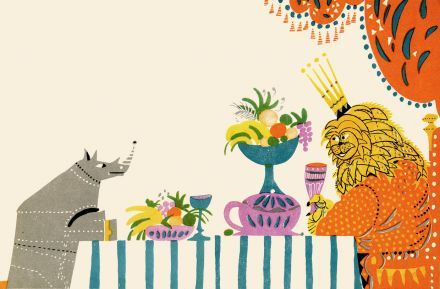
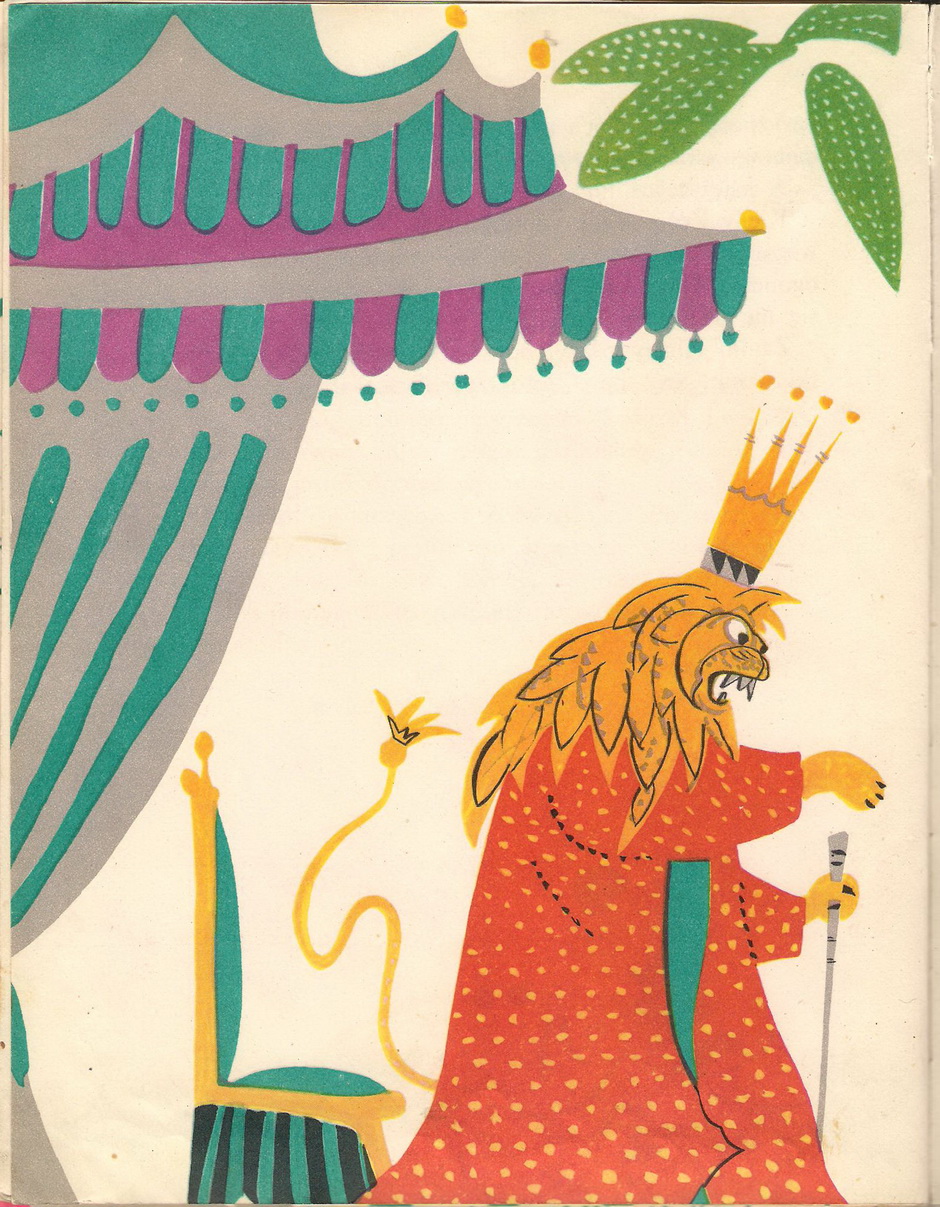
He was an exceptional figure—a painter, illustrator, caricaturist, and journalist specializing in art, and the author of dozens of popular science books on art history. He was known for his extraordinary sensitivity, both to social issues and to the spectrum of artistic expression. Witz was a distinguished children’s book illustrator, notably for Julian Tuwim’s classic The Elephant Trąbalski. His books on art and art history remain highly regarded; his The Eye and the Hand of the Painter shaped generations of aspiring artists.
Witz’s aesthetic views were shaped by the pre-war artistic circles of Lviv. Coming from a poor Jewish family, he naturally gravitated toward the circles of leftist communist activists and progressive artists associated with the Lviv-based Artes group. He made his post-liberation debut in 1944 in the satirical weekly Stańczyk, published in Lublin. The magazine was politically engaged and openly hostile to the Polish Government-in-Exile. Stańczyk featured illustrations by prominent pre-war artists such as Jerzy Zaruba, Karol Baraniecki, Henryk Tomaszewski, and Ignacy Witz himself. It also marked the caricature debut of Zbigniew Lengren.
Over the years, the forms of Witz’s expression evolved, but drawing remained at the core of his work. He achieved a remarkable mastery that placed him among the greats. In the foreword to Witz’s 1963 exhibition at the Zachęta National Gallery of Art, art historian Irena Jakimowicz wrote:
“The rediscovery of this lapidary line—pure and precise—that Witz achieved especially in drawing, was undoubtedly facilitated by his ties to the bygone era when he was receiving his artistic education in pre-war Lviv. His gouaches are also particularly beautiful—subdued and intensely intimate.”
Jestem moim czasem. Twórcy i dzieła [I Am My Time: Artists and Works], Arkady, Warsaw, 1959.
50 lat karykatury polskiej: 1900–1950 [50 Years of Polish Caricature: 1900–1950], Arkady, Warsaw, 1961.
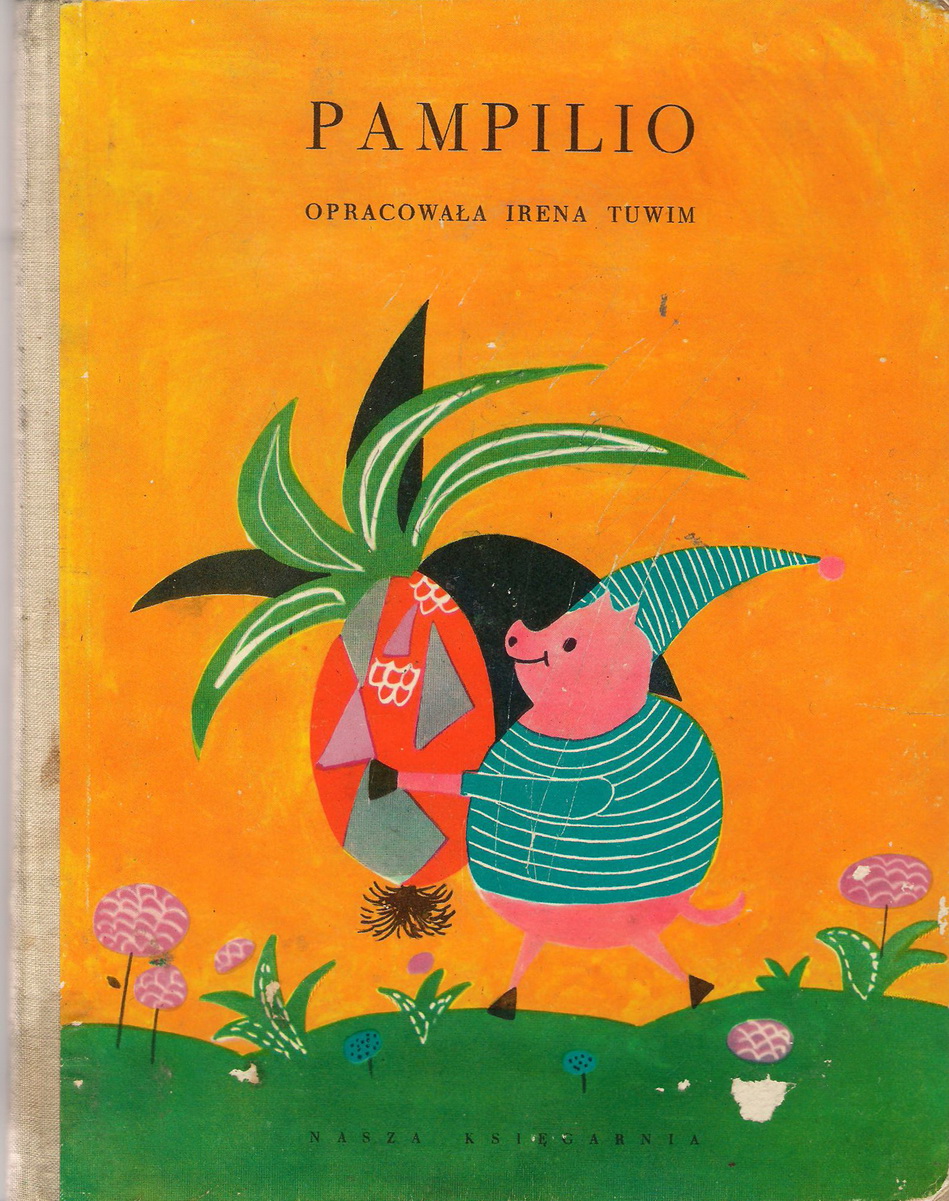
Pampilio, text by Irena Tuwim, illustrations by Ignacy Witz, Nasza Księgarnia, 1962.
Oko i dłoń malarza [The Eye and the Hand of the Painter], Nasza Księgarnia, Warsaw, 2nd ed. 1969.
Portret w malarstwie [Portrait in Painting], Państwowe Zakłady Wydawnictw Szkolnych, Warsaw, 1970.
Krajobraz w malarstwie [Landscape in Painting], Państwowe Zakłady Wydawnictw Szkolnych, Warsaw, 1970.
Polscy malarze, polskie obrazy [Polish Painters, Polish Paintings], Nasza Księgarnia, Warsaw, 1970.
Przechadzki po warszawskich wystawach 1945–1968 [Walks Through Warsaw Exhibitions 1945–1968], Państwowy Instytut Wydawniczy, Warsaw, 1972.
Słoń Trąbalski i inne wiersze [The Elephant Trąbalski and Other Poems], text by Julian Tuwim, illustrations by Ignacy Witz, Siedmioróg, 2008.
Two of Art | KvK: 94351813 | Teilingen 79, 1082JR Amsterdam, Netherlands