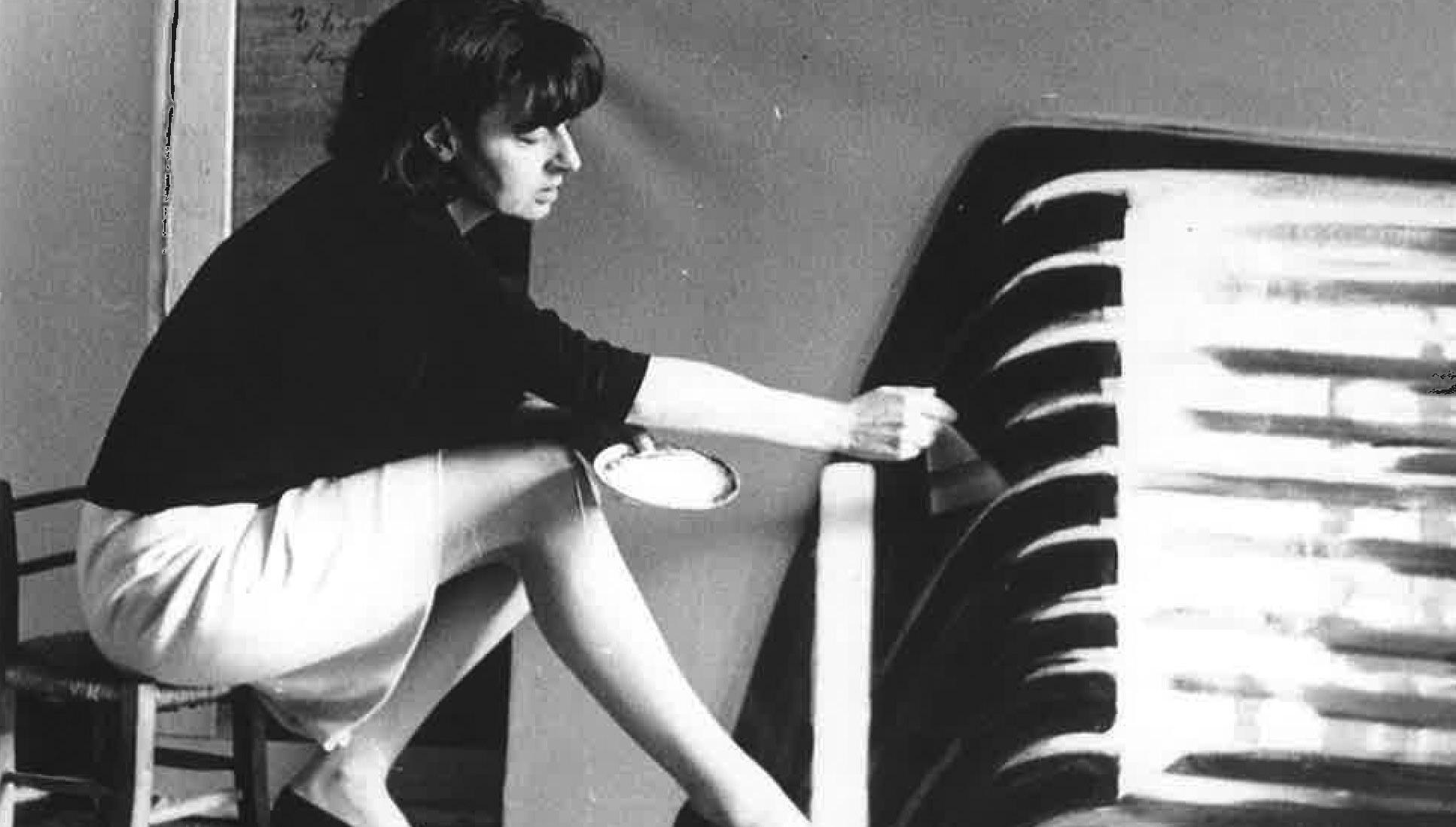

Modesta “Titina” Maselli was born on April 11, 1924, in Rome, into a family steeped in artistic and intellectual tradition. Her father, Ercole Labroca, was an art critic, and her brother, Francesco (Citto) Maselli, became a renowned film director.
In 1948, Maselli held her first solo exhibition at Galleria l’Obelisco in Rome, presented by the writer Corrado Alvaro. Her early promise quickly evolved into a defining artistic voice.
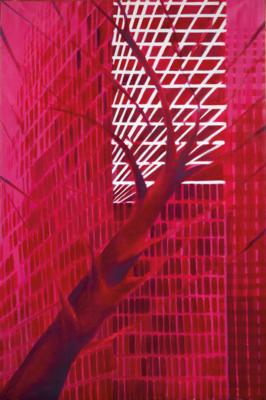
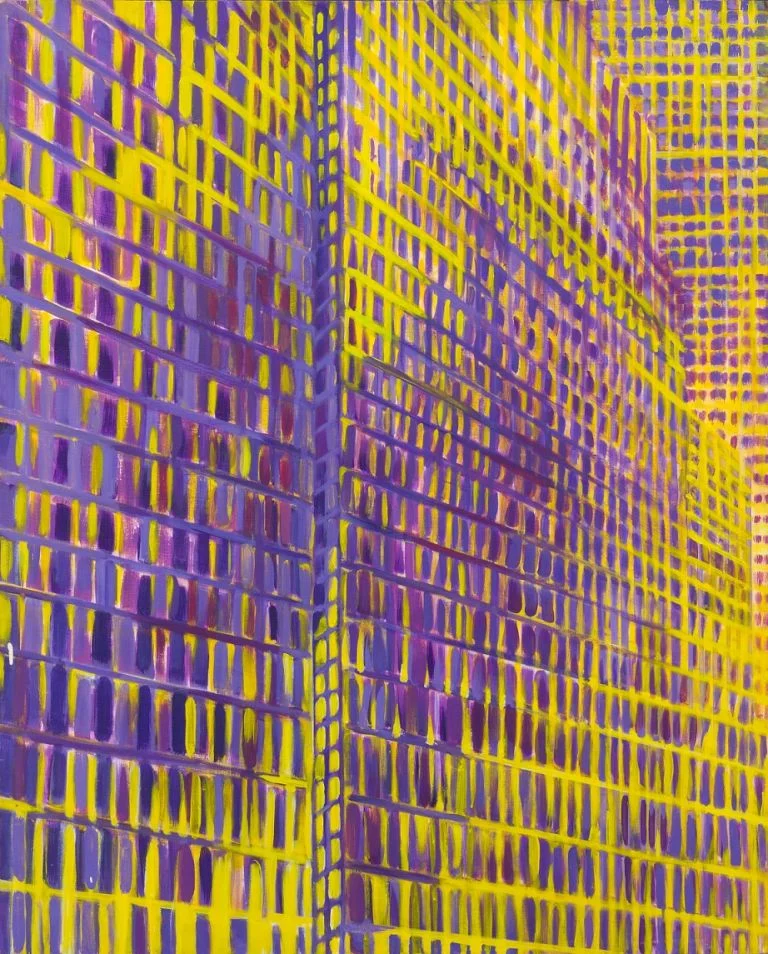
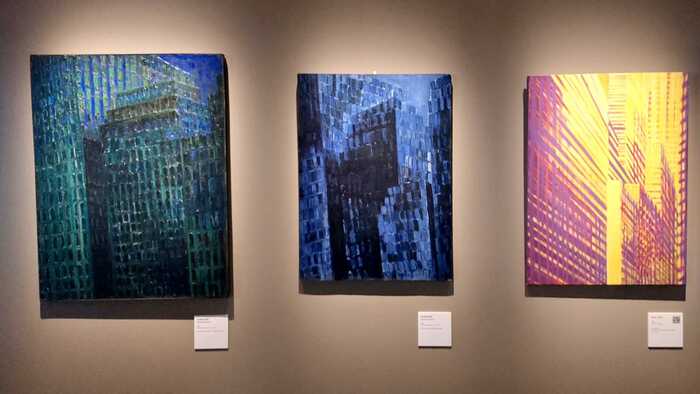
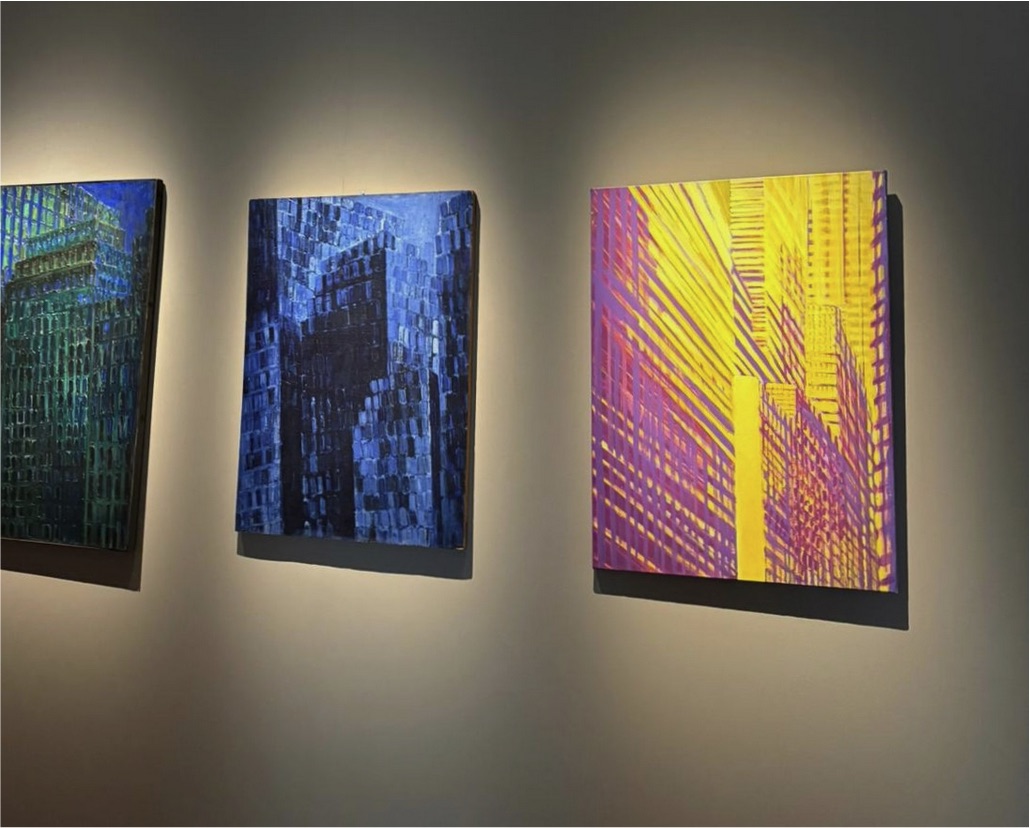
Between 1950 and 1995, Maselli was a regular participant in the Venice Biennale and the Rome Quadriennale (1951–2000). A pivotal moment came with her stay in New York (1952–1955), which deeply influenced her style and thematic focus. There, she developed a fascination with the metropolis—the rhythm of city streets, urban structures, and the modularity of architecture.
After returning from the U.S., she spent time in Austria (1955–1958) and later divided her life between Rome, Paris, and other European cities. Beginning in the 1980s, she worked as a set designer in theater, collaborating with directors such as Sobel, Ailland, and Cecchi. Her designs featured in major productions, including “Maria Stuart” at the Avignon Festival (1983) and at Berlin’s Freie Volksbühne (1981).
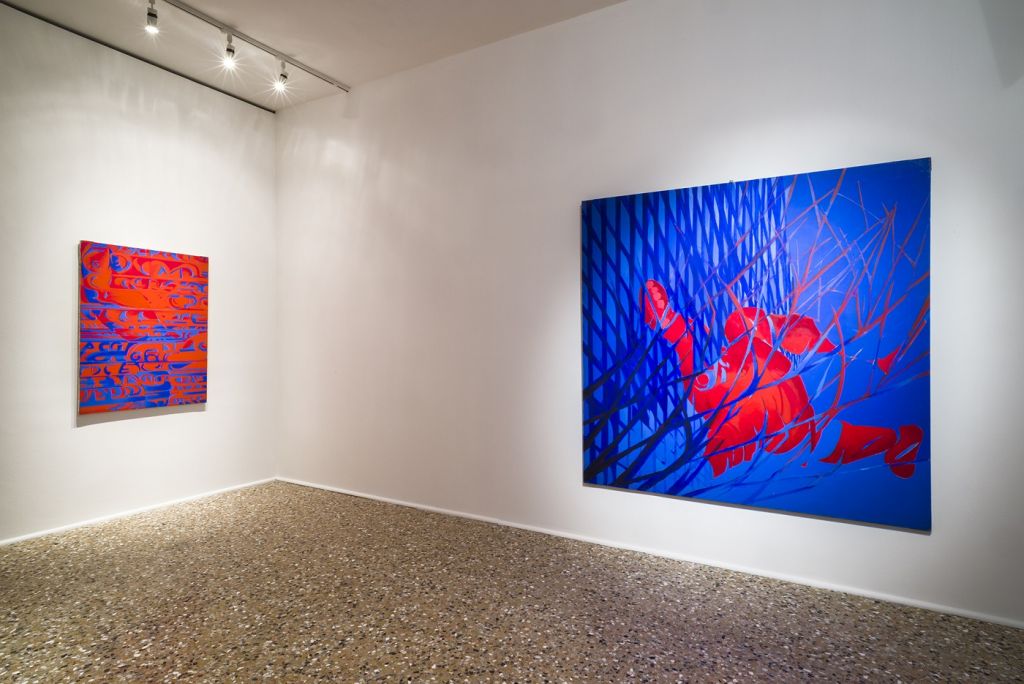
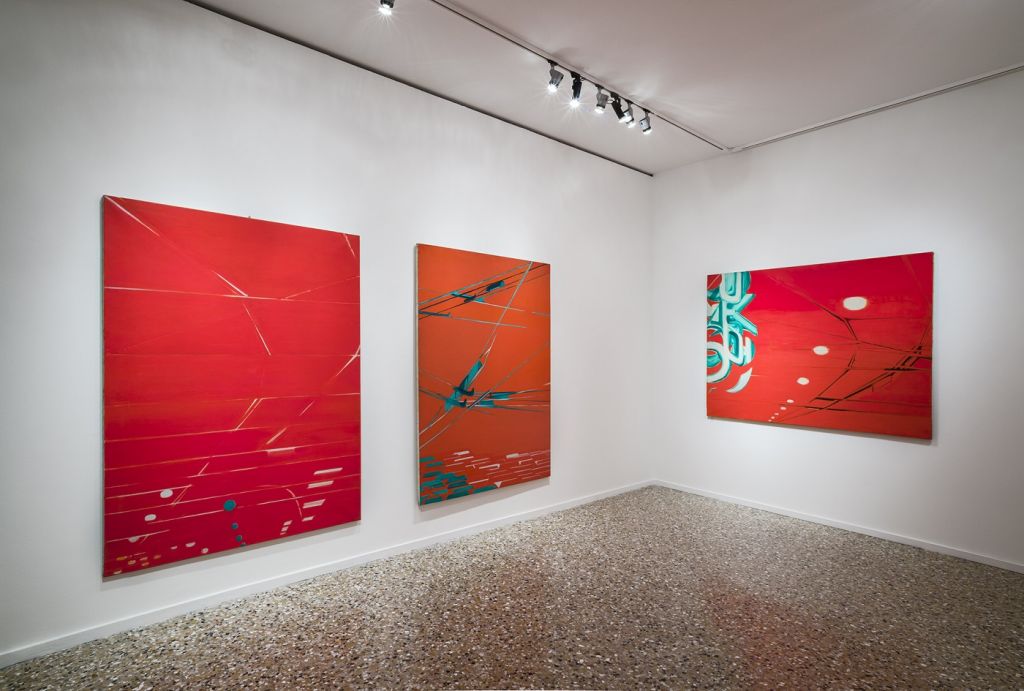
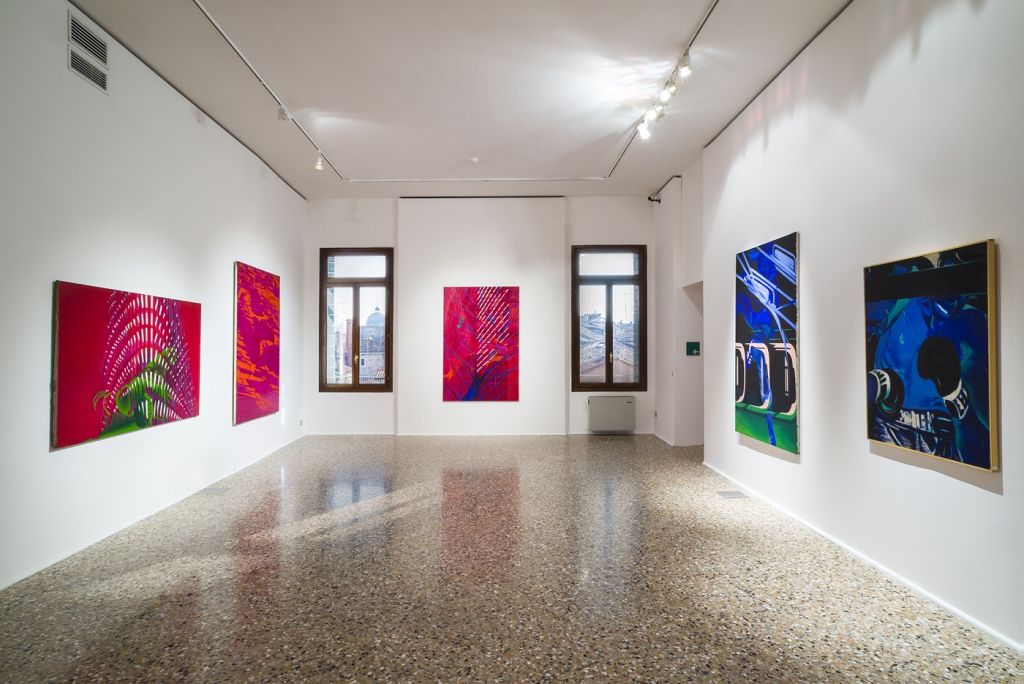
Titina Maselli was a painter of the metropolis, capturing the pulse of urban life with a unique visual language. Her canvases radiate with neon-lit nights, empty streets, and the blinking signs of city infrastructure—elements both familiar and rarely so attentively observed. As she herself once said:
“Tutte le cose note ma non guardate abbastanza” – “All things known, but not sufficiently seen.”
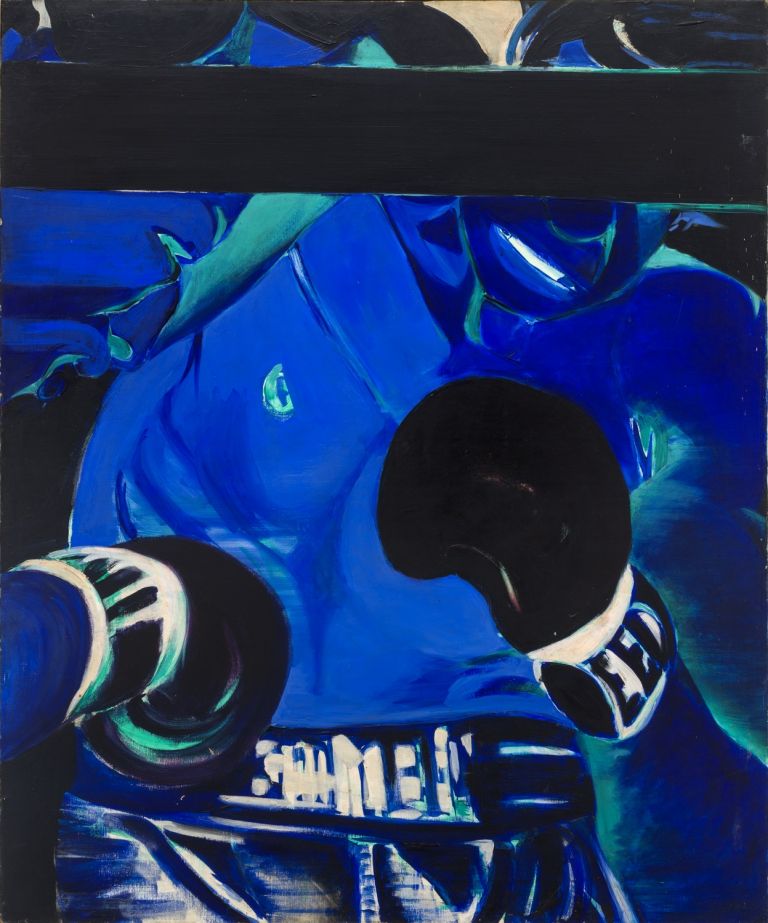
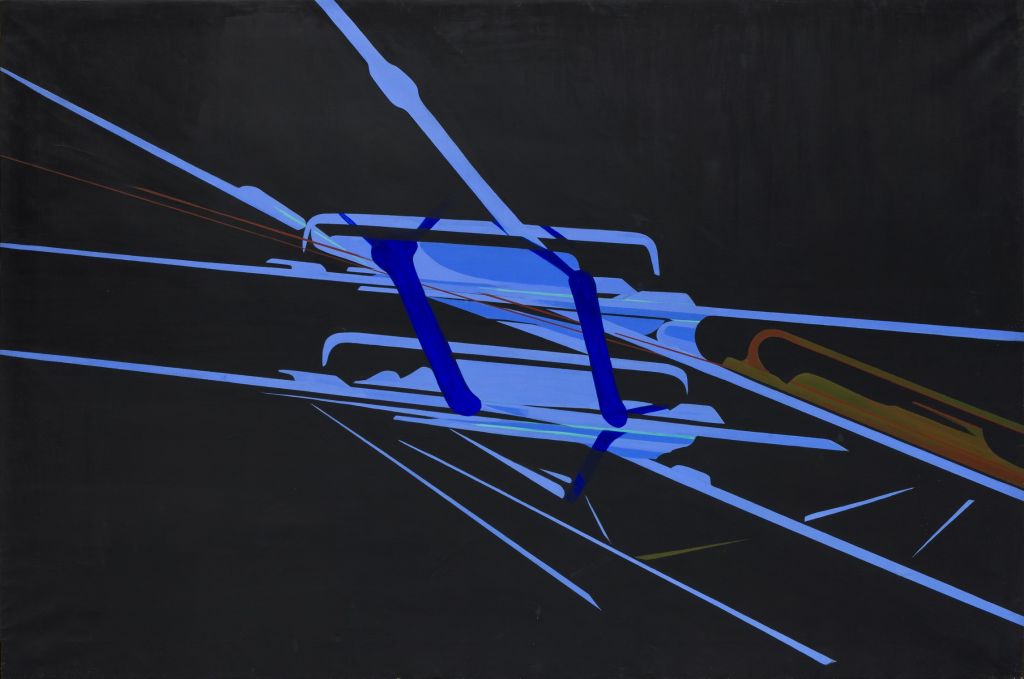
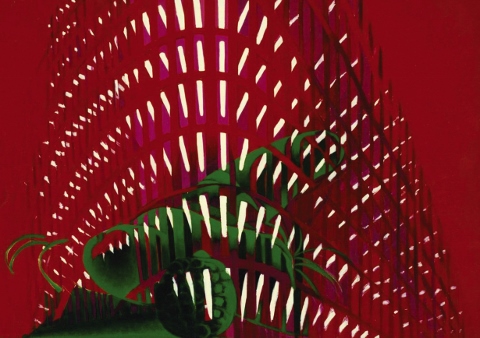
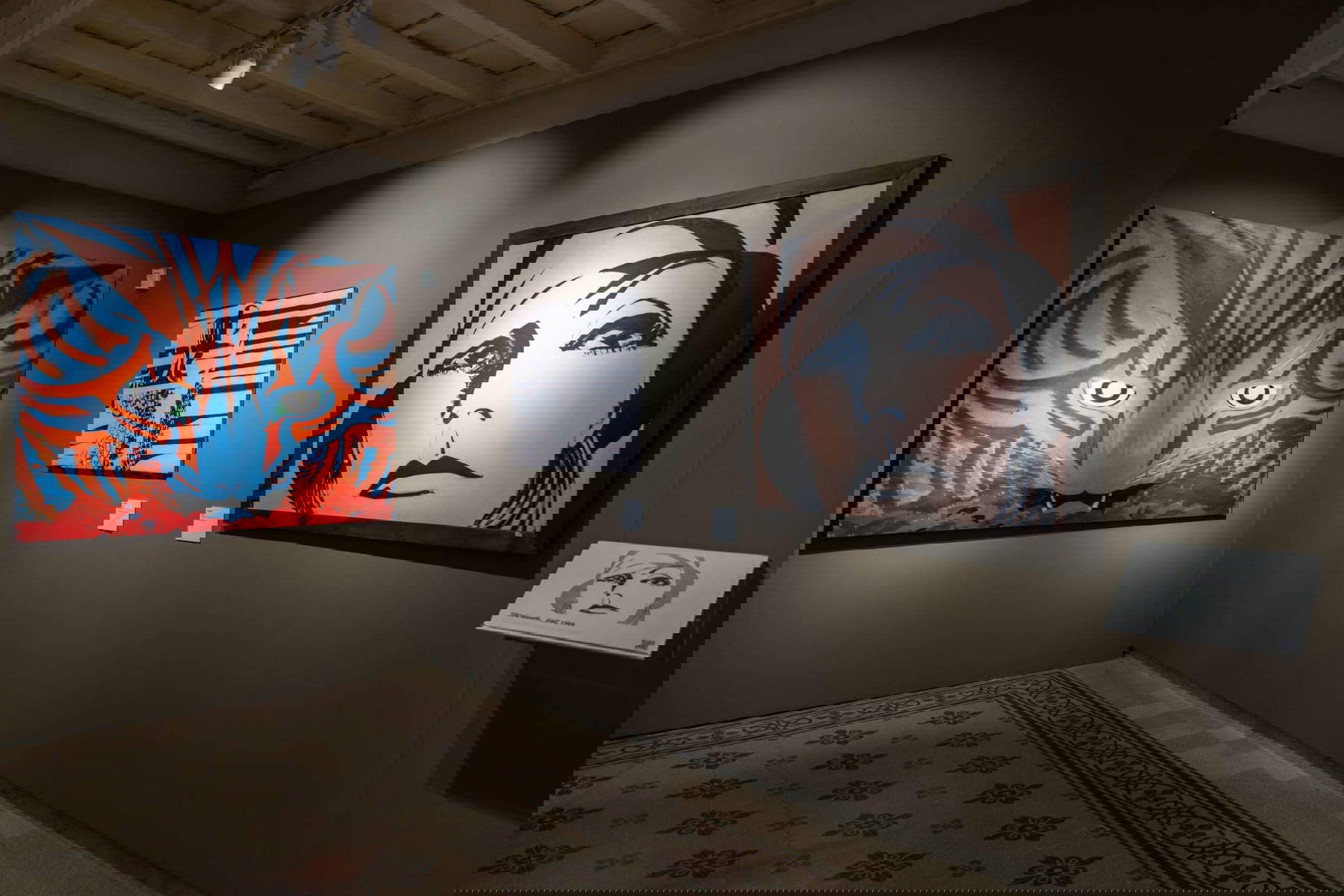
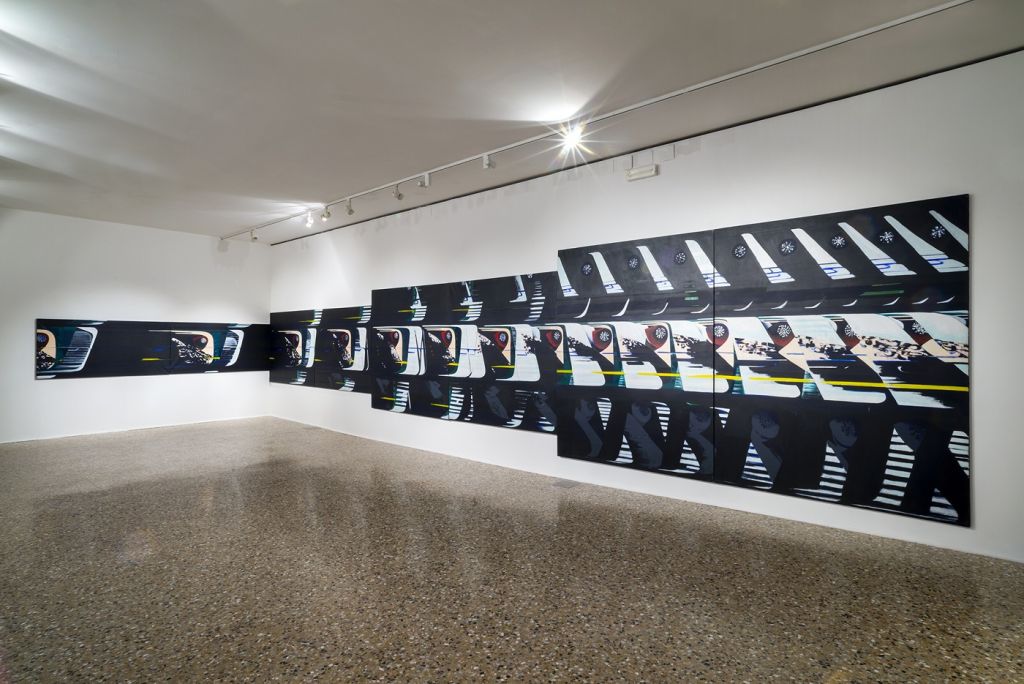
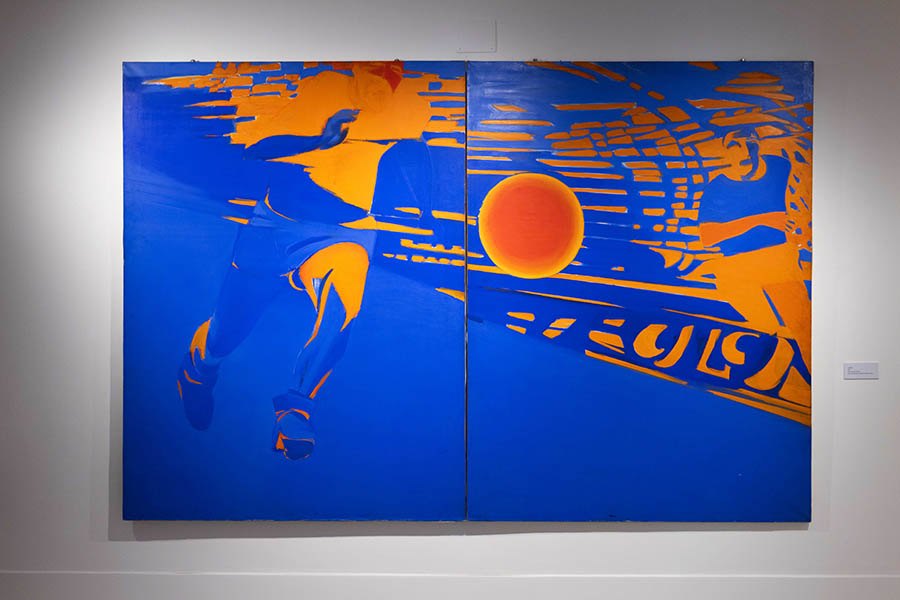
Her years in New York sparked a shift toward gritty realism, featuring shipping crates, neon signs, and tram rails, yet rendered with futuristic form and intense color. She introduced figures of athletes—boxers, cyclists, footballers—extracted from sports newspapers and thrown onto the urban stage, using their movement as a starting point for painting force and intensity, stripped of idealization.
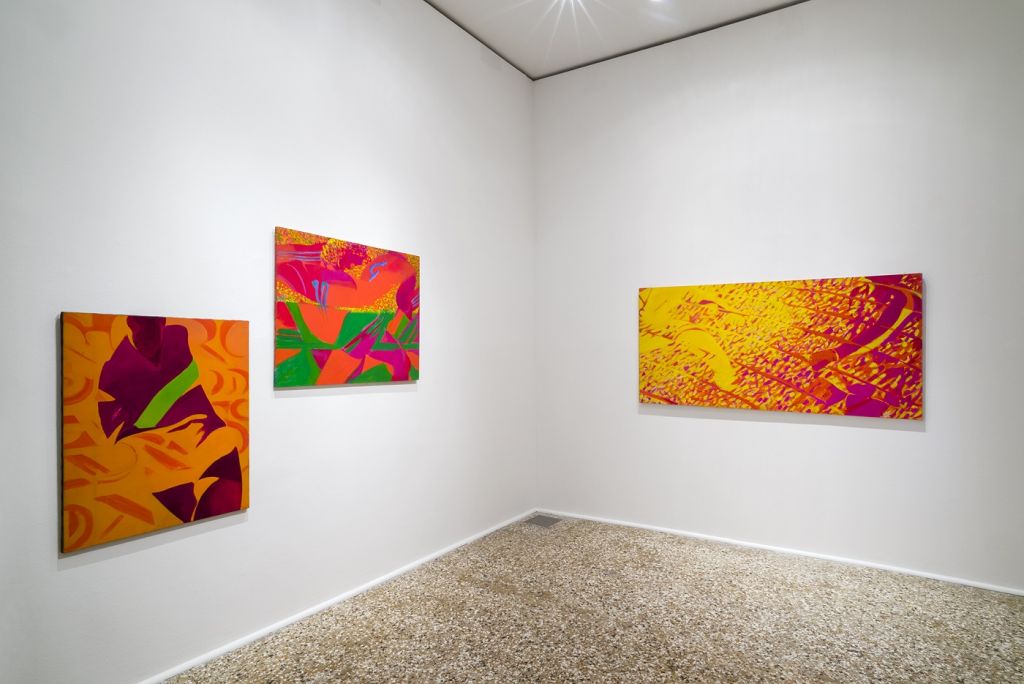
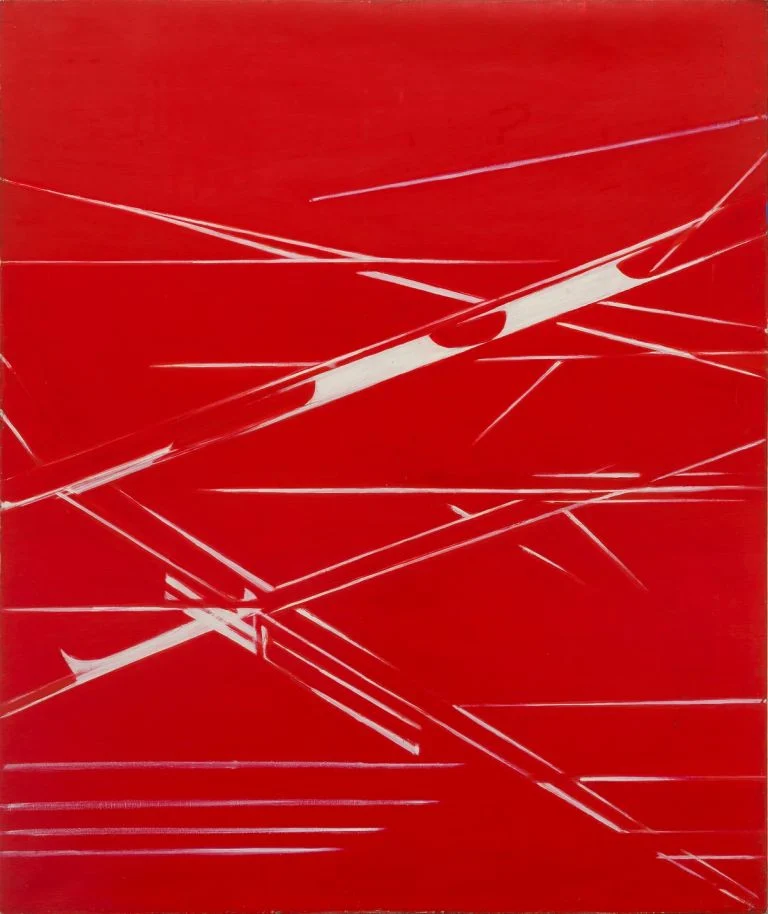
Her palette was marked by bold contrasts—particularly reds and blues—used in dynamic counterpoint. Her large-scale works introduced a sense of monumentality and motion. While she experimented with abstraction and pop-art tendencies, she always remained faithful to her own vision, detached from strict alignment with any single art movement.
1953 & 1955 – Durlacher Gallery, New York
1972 – Fondation Maeght, Saint-Paul-de-Vence
1975 – Musée d’Art Moderne de la Ville, Paris
1979 – Kunstamt Kreuzberg, Berlin
1985 – Pinacoteca Macerata
1991 – Casa del Mantegna, Mantua (Anthology 1948–1990)
1998 – Galleria Giulia (Rome), Italian Institute in Strasbourg
A major retrospective of her work, including rarely exhibited pieces, is being held in Rome (Dec 12, 2024 – Apr 21, 2025), spanning Villa Torlonia and MLAC – Sapienza University.
Maselli’s painting fuses futurist energy, pop-art vibrancy, and the staging of motion. Italian politician and writer Walter Veltroni once described her as a:
“Byzantine empress who maintains the elegance of gesture amid the power of large-scale works.”
French critics such as Jean-Luc Nancy praised the “density of form” and “nocturnal urban force” in her art.
Titina Maselli remains an autonomous artistic voice, with a body of work that defies easy classification. She is best remembered as a painter of movement, energy, and the raw pulse of city life.
Two of Art | KvK: 94351813 | Teilingen 79, 1082JR Amsterdam, Netherlands