This is a demo store for testing purposes — no orders shall be fulfilled. Dismiss
Skip to content(October 22, 1915, Moscow – April 14, 1975, Warsaw)
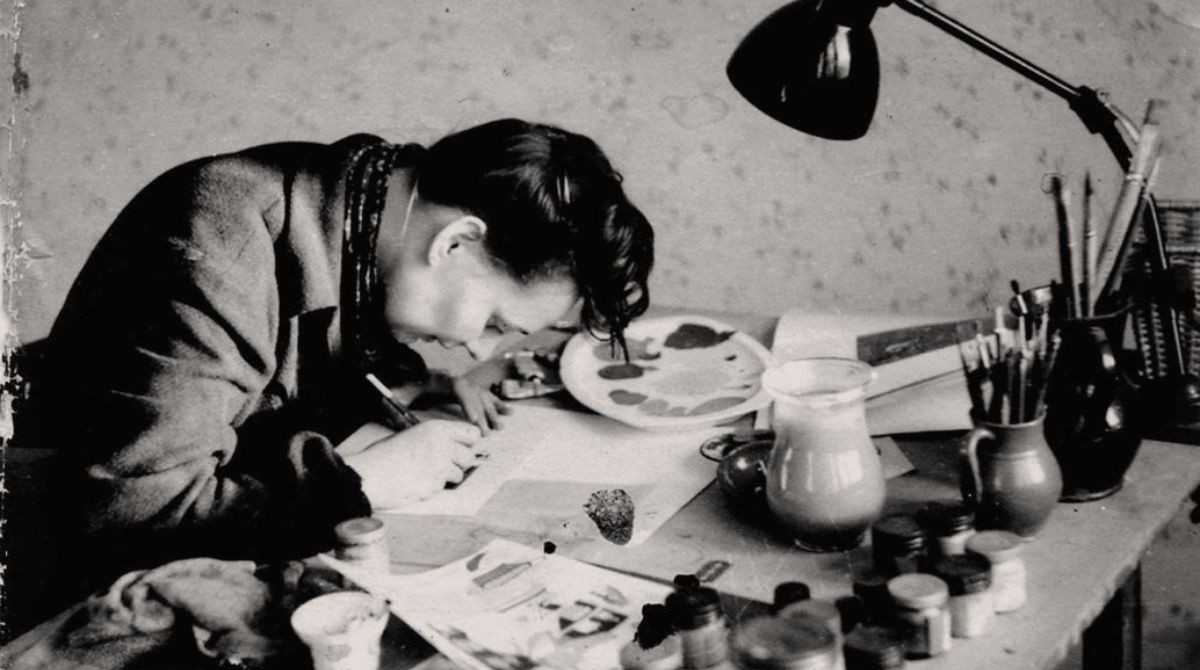
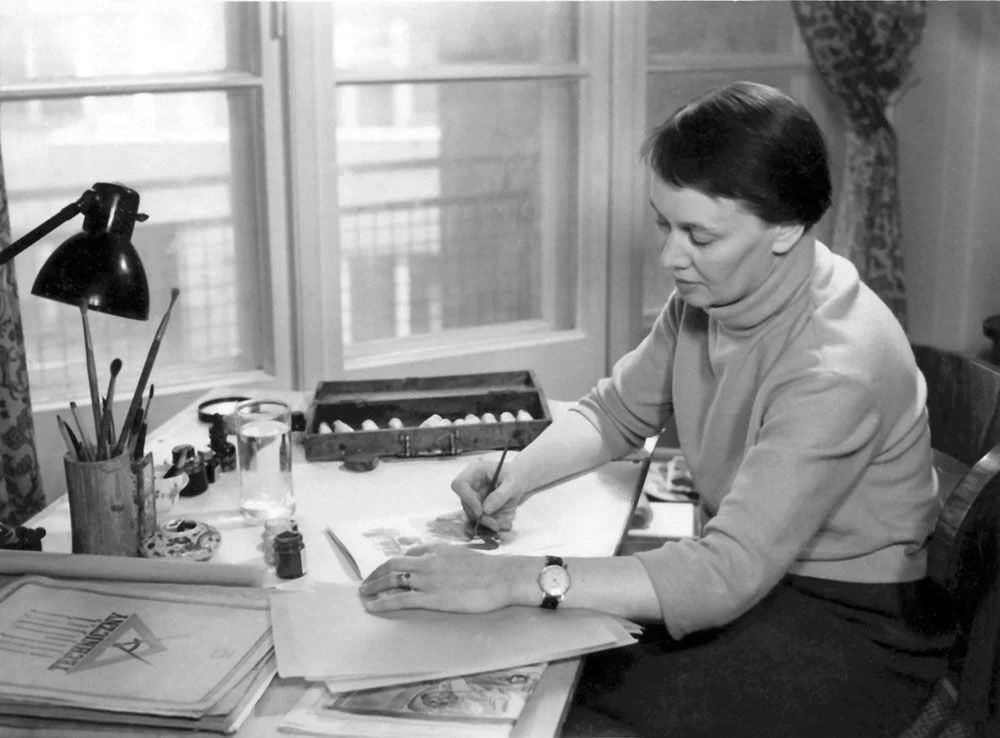
Polish illustrator, cartoonist, and graphic artist.
Anna Gosławska — her birth name — was born in Moscow as the youngest of three children to Eugenia and Kazimierz Gosławski. She spent her earliest years in Russia, but grew up in newly independent Poland after her family returned shortly after the country regained its sovereignty.
She was raised in Zielonka, a town near Warsaw, where her neighbor was Eryk Lipiński, her future husband and lifelong collaborator, whom she had known since youth.
From 1935 to 1939, she studied painting at the Warsaw School of Fine Arts (now the Academy of Fine Arts), in the studio of Tadeusz Pruszkowski, a noted portraitist and member of the Rytm group and Brotherhood of Saint Luke, who drew inspiration from Baroque masters. She never formally completed her studies — she took academic leave in her final year, and shortly after, World War II broke out.
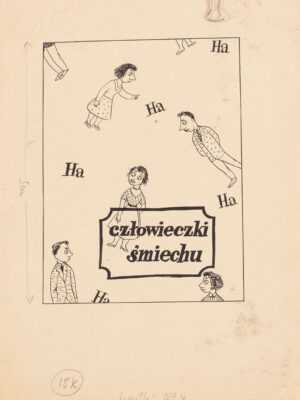
In 1936, she debuted in the satirical magazine Szpilki with a drawing signed under her now-iconic pseudonym Ha-Ga — a name coined by satirist Andrzej Nowicki, combining “Ha” from “Hanna” (a name she often used) and “Ga” from Gosławska. A year later, she married Eryk Lipiński, co-founder and editor-in-chief of Szpilki.
Her collaboration with Szpilki — paused during the war — lasted until her death in 1975. Every week, the magazine featured her column with two original drawings. During the war, she remained in Warsaw with her husband, later briefly relocating to Zakopane after the Warsaw Uprising.
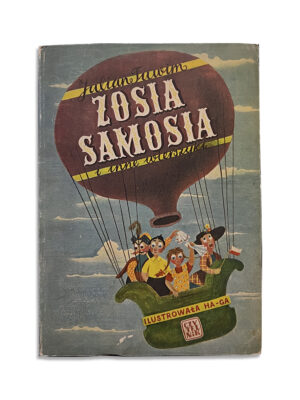
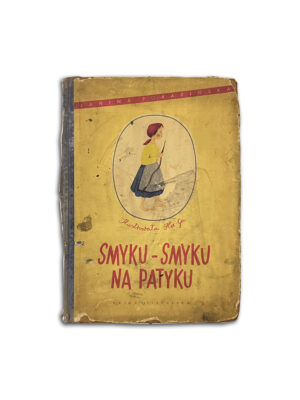
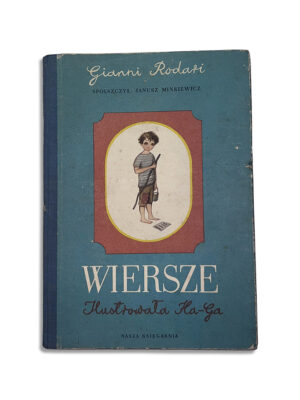
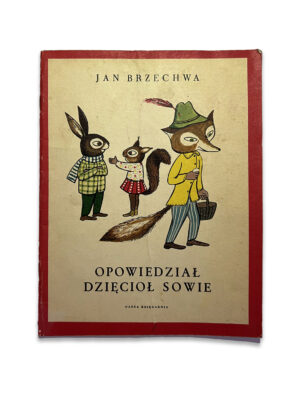
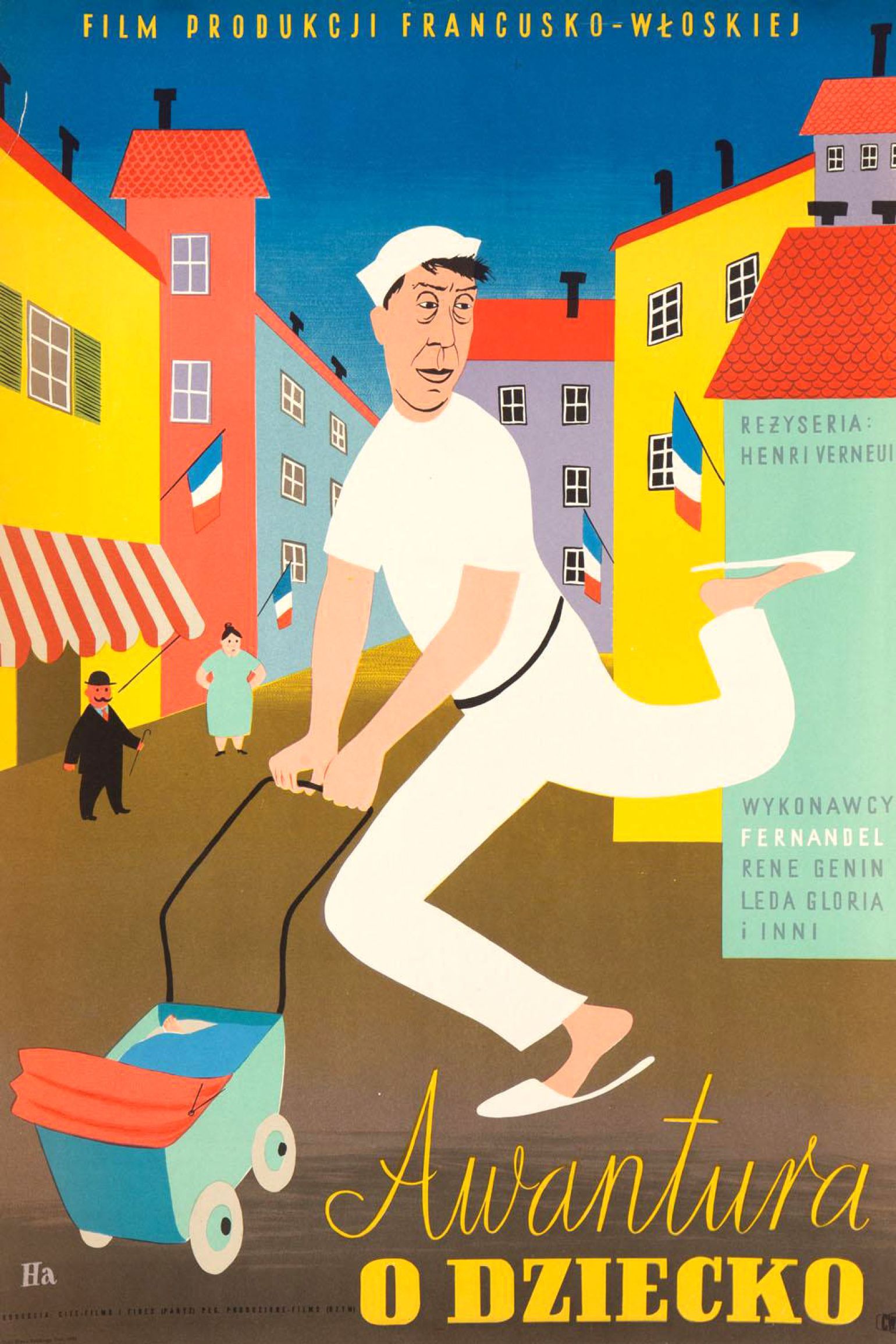
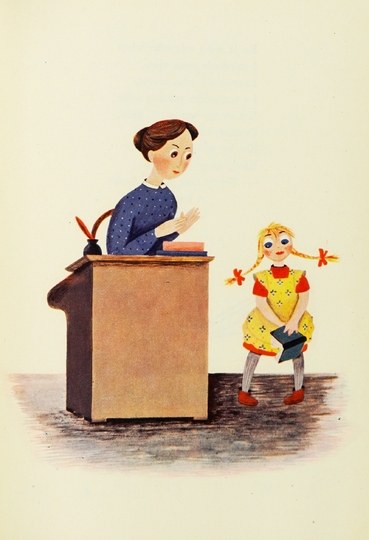
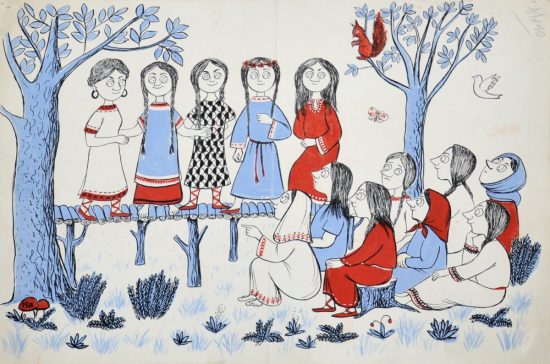
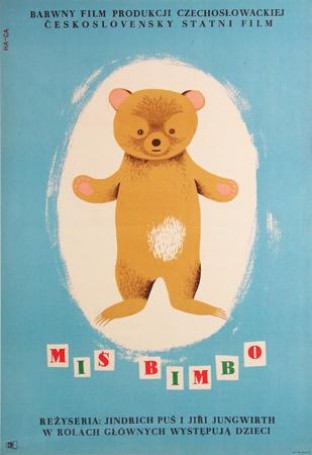
After the war, she continued her career as a cartoonist, publishing her work in major Polish outlets such as Przekrój, Express Wieczorny, Stolica, as well as internationally in Eulenspiegel (Germany), Krokodil (Soviet Union), and L’Humanité Dimanche (France). She also designed posters and illustrated books and children’s magazines — including Julian Tuwim’s Zosia Samosia, reflecting her friendship with the poet.
In 1945, the magazine Szpilki was revived in Łódź, again under Lipiński’s editorial leadership, this time no longer subject to prewar censorship. Although the publication grew more cautious, focusing mainly on social satire, Ha-Ga’s distinctive voice flourished.
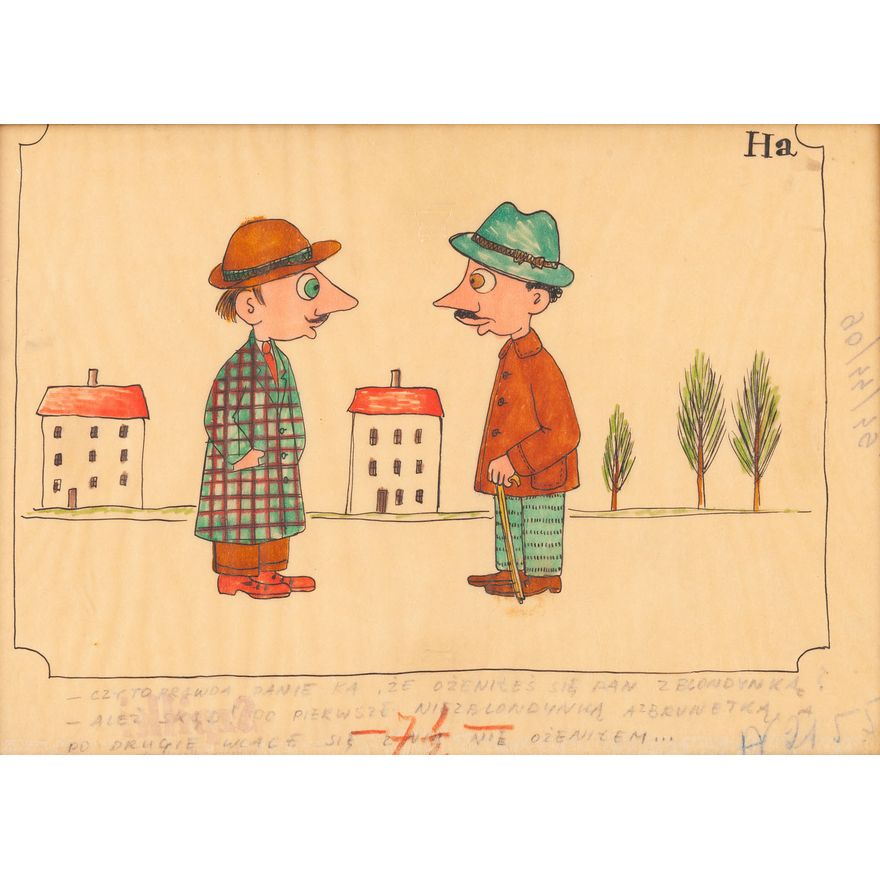
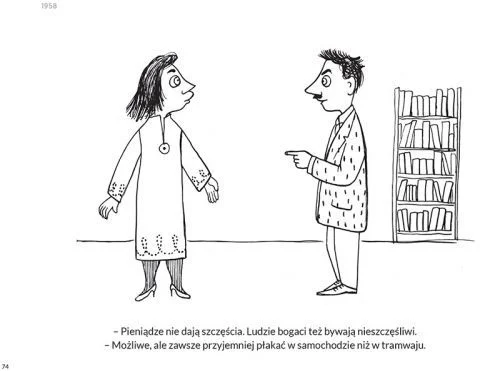
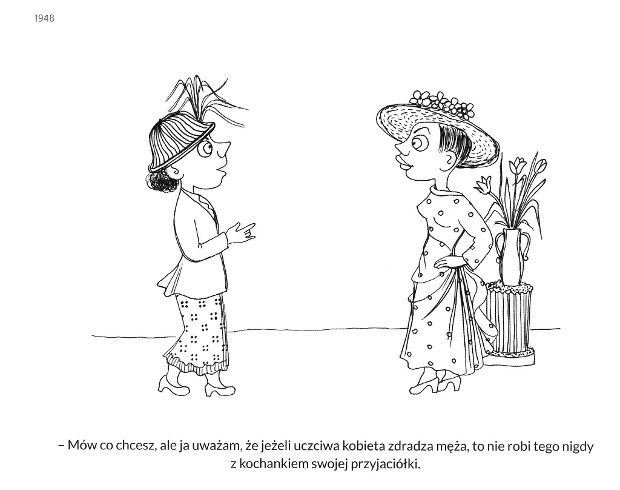
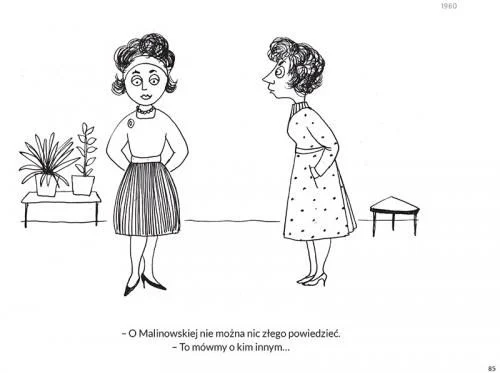
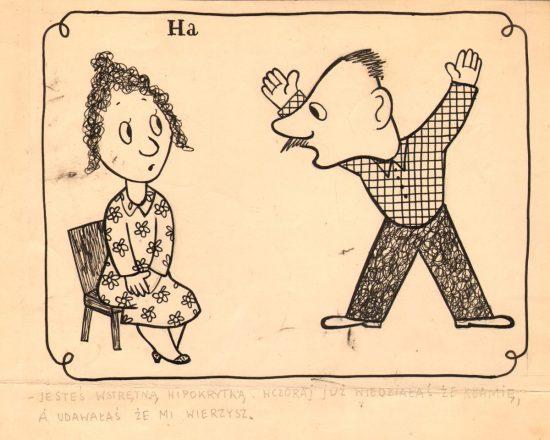
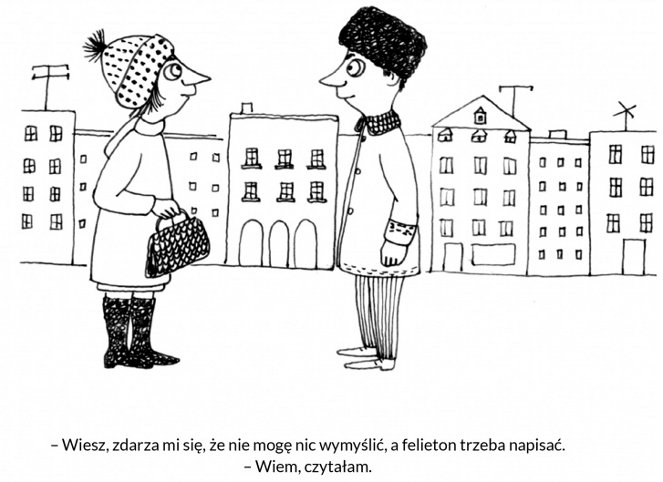
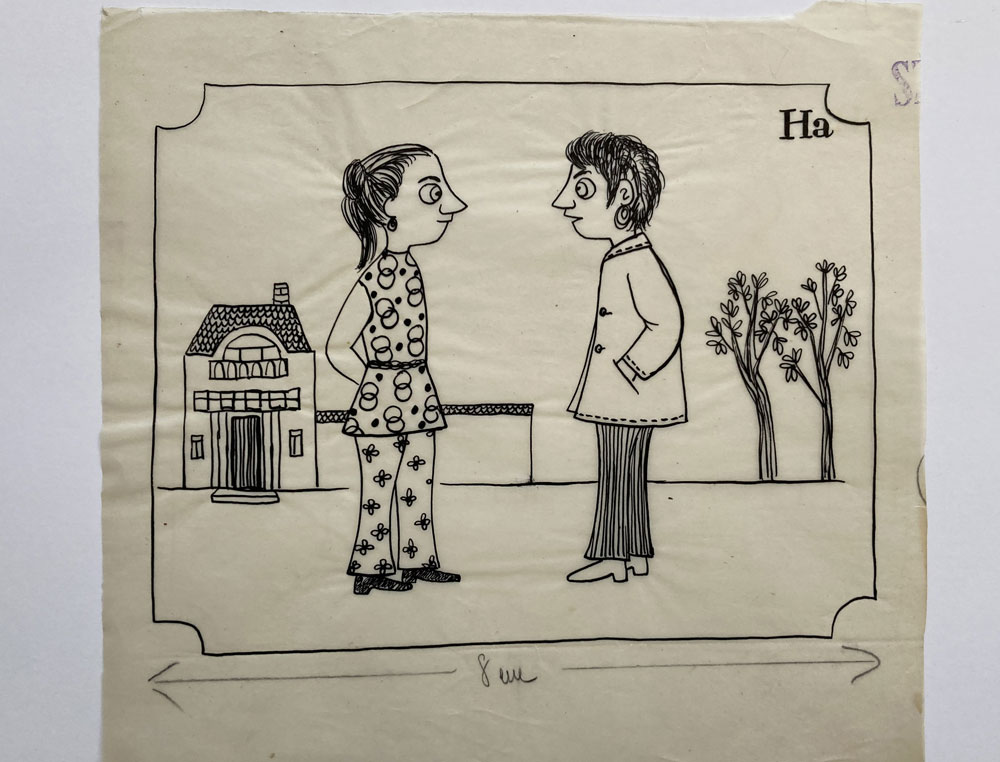
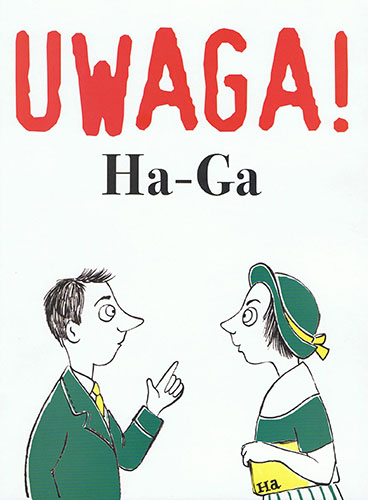
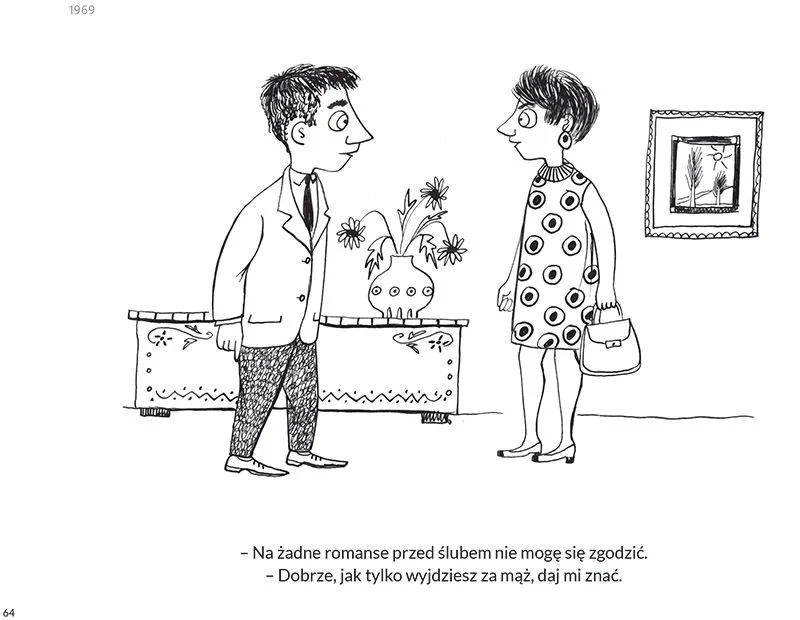
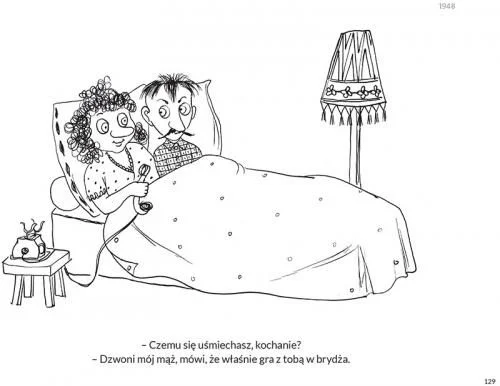
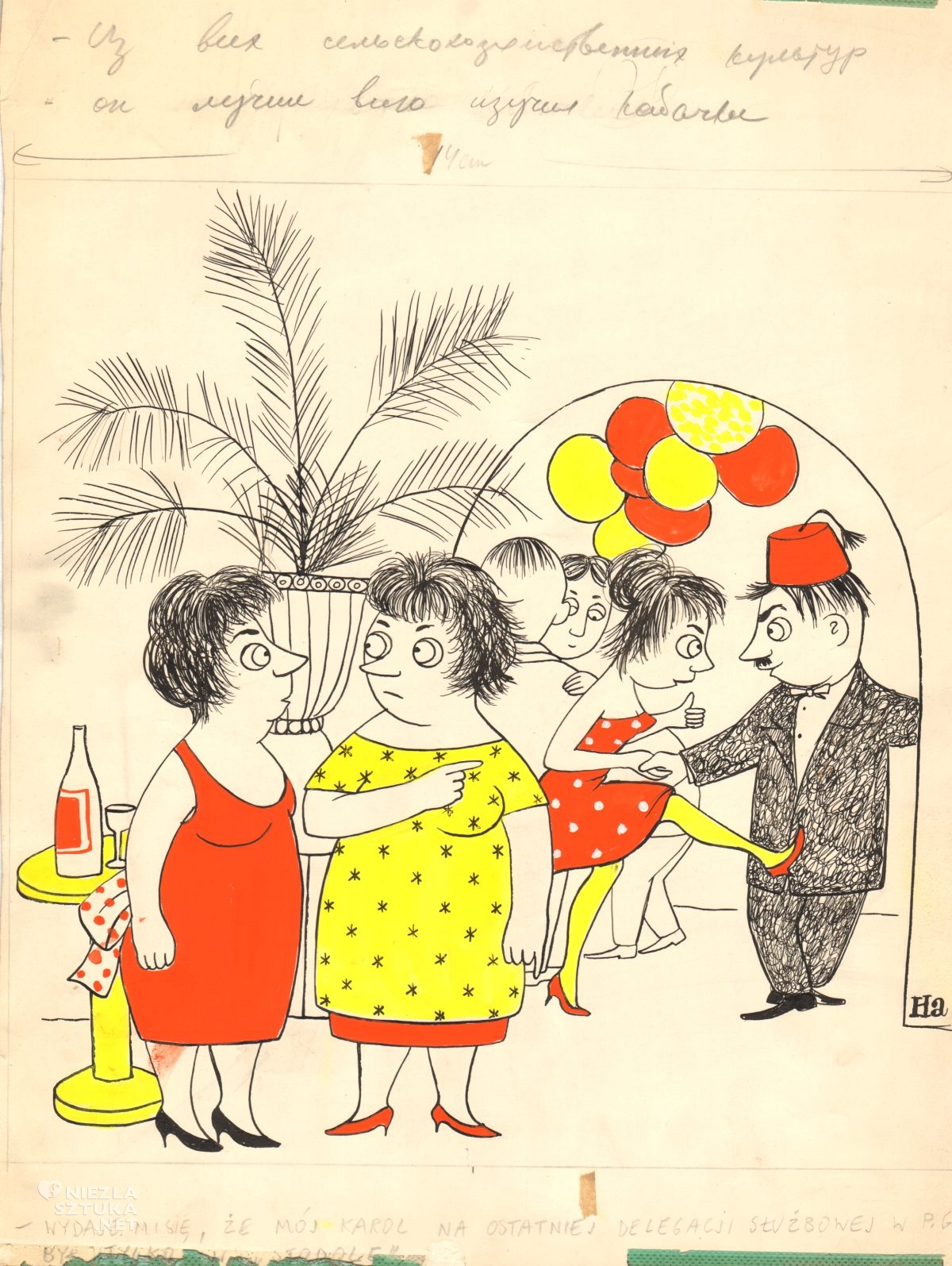
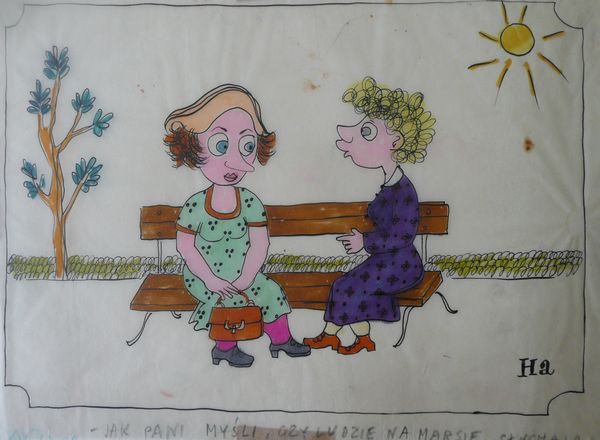
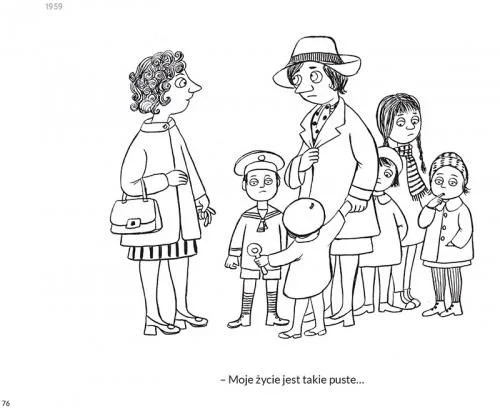
Her drawing style crystallized in this period: characters with large expressive eyes, minimal facial features, and meticulous detail in clothing, accessories, and scenery. According to her daughter Zuzanna Lipińska, this style developed naturally as Ha-Ga simplified her technique, never fully confident in realistic drawing.
In 1947, the couple returned with Szpilki to Warsaw, where Ha-Ga’s drawings became a fixture — appearing regularly, two per issue, beneath the editorial opening. Her work gained wide popularity, especially among female readers.
As actress Beata Tyszkiewicz once said:
“Her drawings were Szpilki’s signature. Just like in Przekrój people looked first at Lengren’s Professor Filutek, in Szpilki they first looked for Ha-Ga.”
Over the decades, she created nearly 4,000 of these works.
Ha-Ga’s style was elegant and precise — instantly recognizable and uniquely hers. She used thin lines and deliberately simplified forms. Her characters, though never photorealistic, were always dressed in the height of fashion. Every outfit detail was carefully rendered. It was even said that if you wanted to know what was in vogue, just look at Szpilki’s latest “Ha-Ga”.
She created a type of illustrated micro-scene: typically two characters, in conversation, often dressed in the latest trends. These miniature satirical drawings — witty, ironic, and sometimes abstract — became so iconic they earned the nickname “hagas”. For nearly forty years, they delighted generations of readers.
Despite her lasting fame, her style became something of a trap — too defined to easily evolve.
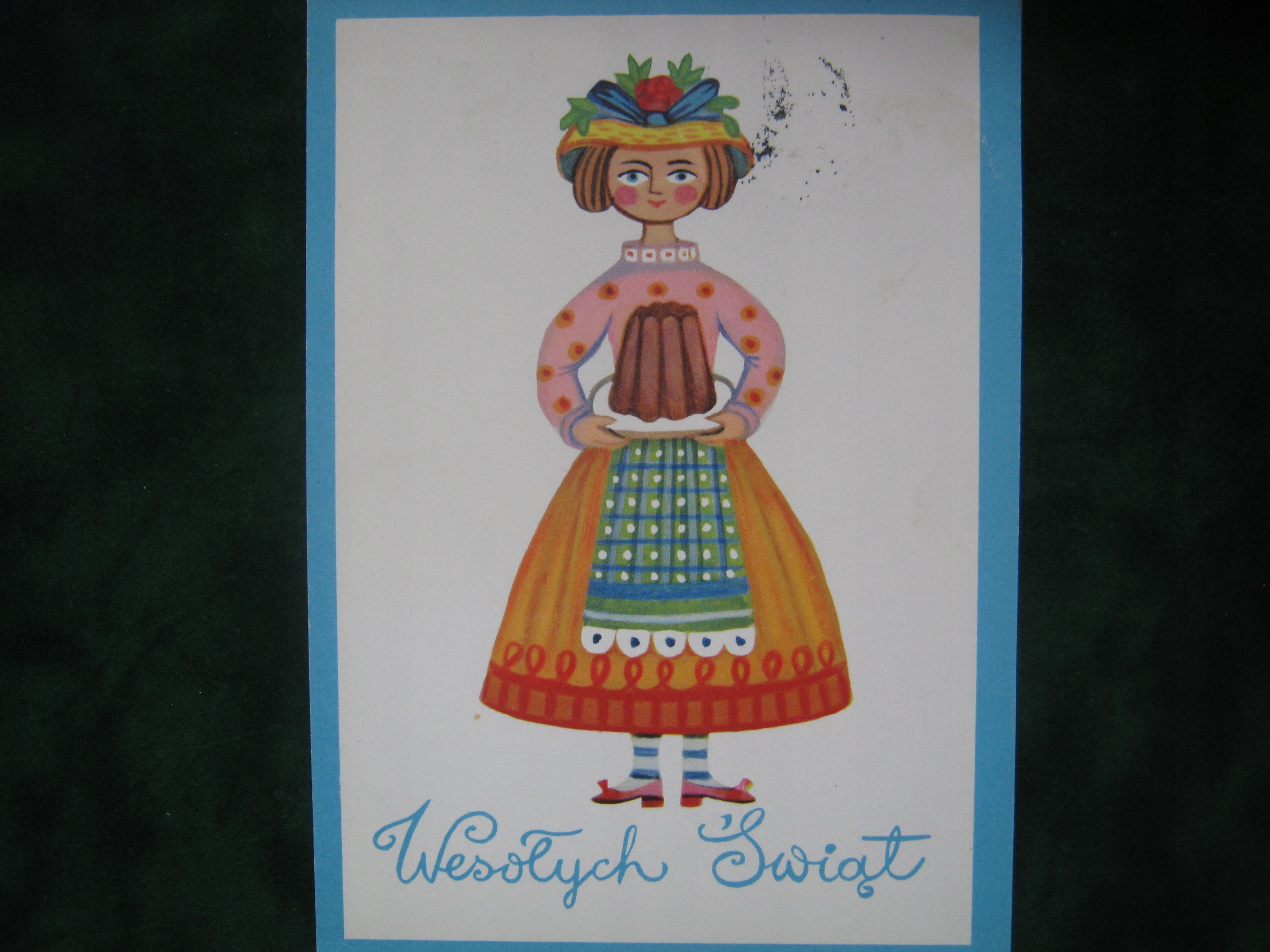
Ha-Ga also collaborated regularly with the children’s magazine Świerszczyk. As press commissions declined in the 1960s, she sought alternative sources of income. She began creating ceramic animal figurines, hand-painted with gouache and sold through the state-run DESA galleries. She also painted botanical postcards inspired by plants in Łazienki Park, and designed album covers for popular Polish bands like Niebiesko-Czarni and Czerwone Gitary. In her final years, she occasionally published drawings abroad.
She received the Order of Polonia Restituta for her contributions to Polish culture and was the recipient of numerous industry awards.
In the 1950s, she divorced Eryk Lipiński. Ha-Ga passed away suddenly on April 14, 1975.
“Ha-Ga. Obrazki z życia” (Ha-Ga. Sketches from Life)
by Agata Napiórska, published in 2023.
This biography recalls Ha-Ga’s prewar days mingling with literary icons like Gombrowicz and Tuwim, her rise to fame in the 1950s, and the twilight of her career in the 1970s. It also explores her friendships, love affairs, life in the shadow of her famous husband, and her complex bond with her daughter Zuzanna Lipińska — offering an intimate, multidimensional portrait of one of Poland’s greatest illustrators.