
This is a demo store for testing purposes — no orders shall be fulfilled. Dismiss
Skip to contentDanuta Konwicka
Graphic artist and book illustrator, born on February 3, 1930, in Poznań; died on August 30, 1999, in Warsaw. Daughter of painter Alfred Lenica, sister of the renowned graphic artist Jan Lenica, and wife of writer and filmmaker Tadeusz Konwicki.
Coming from an artistic family, Danuta Konwicka was also highly talented in the visual arts. Although musically gifted, she chose not to pursue a conservatory education after graduating from high school. After marrying and moving to Warsaw, she enrolled in the Graphic Arts Department at the Academy of Fine Arts.
What kind of woman and artist was the daughter of Alfred Lenica? According to those who knew her, Danuta Konwicka was “graceful, reserved, discreet, dignified, never imposing, hardworking, dutiful, composed, reliable, loyal, and a true lady.”
In Warsaw, she collaborated with various publications, including the children’s magazine Świerszczyk, the literary journal Nowa Kultura, and satirical periodicals such as Szpilki, Mucha, and Kocynder. After earning her degree in artistic graphics (studying under Tadeusz Kulisiewicz and graduating in 1952), she dedicated herself to book illustration—though she maintained contact with select magazines, especially Świerszczyk and Miś, and also designed greeting cards.
Over a career spanning nearly five decades, she illustrated more than 20 books, primarily for children and young adults—including two by her husband: Zwierzoczłekoupiór and Dlaczego kot jest kotem?. She also created illustrations for titles such as Gérard de Nerval’s Confessions of Nicolas Restif.
Danuta Konwicka found her artistic haven in applied graphics—especially children’s illustration—free from the creative shadows cast by the distinguished members of her family. She employed a wide variety of techniques, from pen-and-ink sketches (as seen in the 2009 reissue of The Little Witch by Otfried Preussler), to pastels, colored pencils, watercolors, gouache, and even collage.
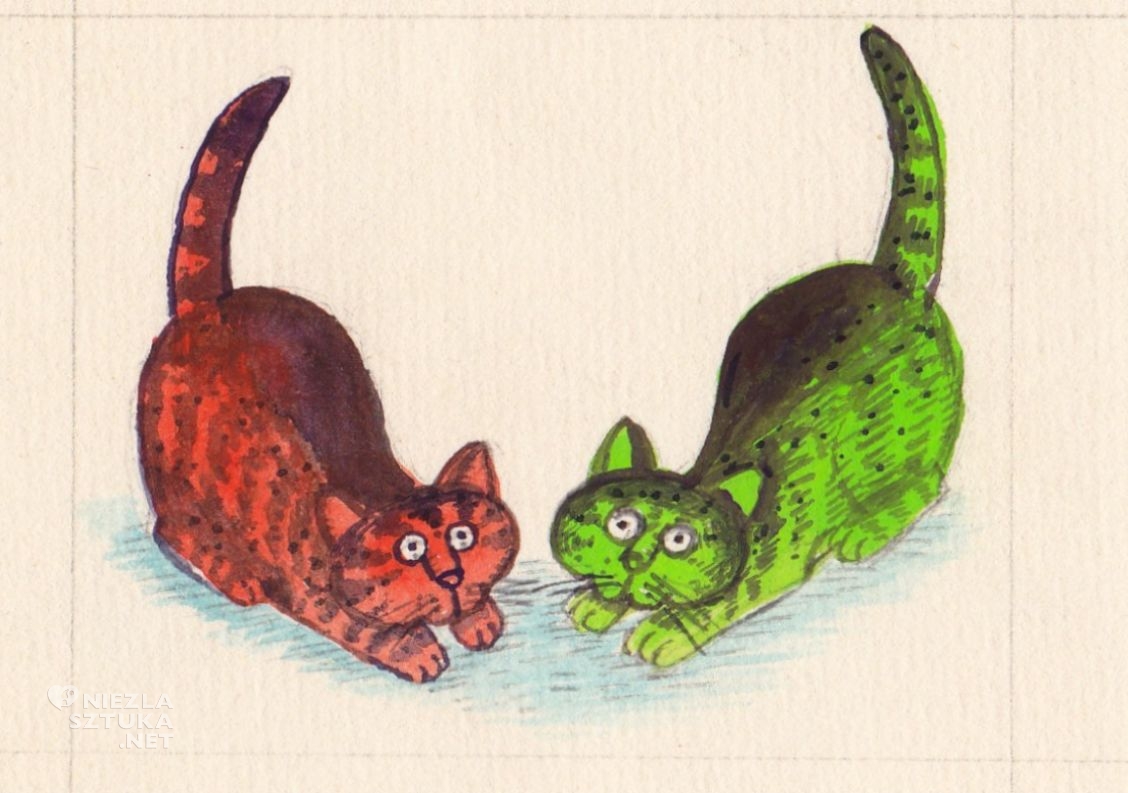
Her children’s illustrations were marked by a lyrical tone and, as one critic put it, were “composed according to the visual logic of a child—[Konwicka] deliberately simplified forms, geometricized them, and applied decorative stylization to make her characters resemble those from a child’s own drawings.”
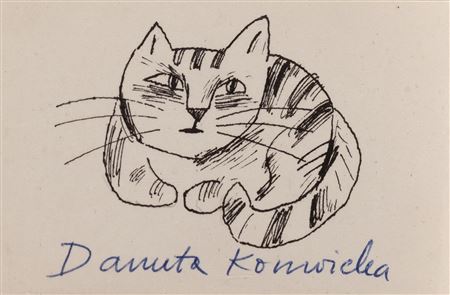
One of her favorite subjects was animals—especially cats. She had a perfect model in Iwan, the family cat, who not only posed for her drawings but also inspired several of Tadeusz Konwicki’s stories. Iwan was immortalized in Dlaczego kot jest kotem?—a collaborative book by Danuta and Tadeusz Konwicki.
Konwicka worked out of a studio on Brzozowa Street in Warsaw’s Old Town, which she shared with her father. Her punctuality was legendary—people joked that you could set your watch by her, as she arrived precisely at 9:00 a.m.
Surrounded by stacks of albums filled with butterflies, animals, costumes, old postcards, and photographs of architecture, she worked diligently—often to the sound of Ella Fitzgerald and Louis Armstrong records sent by her brother from France. A perfectionist, she frequently drew multiple versions of the same image to select the one she considered best. For nearly every book she illustrated, several alternate illustrations were created.
Danuta Konwicka’s work was exhibited in many group and solo shows, including an exhibition of Polish graphic art in Hamburg in 1994 and solo exhibitions in Poznań (at the “Profil” gallery during the Lenica Festival) and in Warsaw in 2002.
Gąska Małgosia, J. Grabowski, Nasza Księgarnia, 1959
Wierzbowa bajeczka, H. Bechlerowa, Ruch, 1964
Czarne i białe kruki and Wiersze dla Ali, A. Słucki, Ruch, 1965
Blisko czy daleko, Cz. Janczarski, Nasza Księgarnia, 1955
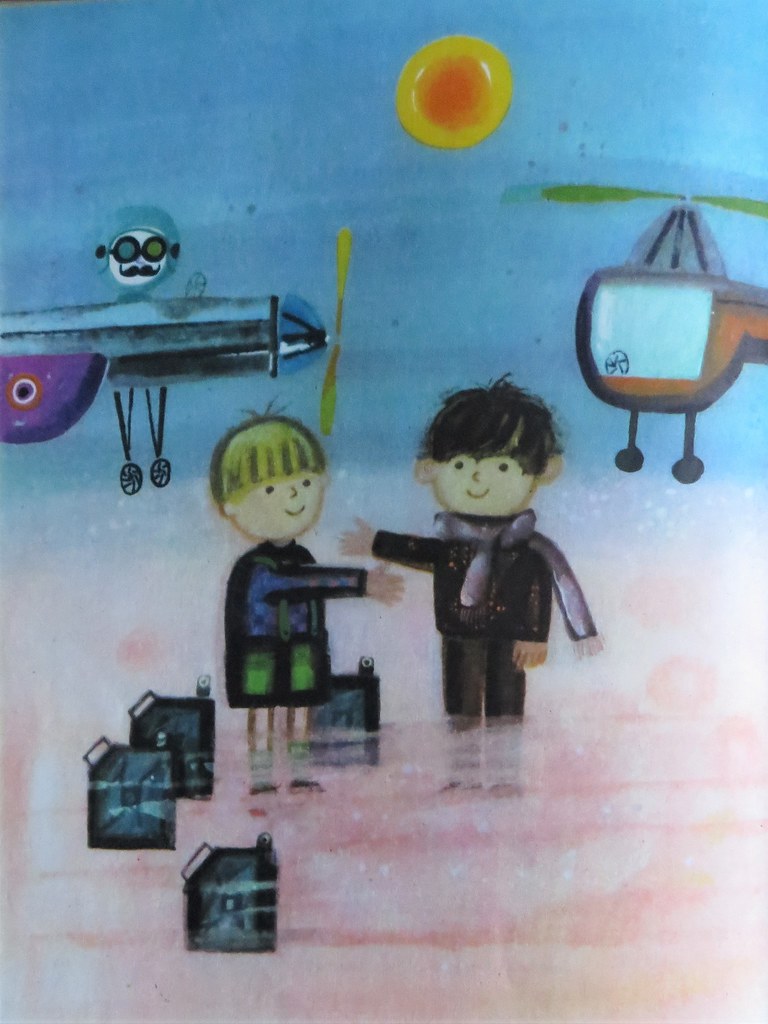
Pilot i ja, A. Bahdaj, Nasza Księgarnia, 1967
O kowbojach z Kolorado, L. Marjańska, Ruch, 1967
Zwierzoczłekoupiór, T. Konwicki, Czytelnik, 1969
Dlaczego kot jest kotem?, T. Konwicki, KAW, 1976
U Małgorzatki, M. Kownacka, Nasza Księgarnia, 1969
Zguba Michałka, J. Hartwig, Nasza Księgarnia, 1969
Zwierzenia Mikołaja Restifa, G. de Nerval, Czytelnik, 1970
Uwaga zaginął chłopiec…, W. Zakrzewska, Pax, 1971
Margot et ses amis, M. Moreu, La Farandole / Nasza Księgarnia, 1971
Wszystko na opak, K. I. Čukovskij, Nasza Księgarnia, 1972
Opowiadania starego szpaka, A. Stern, KAW, 1975
Malutka Czarownica, O. Preussler, Nasza Księgarnia, 1976
Dlaczego nagle pada deszcz, R. M. Groński, Nasza Księgarnia, 1976
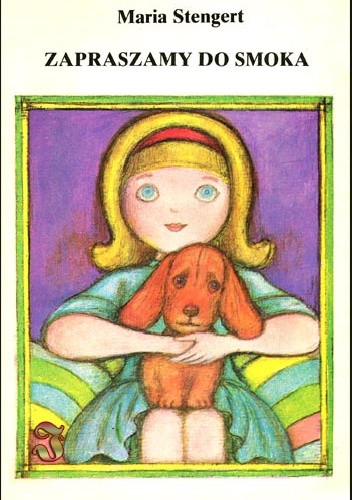
Zapraszamy do Smoka, M. Stengert, KAW, 1977
Mysz jak nie mysz, J. Kulmowa, KAW, 1977
Złote ziarno, Cz. Janczarski (adapted from a Czech folk tale), KAW, 1978
Kolumb na Haweli, P. Abraham, Nasza Księgarnia, 1980
Rokiś wraca, J. Papuzińska, Nasza Księgarnia, 1981
Półbutek, Chrobotek i Mufek and Przygody Mufka, Chrobotka i Półbutka, E. M. Raud, Nasza Księgarnia, 1982–1985
Ilustrowany słownik dla dzieci rosyjsko-polski, polsko-rosyjski, I. Grek-Pabisowa, Wiedza Powszechna, 1982
Mały misjonarz and Misyjne szlaki, Z. Jasnota, Verbinum, 1988–1992
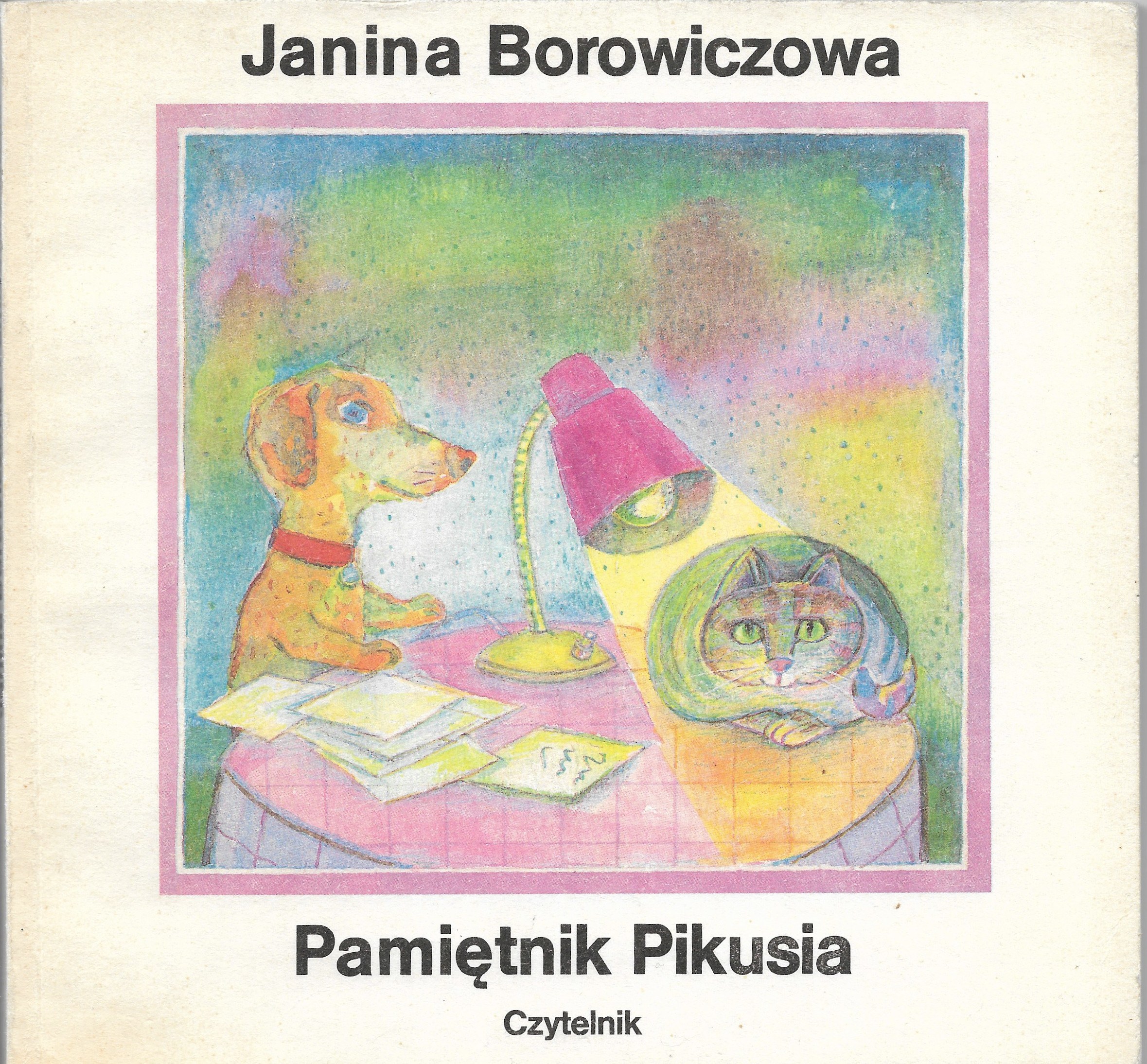
Pamiętnik Pikusia, J. Borowiczowa, Czytelnik, 1989