
This is a demo store for testing purposes — no orders shall be fulfilled. Dismiss
Skip to contentFranz Meisl was born on February 19, 1936, in Amstelveen, the Netherlands, to immigrant parents. His Austrian father, Franz Anton Meisl, and his Polish-German mother, Sophia Pralat, emigrated to the Netherlands in the 1930s due to the economic crisis at the time. They married and had three children: Franz, Rob, and Sophia.
In 1956, Franz began his studies at the Institute for Applied Arts Education in Amsterdam, a school that in 1968 became the Gerrit Rietveld Academy. There, he studied under Henk Zweerus and Jan Elburg. A whole new world opened up for him. During this time, he started a relationship with Kitty Gerritse. They married in 1960 and had 3 children together: Josef, Josefien, and Joscio. Meanwhile, the era of hippies and flower power was in full bloom. Franz fully embraced this lifestyle — his home was covered in gold paper and he dressed in extravagant clothing, which made him stand out in the typically well-mannered, bourgeois town of Amstelveen.
The young family was involved in a tragic car accident in Germany in 1968. His four-year-old daughter Josefien died in the incident. His wife and two sons sustained only minor injuries. Franz spent nearly a year in the hospital in Germany and then many months in recovery. His left leg was badly injured and healed incorrectly; for years afterwards, he walked with crutches and a specially made orthopaedic shoe with a dramatic lift. He incorporated this physical defect into his sculptures — the uneven legs.
After the accident, Franz devoted himself entirely to art and developed his own recognizable style. Distinctive noses, vibrant colors, and uneven limbs became his trademarks. He started with wooden figurines and colorful dolls made from iron wire and papier-mâché.
During the 1970s, Franz scoured for old aluminum pots and pans to melt down. These often turned into headless torsos and elegantly formed chests. He sculpted in papier-mâché, sometimes painting the finished piece or using it as a mold for his aluminum and bronze statues. He also cast a bronze head of his musical idol, and later friend, Frank Zappa.
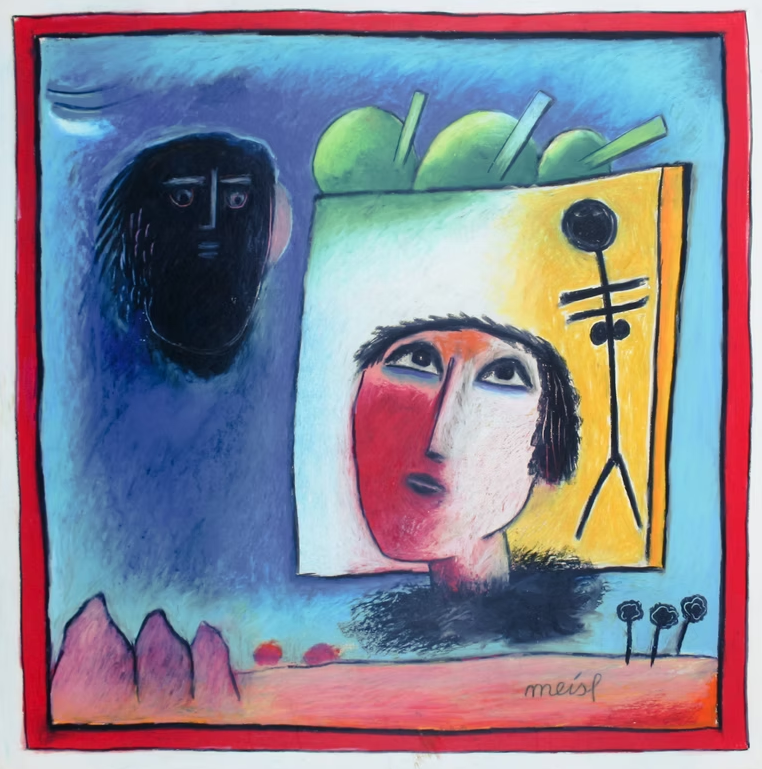
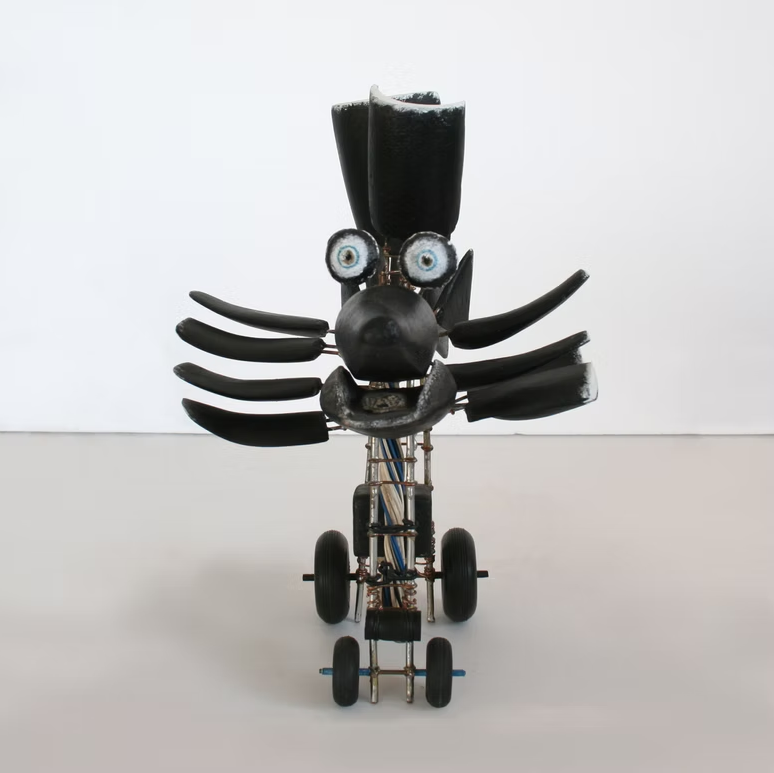
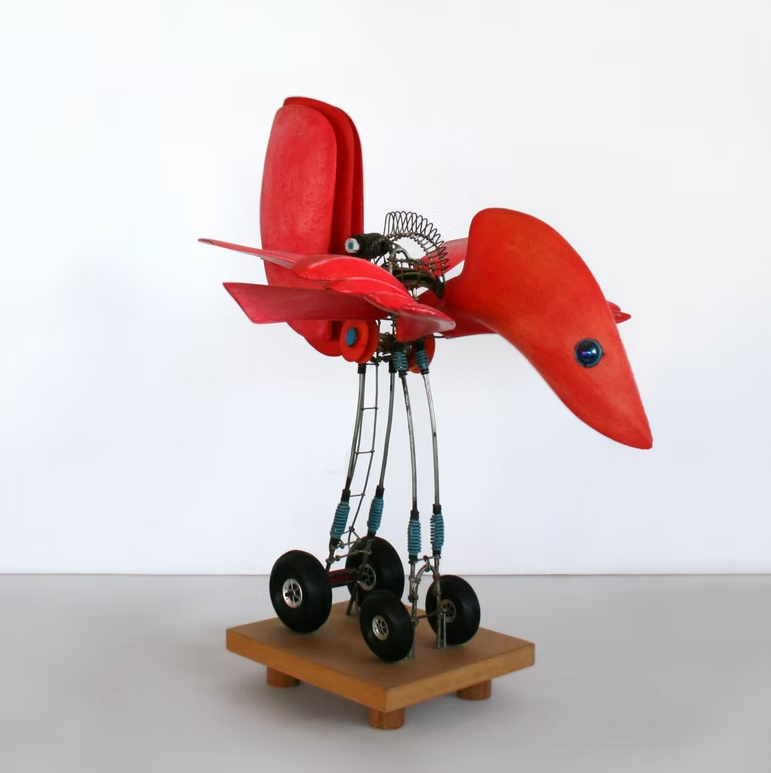
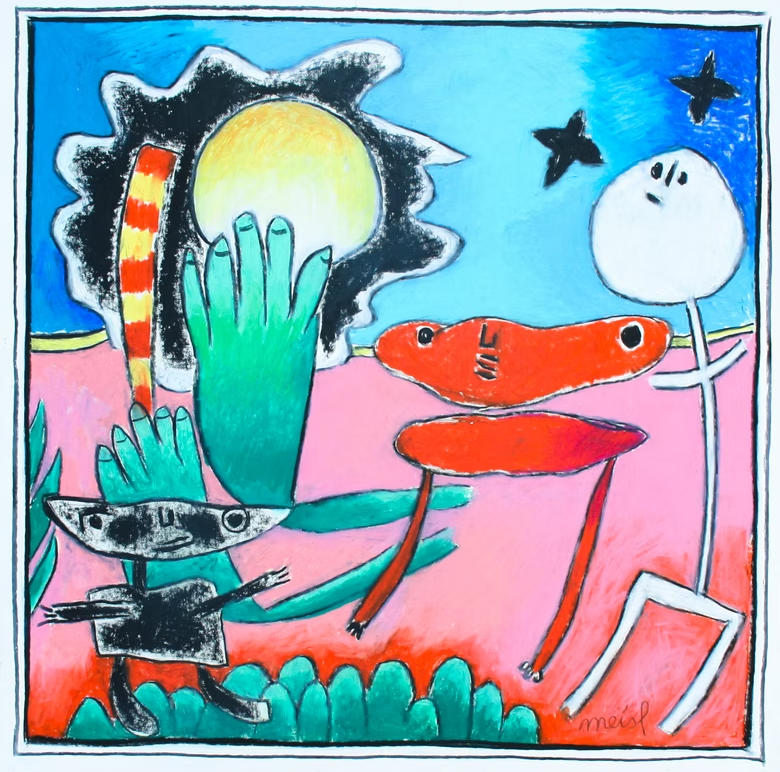
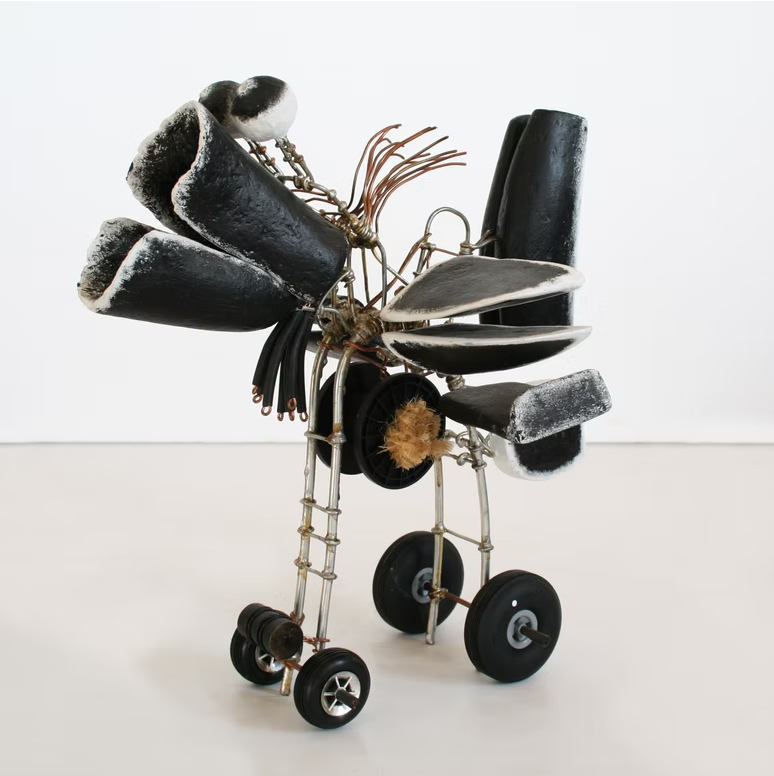
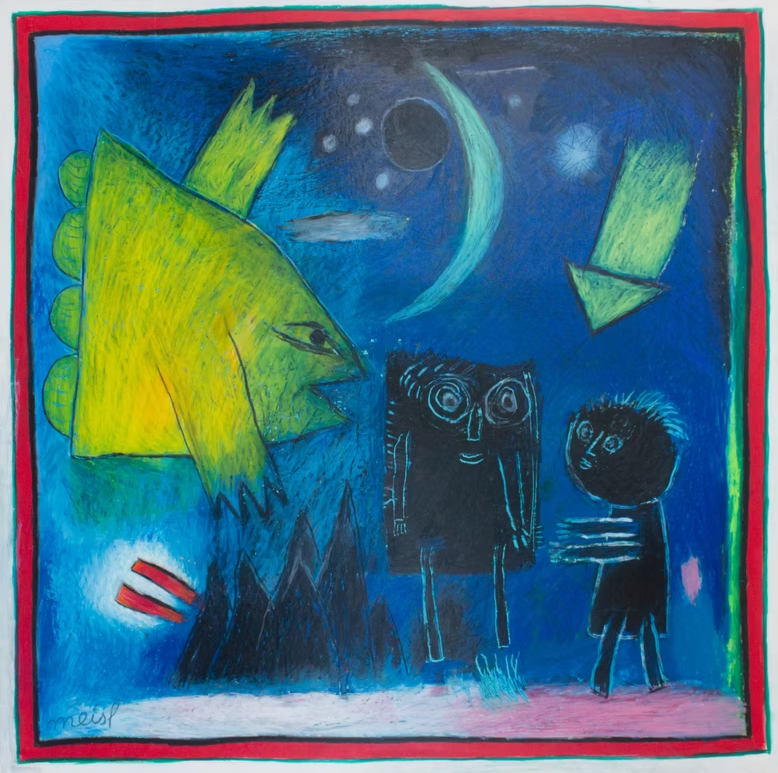
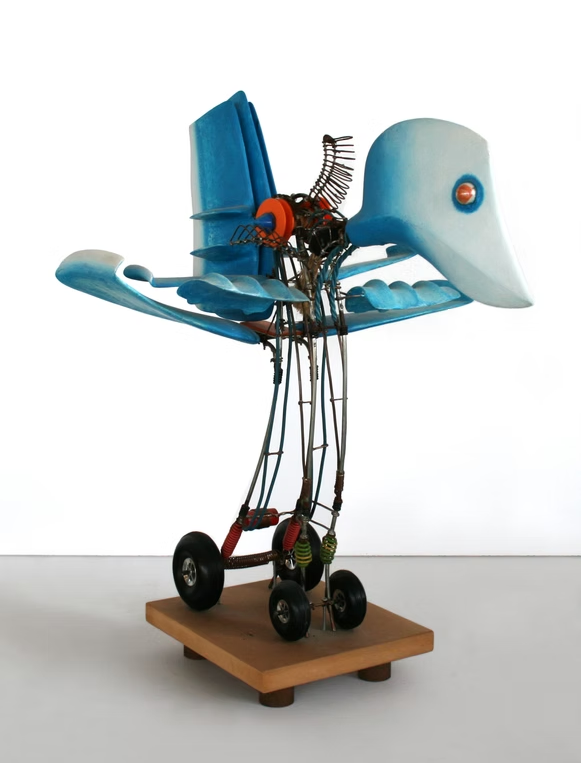
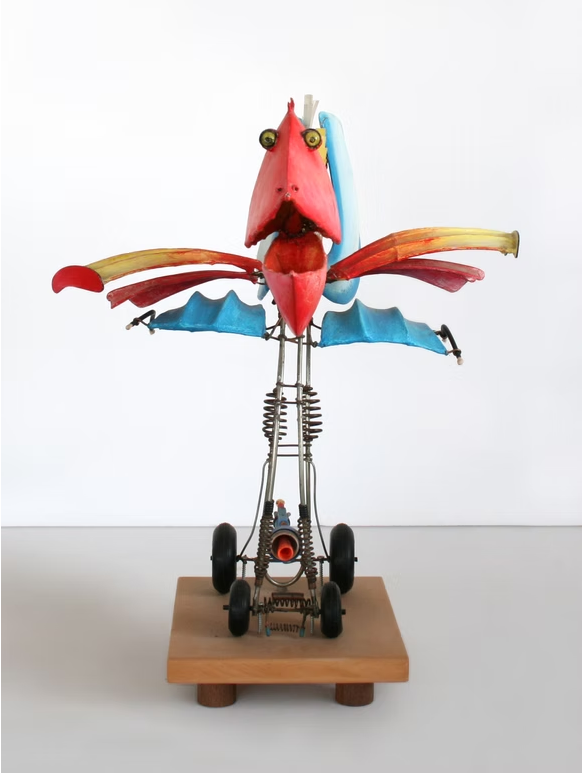
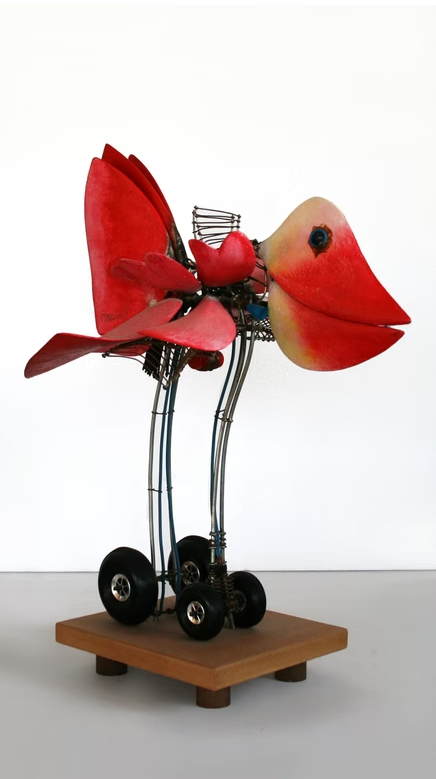
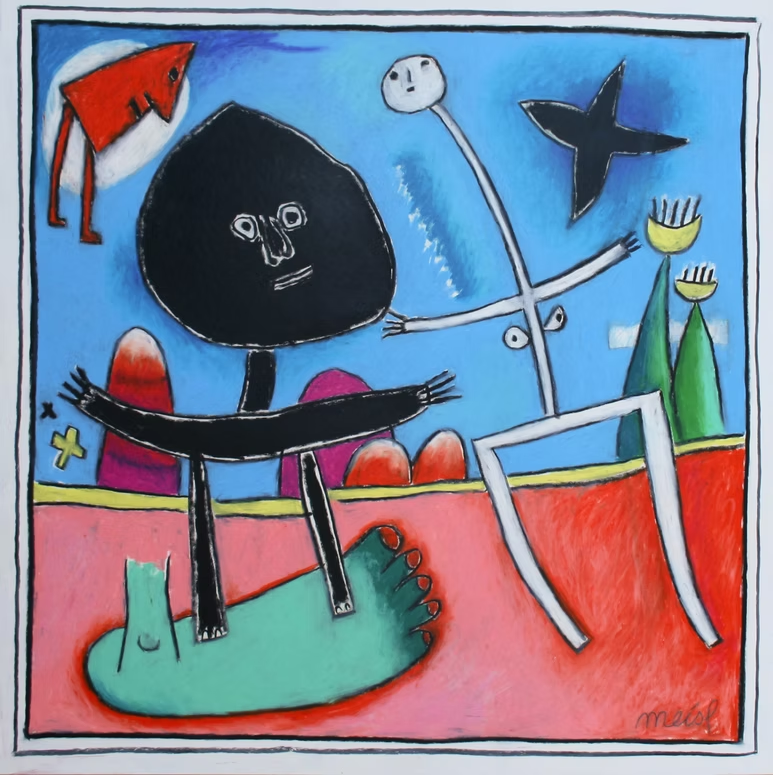
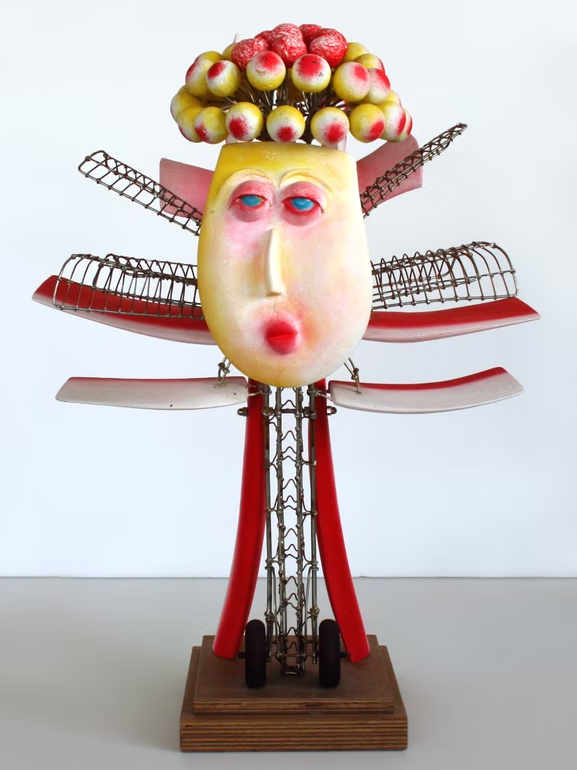
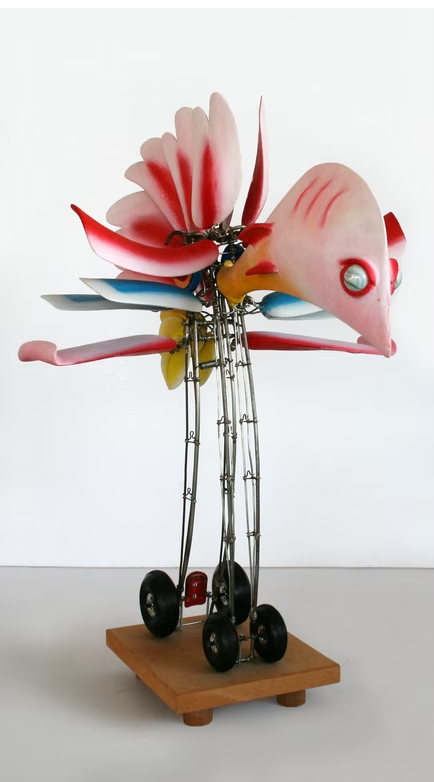
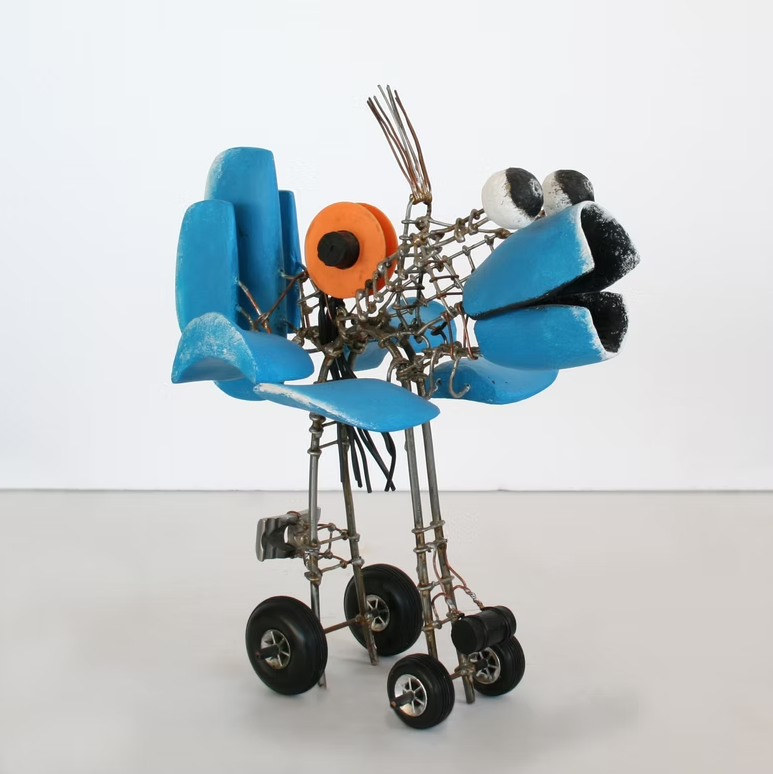
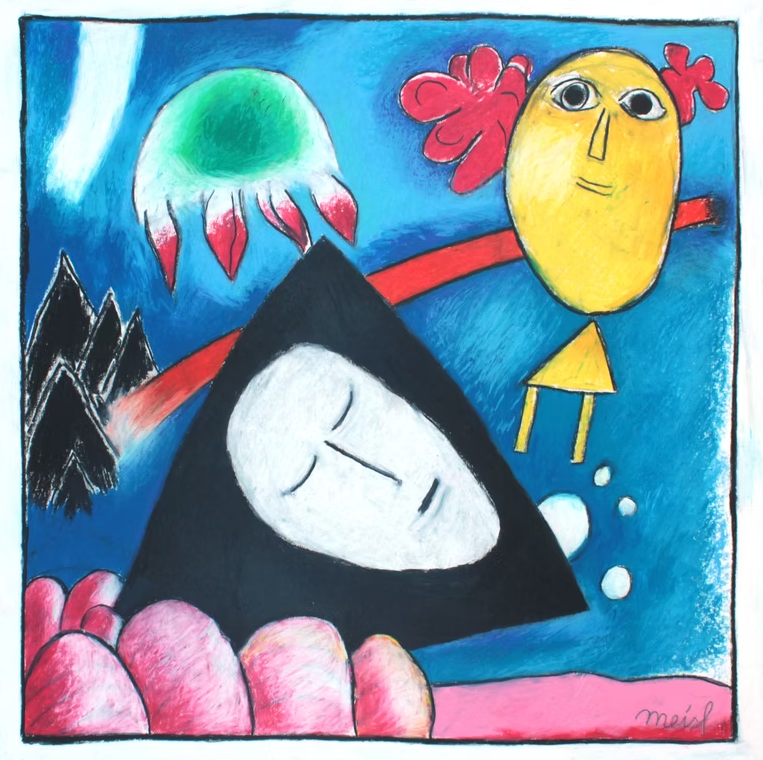
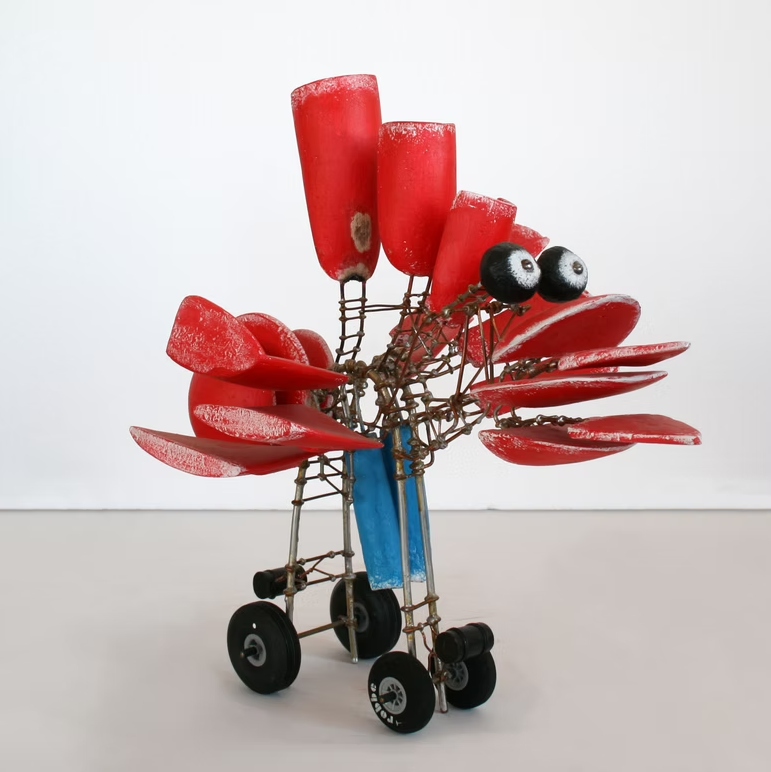
The 1980s were marked by colorful paintings of heads in the most bizarre shapes. He drew with oil pastels, and in the 1990s he shifted his focus toward his “strange birds and Japanese women”—colorful figurines on wheels made from iron wire, papier-mâché, electrical wire, and paint. Here, his artistry, precision, and craftsmanship blossomed. Each piece could take weeks or months. Complicated steel structures with wheels and the endless sanding of hard-as-stone papier-mâché demanded patience and perseverance. Franz was obsessed with car races and kept a collection of wheels to create his own racecars — until a flying jay crossed his view, and the racecars turned into birds.
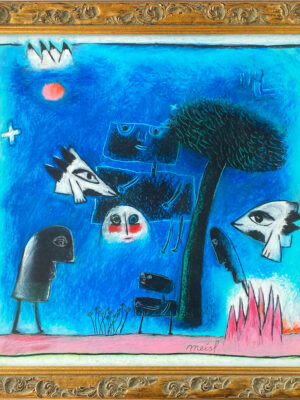
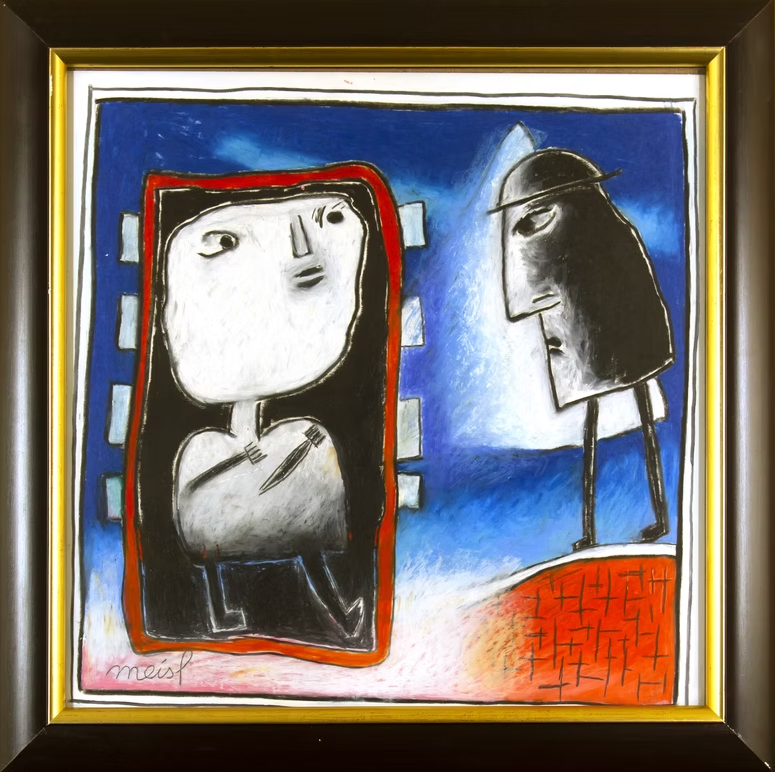
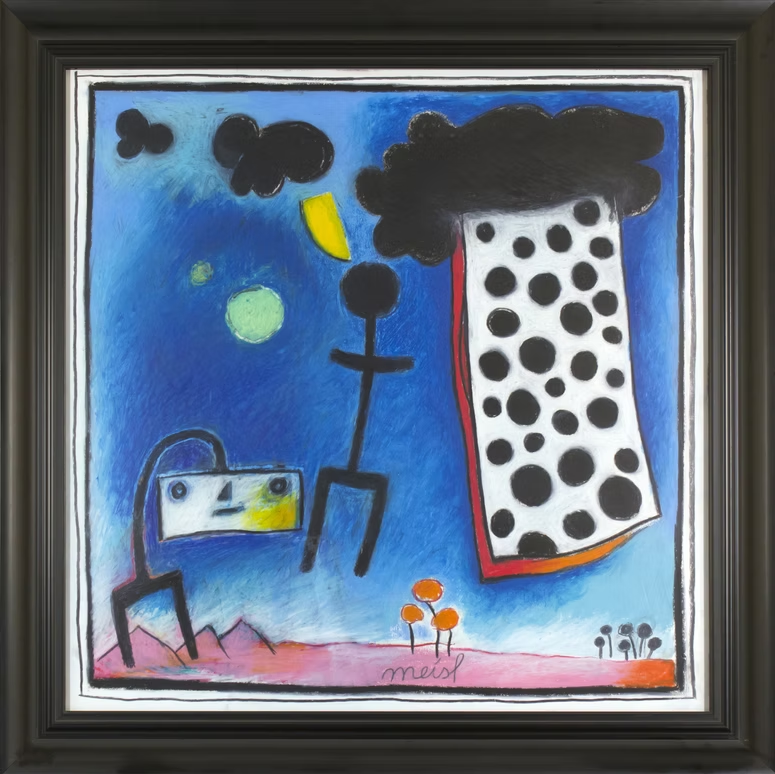
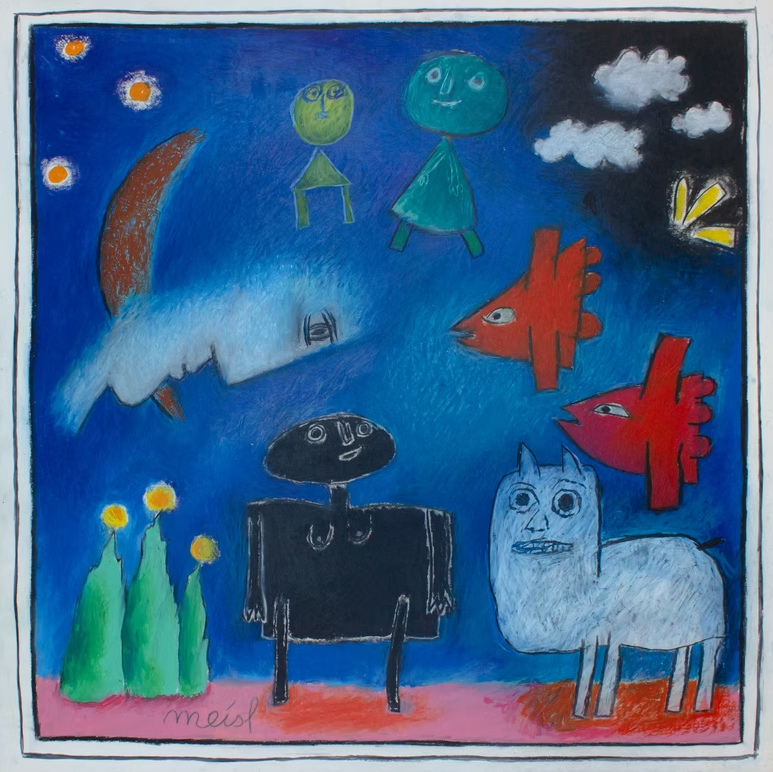
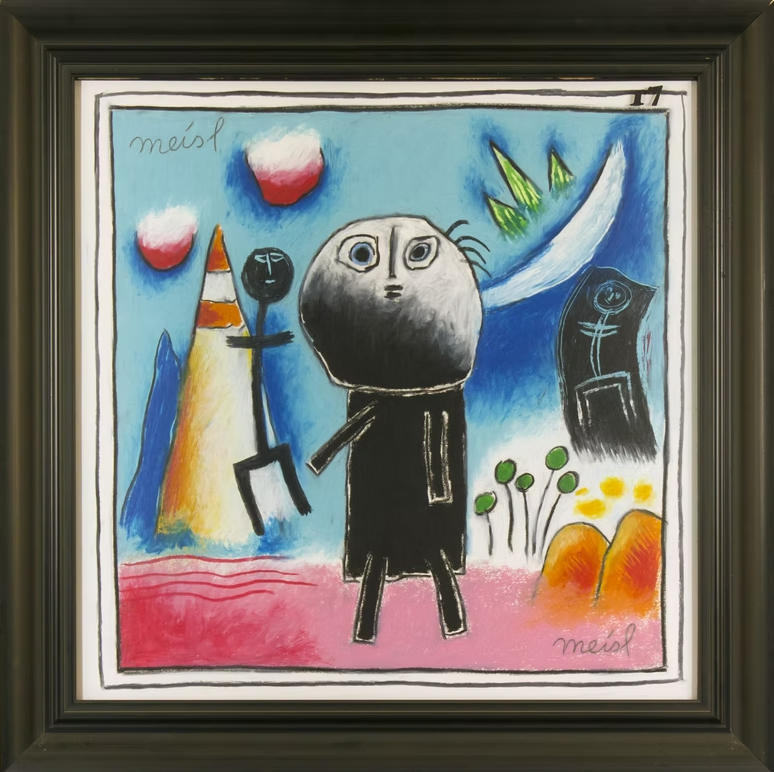
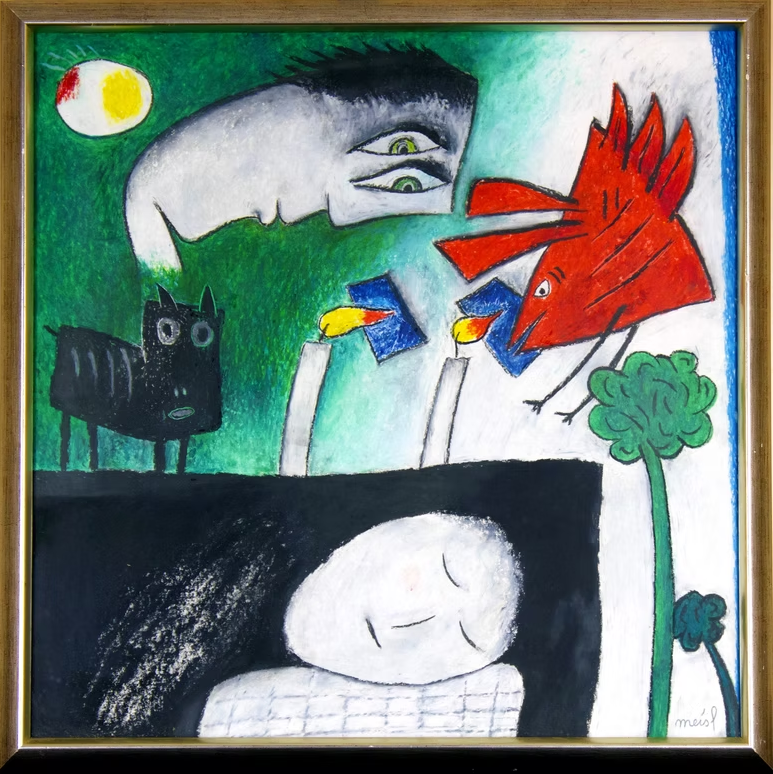
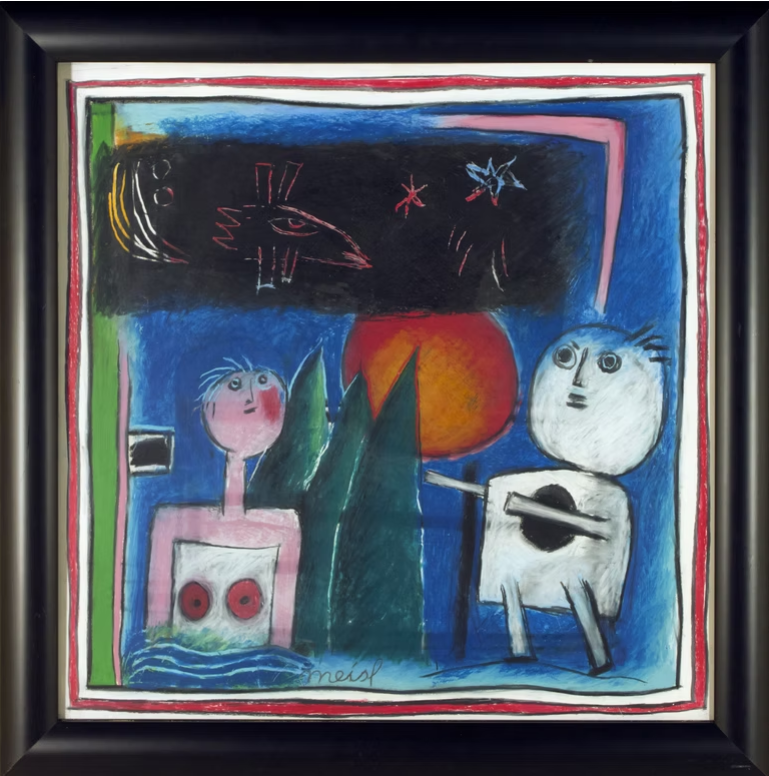
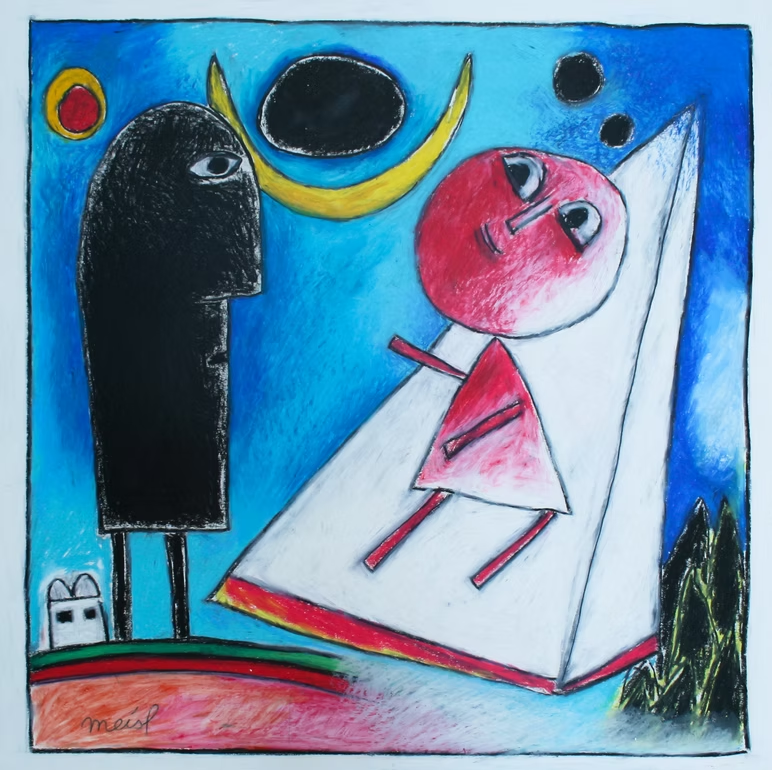
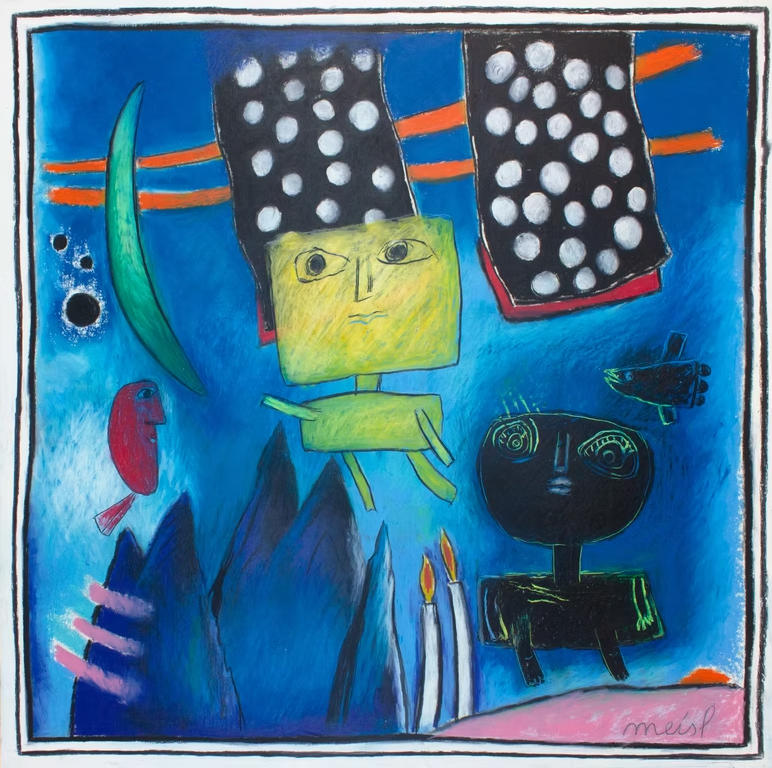
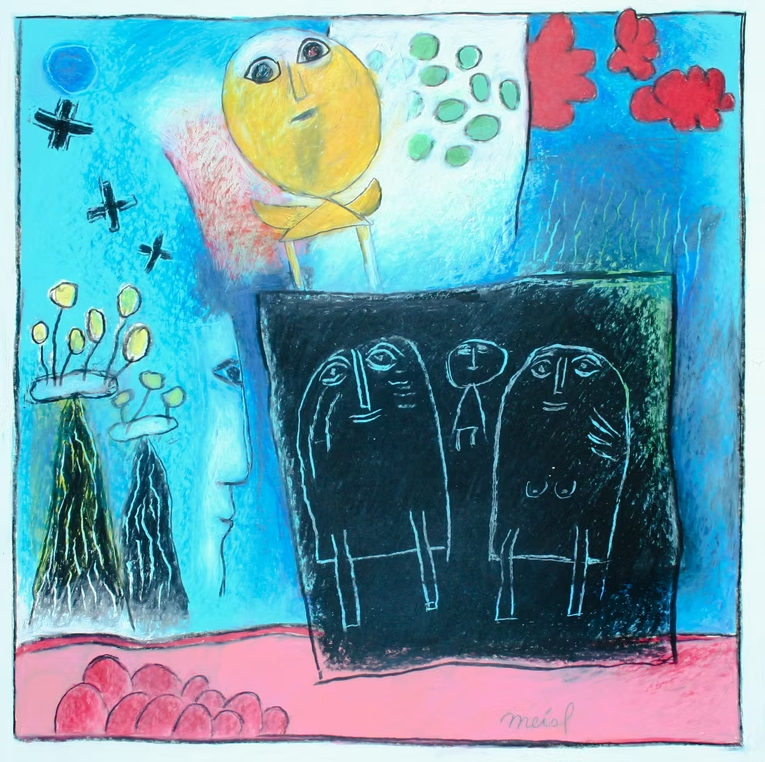
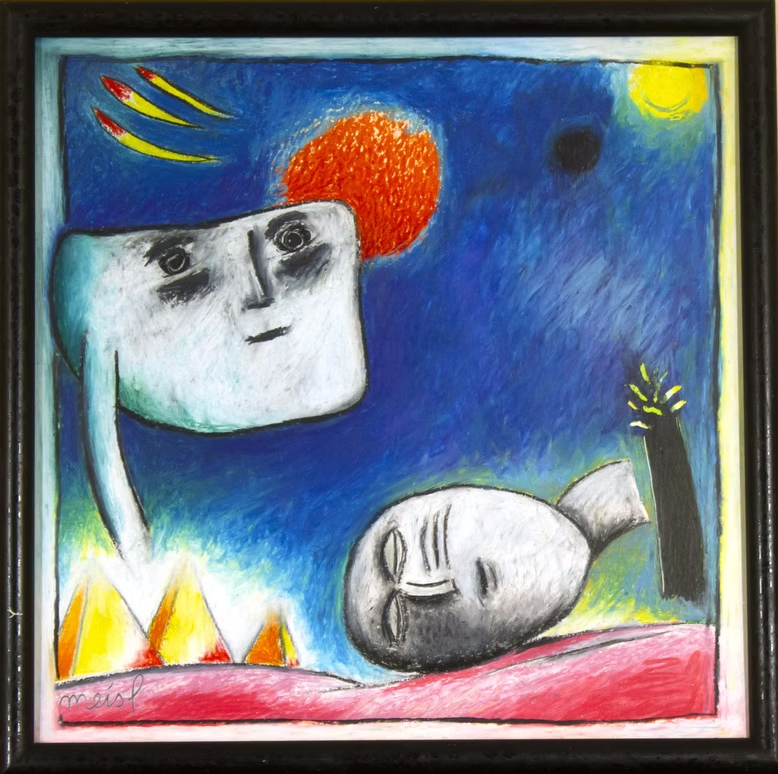
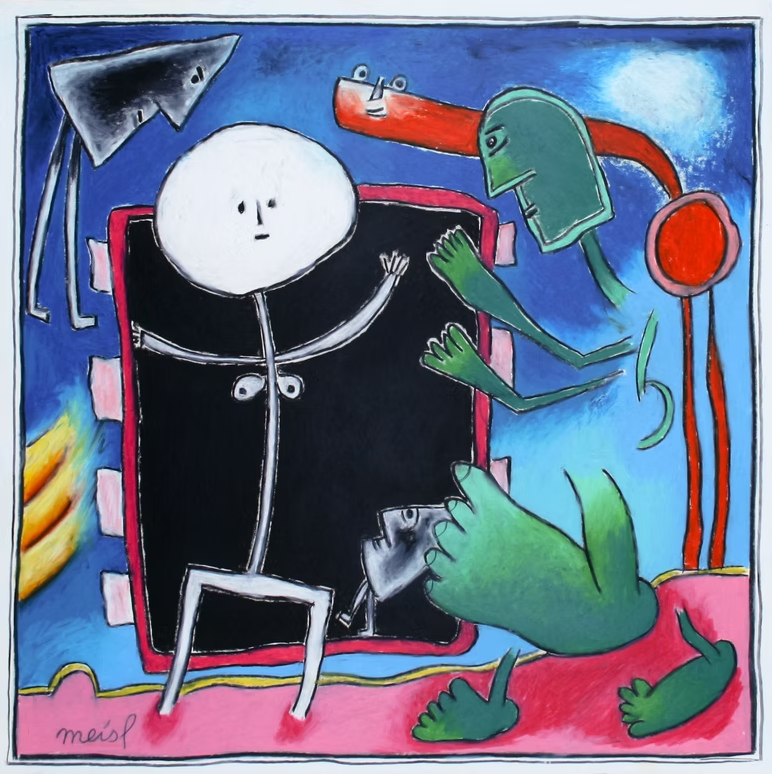
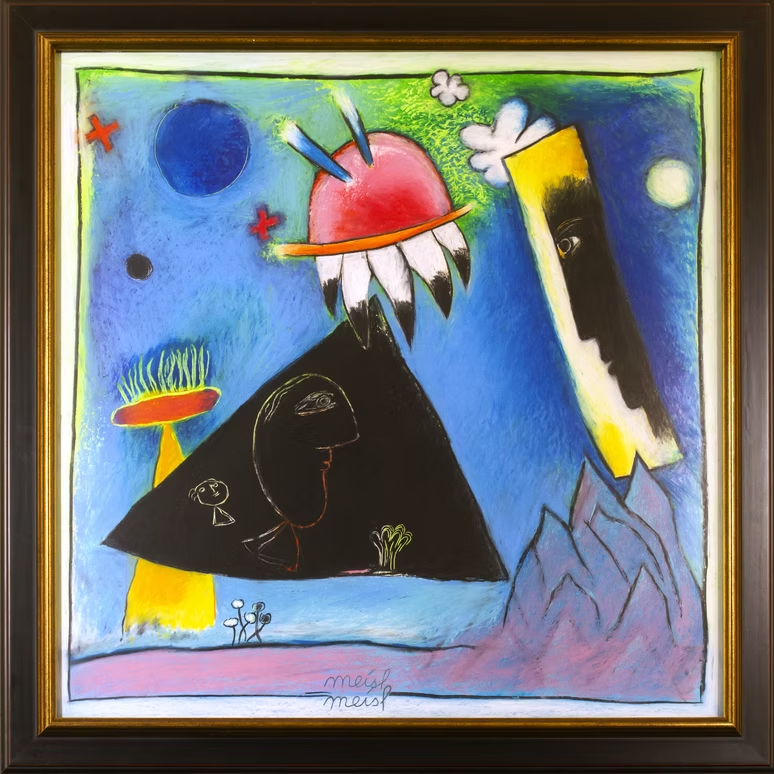
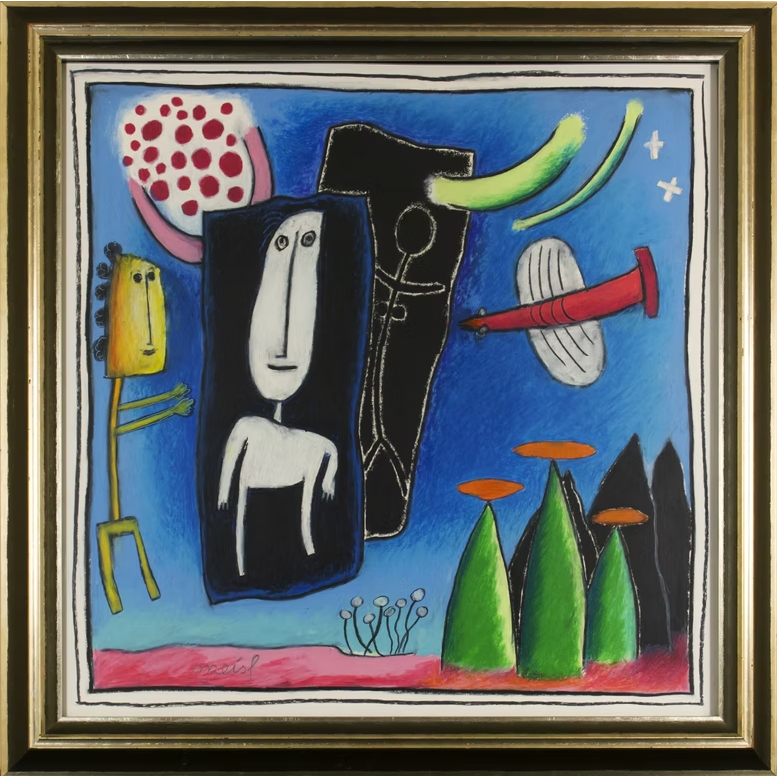
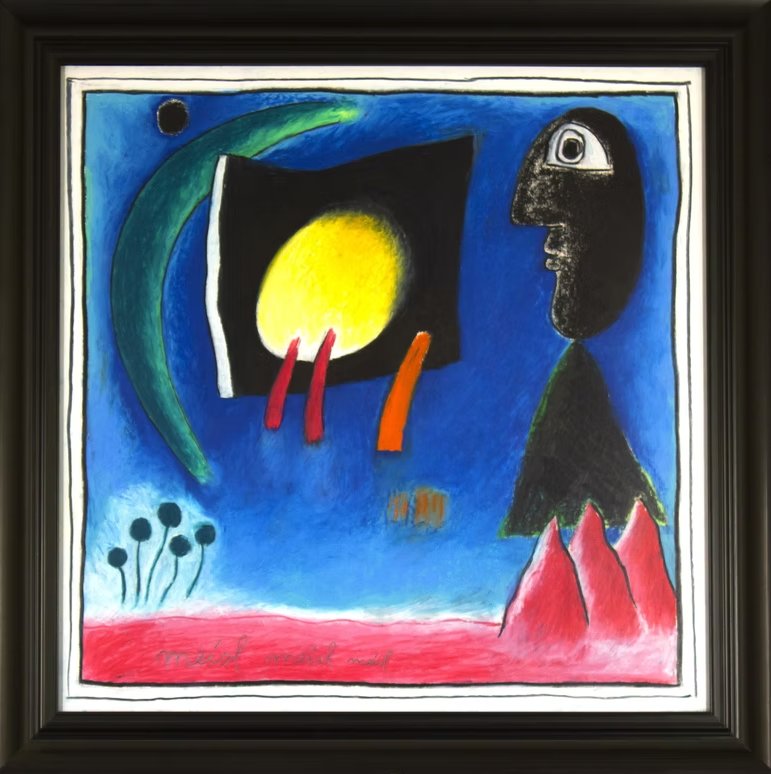
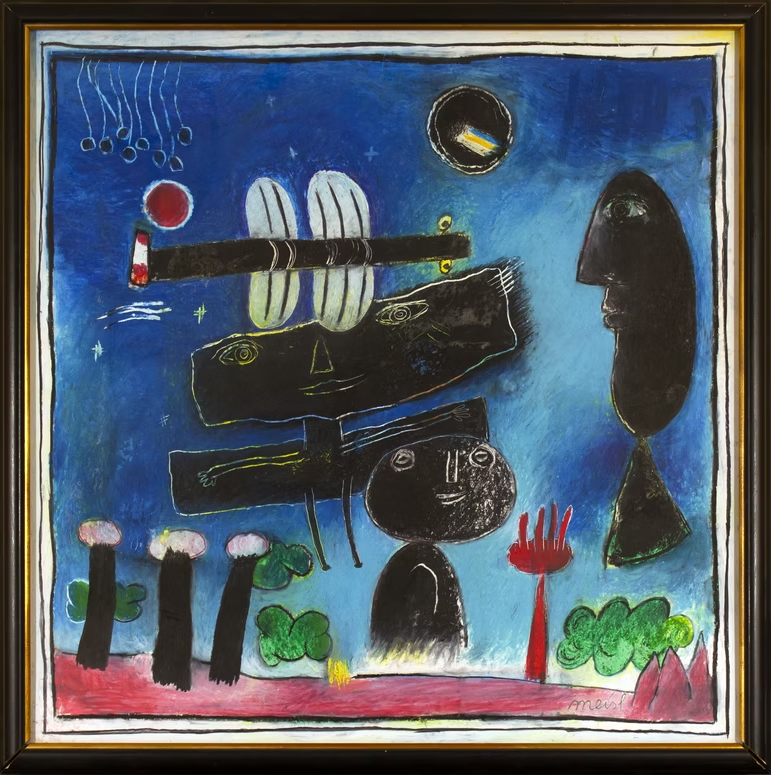
A documentary about Kabuki — a form of Japanese theatre and dance featuring dramatic makeup — inspired him to create portraits of women. Between 2000 and 2010, Franz concentrated on oil pastel drawings. During this period, blue frequently appeared in his backgrounds and a new color, pink, was introduced. His works portray meetings of two figures; love is rendered in color on paper. He also drew black-and-white figures with or without a color highlight. Some works feature large black areas. Here and there, a “sleeping child”—a motif referring to his deceased daughter Josefien—makes an appearance. In his last year, Franz introduced pyramids, mirages, and castles in the air. Some figures rise from the landscape and are partially painted white.
Franz Meisl remained creatively active until a few weeks before his death. He was born, raised, lived, and worked in Amstelveen — and it was there that he said goodbye in March 2010.
Franz Meisl is much like his works: surprising, meticulous, and strongly recognizable. His rich colors, bold form, and light irony bring a smile to those who view his art.