
This is a demo store for testing purposes — no orders shall be fulfilled. Dismiss
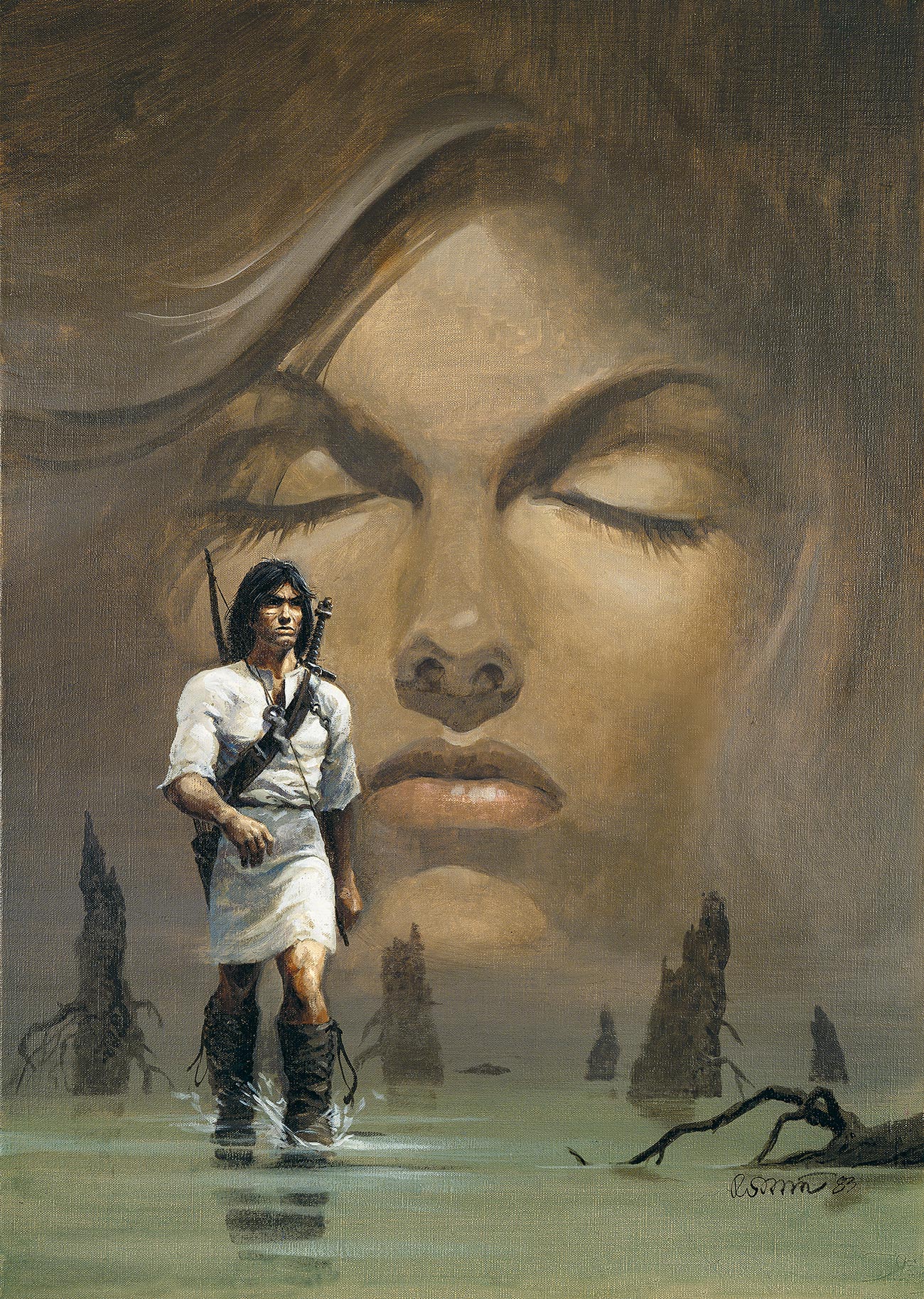
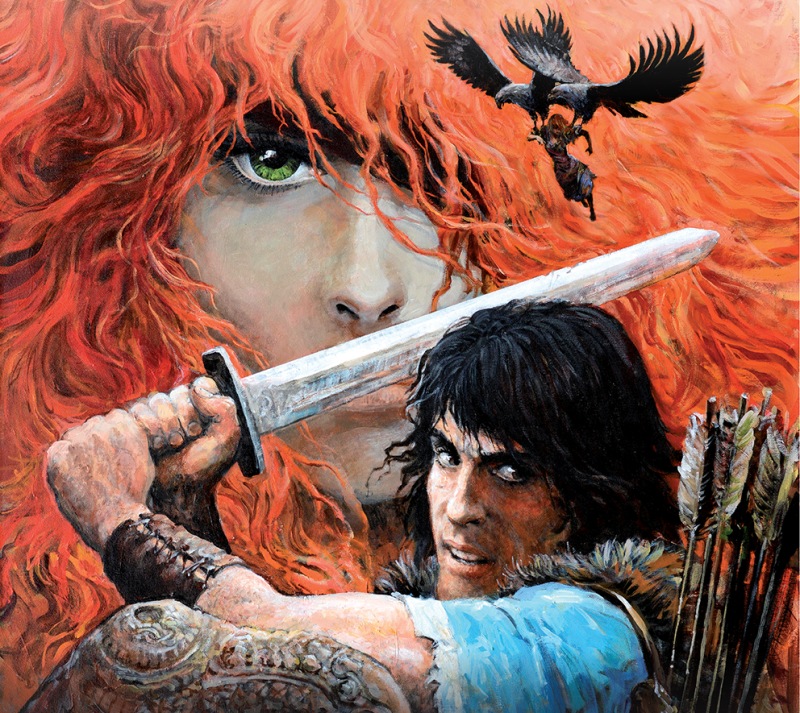
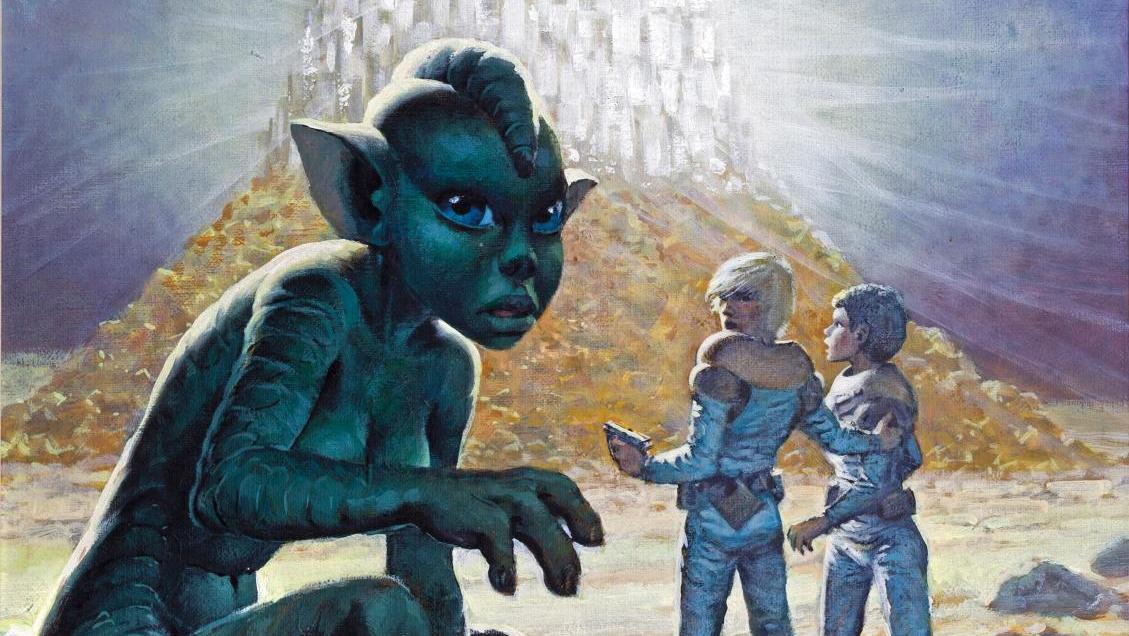
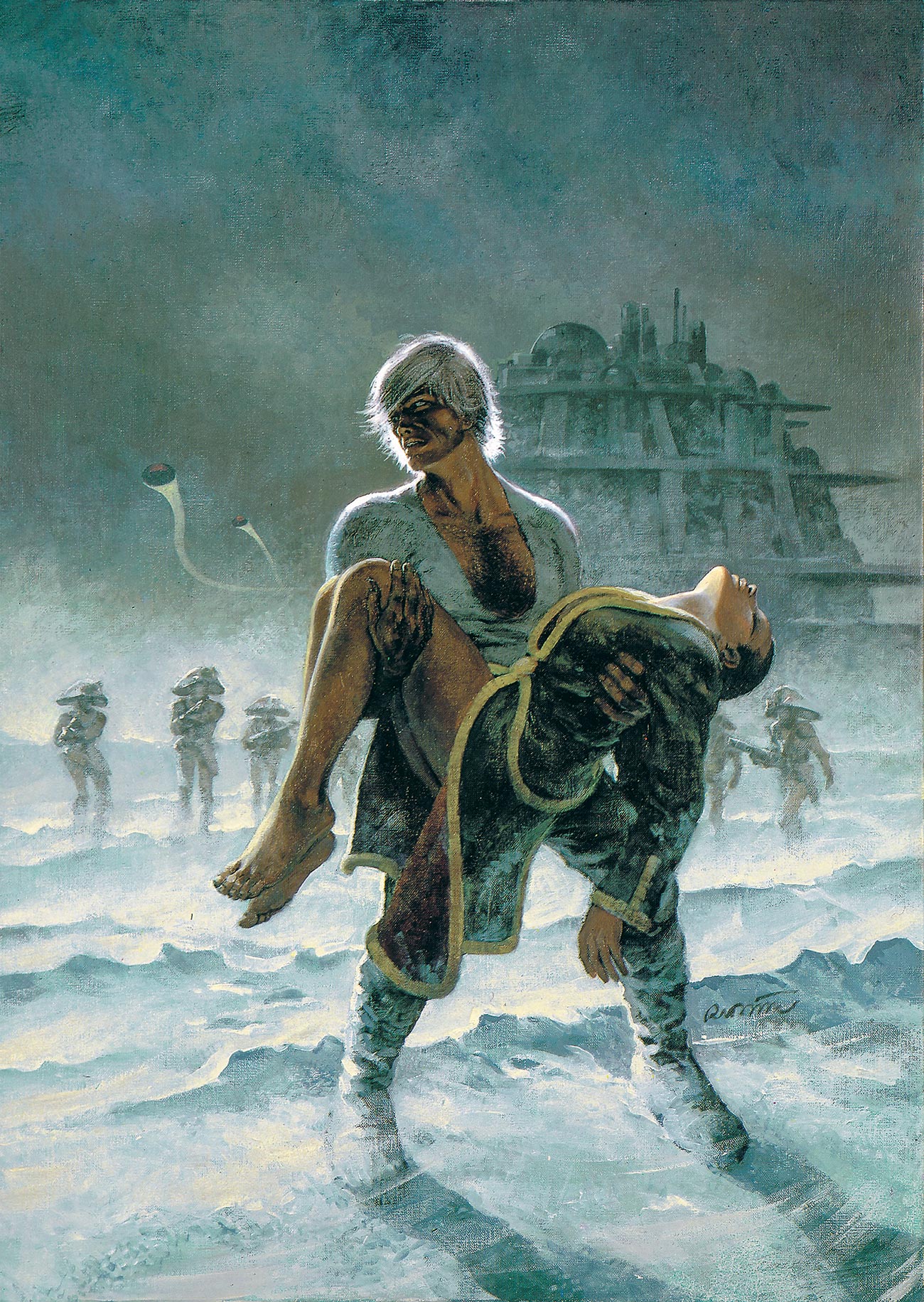
Skip to contentGrzegorz Rosiński (born 3 August 1941 in Stalowa Wola) is a Polish comic book artist, graphic artist, and painter, best known as the co-creator and principal artist of the comic series Thorgal.
In 1952, the Rosiński family moved to Warsaw—this would be their final relocation. Grzegorz drew constantly and with unusual skill (especially comics about pirates and the Wild West), and in 1955, encouraged by his father, he enrolled in the Secondary School of Fine Arts. At Warsaw’s “Plastyk,” he formed friendships with, among others, Bogusław Polch.
From 1957 until nearly the end of his secondary education, he designed the graphic layout for the scouting paper Wesoła Gazetka, soon renamed Korespondent Wszędobylski, where he also published comics. His debut—still in Wesoła Gazetka—was Ali Baba from the Sierra Nevada, an adaptation of a short story by Francis Bret Harte. Bogusław Polch also debuted in Korespondent Wszędobylski.
Rosiński passed his final exams in 1960. At first, he did not plan to continue an art education and attempted to enter the Faculty of Architecture at the Warsaw University of Technology, but failed the mathematics entrance exam. After this setback, he worked for a year on a construction site as a bricklayer’s assistant at the Warsaw Śródmieście Housing Construction Enterprise. He then applied to the Academy of Fine Arts in Warsaw.
Shortly before beginning his studies, in the summer of 1961, he met his future wife, Kasia Piluchowska, a horticulture student at the Warsaw University of Life Sciences. They married shortly after he completed his degree. Rosiński chose theatre scenography as his specialization. His diploma project in book illustration was completed in the studio led by Jan Marcin Szancer and focused on illustrations for A Farewell to Arms. He defended his diploma in 1966. During his studies he also produced illustration projects for other books, such as Gulliver’s Travels and Jacques the Fatalist and His Master. He gained professional experience through press publications and work for the editorial team of Tygodnik Kulturalny.
Rosiński often recalls an anecdote from his student years: during a class led by Jerzy Tchórzewski, his work was criticized; when he began painting with his back turned to the canvas, his “creative process” was suddenly appreciated. The incident reflected the dominant preference for abstraction at the Academy at the time and a skepticism toward realistic figure drawing—precisely the form Rosiński favored.
After graduation, he focused on illustrating books and textbooks. Because he worked in varied techniques, his illustrations are not always easy to identify at a glance. He became known for his ability to “translate” complex physical concepts for young readers through images—illustrating, among other titles, Elżbieta Rubinowicz’s Rozmowy o fizyce (Conversations on Physics) and Emil Kindzierszky’s Od gry w guziki do statku kosmicznego (From Playing Marbles to a Spaceship). His illustrations also appeared in historical novels by Ewa Nowacka, such as Szubad żąda ofiary and Ursa z krainy Uratu, as well as in the war novel Uwaga, piegowaty (Attention, Freckled One) by Kazimierz Dębnicki.
By chance, he learned that the publisher Sport i Turystyka was attempting to improve the image of the Citizens’ Militia among young people through the comic-book series Kapitan Żbik. He joined the project and in 1969 published his first issue, Diadem Tamary (Tamara’s Diadem), the seventh episode in the series. Rosiński was the first artist in the Żbik cycle to sign his work on the final illustration. The last Żbik episode he drew was Skoda TW 61–63. At his urging, Bogusław Polch also returned to comics and joined the circle of Żbik artists.
For the same publisher, Rosiński later created the series Pilot śmigłowca (Helicopter Pilot) about Sławomir Karski, a lieutenant in the People’s Army of Poland, launched in 1973; Rosiński drew the first five issues. That same year, he was commissioned to draw Legendy polskie (Polish Legends), scripted by Barbara Seidler. The first issue, O smoku wawelskim i królewnie Wandzie (The Wawel Dragon and Princess Wanda), was followed by O Popielu i myszach (Popiel and the Mice) and O Piaście Kołodzieju (Piast the Wheelwright) in 1975; the series was published in 1977.
In 1974 he drew a comic about the Polish national team’s success under coach Kazimierz Górski at the 1974 World Cup in Germany. Titled Od Walii do Brazylii (From Wales to Brazil) and scripted by Andrzej Konieczny, it received a lukewarm critical response.
In 1976, Rosiński joined the editorial team of the landmark Polish comics magazine Relax, becoming its graphic editor. He was responsible mainly for selecting comics for upcoming issues and inviting Polish and international creators to collaborate. He also published his own comics there. The very first issue featured his comic Dziewięciu do nieba (Nine to Heaven), scripted by Stanisław Majewski—though in an abridged version; the full version appeared only in 2022 in the first volume of the Relax anthology.
From issue three onward, Rosiński drew short stories about the early history of the Polish state, replacing Szymon Kobyliński (who created the first two installments). The final installment was drawn by Marek Szyszko; the overall script was by Leszek Moczulski. Another Relax project was the science-fiction story Najdłuższa podróż (The Longest Journey), scripted by Andrzej Sawicki and Ryszard Siwanowicz, who used the pen name Rian Asars for professional reasons (both were Polish Army officers). This became Rosiński’s last longer comic created for the Polish market and serialized in Relax. He left the editorial board in 1978, while continuing to publish shorter stories in the magazine.
Around the same time, he also published a black-and-white science-fiction series in Alfa magazine titled W służbie galaktycznej (In Galactic Service), scripted by Tadeusz Lech. The series was initially drawn by Janusz Stanny; as in Relax, Rosiński did not complete it, and Jerzy Majewski drew the final—fifth—episode.
In the second half of the 1970s, Rosiński began publishing short humorous stories in Belgian comics magazines, which helped him establish stronger contacts with Western publishers. A key role was played by Carlos Blanchard, a publisher of postcards and calendars, who visited Poland looking for artists and later helped Rosiński connect with Belgian publishers. During a subsequent trip to Brussels in 1976, two major houses—Le Lombard and Dupuis—became interested in his work. He initially published short humorous pieces but also adapted longer works, including Pojedynek (The Duel) from Relax. While early scripts were often written by Polish authors, he also illustrated stories by local writers, including two comics scripted by Yvan Delporte, co-creator of the Smurfs.
His first larger Belgian project was the humorous series Fantastyczna podróż (La Croisière fantastique), published in Spirou and scripted by Jean-Claude Smit-le-Bénédicte. The series—graphically close to Polish Legends—was signed with the pseudonyms Mythic (Smit-le-Bénédicte) and Rosek (Rosiński). The last episode appeared in 1987, this time with Rosiński’s full signature; after Le Lombard acquired the rights, it was released in two collected albums.
In August 1976, during a visit to Brussels, Rosiński met the screenwriter and comics writer Jean Van Hamme. Despite the language barrier, the two immediately connected. Rosiński drew two test pages from Van Hamme’s script during the visit, which led to a collaboration maintained by phone and letters once Rosiński returned to Poland.
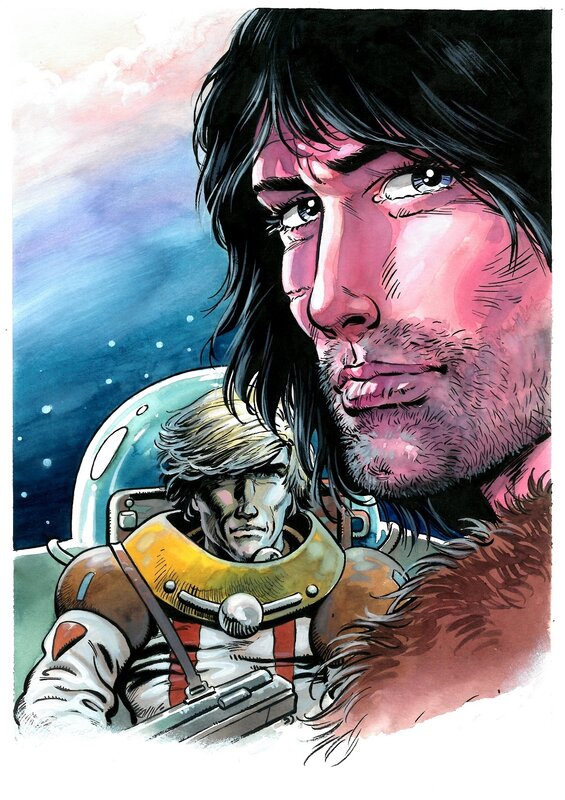
Following a suggestion from André-Paul Duchâteau (then editor-in-chief of Tintin magazine), Van Hamme chose a Viking theme—considered politically “safe” within the realities of communist Poland. Another practical reason was that Rosiński already had a Viking comic, Klęska Wikinga (The Viking’s Defeat), waiting for publication in Relax. The initial concept for a longer story arrived in early November 1976: a proposal for a pacifist Viking named Ragnar Aegirsson for Tintin. When it emerged that “Ragnar” had already been used as a comics character in the 1950s, the hero was renamed Thorgal.
The series pilot ran in Tintin from 3 March to 25 October 1977 in five installments, published roughly monthly, with a longer break between the second and third parts. A year later, Thorgal debuted in Poland in Relax. Over time, it won Belgian audiences. In 1979, the second episode, Wyspa Lodowych Mórz (L’Île des Mers gelées / The Island of the Frozen Seas), received the prestigious Prix Saint-Michel in Brussels for best realistic comic. In 1980, Le Lombard published the first album edition, Zdradzona Czarodziejka (La Magicienne trahie / The Betrayed Sorceress), with an additional episode, Prawie raj (Almost Paradise).
Rosiński regularly mailed original art to Belgium. Martial law in Poland found him in the middle of work on Ponad krainą cieni (Au-delà des ombres / Beyond the Shadows). Practical difficulties in sending pages to Brussels made it clear that, to continue his Western career, he would need to emigrate.
Despite martial law, he was able to travel abroad using a passport issued through the Polish artistic agency Pagart. In January 1982 he left Poland at the invitation of the Angoulême International Comics Festival. After a second trip, to the Brussels Book Fair in March 1982, he did not return to Poland. His family joined him in June. In Belgium, legalizing his stay required an employment contract; since he was receiving authors’ royalties rather than a salary, Le Lombard formally employed him in a role connected with launching a (fictional) Thorgal magazine—an arrangement that enabled residency formalities.
After relocating, all domestic projects were effectively suspended, and Rosiński concentrated on Thorgal. He also drew other major series and albums in the Francophone market, including Yans (with André-Paul Duchâteau), The Complaint of the Lost Lands (with Jean Dufaux), and Szninkiel (with Jean Van Hamme). To ensure continuity on Yans after several albums, he later invited Zbigniew Kasprzak to collaborate; Kasprzak ultimately took over the series.
Diadem Tamary (1968)
Tajemnica ikony (1969)
Zapalniczka z pozytywką (1970)
Spotkanie w „Kukerite” (1970)
Podwójny mat (1970)
Porwanie (1970)
Błękitna serpentyna (1970)
Czarna Nefretete (1970)
Człowiek za burtą (1971)
Gotycka komnata (1971)
Skoda TW 61–63 (1972)
Na ratunek (1974)
Egzamin (1975)
Zejście z trasy (1975)
W śnieżnych zamieciach (1976)
Dramatyczne chwile (1976)
Dziewięciu do nieba (Relax #1, 1976; script: Stanisław Majewski)
Early Polish-state history cycle (scripts: Leszek Moczulski; various issues)
Najdłuższa podróż (Relax #6–#11, 1977; text: Rian Asars)
Pojedynek (Relax #30, 1981; script: Stefan Weinfeld)
Extracts from Thorgal: Zdradzona czarodziejka (Relax #19–#23, 1978; script: Jean Van Hamme)
O Smoku Wawelskim i królewnie Wandzie (1974)
Opowieść o Popielu i myszach (1977)
O Piaście Kołodzieju (1977)
Zdradzona czarodziejka (1980)
Wyspa lodowych mórz (1980)
and subsequent volumes as listed
Ostatnia wyspa (1983)
Więzień wieczności (1985)
Mutanci z Xanai (1986)
Gladiatorzy (1988)
Prawo Ardelii (1990)
Skarga Utraconych Ziem (The Complaint of the Lost Lands)
Zemsta hrabiego Skarbka (The Revenge of Count Skarbek)
Szninkiel (Le grand pouvoir du Schninkel)
Western (2001)