This is a demo store for testing purposes — no orders shall be fulfilled. Dismiss
Skip to content(b. June 10, 1914, Warsaw – d. September 11, 2005, Warsaw)
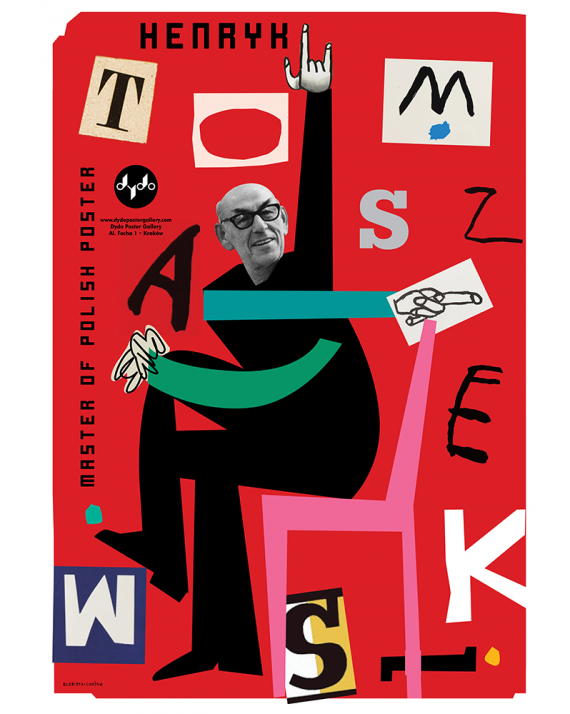
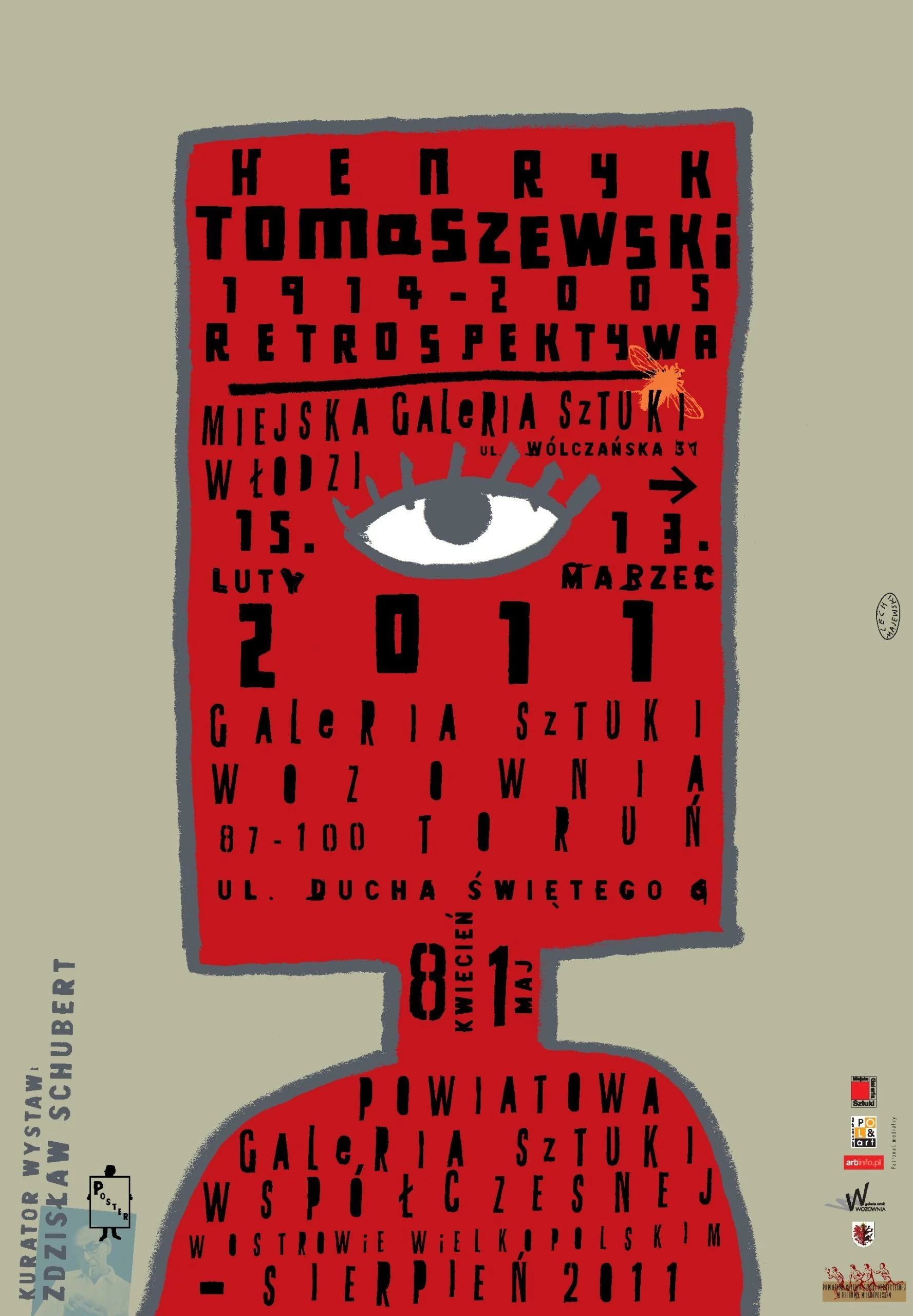
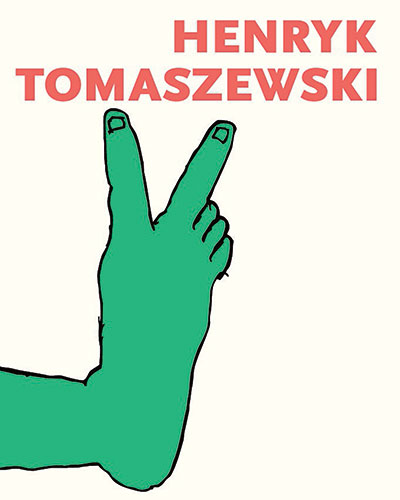
Graphic designer, illustrator, poster artist—considered, alongside Józef Mroszczak, one of the founding fathers of the Polish School of Poster Art.
Henryk Tomaszewski studied at the Józef Piłsudski School of Graphic Arts in Warsaw from 1929 to 1934, where he trained as a lithographic draftsman. From 1934 to 1939, he studied painting at the Academy of Fine Arts in Warsaw under Professor Mieczysław Kotarbiński.
He made his artistic debut while still a student, designing two posters for the Municipal Savings Bank. From 1936 to 1939, he collaborated with the satirical magazine Szpilki. In 1939, he was awarded First Prize in two prestigious competitions: for a design of the Polish Industry Pavilion at the World’s Fair in New York, and for a bas-relief frieze for the facade of the Warsaw Central Railway Station.
During World War II, Tomaszewski remained in Warsaw. Following the Warsaw Uprising, he relocated to Lublin, where he worked with the weekly Stańczyk, and later moved to Łódź. There, he participated in the postwar revival of artistic life, co-founding the satirical weekly Rózgi (1946–1947) with Stanisław Sojecki and Stefan Stefański. Between 1947 and 1949, he lectured at the Higher School of Fine Arts in Łódź.
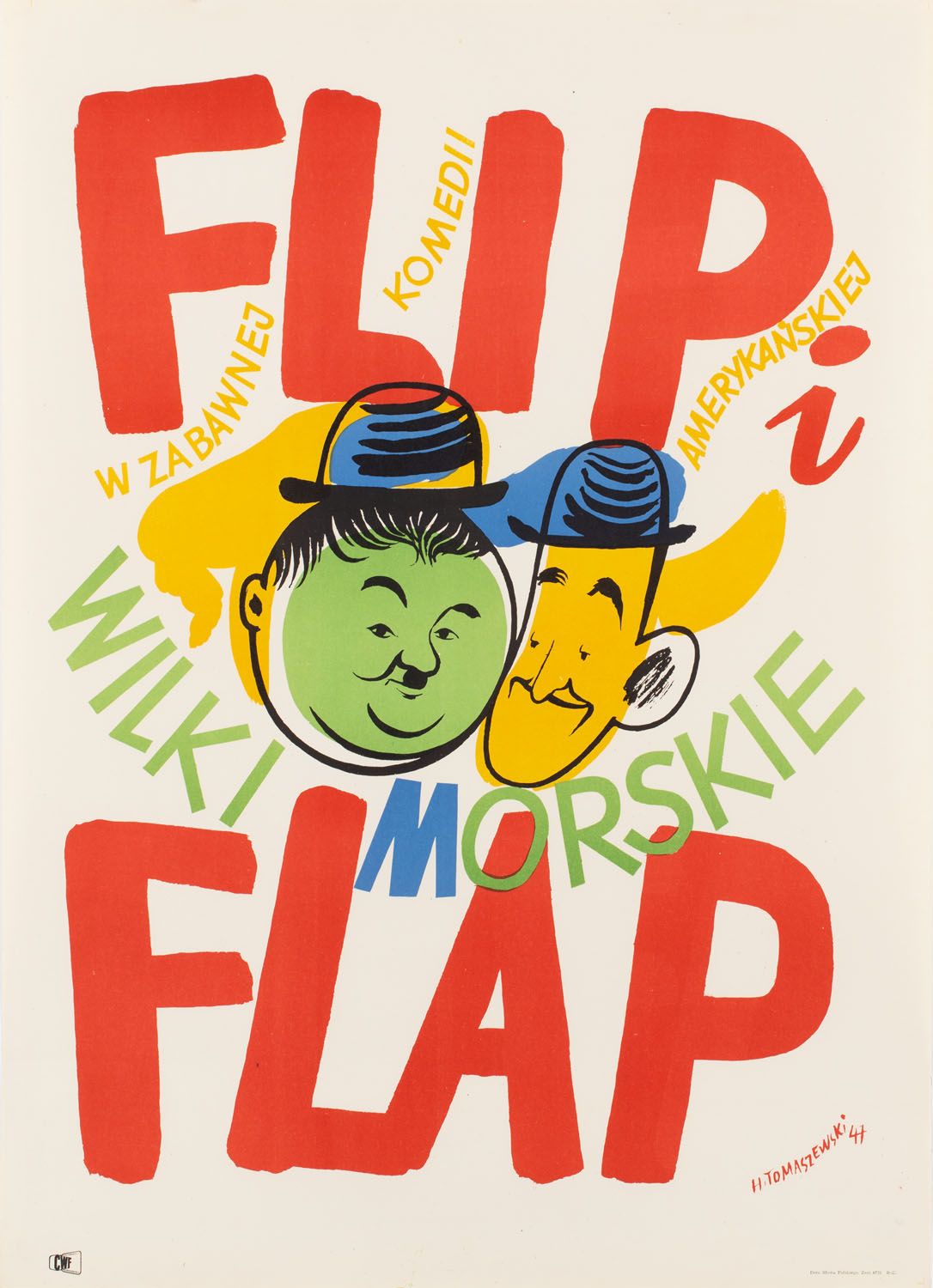
In 1947, while in Łódź, Tomaszewski and Eryk Lipiński were invited to design posters for the state-run Film Polski enterprise. Accepting this offer would become the first step toward the emergence of what would soon be recognized as the Polish School of Poster Art. Tomaszewski became its spiritual father and one of its most distinguished practitioners.
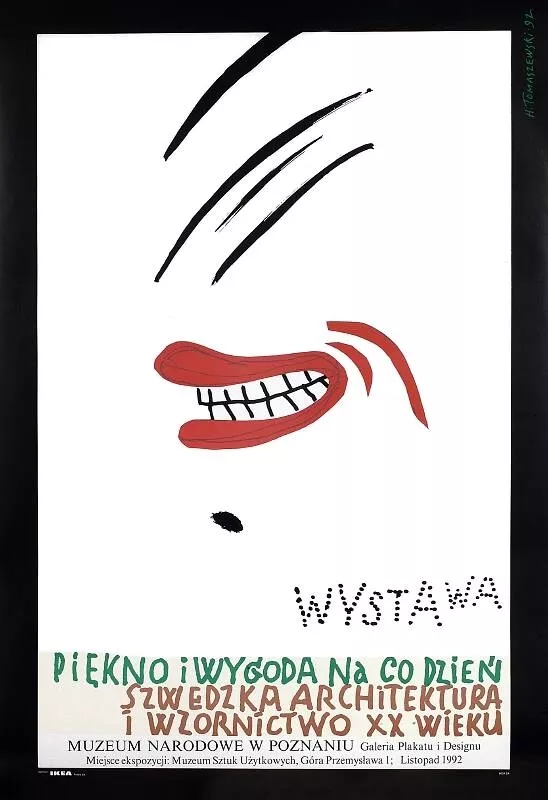
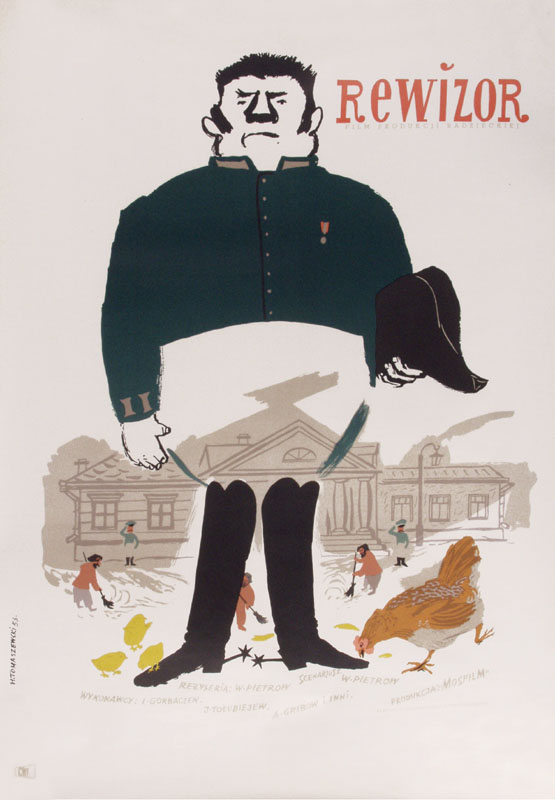
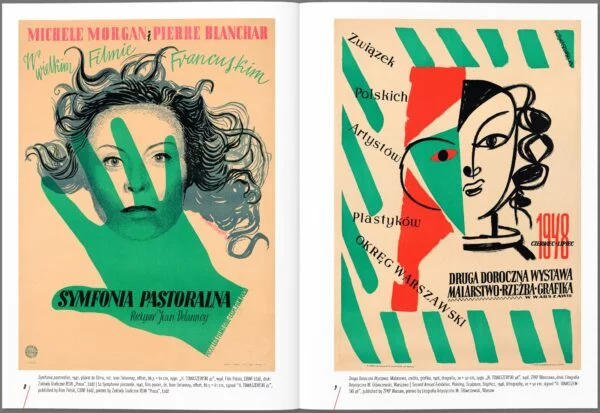
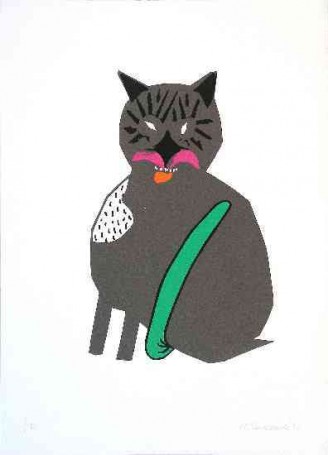
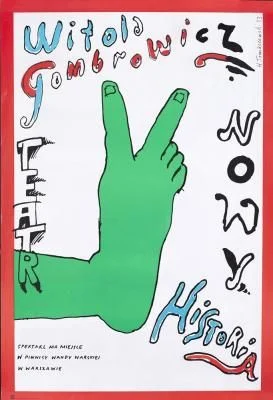
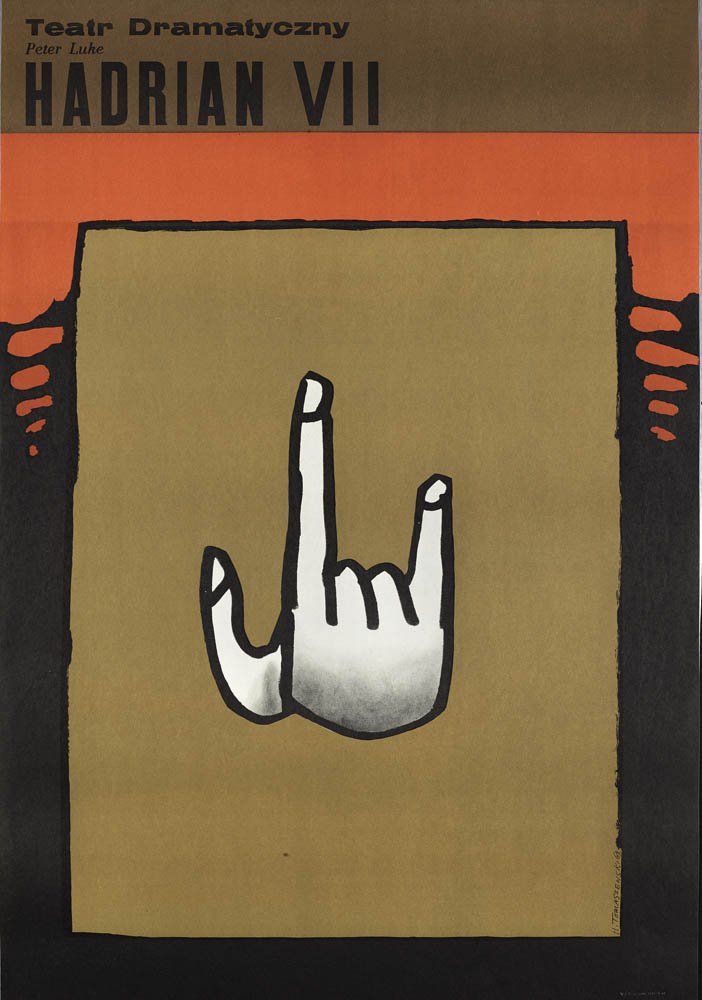
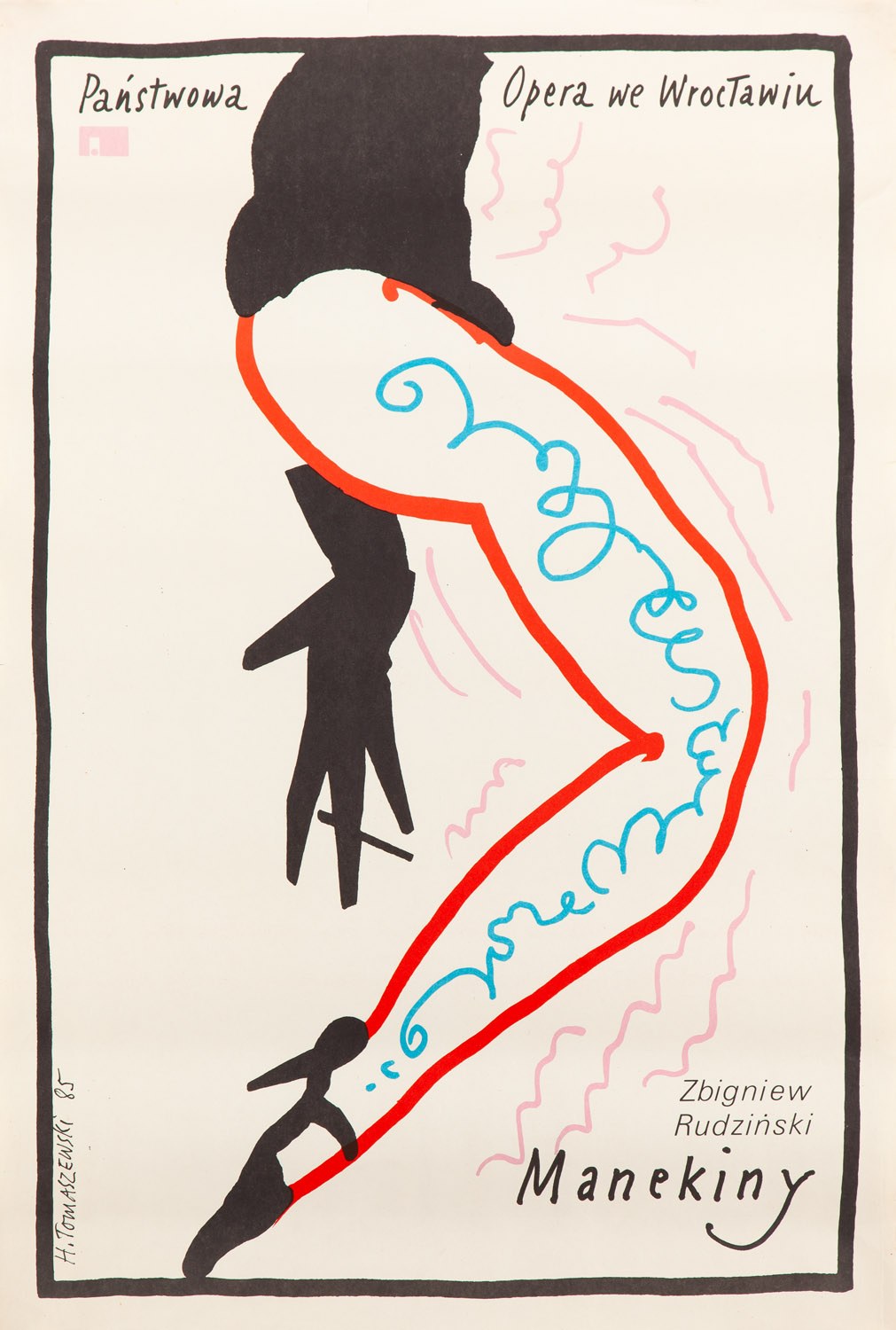
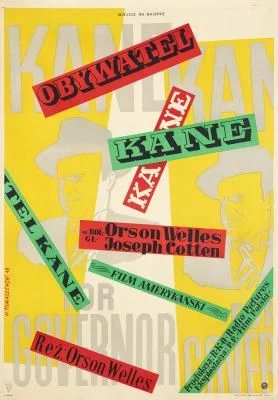
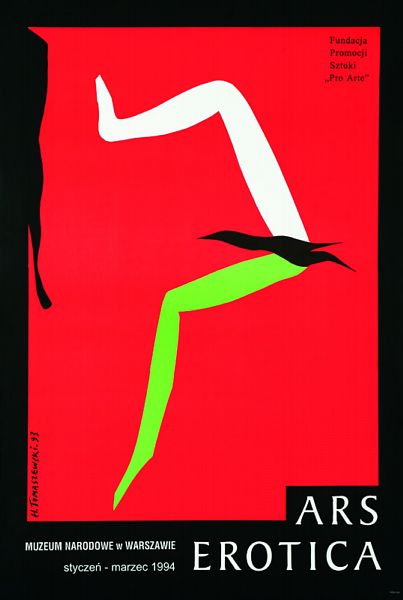
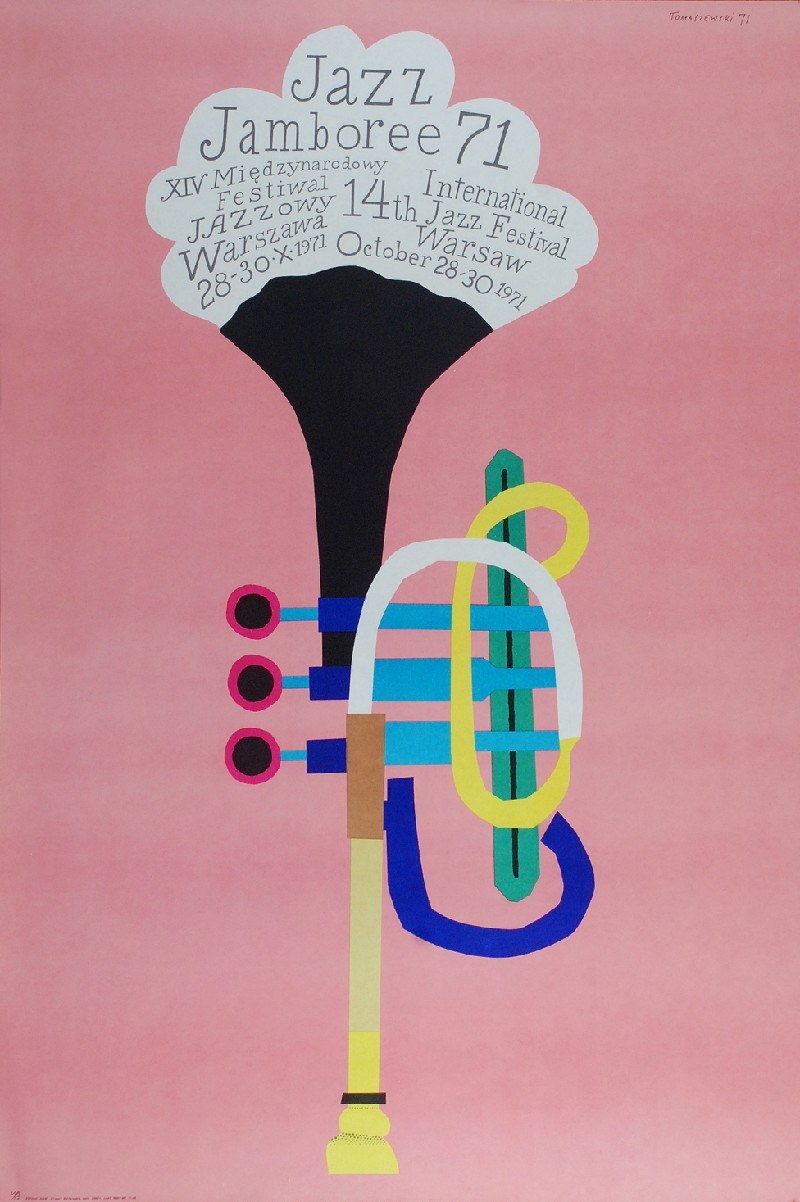
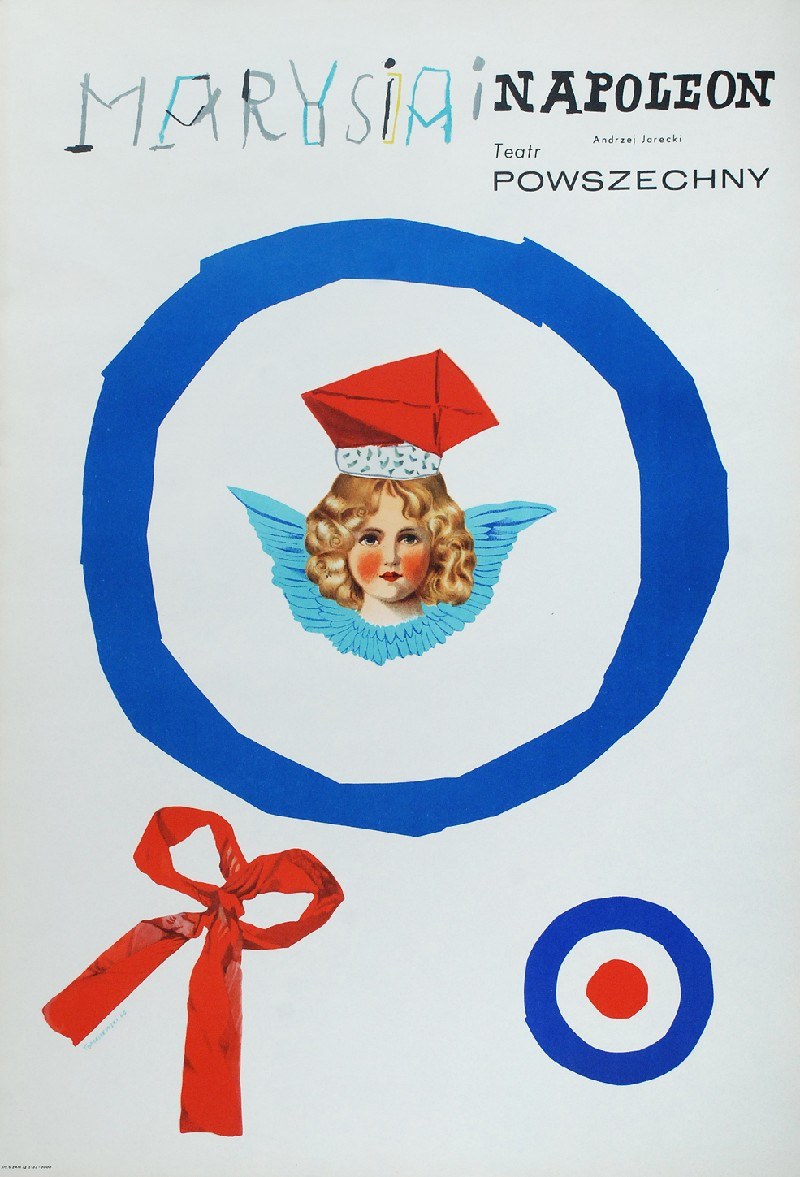
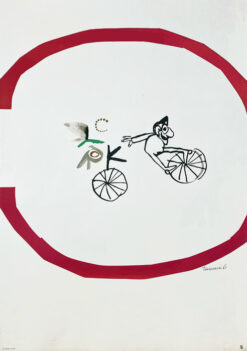
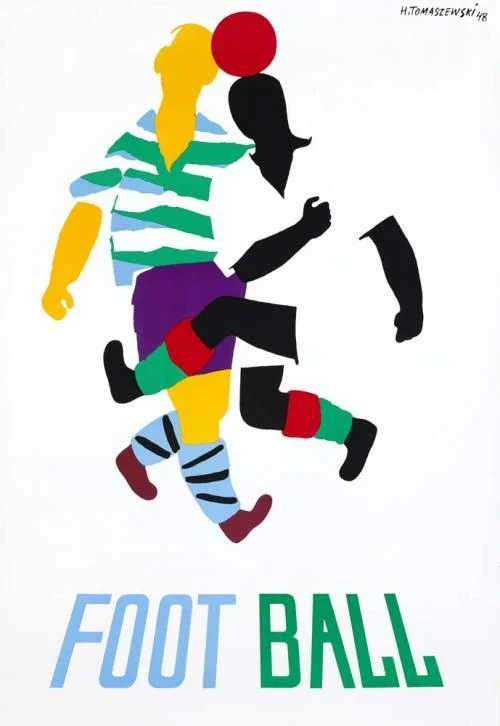
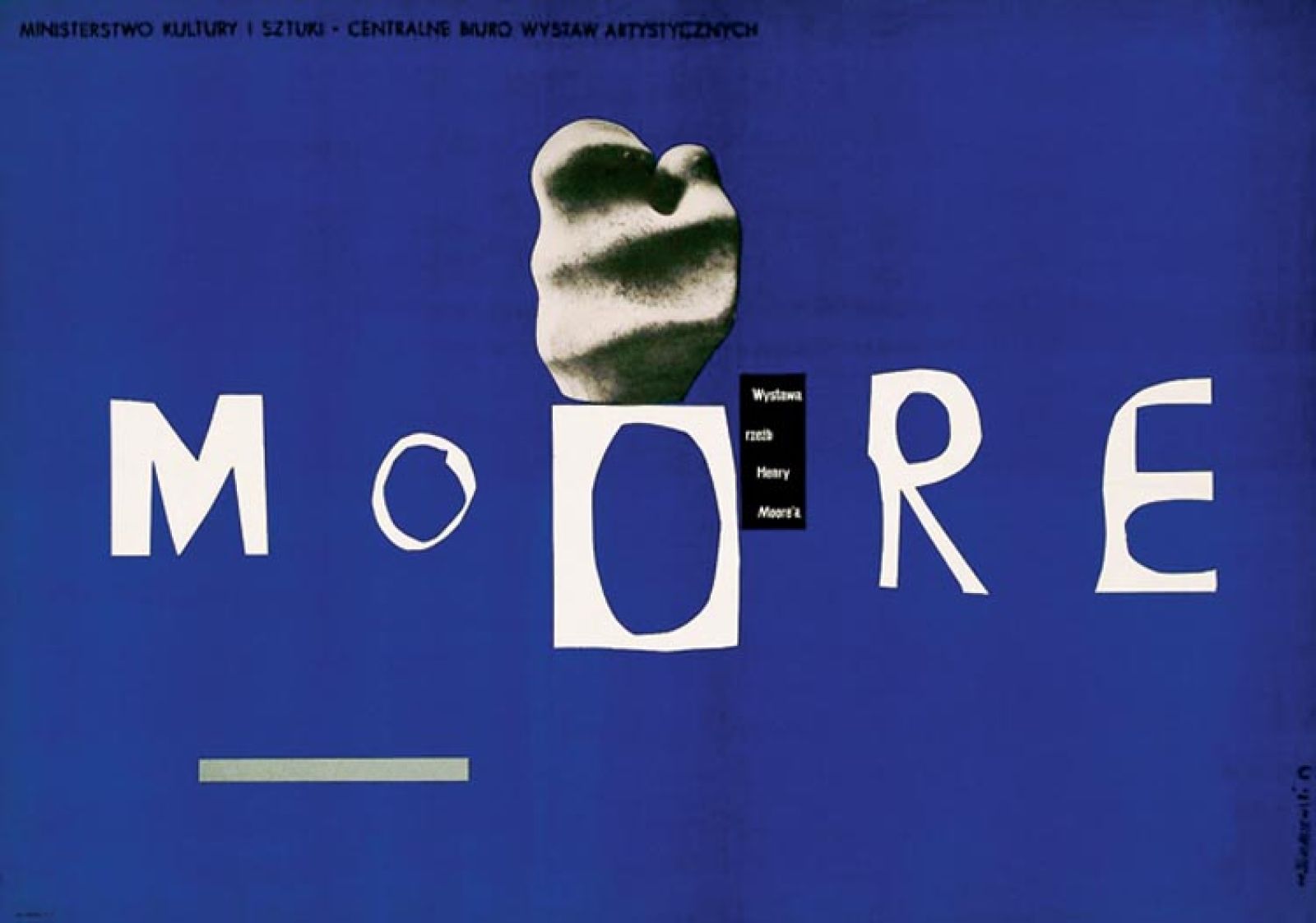
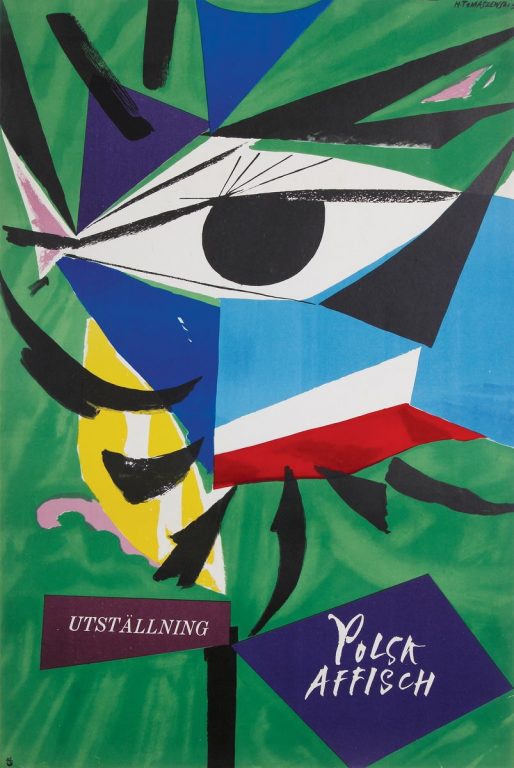
He developed a new poster language based on visual abbreviation, metaphor, and graphic interpretation of a film’s message. His posters from this era were marked by painterly qualities, fluidity, wit, and poetic atmosphere. Many of them are now regarded as iconic: The Little Barrel (1947), Pastoral Symphony (1947), Citizen Kane (1948), Under the Sicilian Sky (1952), Ditta (1952), The Inspector General (1953), The Devil’s Charm (1954). He designed film, theater, and circus posters whose power lay not in ornamentation, but in their ideas.
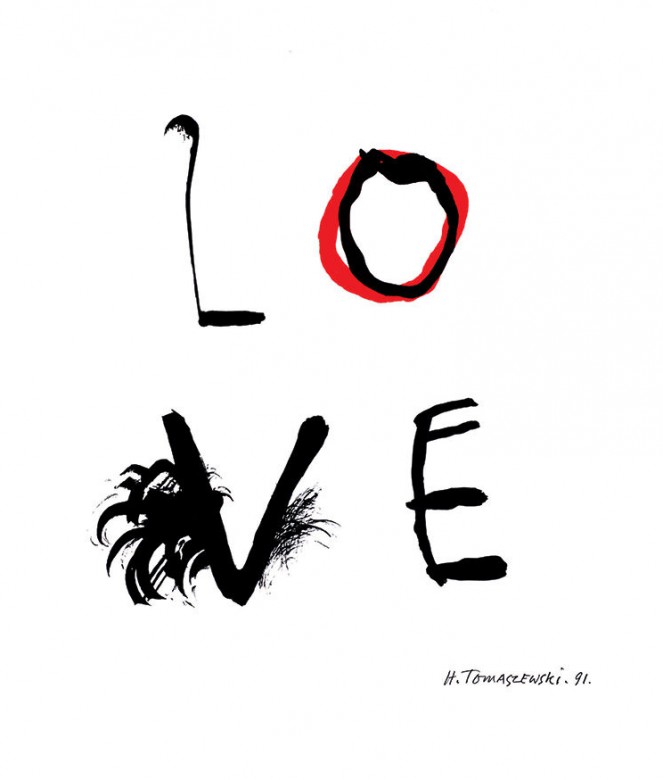
Tomaszewski used irony, metaphor, and interplay between typography and color. His strength lay in abstraction and conceptual brevity—not just visually, but intellectually.
Tomaszewski’s five First Prizes at the 1948 International Poster Exhibition in Vienna sparked global interest in Polish posters and ushered in a golden era for Polish poster design.
Tomaszewski also created book illustrations and covers, collaborating with major publishers such as PIW and Czytelnik. He designed theatrical sets (notably for the Syrena Theater in Warsaw from 1950 to 1952), and contributed to the design of exhibition pavilions, including those in London (1954) and Paris (1955).
From 1952 to 1985, Tomaszewski ran the Poster Studio at the Academy of Fine Arts in Warsaw. The studio soon gained international acclaim and attracted students from around the world. His teaching method was rooted in abstract conceptual exercises, designed to develop intellectual sensitivity, logical thinking, and imagination.
He told students:
“Think first. You’ll learn to draw later.”
He shaped generations of artists—not through imitation, but through an understanding of meaning and synthesis.
Notable students include:
Pierre Bernard, Andrzej Budek, Marek Freudenreich, Joanna Flatau, Jacek Gawłowski, Leszek Hołdanowicz, Radovan Jenko, Andrzej Klimowski, Cyprian Kościelniak, Lech Majewski, Jan and Piotr Młodożeniec, Marcin Mroszczak, Gérard Paris-Clavel, Filip Pągowski, Alain Le Quernec, Wiesław Rosocha, Thierry Sarfis, Romuald Socha, Janusz Stanny, Rosław Szaybo, Stefan Szczypka, Maciej Urbaniec, Mieczysław Wasilewski, and Bronisław Zelek.
Henryk Tomaszewski was a solitary giant—an artist who did not cater to mass taste, but created for the intellect of the viewer. He never resorted to clichés, always trusting in the intelligence of his audience. His work is filled with humor, lightness, and a profound awareness of form.
His art is proof that minimalism is not impoverishment—it is the highest form of concentration.
Poster Museum, Wilanów (Poland)
National Museum, Poznań
Museum of Modern Art (MoMA), New York
Museum of Modern Art, Toyama (Japan)
Museum of Modern Art, São Paulo
Stedelijk Museum, Amsterdam
Museum für Gestaltung, Zurich
German Poster Museum, Essen
Plakatmuseum, Århus (Denmark)
1969 – Henryk Tomaszewski. Drawings and Posters, Société des Beaux-Arts, Biel/Bienne, Switzerland
1972 – Laureates of the 3rd International Poster Biennale, Poster Museum, Wilanów
1984 – Posters by Henryk Tomaszewski, Wahl Gallery, Warsaw
1989 – Affiches de Pologne 1945–1988. Tribute to Henryk Tomaszewski, Centre de la gravure, La Louvière (Belgium)
1990 – Laureates of the 12th International Poster Biennale, Poster Museum, Wilanów
Polish Posters 1945–1990. Tribute to Henryk Tomaszewski, Hessenhuis, Antwerp
1991 – Henryk Tomaszewski, Stedelijk Museum, Amsterdam
1992 – Henryk Tomaszewski, Ginza Graphic Gallery, Tokyo
1996 – Henryk Tomaszewski: My Creative Journey, Gallery of Graphic Art and Posters, Warsaw
1939 – First Prize for the Polish Industry Pavilion design, World’s Fair, New York
1947 – First Prize in the UN International Poster Competition
1948 – Five First Prizes at the International Poster Exhibition, Vienna
1948 – Prize for Olympic Poster Design, London
1953 – First Prize, 1st National Poster Exhibition, Warsaw
1953 – Second-Degree State Award
1955 – Vienna City Prize for Best Poster Displayed
1956 – Ministry of Culture Award, Polish Film Poster Exhibition, Warsaw
1959 – Artistic Award from Przegląd Kulturalny magazine
1963 – First Prize, 7th São Paulo Biennale of Contemporary Art
1963–1973 – Multiple awards from the Mayor of Warsaw for Best Poster of the Year
1965 – Gold Medal, International Exhibition of Editorial Art, Leipzig
1966 – Silver Medal, 1st International Poster Biennale, Warsaw
1967 – Gold Medal, 2nd National Poster Biennale, Katowice
1970 – Gold Medal, International Poster Biennale, Warsaw
1975 – Silver Medal, 6th National Poster Biennale, Katowice
1979 – Grand Prix, 8th Polish Poster Biennale, Katowice
1984 – Alfred Jurzykowski Foundation Award, New York
1986 – Icograda Prize, 9th International Poster Biennale, Warsaw
1988 – Gold and Silver Medals, 12th International Poster Biennale, Warsaw
1991 – Bronze Medal, 3rd International Poster Triennale, Toyama