
This is a demo store for testing purposes — no orders shall be fulfilled. Dismiss
Skip to contentJózef Szajna Set designer, theater director, screenwriter, theater theoretician, painter, graphic artist. Born in 1922 in Rzeszow. Died on June 24, 2008.
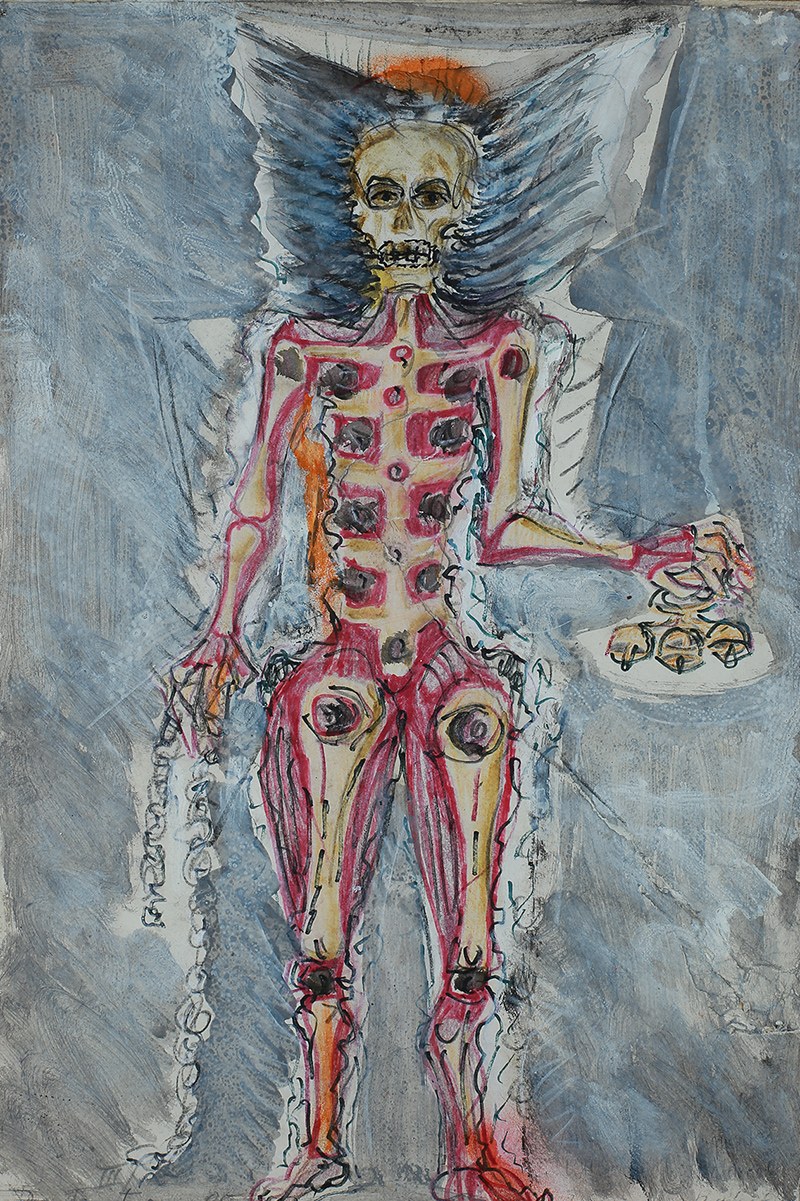
During the occupation, he was a prisoner in the Auschwitz and Buchenwald concentration camps, which affected the nature of his artistic work.
He received his diploma in graphic design (1952) and stage design (1953) from the Academy of Fine Arts in Cracow. Shortly after graduation, in 1954, he began teaching at his alma mater, which he continued for the next nine years. Since 1972, he was a professor at the Academy of Fine Arts in Warsaw, where, among other things, he headed the scenography studio. At the same time, he was professionally active: in 1955-63 he was a stage designer (among other things, he designed the scenery for the plays: “Mice and People” – based on Steinbeck, “Dziady” – based on Mickiewicz), and then, until 1966, also director, artistic manager and director of the People’s Theater in Nowa Huta.
He also worked with the Old Theater in Cracow, the Silesian Theater in Katowice, the Contemporary Theater in Wroclaw and the Polish Theater in Warsaw. In 1971, he created the author’s Theater-Gallery at Warsaw’s Studio Art Center (transformed from the Classical Theater). There he pursued his idea of education through a peculiar, because elitist, popularization of various genres of art: primarily through theater, but also through various manifestations of the visual arts (and not only). He resigned from running the Center ten years later – after the declaration of martial law.
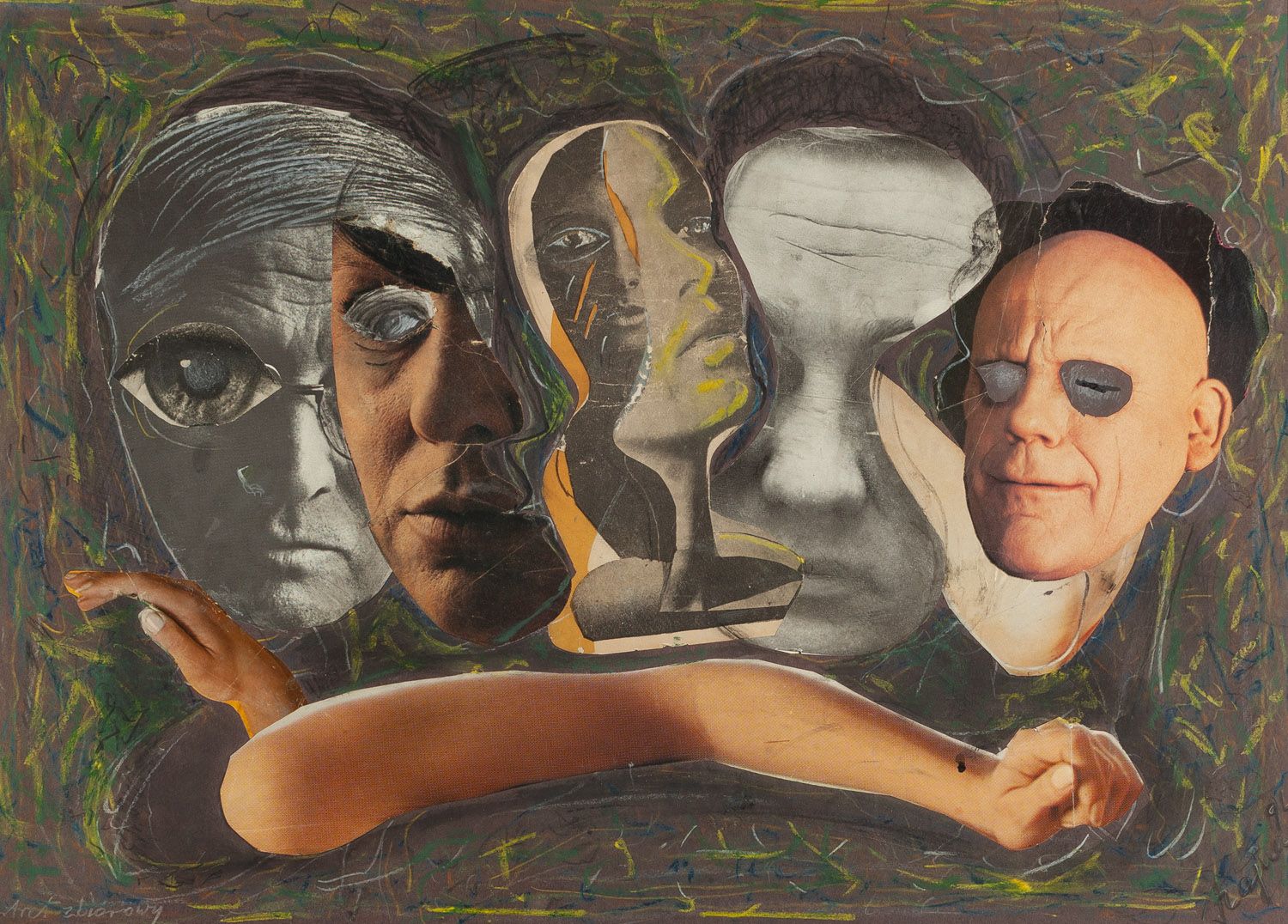
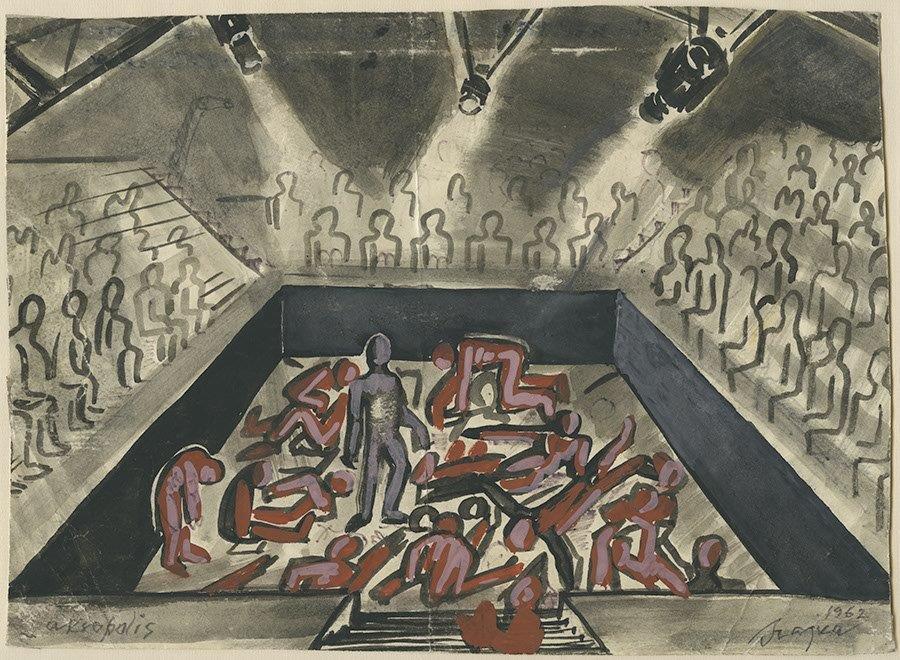
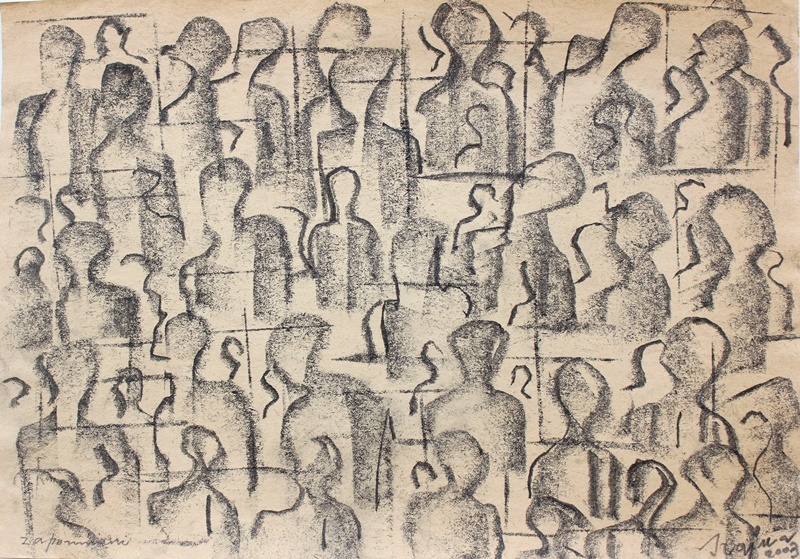
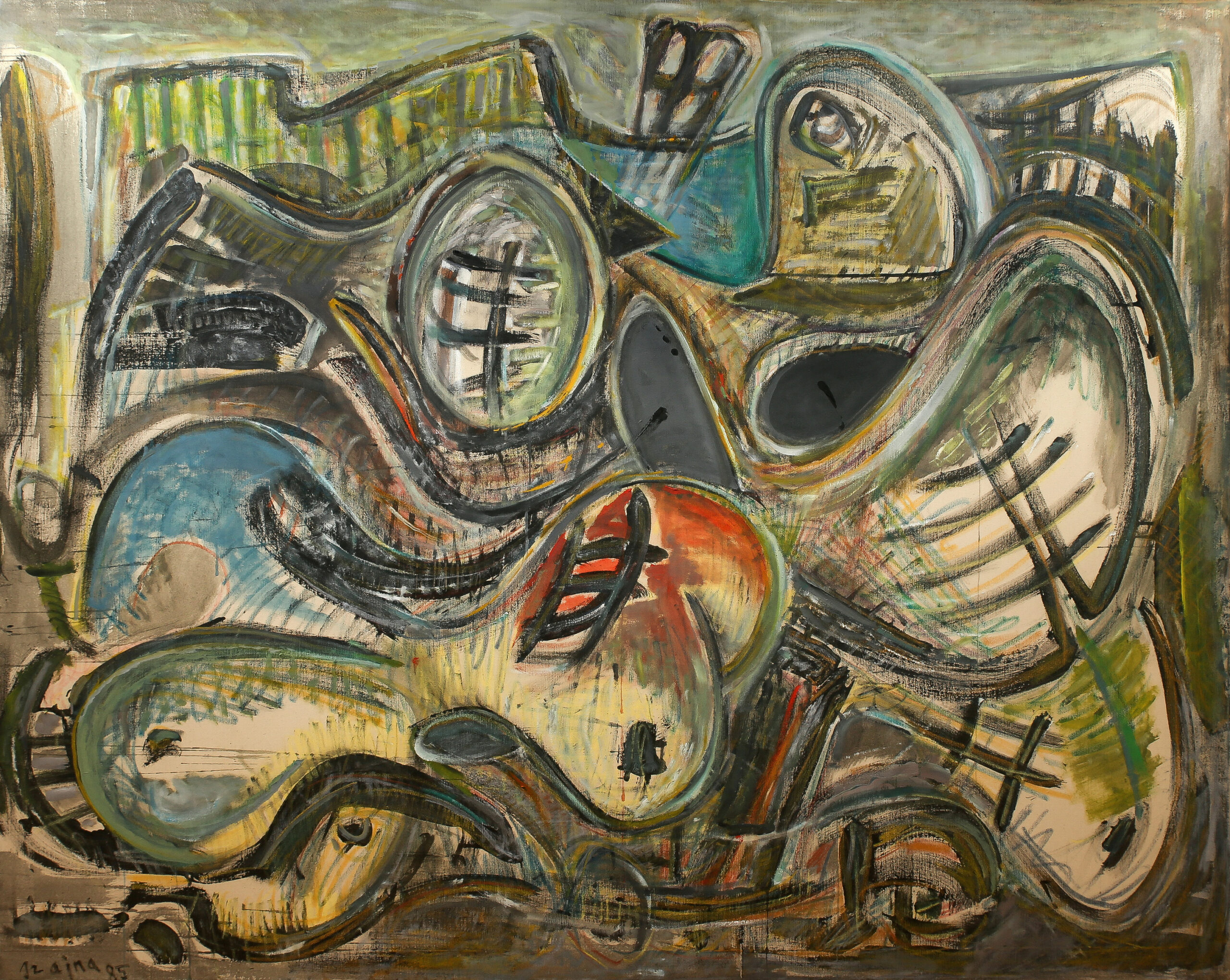
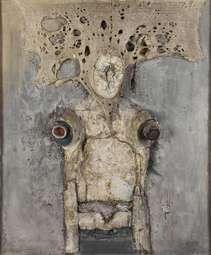
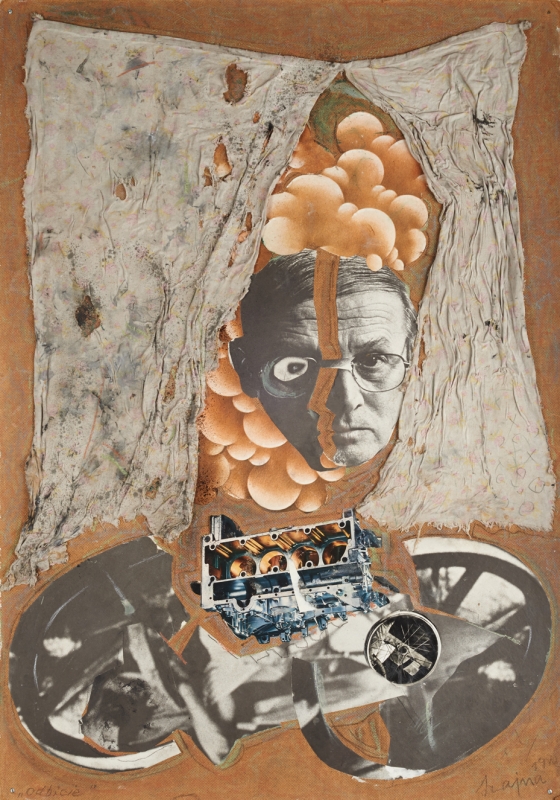
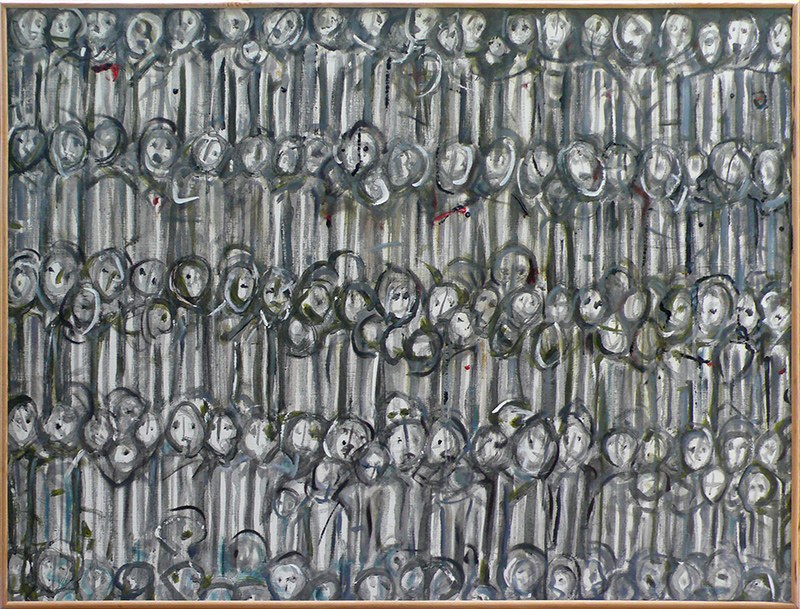
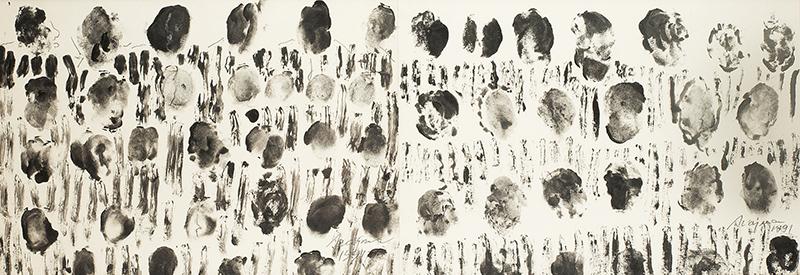
He practiced painting, graphic design, stage design, theater directing, wrote scripts for his own productions, and was a theoretician of theater. He is perceived primarily as a man of the theater, creator of a personal formula – in the words of Zbigniew Taranienko – “the theater of visual narration” (otherwise known as “plastic theater”, “theater of visual artists”, “theater of visions”). The main emphasis in it is on visual expression. However, unlike, for example, Leszek Mądzik, Szajna never rejected either the actor with his individual gesture or the word. Nevertheless, in the program of his theater he gave the most prominent role to the visual sign: elaborate scenery and – often grotesquely enlarged – props. He himself said “I turn life into a picture […]” and this thought reflects his intentions.
This original idea of a peculiarly plastic theater, fully realized at the Studio Theater, assimilated most of the artist’s non-theatrical experience. In the author’s productions-morality plays (e.g. “Replika”, 1973; “Gulgutiera”, 1973; “Dante” – on the basis of “The Divine Comedy”, 1974; “Cervantes”, 1976), he combined the literary text, saturated with personal reflections, with the aforementioned visionary organization of the stage space and the unorthodox, intense, expressive performance of his actors.
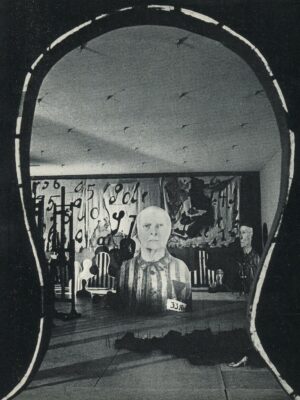
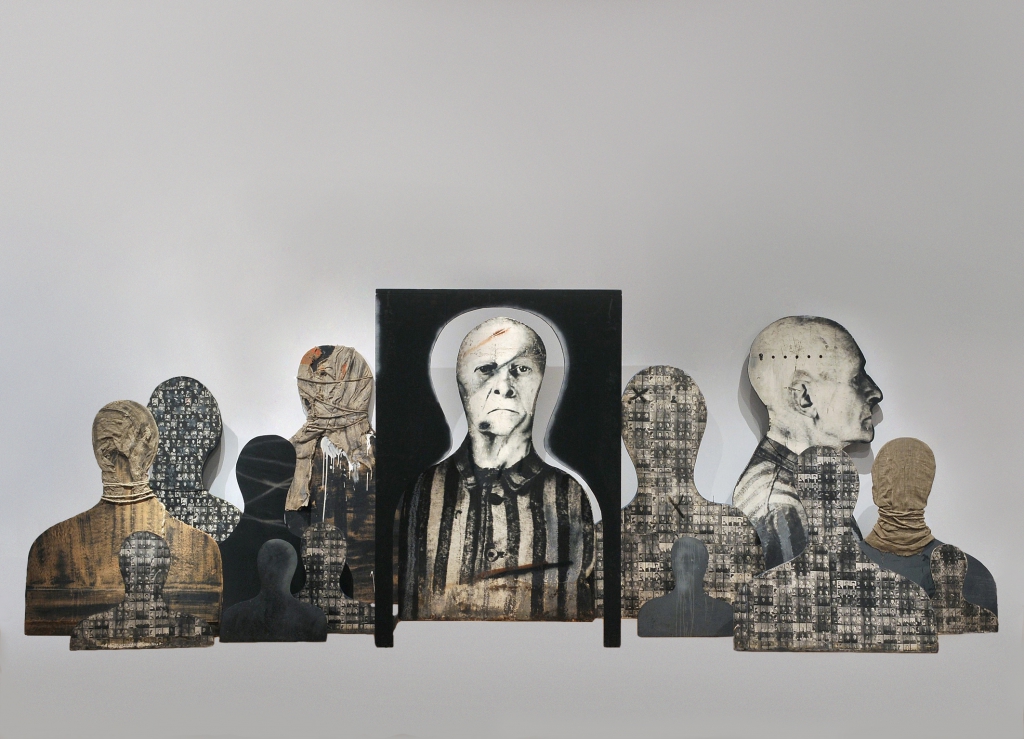
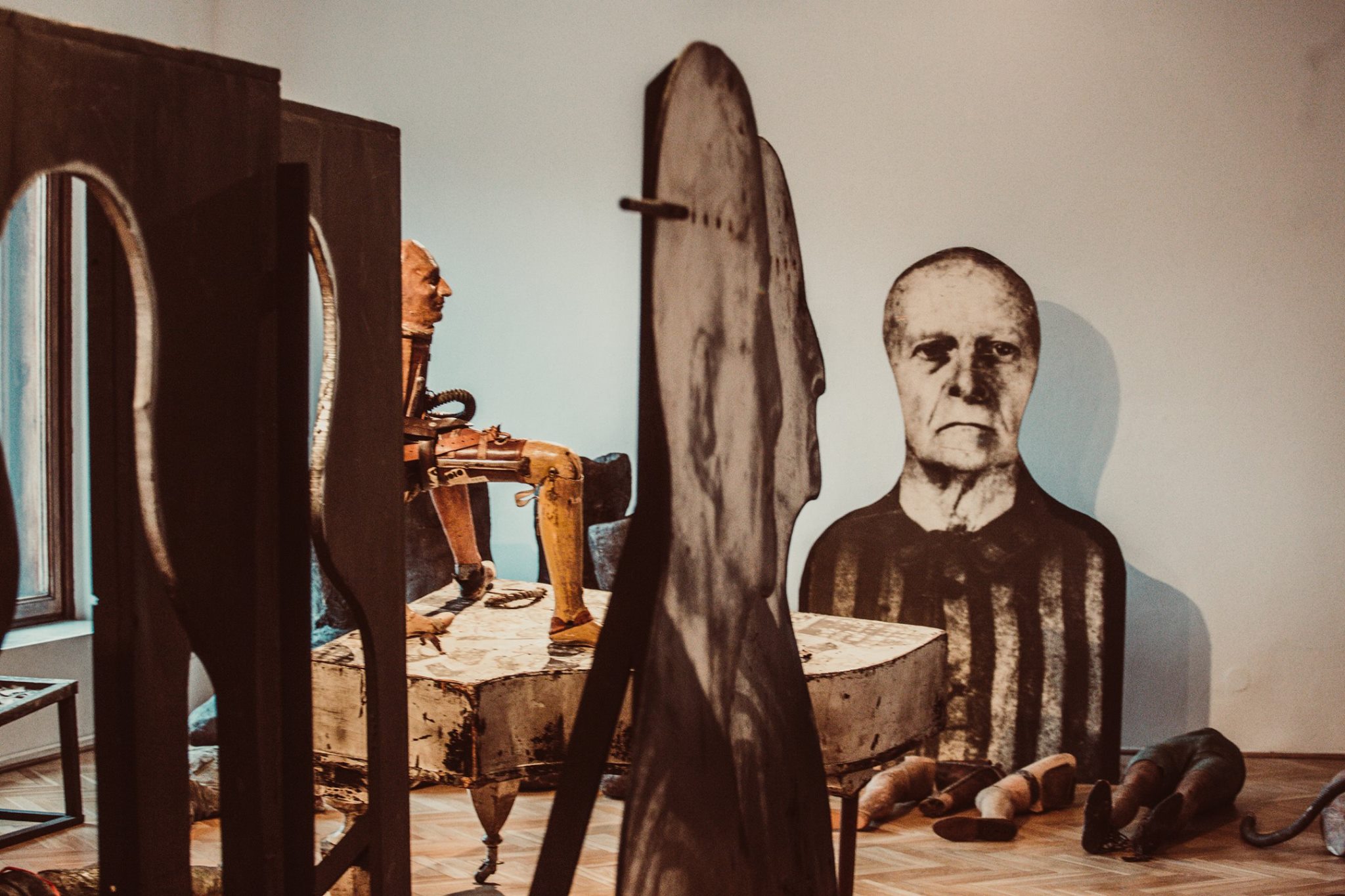
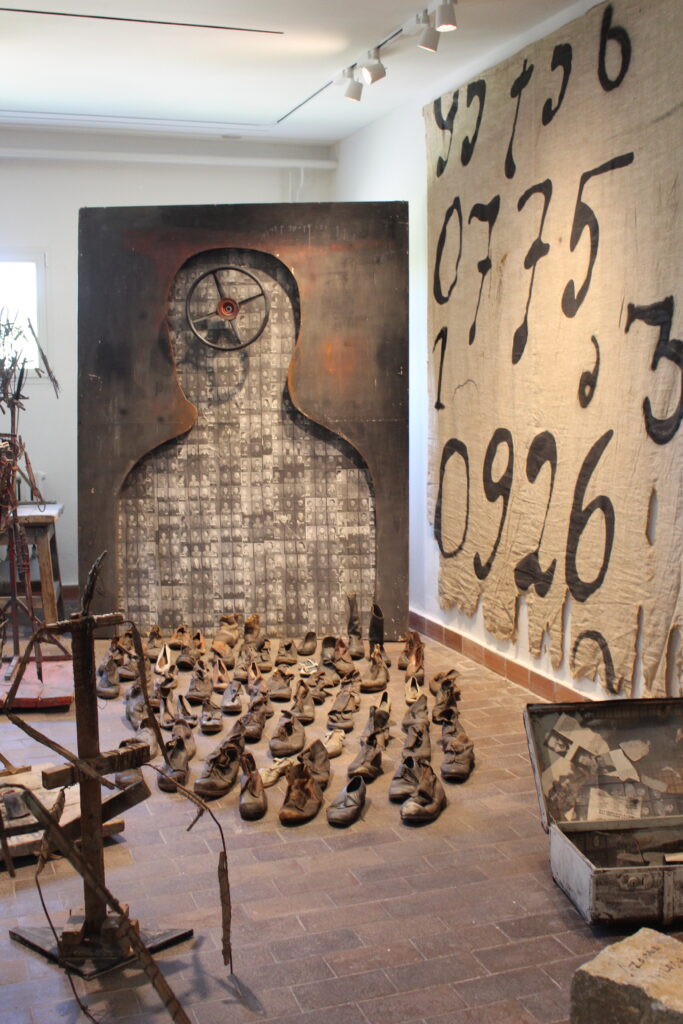
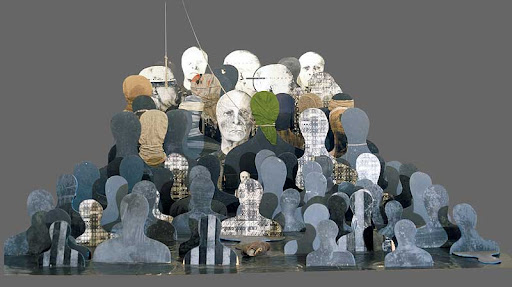
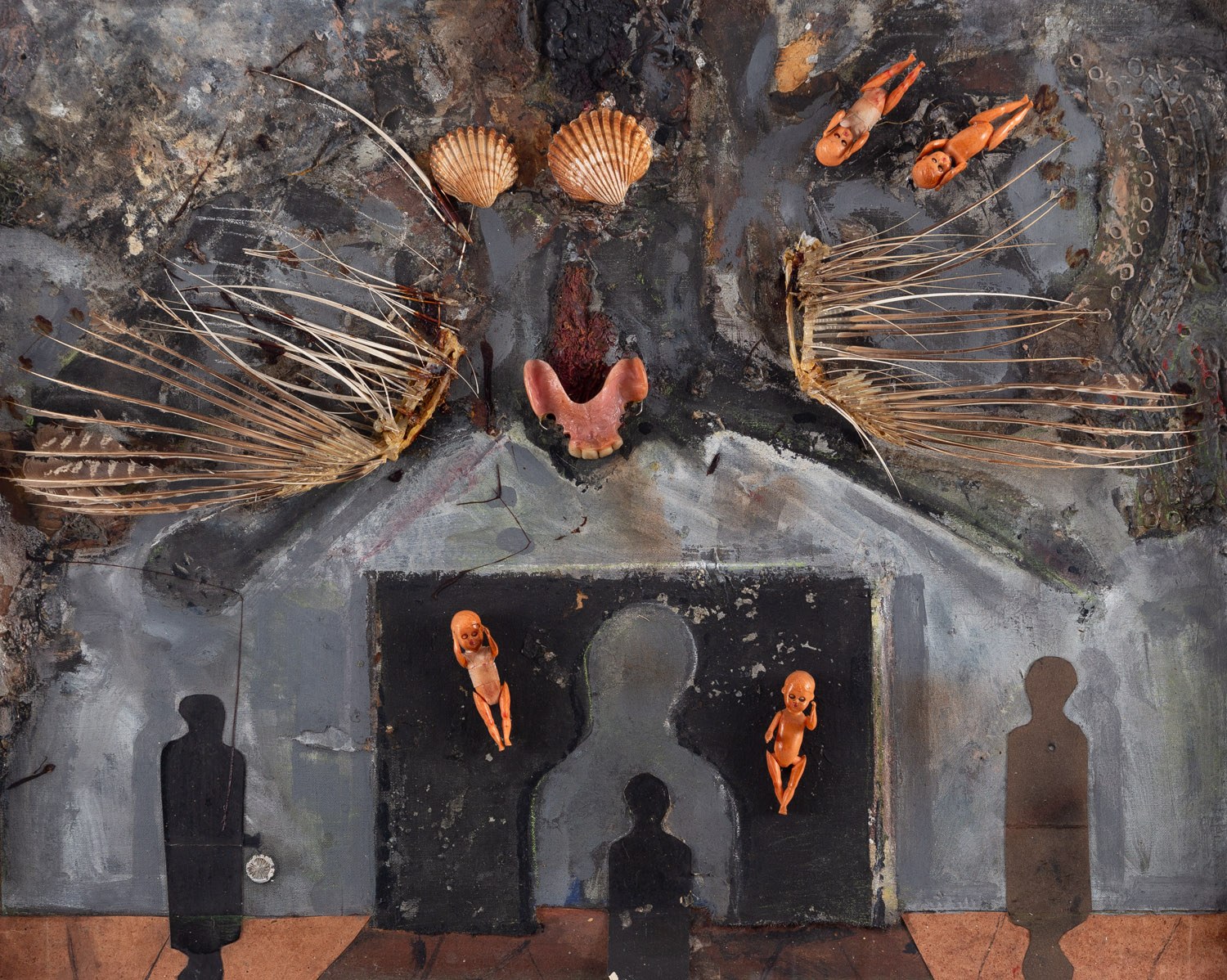
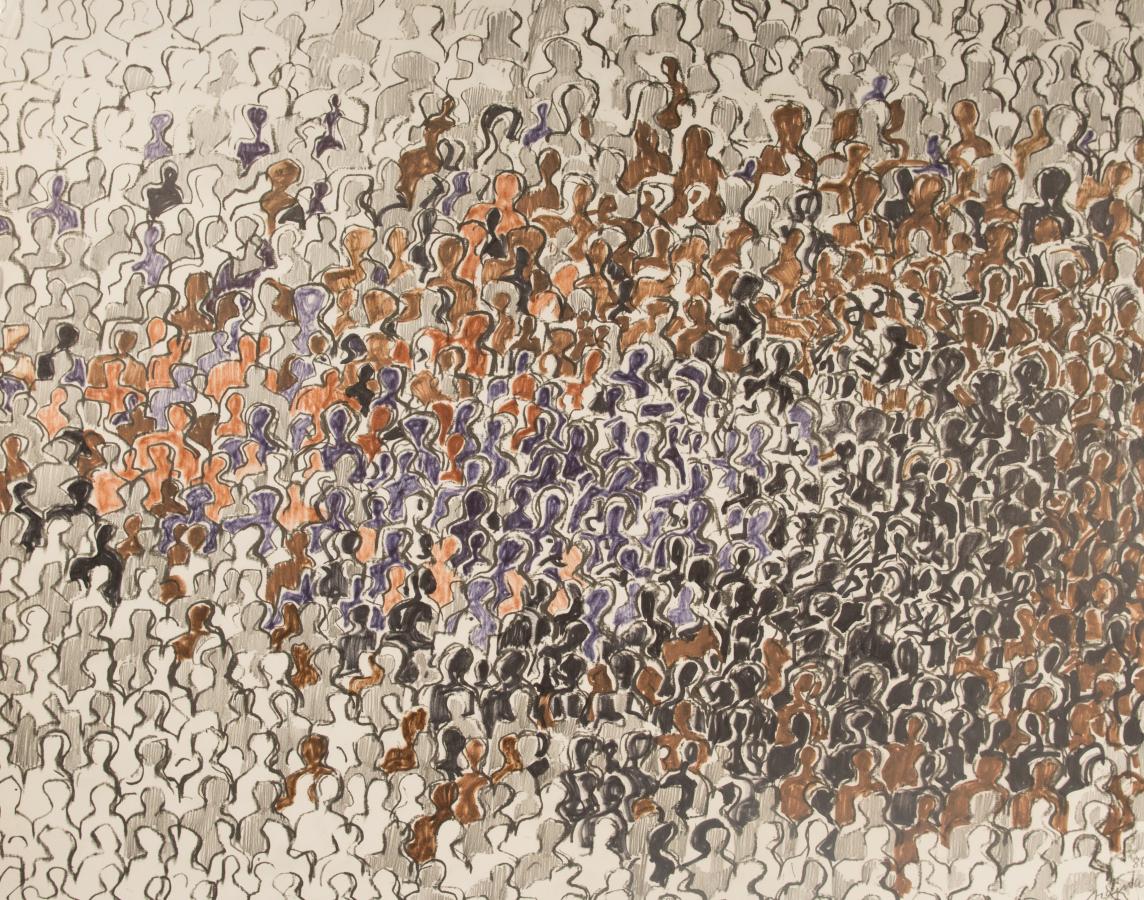
Among others, Szajna represented Poland at the Venice Biennale (1970 and 1990) and the São Paulo Biennale (1979 and 1989). However, he achieved worldwide success primarily as a theater artist. He was a member of numerous art associations. He was repeatedly honored for his achievements in various ways – at home and abroad. He gained particular fame and recognition in Italy, where he received several times high cultural awards (such as the Gold Medal of the Accademia Italia delle Arti e del Lavoro in Salsomaggiore Terme, 1981). Szajna’s name has been carried by the theater at the Slavic Cultural Center in Port Jefferson, United States, since 1975. In 1997, on the occasion of the 75th anniversary of the artist’s birth, a permanent exhibition of his works was set up in his hometown of Rzeszow, in a theater attic specially adapted for this purpose. The collection gathered there (painting, drawing, spatial compositions from the plays “Replika” and “Dante”) is retrospective in nature, thus providing insight into both the subject matter and poetics of this work.
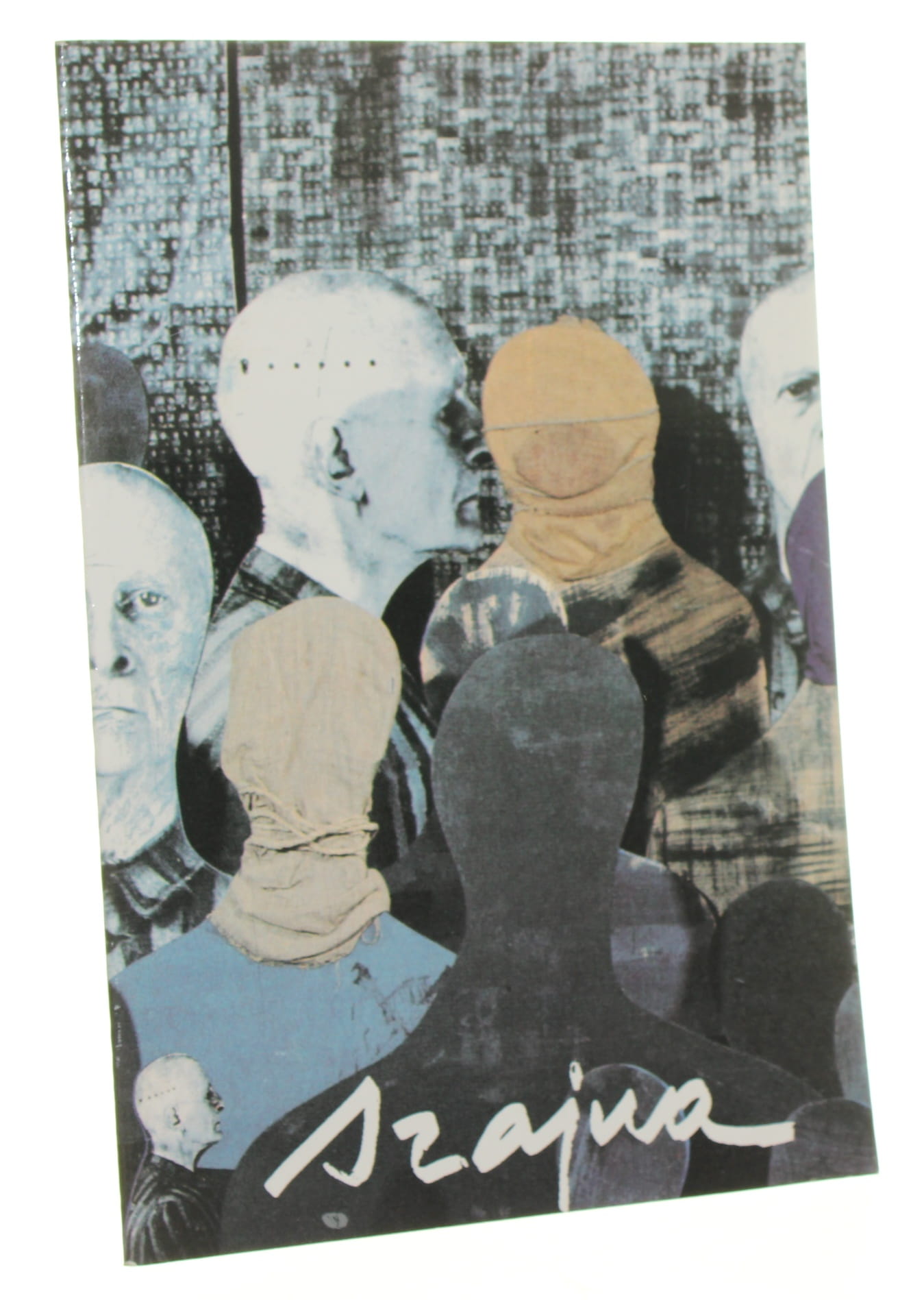
Among the studies devoted to Szajna, it is worth mentioning the book “Szajna” by Jerzy Madeyski and Andrzej Żurowski (1992), the catalog of the monographic exhibition organized on the occasion of his 75th birthday at the Polish Sculpture Center in Oronsko (1997) and the publication “Józef Szajna and his world” by Bożena Kowalska (2000).