This is a demo store for testing purposes — no orders shall be fulfilled. Dismiss
Skip to content(Born September 24, 1897, Koronowo – Died October 4, 1955, Bydgoszcz)
Polish graphic artist, typographer, illustrator, and educator based in Bydgoszcz.
From 1903 to 1913, Brzęczkowski attended the Municipal Realschule in Bydgoszcz. He later traveled to Kraków, then the center of Polish art, and to Berlin, where he worked at an advertising firm. During World War I, he served for two years on the front, having been conscripted into the German army.
In 1919, after Poland regained independence, he returned and settled in Chojnice, where he became involved in the Kashubian cultural movement. In 1921, he moved to Gdańsk and began working at the Polish State Railways Directorate, where he befriended Stanisław Przybyszewski, a fellow employee and key figure in the Polish nationalist scene in Gdańsk.
Alongside his full-time job, Brzęczkowski studied at the School of Applied Arts in Gdańsk (1922–1923). During this period, he met Aleksander Majkowski, a leading Kashubian activist, and became art director for the Kashubian periodical Gryf, where he worked on visual design and contributed articles. He became deeply interested in Kashubian folk art and actively promoted regionalism as a form of local patriotism, emphasizing the role of teachers in its cultivation. In 1929, he joined the board of the Kashubian Regional Association.
Throughout his time in Gdańsk, he continued refining his skills as a graphic artist. He mastered the techniques of woodcut and etching, and worked extensively in book illustration and typography. His works were displayed in exhibitions in Gdańsk and Sopot. In 1923, he participated in the Annual Salon of the Society for the Encouragement of Fine Arts in Warsaw, where he exhibited coastal etchings. He also took part in the General National Exhibition (1929) and the International Woodcut Exhibition in Warsaw (1933).
In 1935, he relocated to Bydgoszcz, where he was employed as a graphic advisor at the Printing Department of the Polish Library Publishing Institute. He soon became technical director of the printworks, which was at that time the largest and most modern printing house in Poland. He described its high technical standards in a chapter published in the 1937 volume Modern Printing. Despite his managerial responsibilities, he continued creating art and exhibited his work widely, including in Munich, Hamburg, Warsaw, and Poznań. He won a prize at the International Woodcut Exhibition in Warsaw and created advertising posters for the Poznań International Fair.
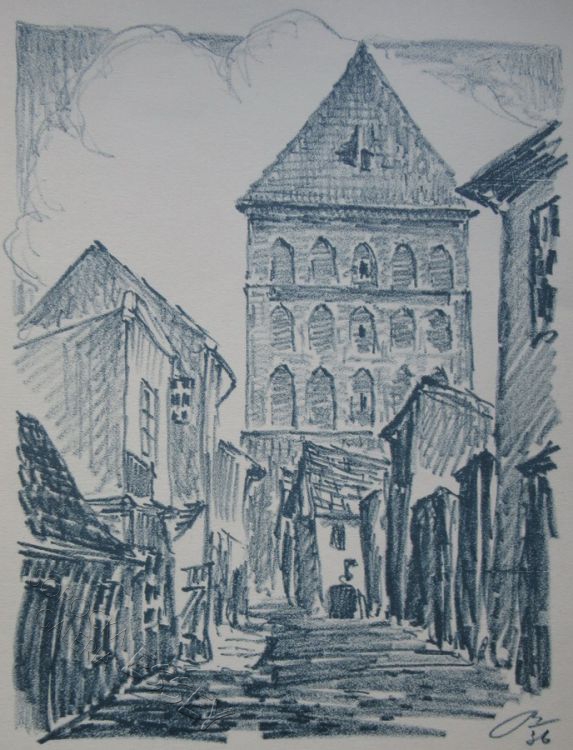
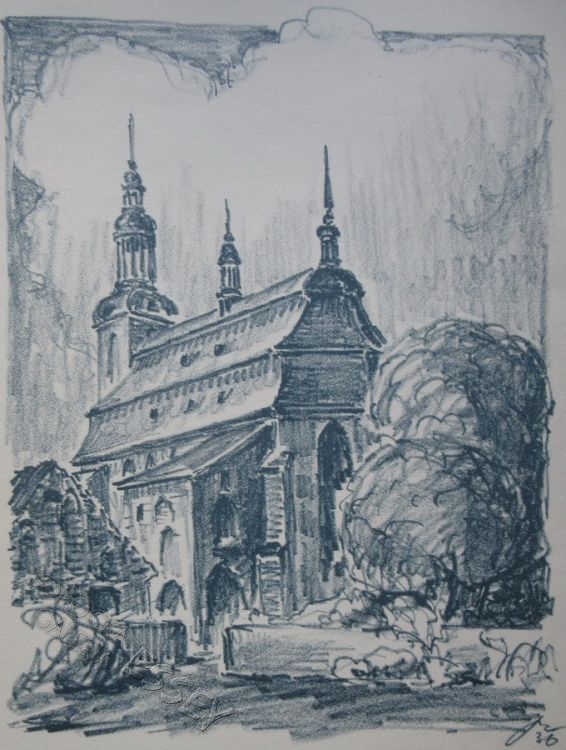
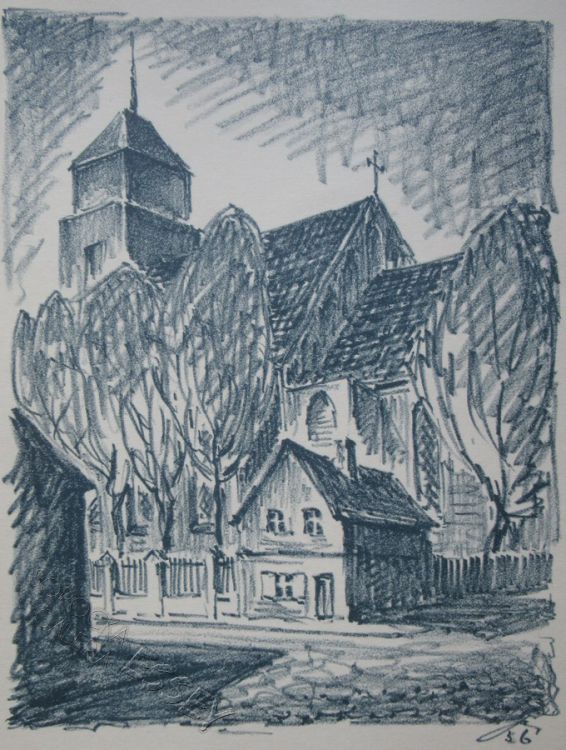
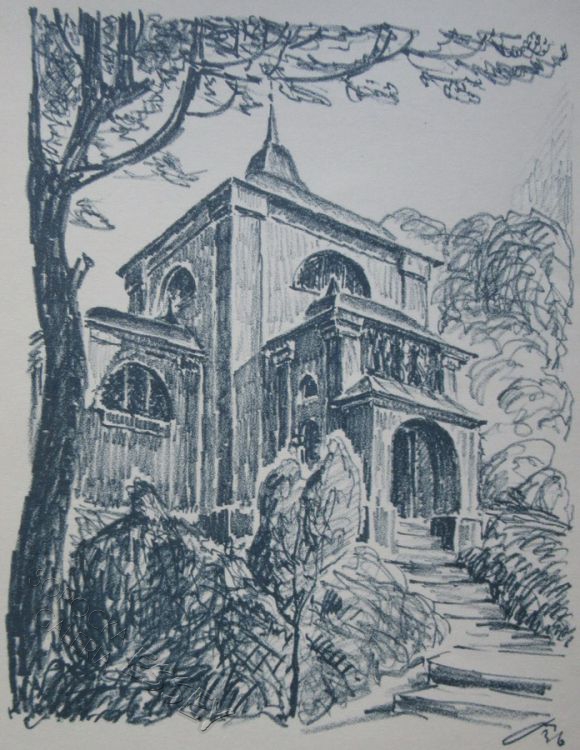
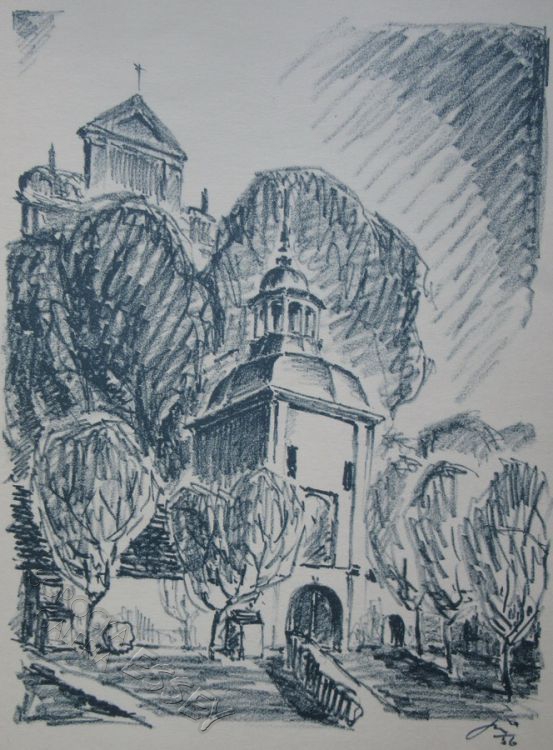
In 1937, he published a portfolio of offset prints titled Portfolio of Pomeranian Cities, for which he received a City of Bydgoszcz Award. He regularly exhibited at the Annual Salons of the Bydgoszcz City Museum. From October 1938 to February 1939, he attended the Academy of Graphic Arts and Book Design in Leipzig, later traveling to Munich and Vienna. He returned to Poland in May 1939, moving to Warsaw to resume work as technical director at the Polish Library Publishing Institute.
After World War II, in February 1945, he was appointed by the Ministry of Information and Propaganda to reorganize the printing industry in Bydgoszcz. From May 1945 until the end of 1947, he served as director of the local branch of the State Printing Plant Authority. On September 1, 1947, he also began teaching at the State Secondary School of Visual Arts, where he founded and headed the graphics department. Between 1949 and 1951, he was a graphic advisor to the PZWS Graphic Plant in Bydgoszcz.
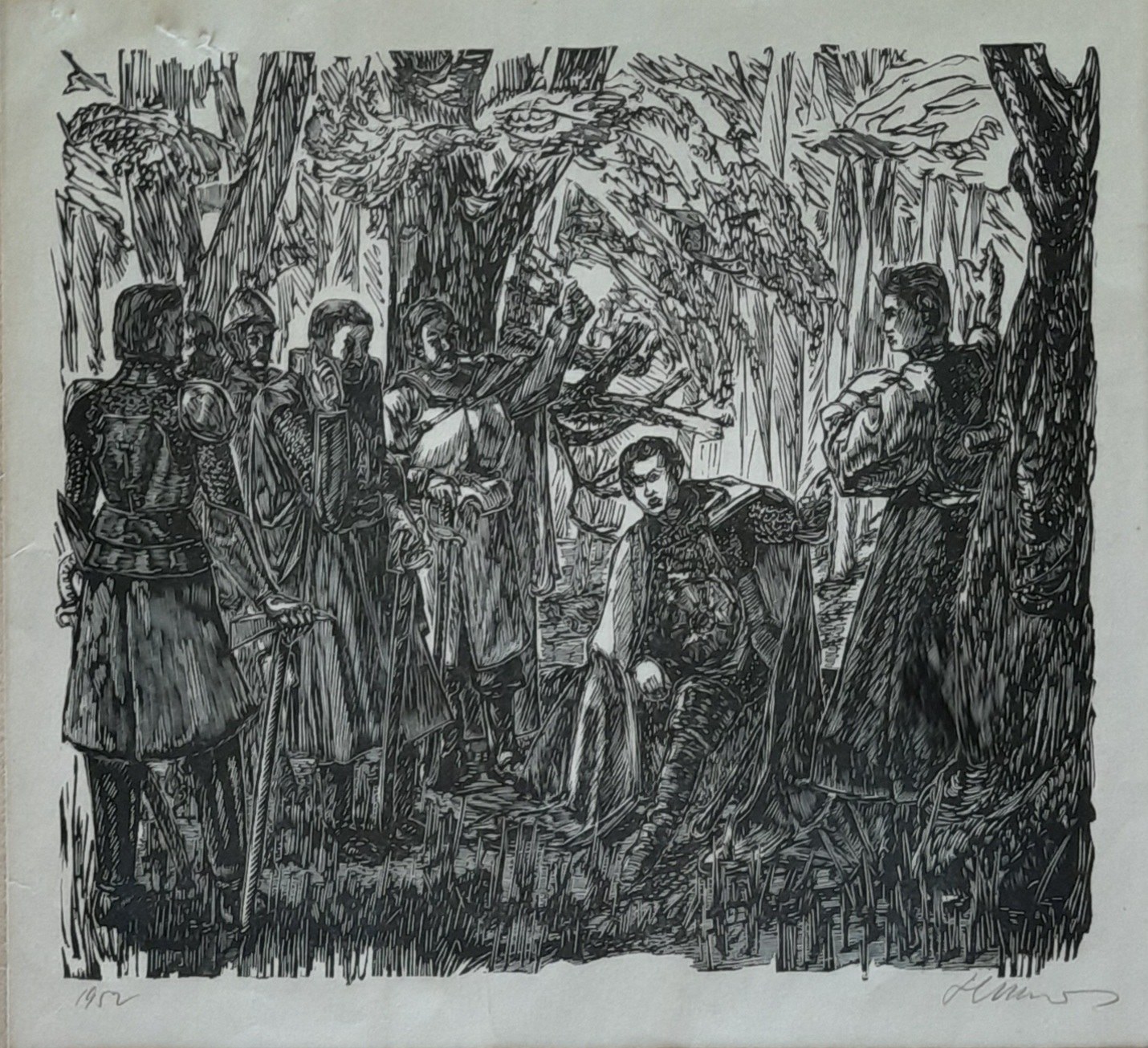
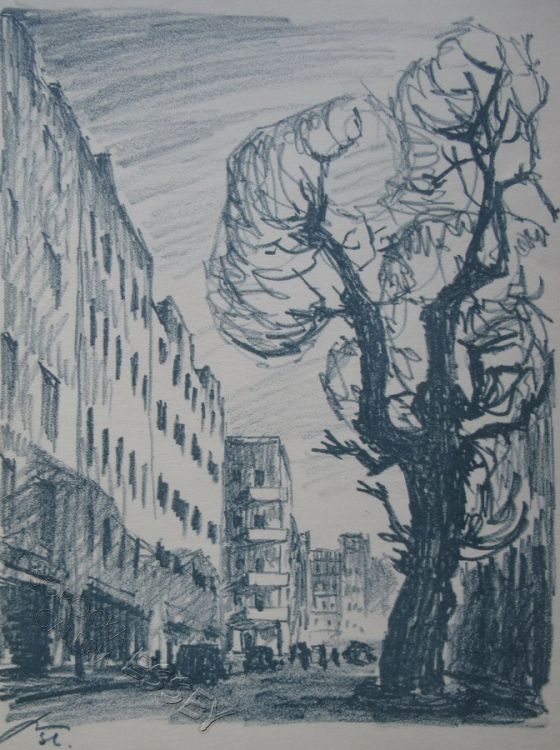
He continued developing his artistic skills and worked across various graphic techniques, including woodcut, lithography, and etching—though woodcut remained his primary medium. His focus remained on graphic design, particularly book typography. His works were well-received and widely exhibited. He was awarded the 600th Anniversary Medal of Bydgoszcz, and on November 24, 1946, a solo exhibition of his work was held at the Pomeranian House of Art in Bydgoszcz. A second solo exhibition followed in 1952, presenting 140 works, including prints, drawings, and applied graphic design projects.
In 1946, he published his second portfolio titled Greater Pomerania. He also created woodcuts illustrating The Crimean Sonnets by Adam Mickiewicz and Boris Godunov by Alexander Pushkin. He took part in all major national exhibitions at the time (Sopot 1949; Warsaw 1951, 1952), and represented Poland internationally, including at shows in Venice (1952), Beijing, Shanghai (1953), Moscow, and Prague.
Brzęczkowski also edited the professional journal Poligrafika and the Bydgoszcz-based socio-cultural magazine Arkona. He was active in the Bydgoszcz Literary and Artistic Club.
He was a committed member of multiple artistic associations, joining the Polish Graphic Artists Association in 1923 and the Pomeranian Artists Union in 1935. After the war, he became one of the founding members and secretary of the Pomeranian Branch of the Association of Polish Visual Artists.
Brzęczkowski was widely recognized for his mastery of printmaking techniques. His works are notable for their meticulous execution, which allowed him to evoke a lyrical atmosphere. His visual language often leaned more toward painterly expression than traditional printmaking, setting him apart with a refined, emotive approach to graphic art.