This is a demo store for testing purposes — no orders shall be fulfilled. Dismiss
Skip to contentA representative
of the Polish school of illustration.
Illustrator, graphic artist, poster designer, and stage designer.
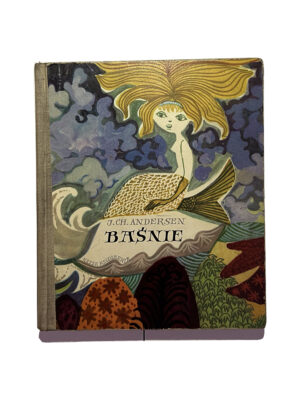
In 1982, he received the Hans Christian Andersen Award for Illustration from IBBY — the most prestigious international recognition for creators of children’s books, often referred to as the “Little Nobel Prize.” He was born on January 17, 1922, in Orzechówka in southeastern Poland, and died on September 10, 1989, in Bratislava.
He studied at the Department of Book Graphics at the Kraków Institute of Fine Arts, which was reestablished as the State School of Fine Arts (PSSP) in 1945. He began his studies during the Nazi occupation, while working as a factory laborer. According to Stanisław K. Stopczyk, he used his technical skills at the time to forge stamps for counterfeit identity cards known as Kennkarten. He graduated from the State School of Fine Arts in 1946 and, a decade later, already an established illustrator, earned a diploma from the Academy of Fine Arts in Kraków.
Rychlicki began his professional career in animation. In 1947, he joined the Studio of Animated Films in Łódź, where he designed characters and backgrounds for animated productions. In 1949, he moved to Warsaw. That same year, the first book featuring his illustrations was published: Pyza na Starym Mieście (Pyza in the Old Town) by Hanna Januszewska.
In Warsaw, he became closely associated with Nasza Księgarnia (Our Bookstore), the leading children’s publishing house in the Polish People’s Republic. He worked there as art director for three and a half decades, until his death. Founded in 1921, Nasza Księgarnia had already published over 450 titles for young readers by the interwar period. After WWII, in the new cultural reality of socialist Poland, it intensified its activity and solidified its position. For a time, it was virtually the only publisher producing children’s literature. Beyond publishing, it also organized international conferences, symposia, and seminars — including on the art of children’s book illustration.
Under Rychlicki’s artistic direction, Nasza Księgarnia collaborated with the most important illustrators of postwar Poland, becoming a key influence in the field of children’s illustration. It not only worked with established artists, but also attracted the most talented students from the Academy of Fine Arts (ASP), offering postgraduate internships. Rychlicki’s organizational contributions were as significant as his own artistic output. He wrote numerous articles, gave lectures, and supported young illustrators starting their careers. He also served as curator of the “Book Graphics and Children’s Books” exhibition held during the first Biennale of Art for Children in Poznań (launched in 1973).
Rychlicki was one of the foremost figures of the so-called Polish School of Illustration in the second half of the 20th century. As the art director of the country’s leading children’s book publisher, he played a decisive role in shaping the entire landscape of Polish illustration. As Barbara Gawryluk wrote, “He had the greatest influence on how books for the youngest readers looked.” Stanisław K. Stopczyk recalled, “He was a mediator between writers and illustrators, calming disputes with great tact and preventing conflicts or scandals. He treated all creators with respect.”
He extended this same respect to his readers, once saying: “Children deserve beautiful books,” and believed that the illustrator’s role was to contribute creatively to “realizing the beautiful ideal — the right to a happy childhood.” His son, Andrzej Rychlicki, remembered:
“When he had to sign books, he always tried to draw something along with his signature. A teddy bear or a doll would accompany the dedication — he wanted it to be more than just a dry autograph. He often traveled, visited schools and preschools, and participated in book fairs.”
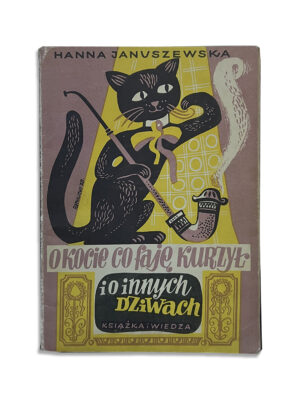
From early on, Rychlicki also designed covers for other major publishing houses, including Czytelnik and Książka i Wiedza. He designed covers for the widely popular youth series Biblioteka Młodych (Youth Library), published in the 1970s and 1980s through collaboration between several state publishing houses.
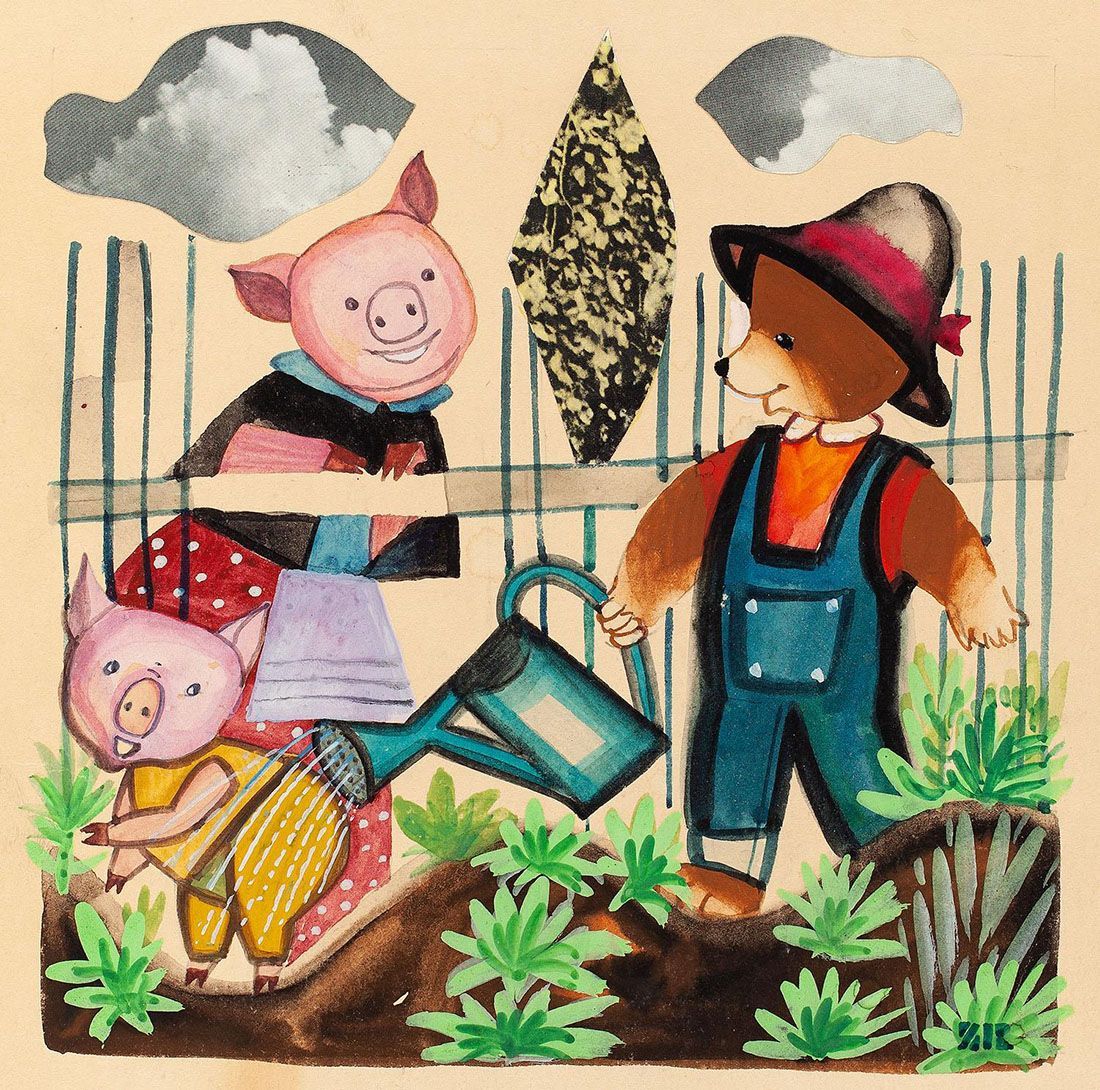
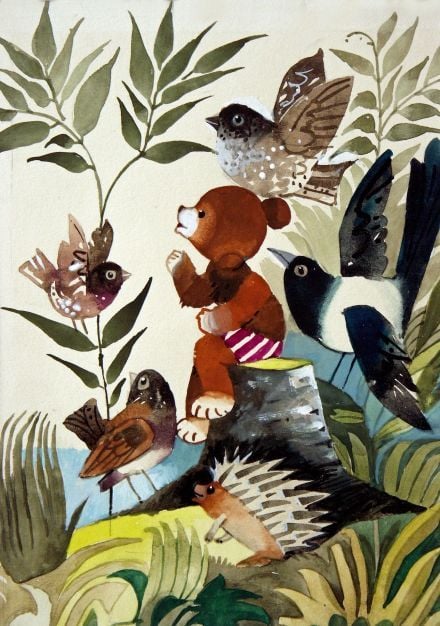
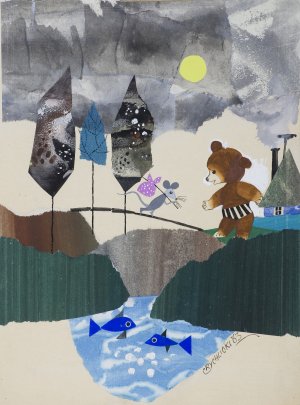
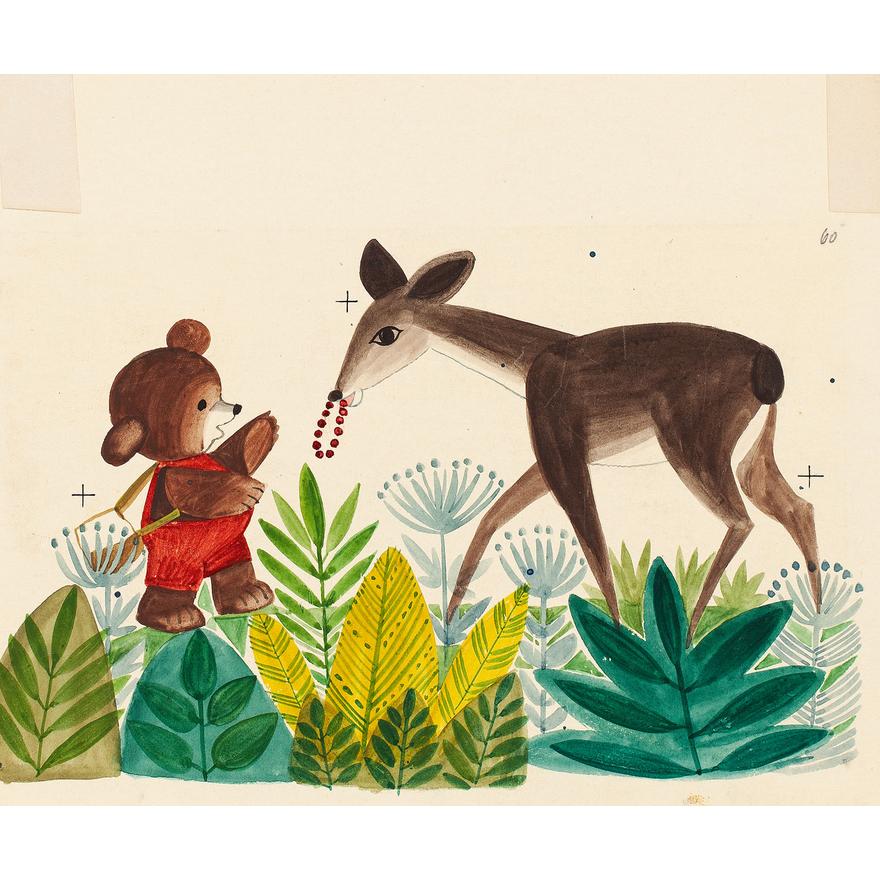
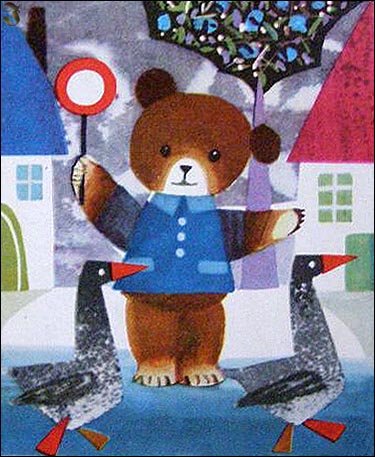
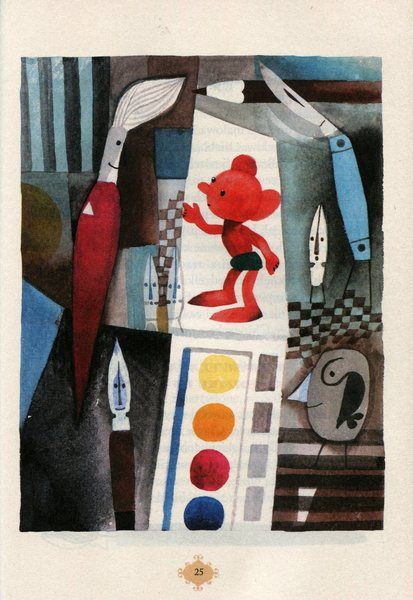
He was also involved with children’s and youth magazines. From 1951, he served as art director for the weekly Przyjaciel (Friend) and contributed to Świerszczyk, a magazine illustrated by other masters of Polish illustration such as Jan Marcin Szancer and Olga Siemaszko. He was also responsible for the visual design of the magazine Miś (Teddy Bear). It was in Miś that the first stories about Miś Uszatek (Teddy Floppy-Ear) appeared in 1957 — a character created by poet and writer Czesław Janczarski, with visuals by Rychlicki.
“He created a visual version that perfectly suited the personality imagined by the author. His Teddy Bear is charming like a small child — sometimes childishly clumsy, other times confidently stepping into the world. He changes expressions, wears different outfits, and seems to be in constant motion,” wrote Małgorzata Strękowska-Zaremba.
Rychlicki also brought Teddy Floppy-Ear and other characters to television, designing the puppets and set for the stop-motion series produced by Se-ma-for starting in 1975. He gave the bear a vivid and expressive personality purely through visual means.
Strękowska-Zaremba added:
“In the animated series, Teddy Floppy-Ear changed outfits several times per episode. Rychlicki introduced the costume changes out of boredom — but it aligned perfectly with the character. Uszatek had an outfit for every kind of weather, several bathrobes, and a dozen pajamas.”
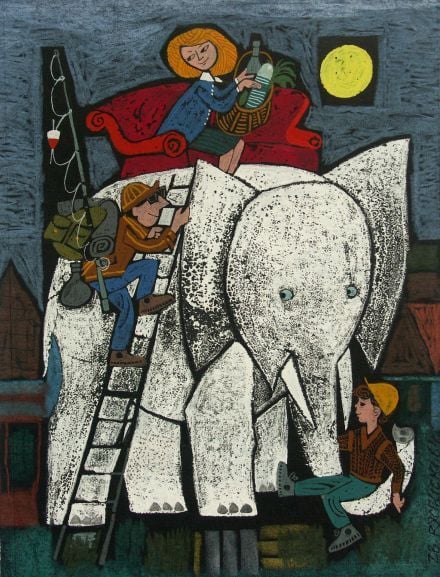
Another beloved character given visual form by Rychlicki was Plastuś, from the books by Maria Kownacka. Although other artists also illustrated Plastuś’s adventures, it was Rychlicki who shaped their first visual identity. Among the many classic titles he illustrated were Proszę słonia (Please, Mr. Elephant) by Ludwik Jerzy Kern, Od rzeczy do rzeczy (From Thing to Thing) by Wanda Chotomska, and Polish editions of adventure classics such as Gulliver’s Travels, The Mysterious Island, and The Wizard of Oz. Over his lifetime, he illustrated more than 150 titles.
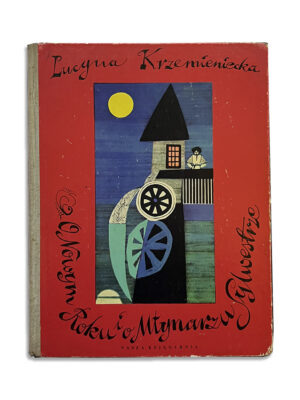
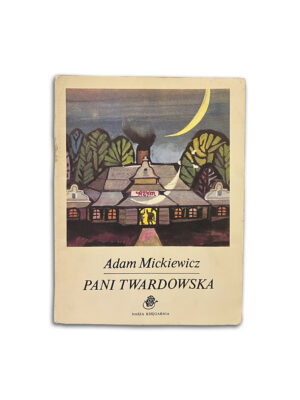
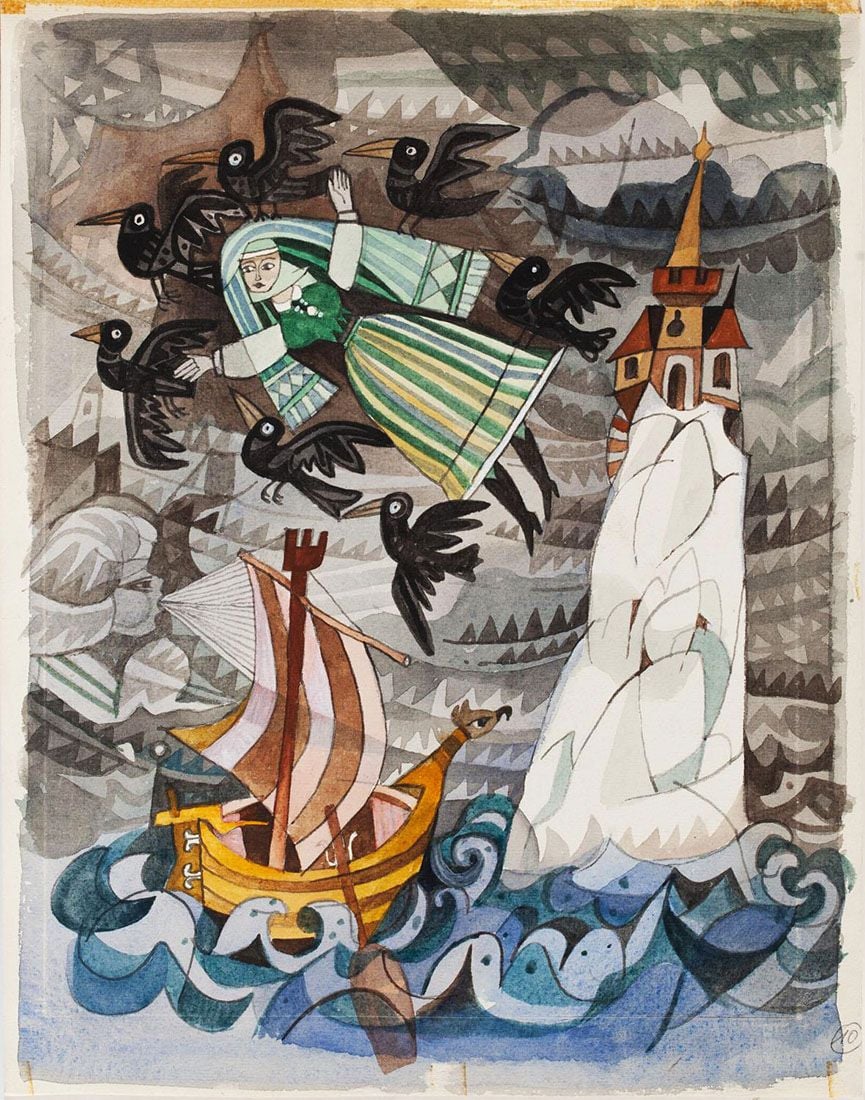
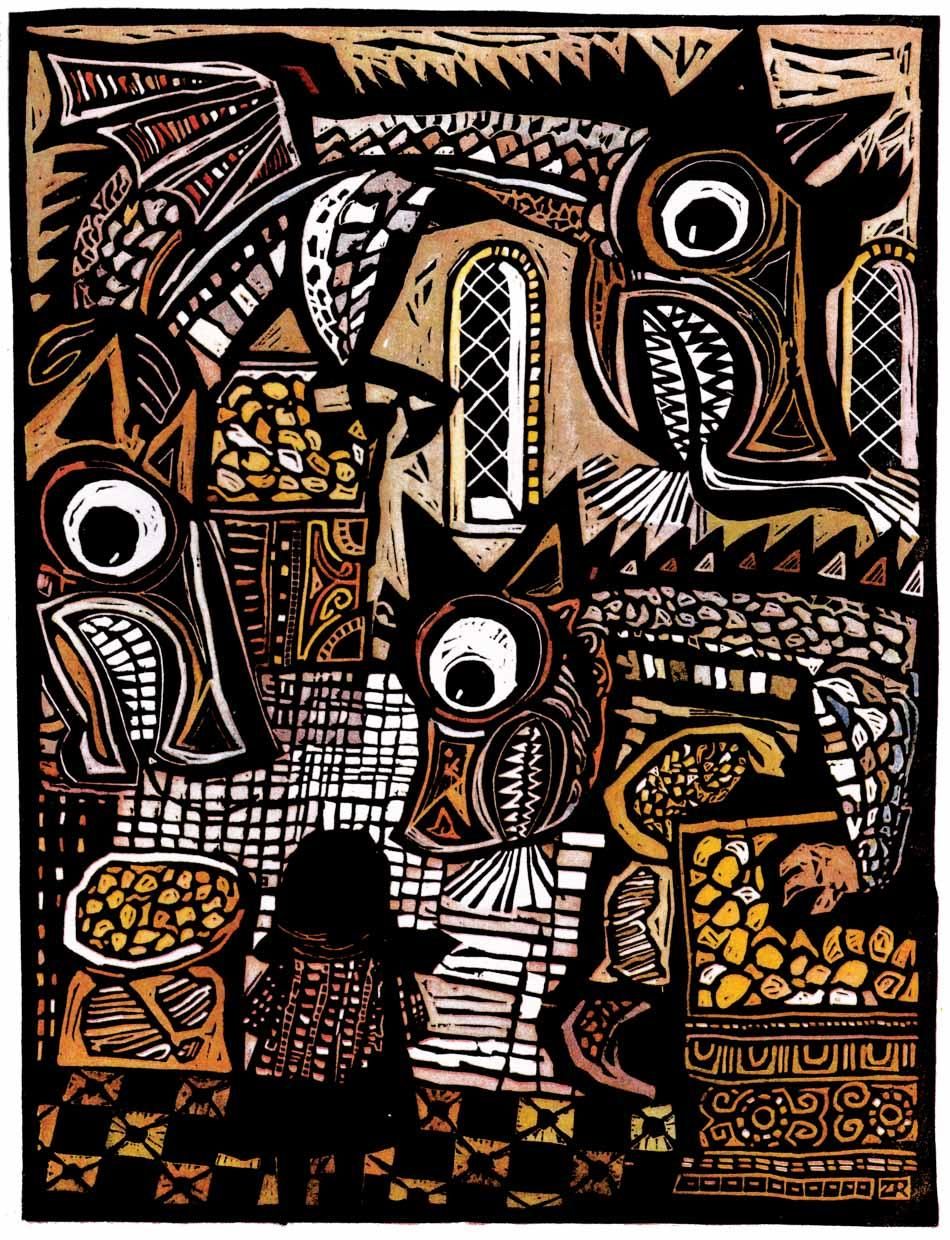
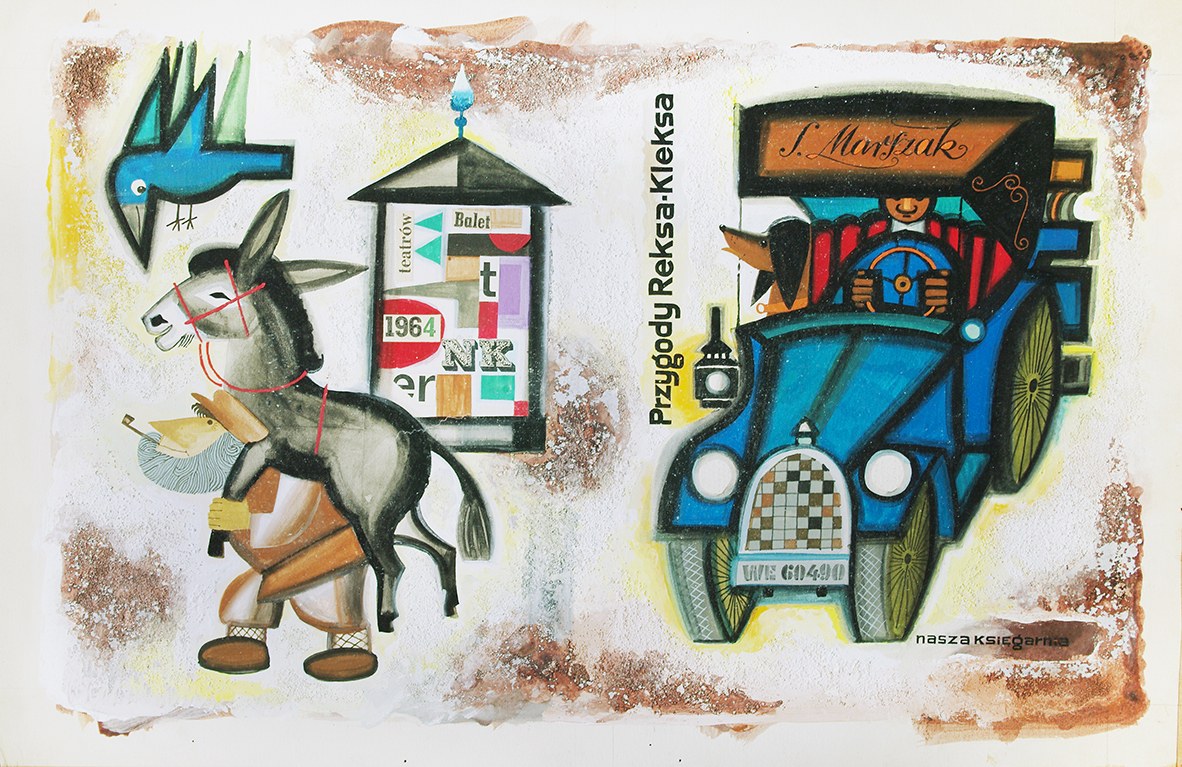
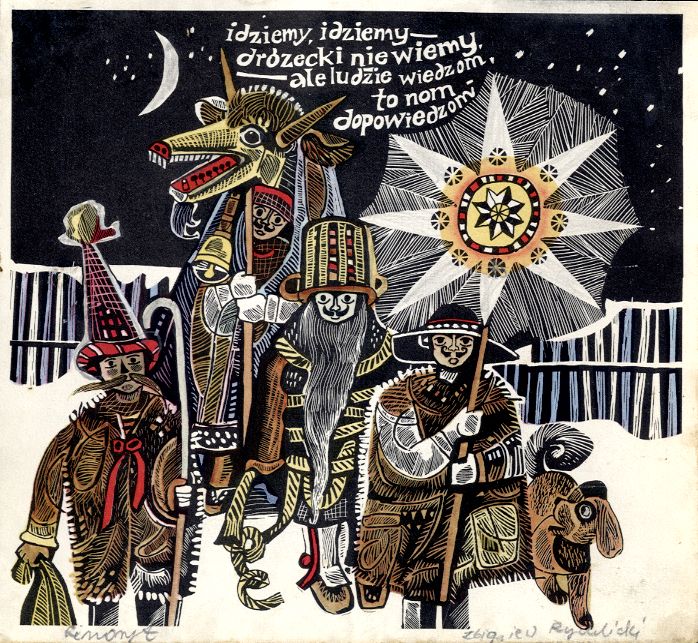
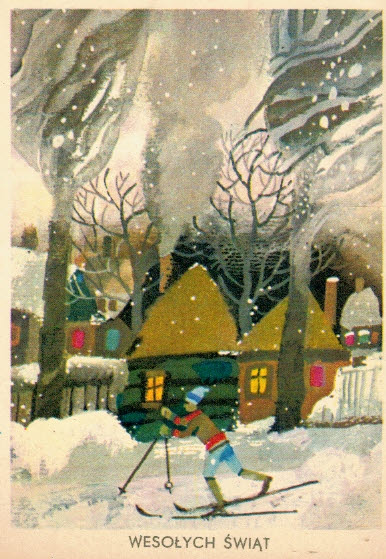
Folk tales and legends were among his favorite subjects. In illustrating them, he often drew on Polish folk art — the cut-paper designs of Łowicz or woodcuts from the Tatra region. According to his wife Halina Rychlicka, his artistic sensitivity and love for folk art stemmed from a rural childhood immersed in village cultural life and folk storytelling.
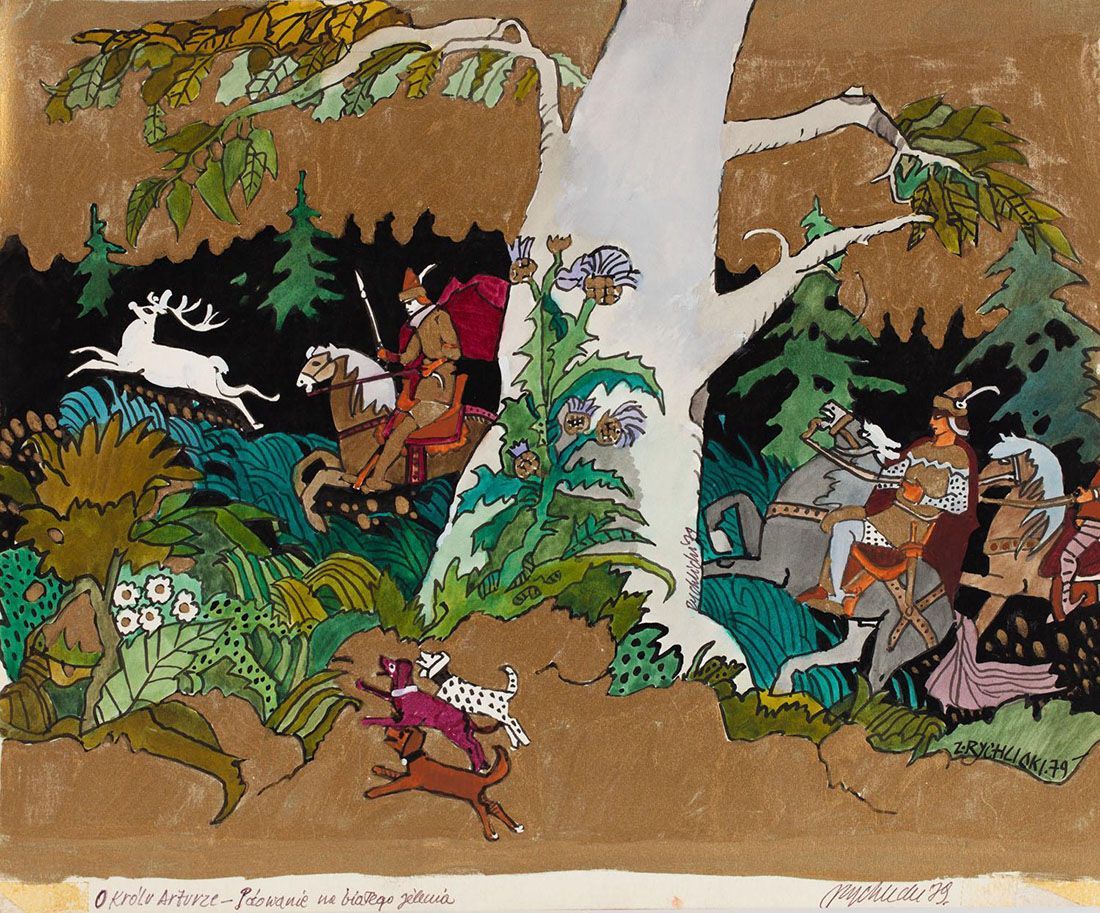
By incorporating folk elements, Rychlicki was part of a wider postwar trend in children’s book illustration that drew on local traditions. In Poland, similar approaches were taken by artists like Adam Kilian and Eugenia Różańska, while in other Central European countries, artists such as Albina Makunajte, Viera Bombová, and Josef Lada followed similar paths. But folk art was not Rychlicki’s only inspiration. In the flat, decorative style and vivid colors of his illustrations for King Arthur and the Knights of the Round Table, one can find echoes of Irish illuminated manuscripts. In his illustrations of folk legends, folkloric motifs blended smoothly with elements of pop art and the psychedelic graphics of the late 1960s and early 1970s.
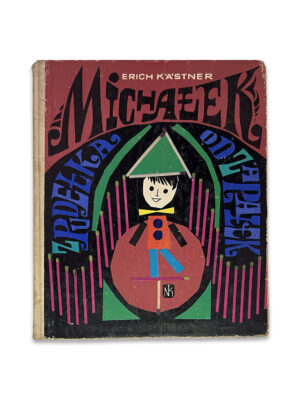
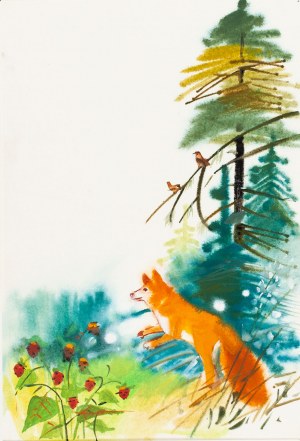
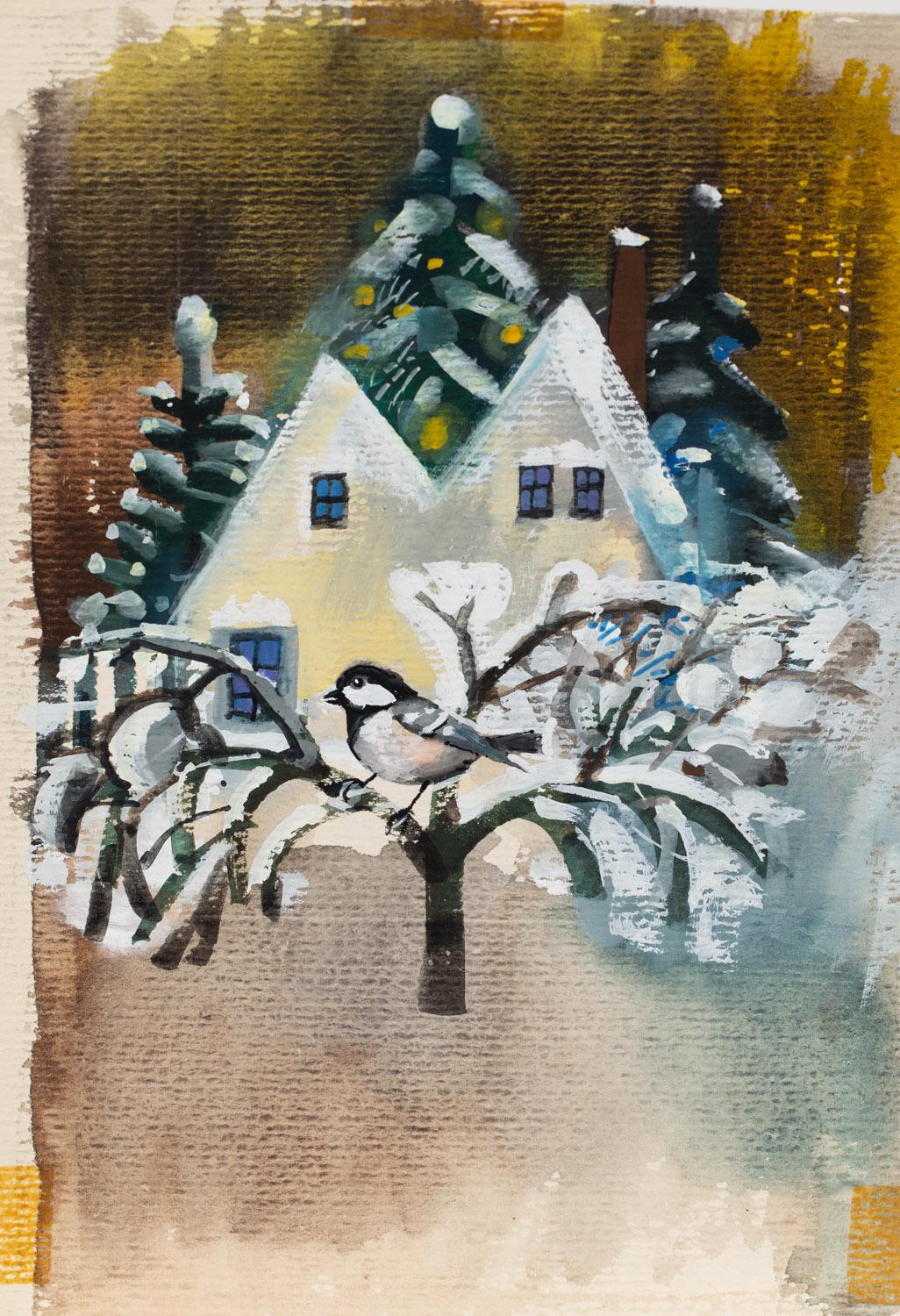
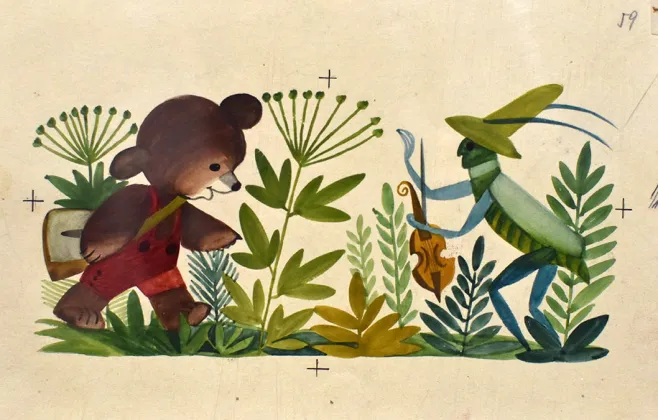
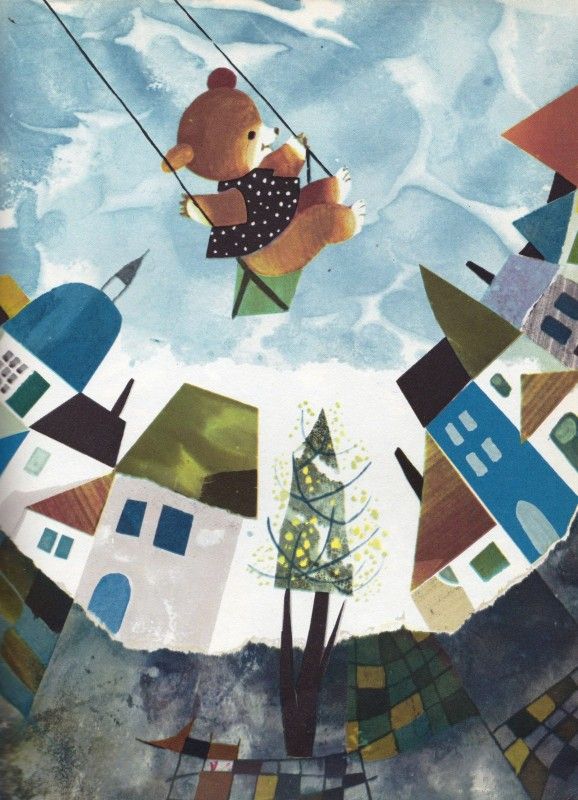
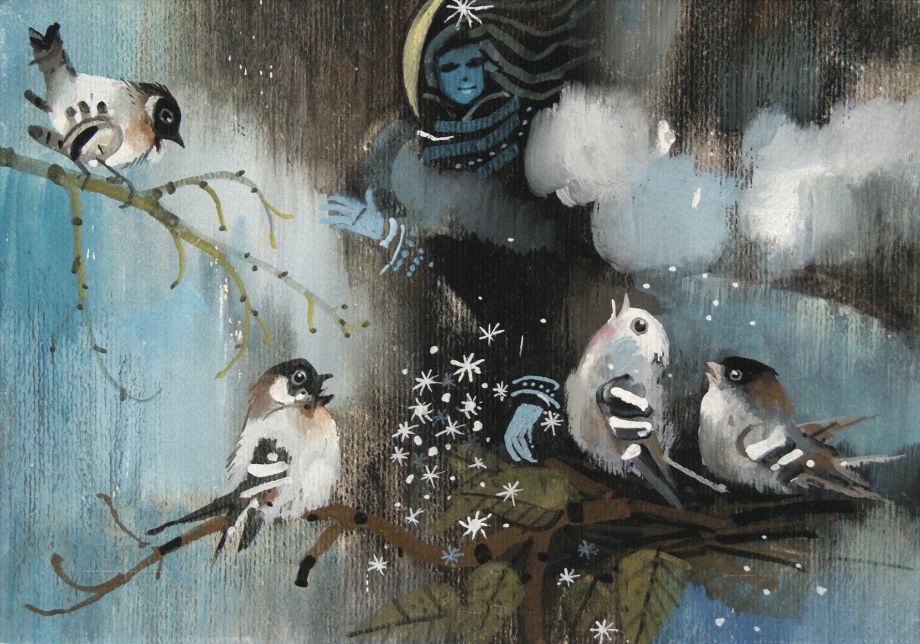
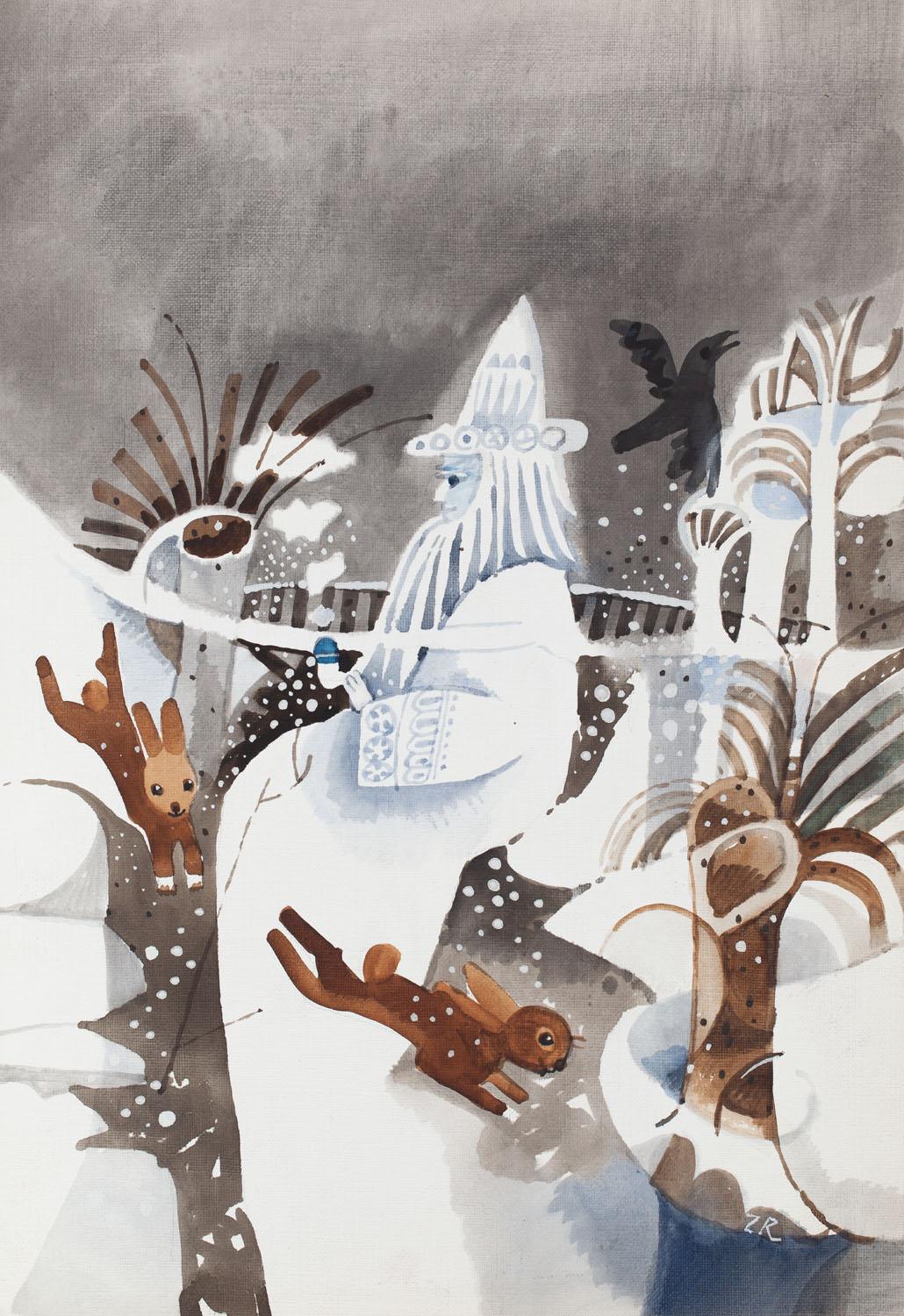
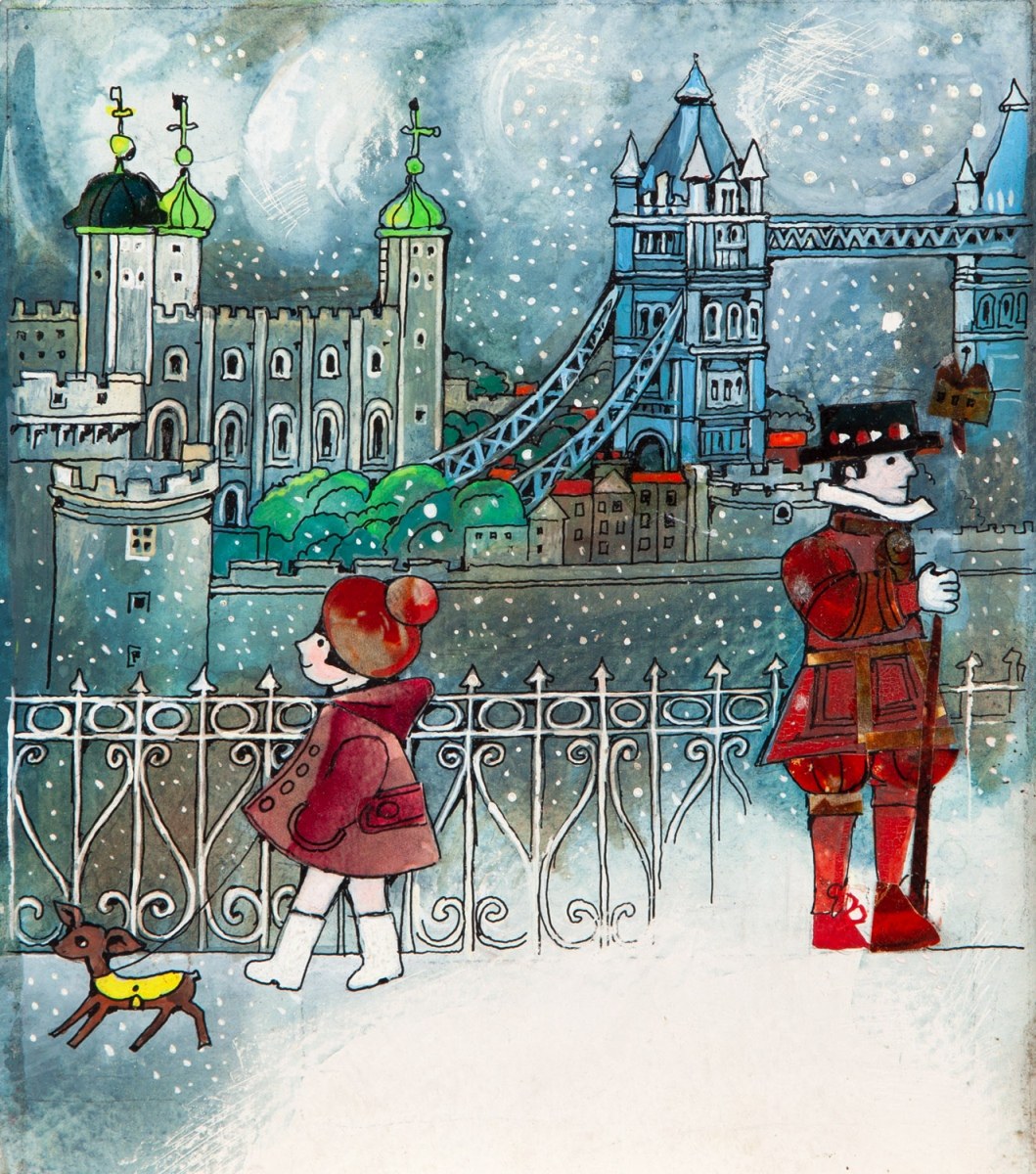
Rychlicki was an exceptionally versatile artist. His style ranged from simplified realism to decorative stylization, from traditional to modern. His illustrations could be painterly and impressionistic, or sharply outlined and graphic. He worked with a wide variety of techniques, especially watercolor, gouache, and tempera, and used collage — from magazine cutouts to scraps of fabric. Throughout his life, he continued to experiment with form and technique — and, as his son observed, the older he got, the more boldly he explored.