
This is a demo store for testing purposes — no orders shall be fulfilled. Dismiss
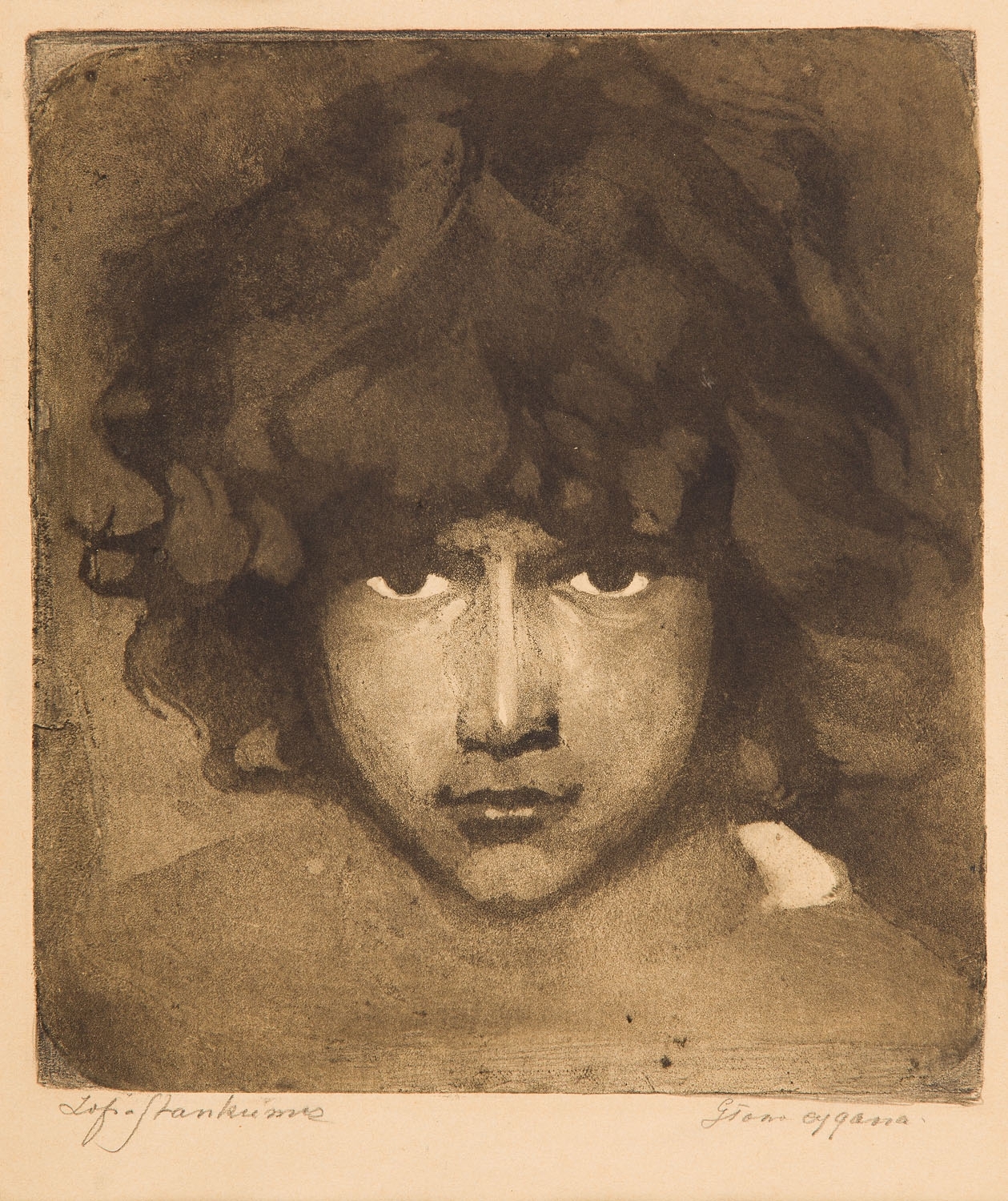
Skip to contentPolish graphic artist, illustrator, and draughtswoman active in Warsaw, associated with the symbolist movement.
Born in 1862 in Ryźna, Ukraine, died in 1955 in Warsaw.
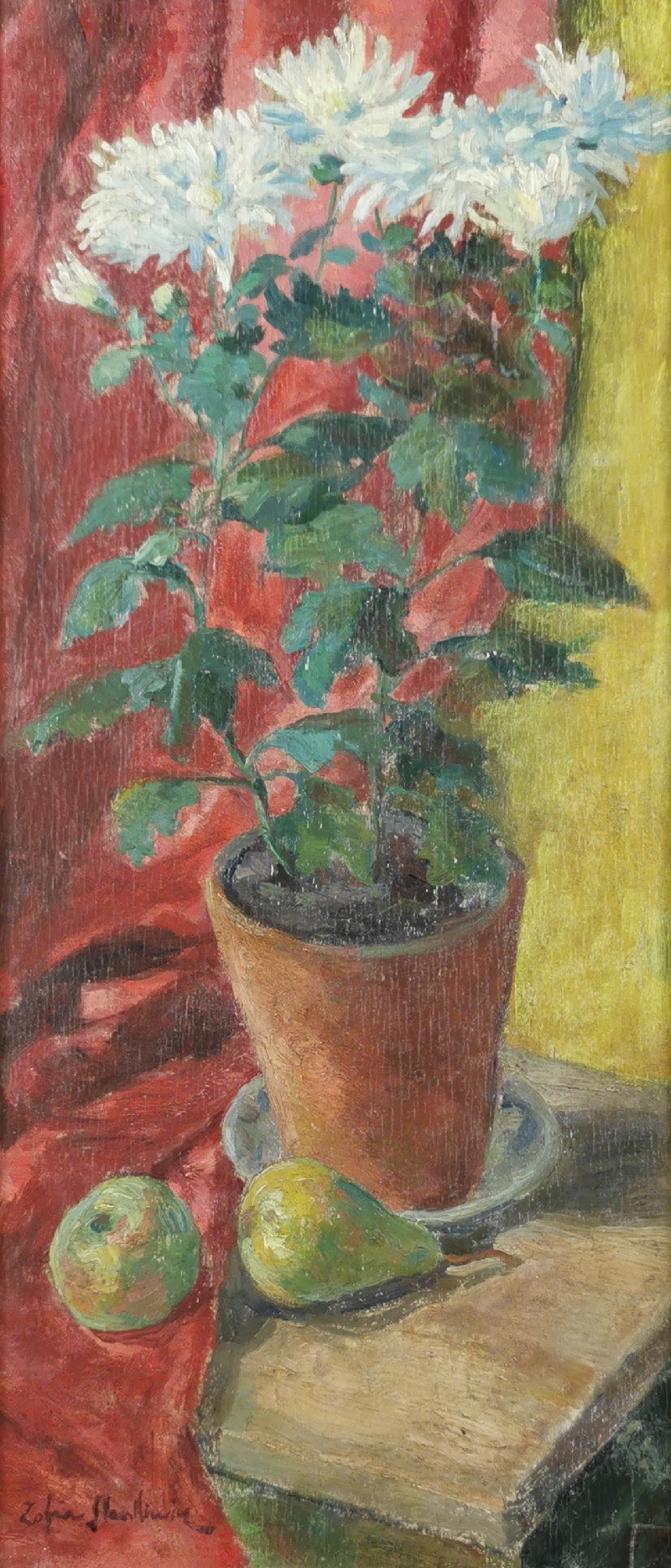
After completing her chemistry studies in Kharkiv, Stankiewicz began her artistic education in 1876 under the guidance of J. Schreider. From 1878, she studied at Władysław Gerson’s Drawing School in Warsaw. In 1880, she left for Paris to further develop her painting skills at the Académie Julian, under T. Robert-Fleury, P. Delaroche, J.-P. Laurens, and W. A. Bouguereau. Upon returning to Warsaw in 1883, she expanded her studies in the studios of Miłosz Kotarbiński, Konrad Krzyżanowski, and Kazimierz Stabrowski.
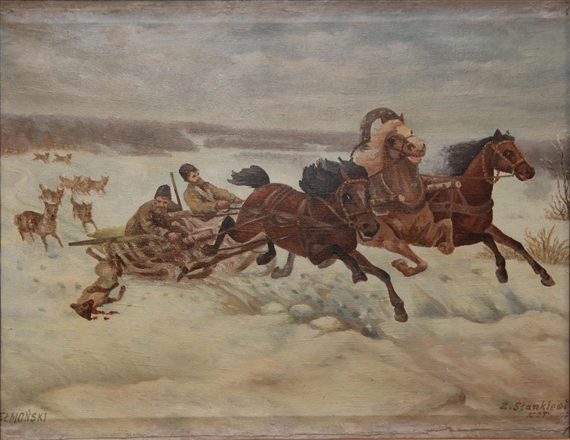
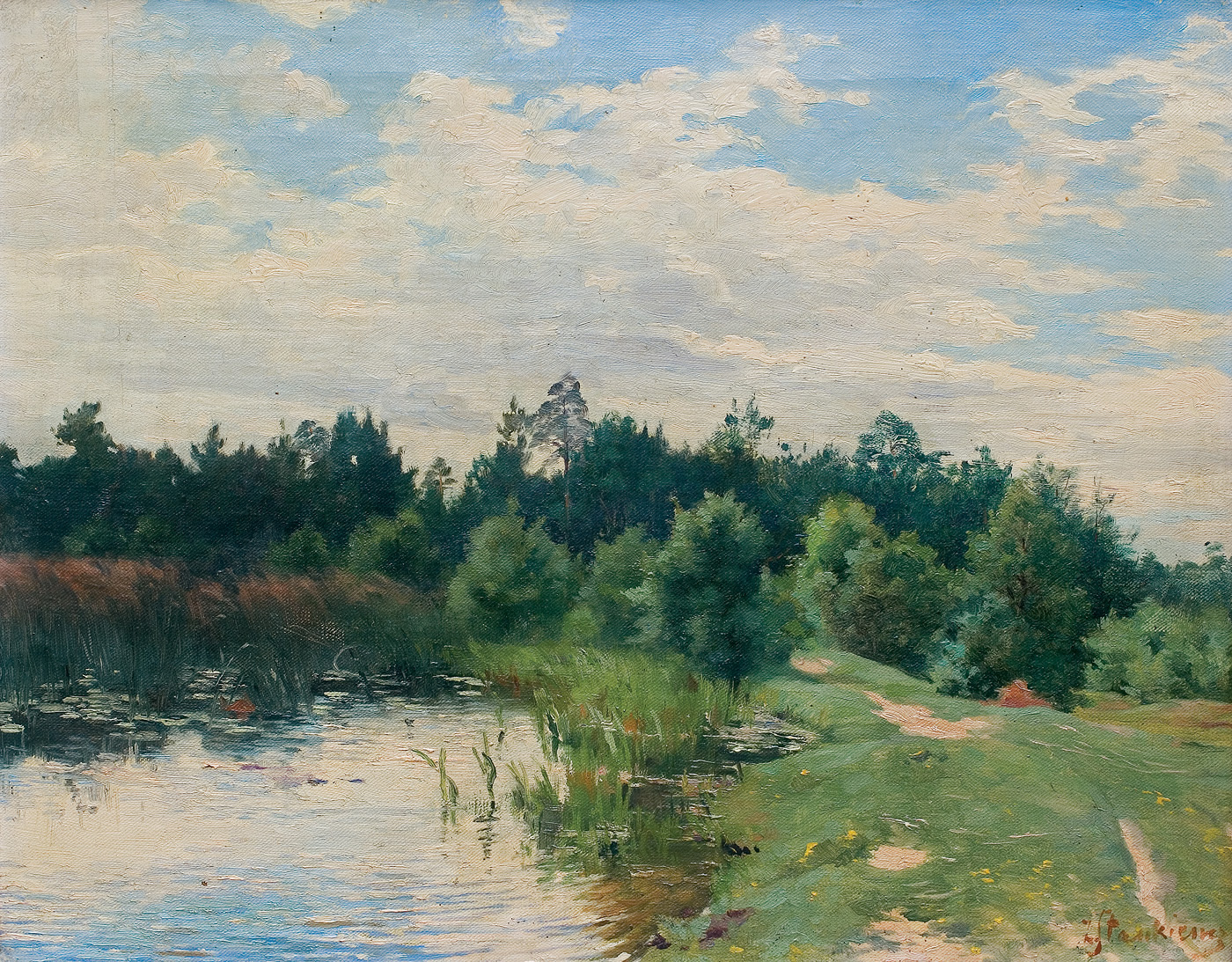
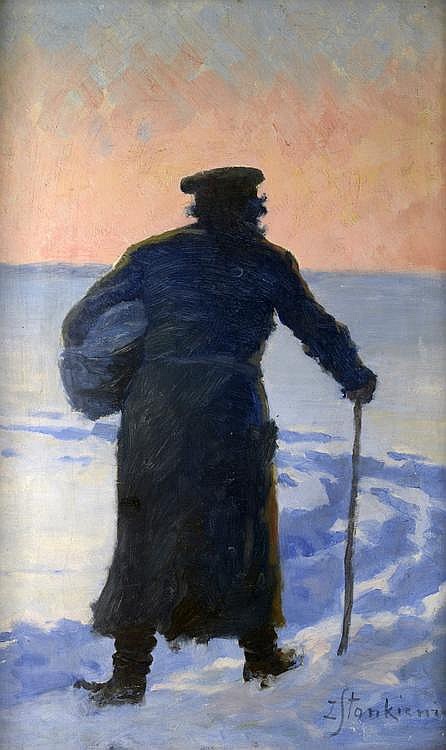
She worked as an illustrator for widely read periodicals such as Kłosy, Tygodnik Ilustrowany, Bluszcz, and Wędrowiec. In the early phase of her career, she painted vast Ukrainian landscapes that evoked a tone of nostalgia.
At the 1900 “Monochrome” exhibition, she received an award for her charcoal studies of trees, which critics interpreted as symbolic images reflecting a pantheistic worldview. In 1904, she decisively abandoned painting in favor of black-and-white graphic techniques, achieving mastery in etching and aquatint (e.g., Night Over the Lake).
In 1911, she was awarded third prize at the 1st H. Grohman Graphic Competition in Zakopane for her aquatint My Family Home. In 1912, together with Ignacy Łopieński and Franciszek Siedlecki, she co-founded the Society of Friends of Graphic Arts.
In 1914 and again in 1921, she won first prize in the graphic arts category from the Society for the Encouragement of Fine Arts (Zachęta). In 1923, she was awarded the City of Warsaw Prize, and in 1929, she received a medal at the General National Exhibition in Poznań.
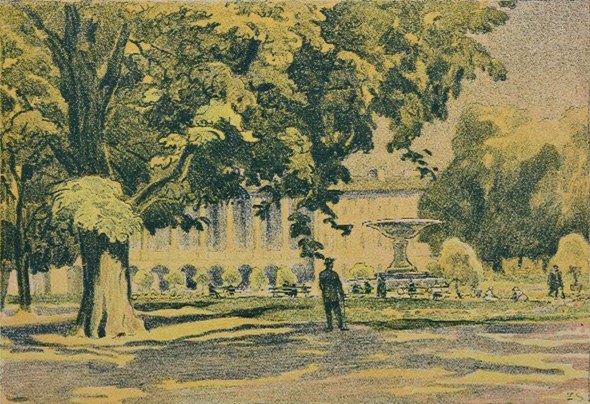
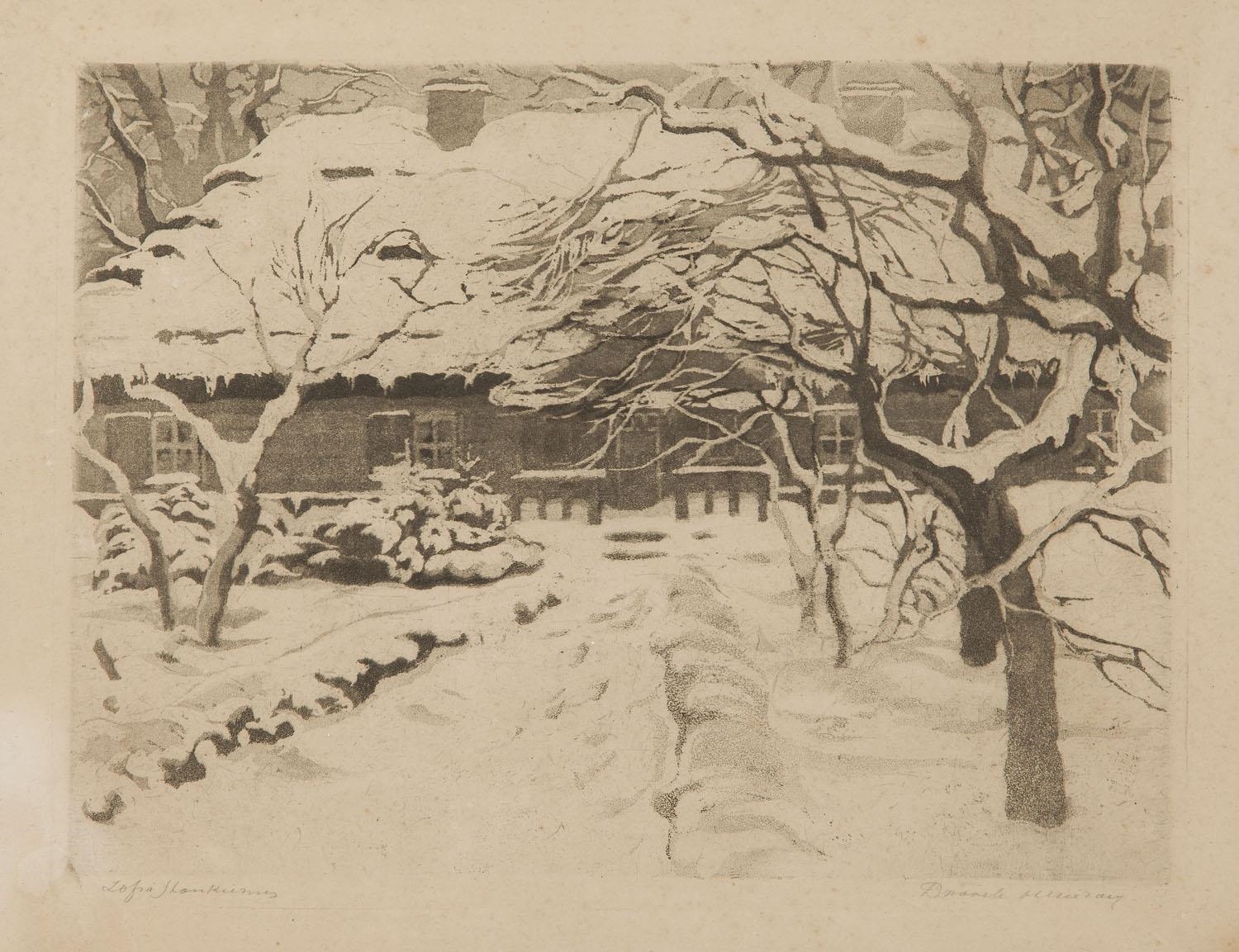
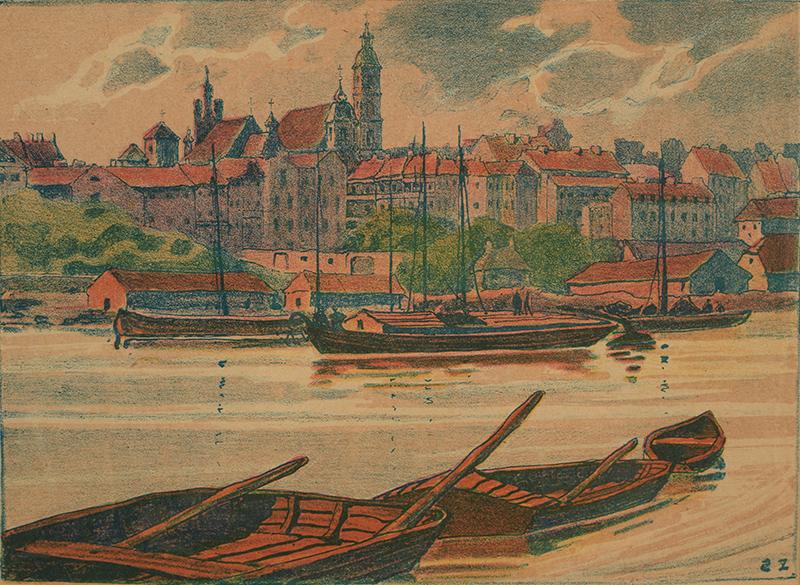
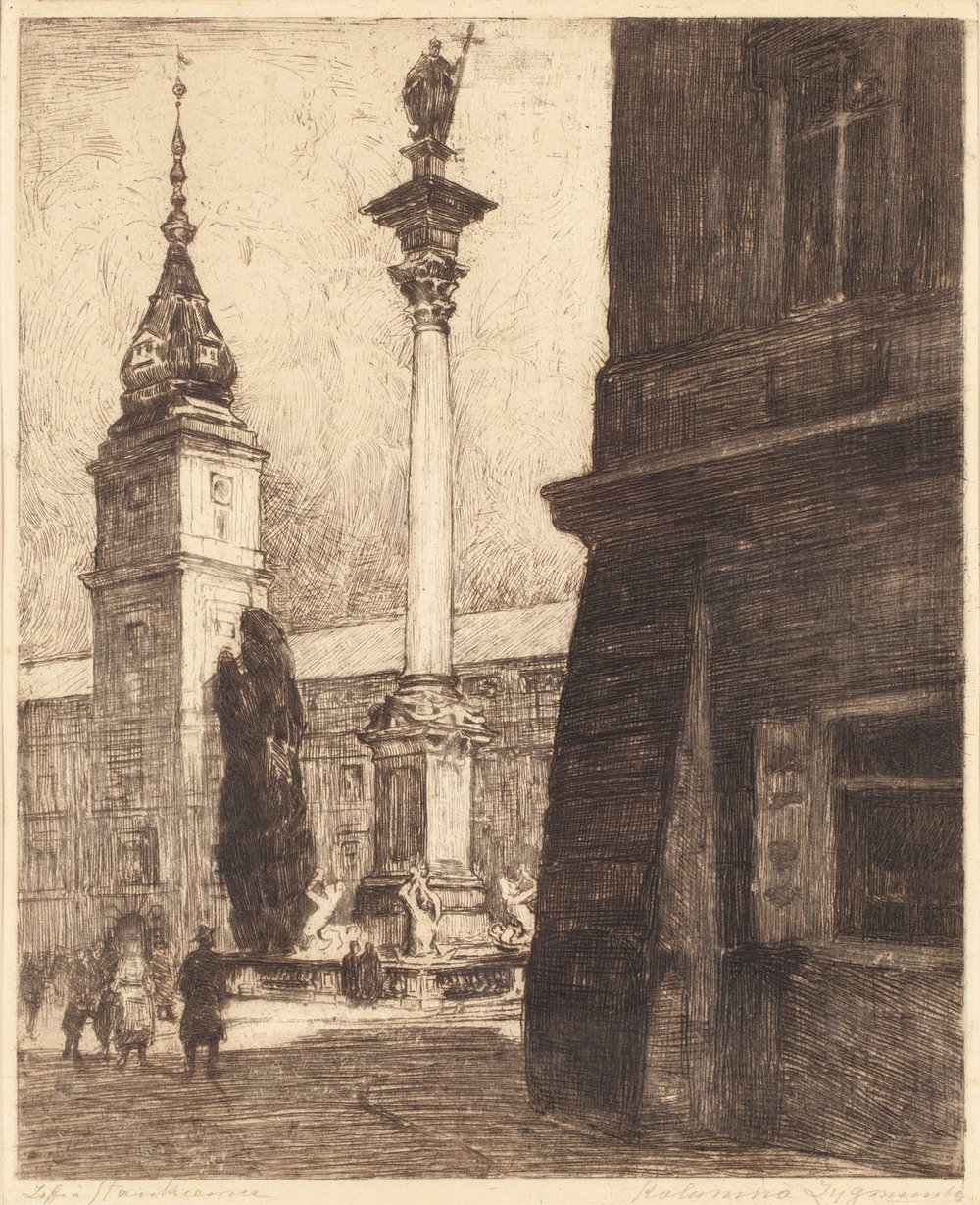
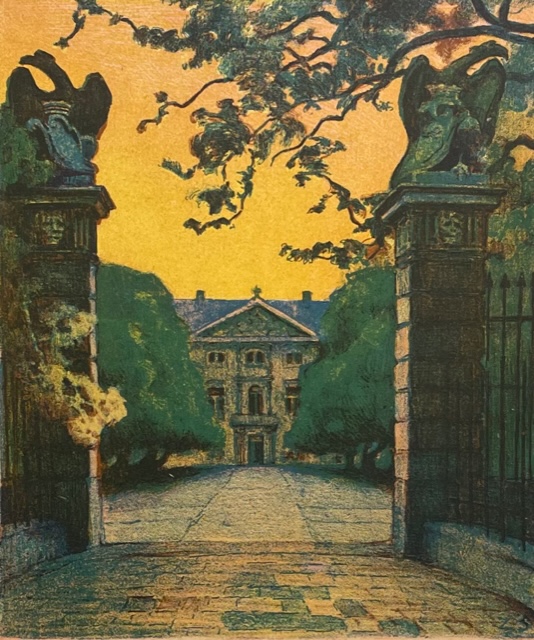
Internationally, Stankiewicz exhibited her works in Venice, Paris, London, The Hague, Stockholm, and Copenhagen. She published several portfolios of etchings, capturing urban alleyways, historic architecture, and rural scenes, such as: Old Warsaw, Vilnius, Kraków, Manors, Estates, Cottages, and Pomerania.
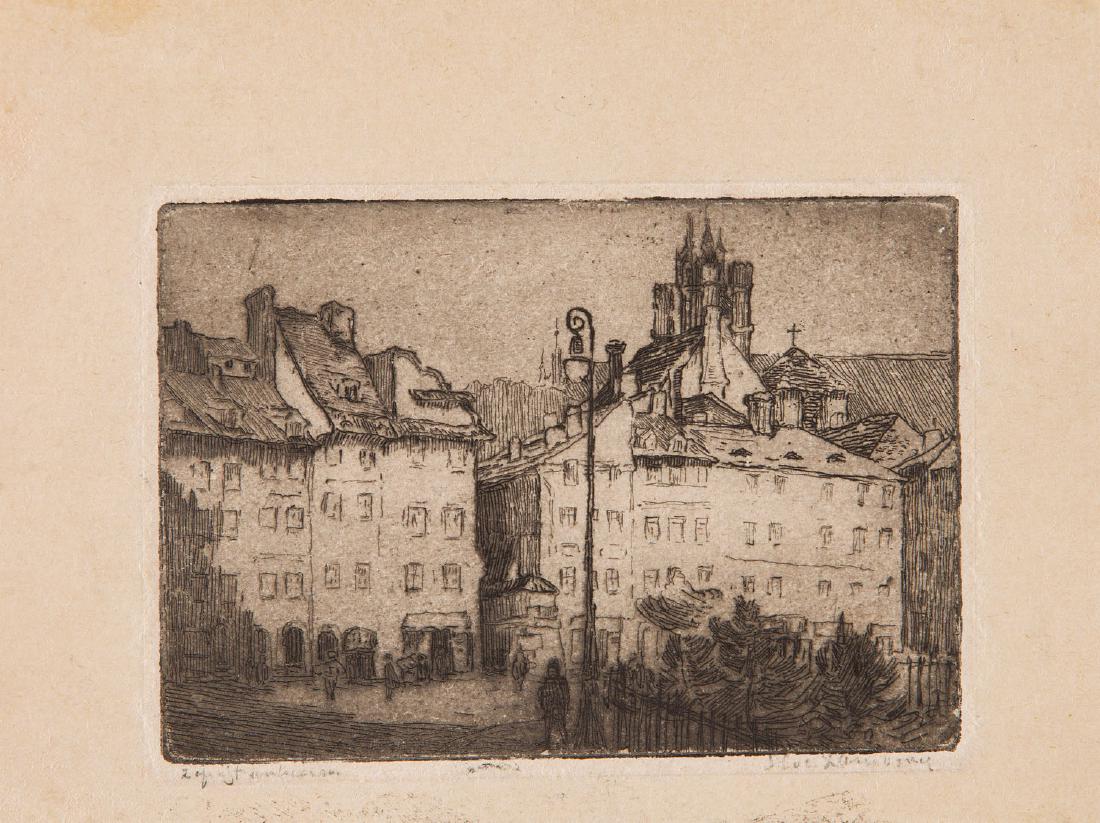
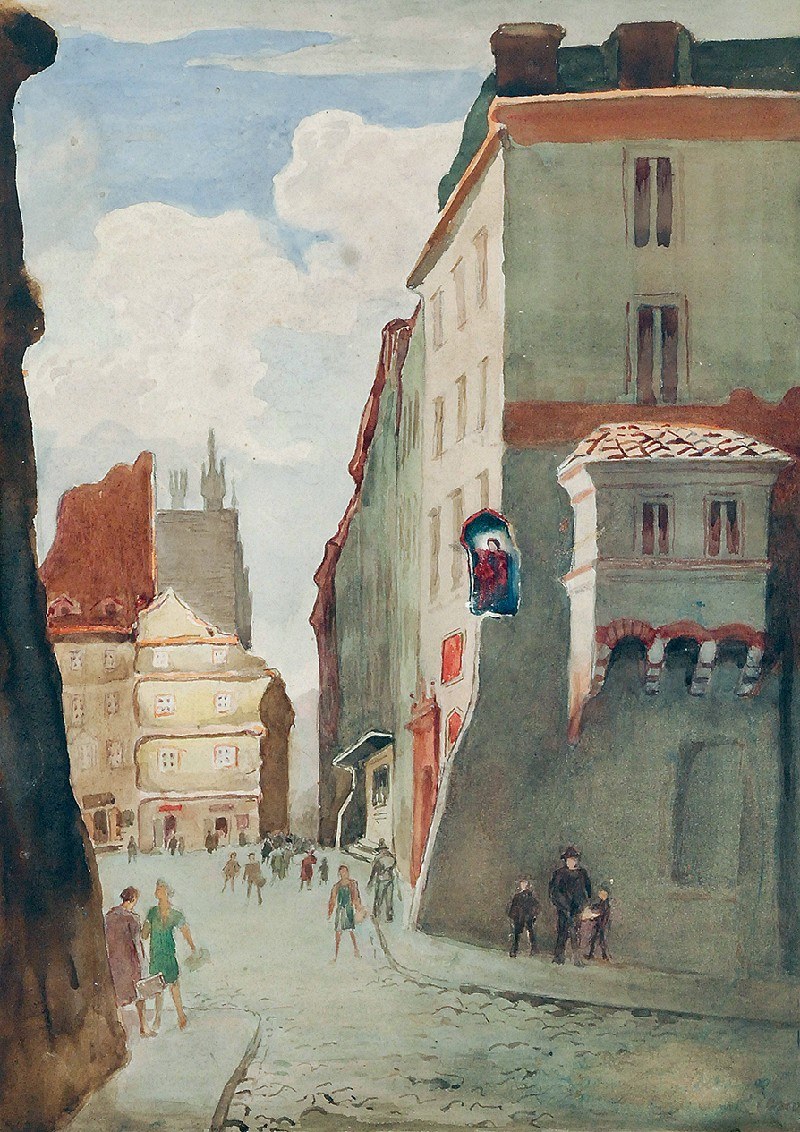
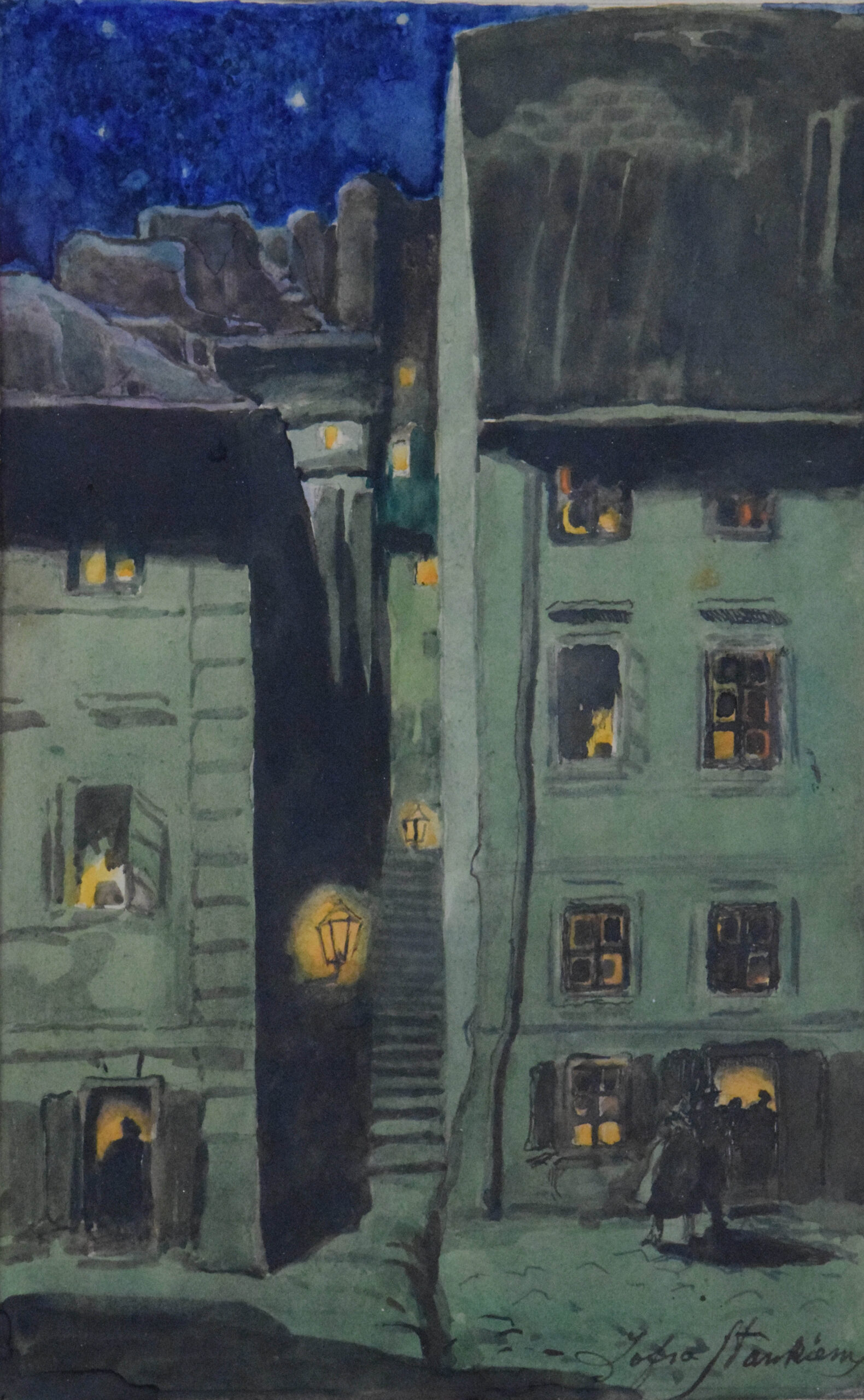
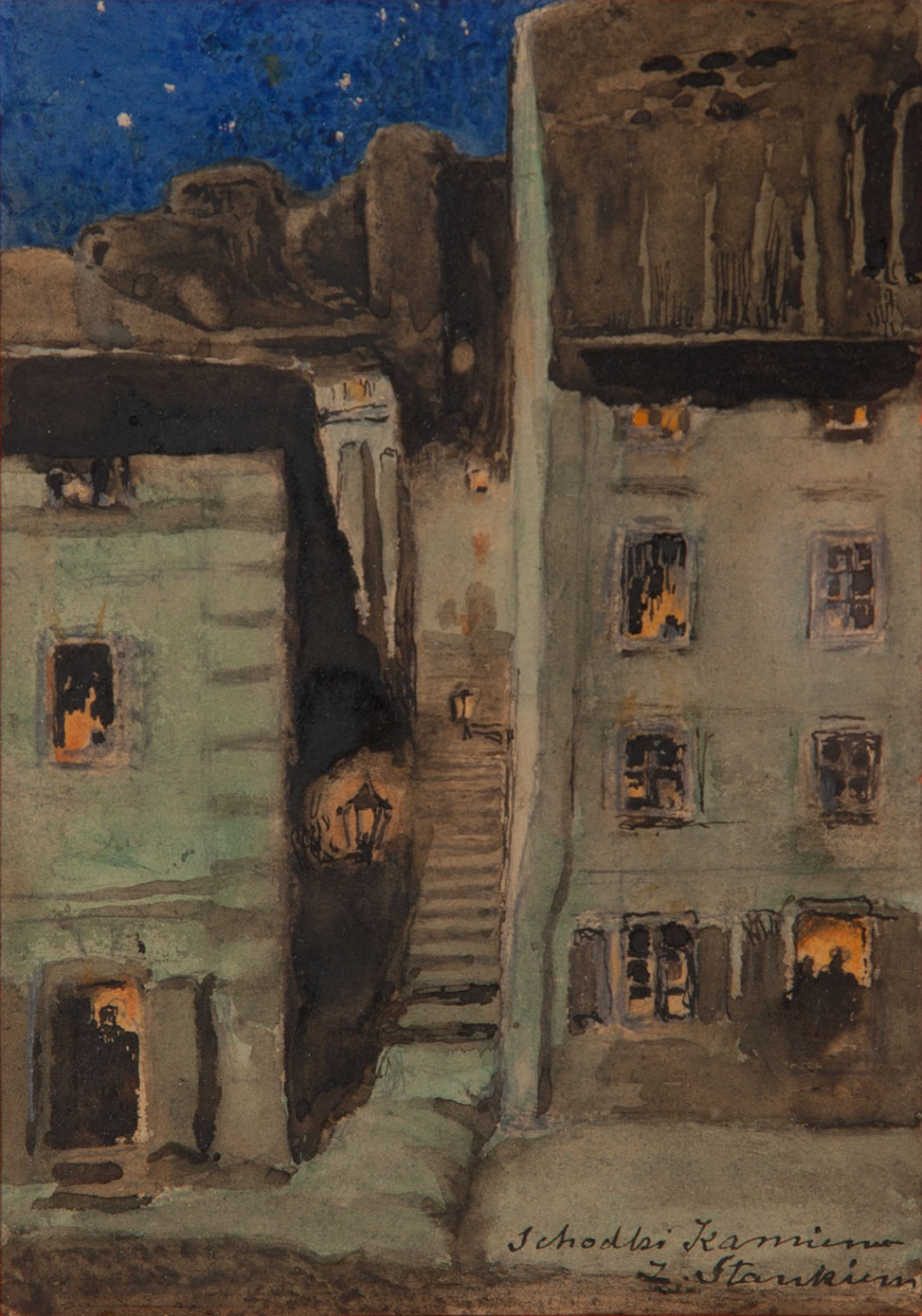
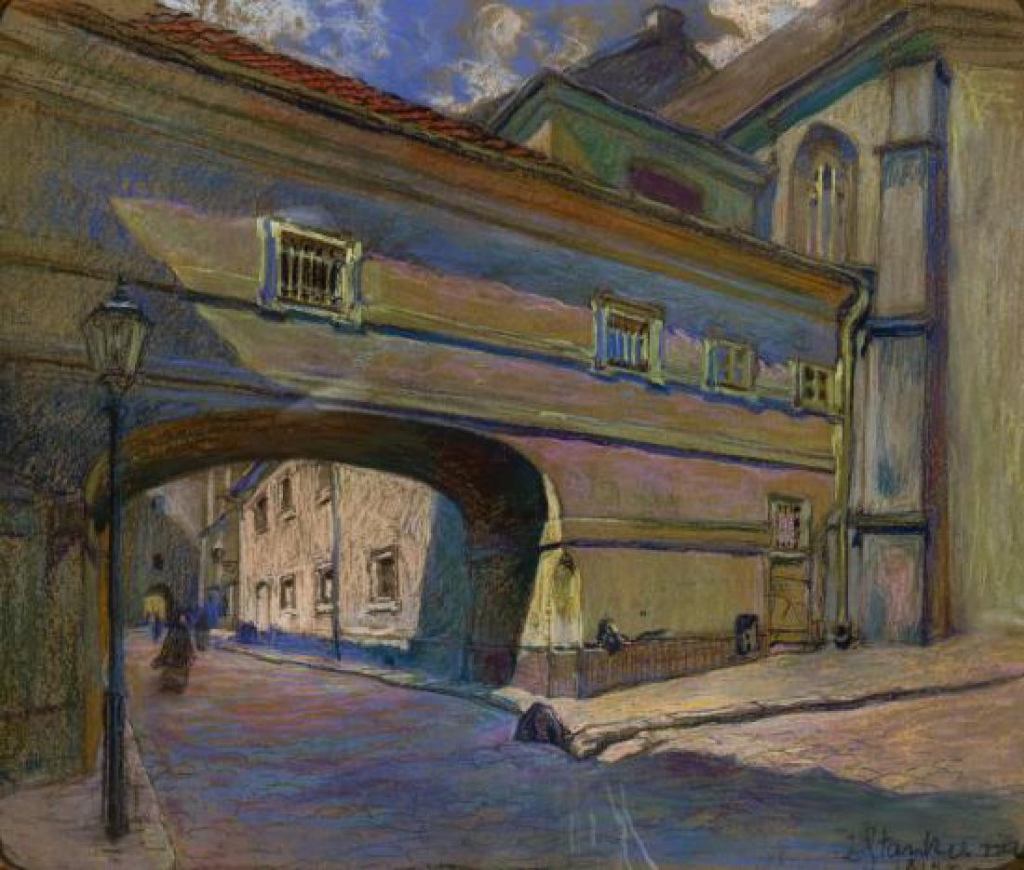
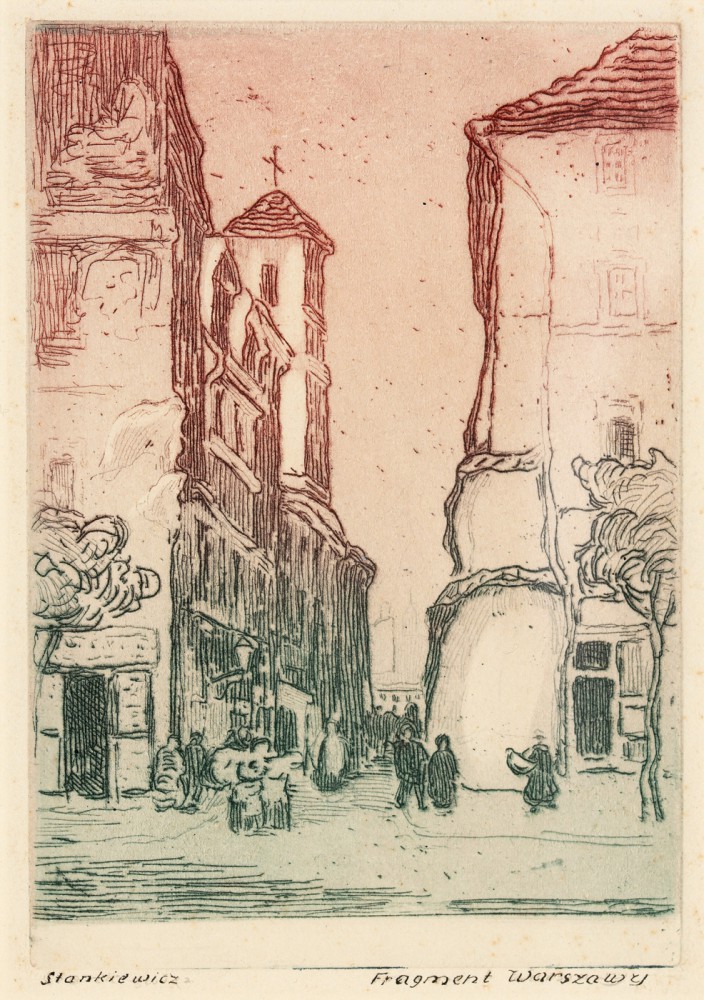
Zofia Stankiewicz had a deep affection for Warsaw’s hidden corners, which she often depicted in her etchings. She illustrated narrow tunnels of Old Town streets (Kamienne Schodki), shadowed fragments of defensive walls, and sculptural details adorning townhouse façades (Corner of Piwna Street with Stone Swan, c. 1913).
Her artistic outlook was strongly shaped by the graphic works of James McNeill Whistler, particularly his nocturnes, which provided crucial inspiration for her stylistic evolution.
In her aquatints, the glow of street lanterns pierces through nocturnal sfumato, softly modulated ink patches capturing the shimmering reflections on the Vistula River (Vistula Under Warsaw at Night, before 1913). When depicting Old Town architecture in daylight, she drew inspiration from Whistler’s views of London and Parisian storefronts (House Under the Ship, c. 1913).
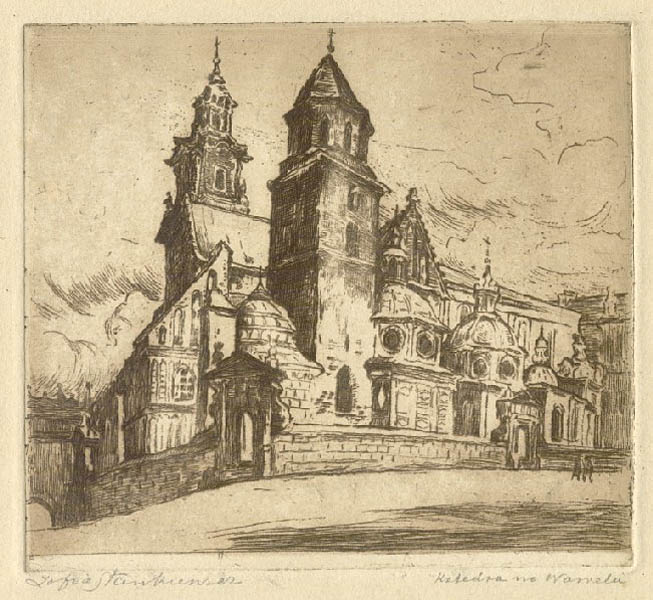
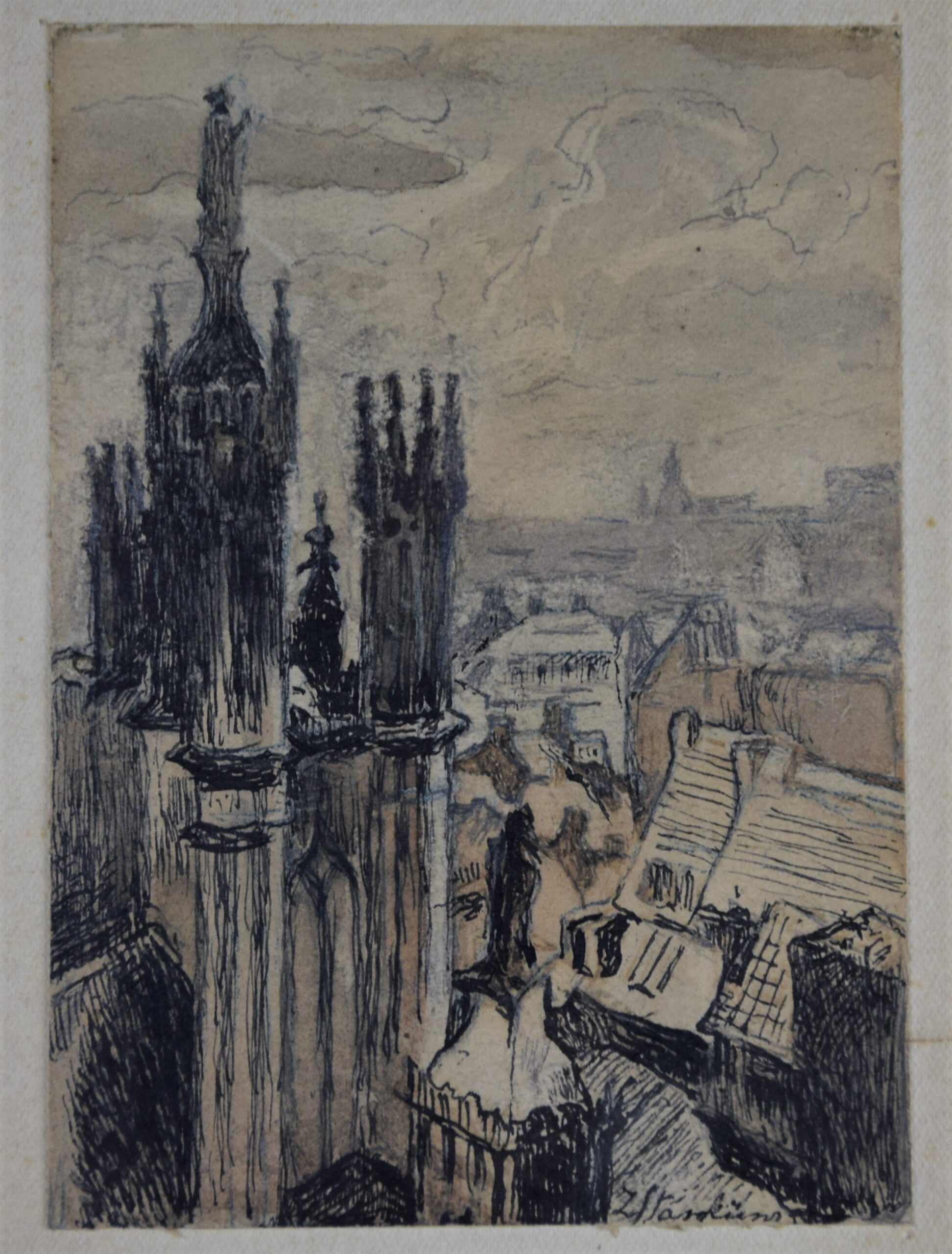
She also documented monuments of Kraków (Wawel Cathedral), Toruń (Old Granaries), Chełmno, Grudziądz, and Vilnius, in a realist architectural style. These works are characterized by precise linework, varied surface textures, and carefully rendered light and shadow.
In the 1920s and 1930s, her landscape compositions gained a decorative quality inspired by Japanese aesthetics, featuring flexible contours and asymmetrical arrangements with richly toned aquatint gradients (Sparrows, Swans). In the 1930s, she began exploring seaside themes, frequently portraying views of Hel (Old Port in Hel, Solitary Boat).
During the Nazi occupation and in the postwar years, she created prints from reconstructed plates, restoring much of her graphic legacy that had been destroyed in 1939.
Graphic Period (Post-1904)
Main techniques: Etching, aquatint, lithography, linocut
Characteristics:
Intricate lines and contours, with meticulous attention to architectural detail
Skilled manipulation of light and shadow to evoke atmosphere
A strong inclination toward tonal transitions in aquatint, creating a sense of lightness and depth
Themes:
Urban scenes from Old Warsaw, Vilnius, Pomerania — often showing alleyways, bridges, and foggy streets
Seaside landscapes (especially from Hel), manors, cottages, and rural architecture
Mood:
Often melancholic or nostalgic – images resemble captured memories
Influences:
Deeply inspired by James McNeill Whistler, especially his nocturnal cityscapes
Art Nouveau elements visible in ornamental lines and soft forms
Technical mastery – both in draftsmanship and in copperplate etching
A seamless blend of documentary realism and poetic expression – her works serve both as historical iconography and emotive artworks
A profound love of architecture – with detailed depictions of facades, rooftops, towers, and gates
A subtle but effective light–dark contrast, often achieved through a limited black-and-white palette