This is a demo store for testing purposes — no orders shall be fulfilled. Dismiss
Skip to contentPainter, graphic artist, illustrator, set designer, textile, poster, and toy designer. Often referred to as the “Princess of Polish Art.”
Born in 1891 in Kraków, died in 1976 in Geneva. Alongside Tamara Łempicka, she was one of the most prominent Polish female artists of the interwar period and the Art Deco era.
She began studying painting under L. Stroynowski and continued her education from 1909 at the Private School of Fine Arts for Women run by Maria Niedzielska in Kraków. In 1911, in a remarkable feat for that time, she enrolled at the Academy of Fine Arts in Munich, disguising herself as a man, as the institution did not yet accept female students.
In 1916, she married architect Karol Stryjeński. Between 1921 and 1927, they lived in Zakopane, where Stryjeński became the director of the School of Wood Industry.
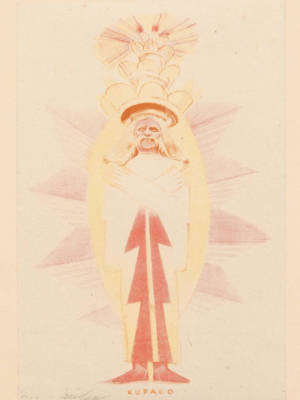
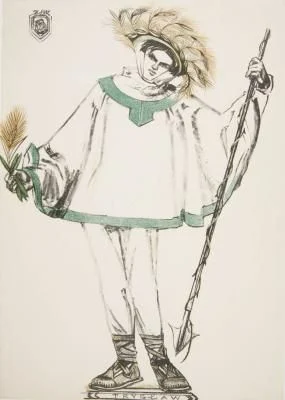
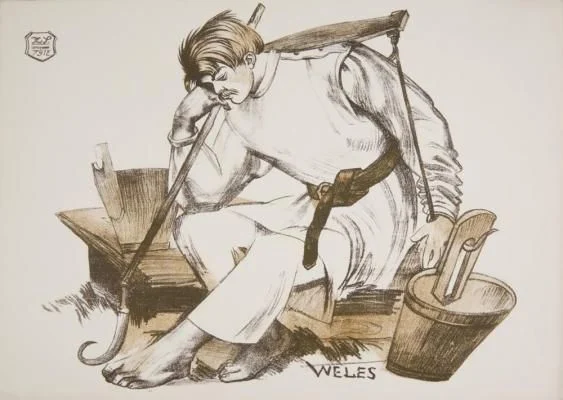
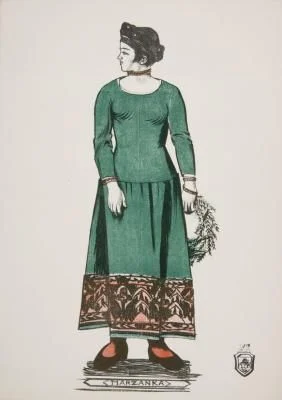
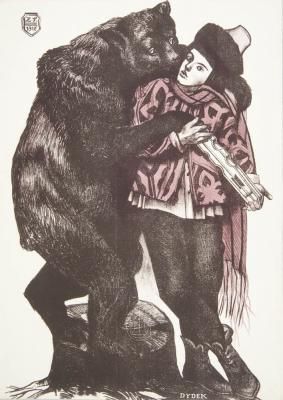
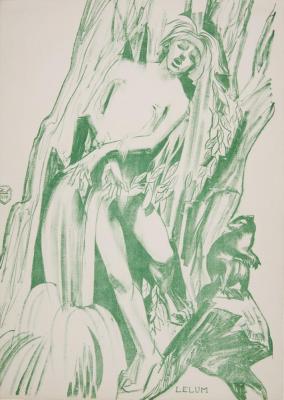
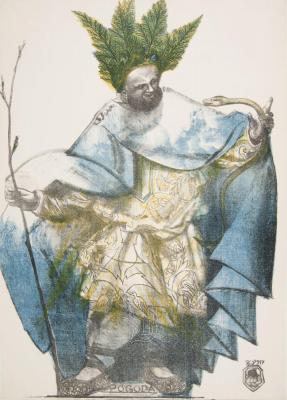
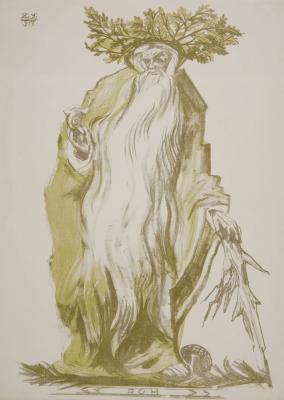
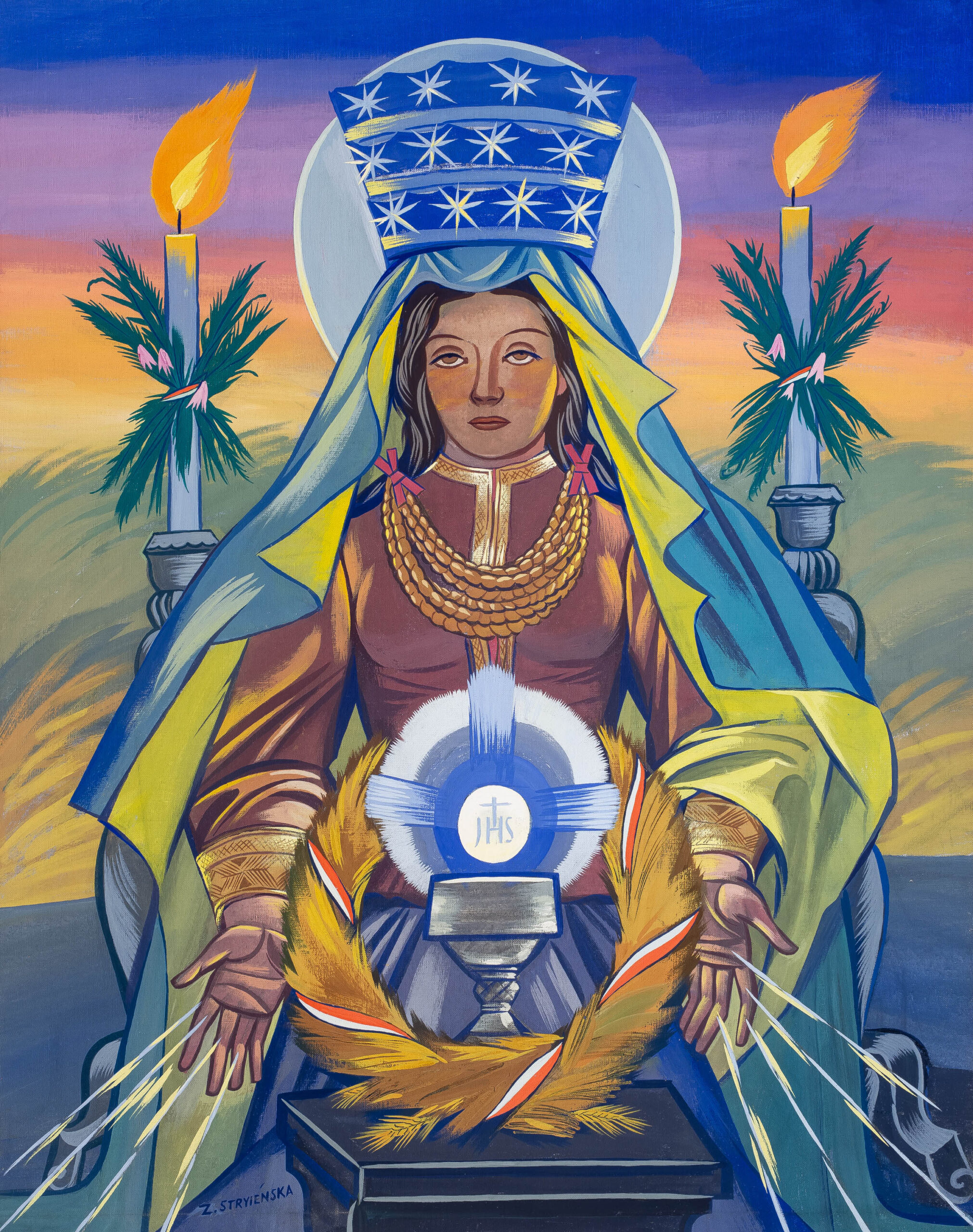
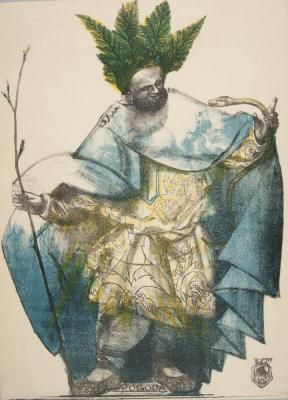
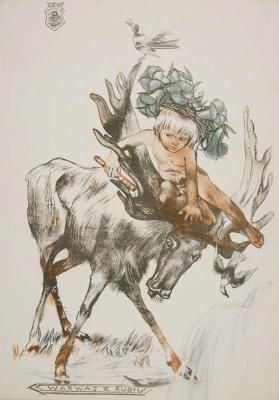
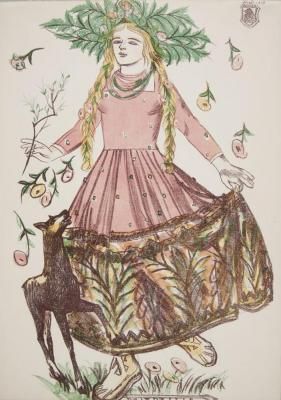
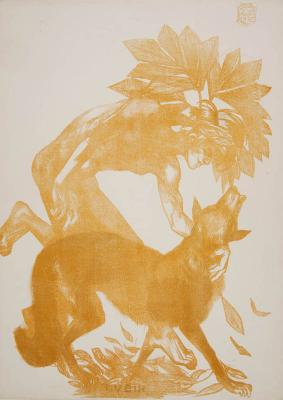
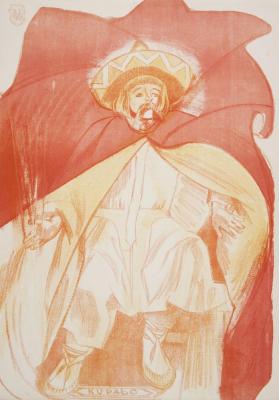
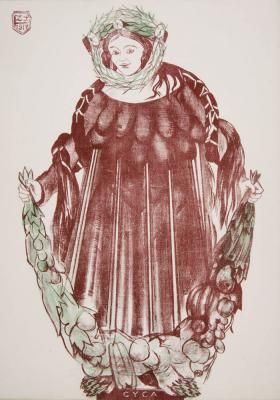
In 1918, she joined the Kraków Workshops as a toy designer and graphic artist. Between 1917 and 1918, she created a series of five tempera paintings titled “Pascha,” merging religious iconography with folk themes. She published two portfolios of color lithographs titled “Slavic Idols” (1918, 1922), reviving and reinterpreting elements of archaic Slavic mythology.
She excelled in decorative painting, integrating art with architecture. Notable works in this genre include:
Frescoes at the Museum of Technical and Industrial Arts in Kraków (1917)
Polychromes in the Senate Tower at Wawel Castle (1917)
Interior decorations for Fukier’s wine cellar in Warsaw
Among her monumental compositions were “The Gods’ Hunt” (1921) and the cycle “Morning,” “Evening,” and “Beriot’s Concert” (1923).
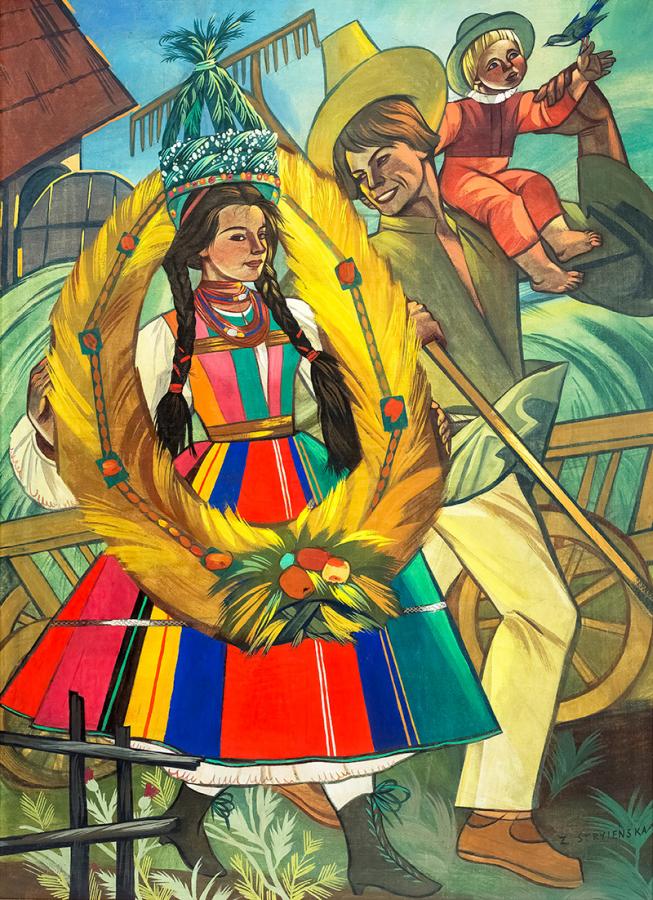
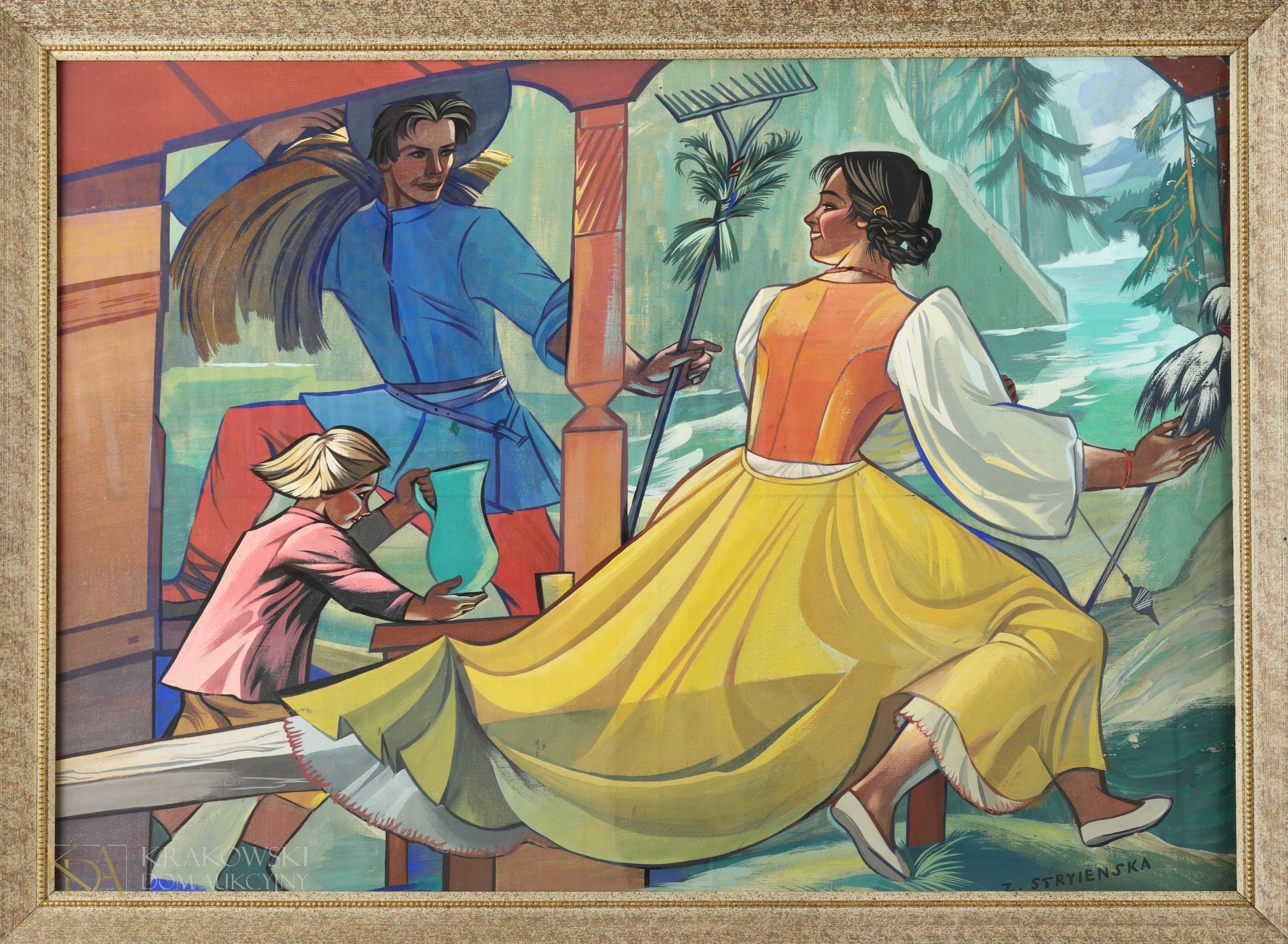
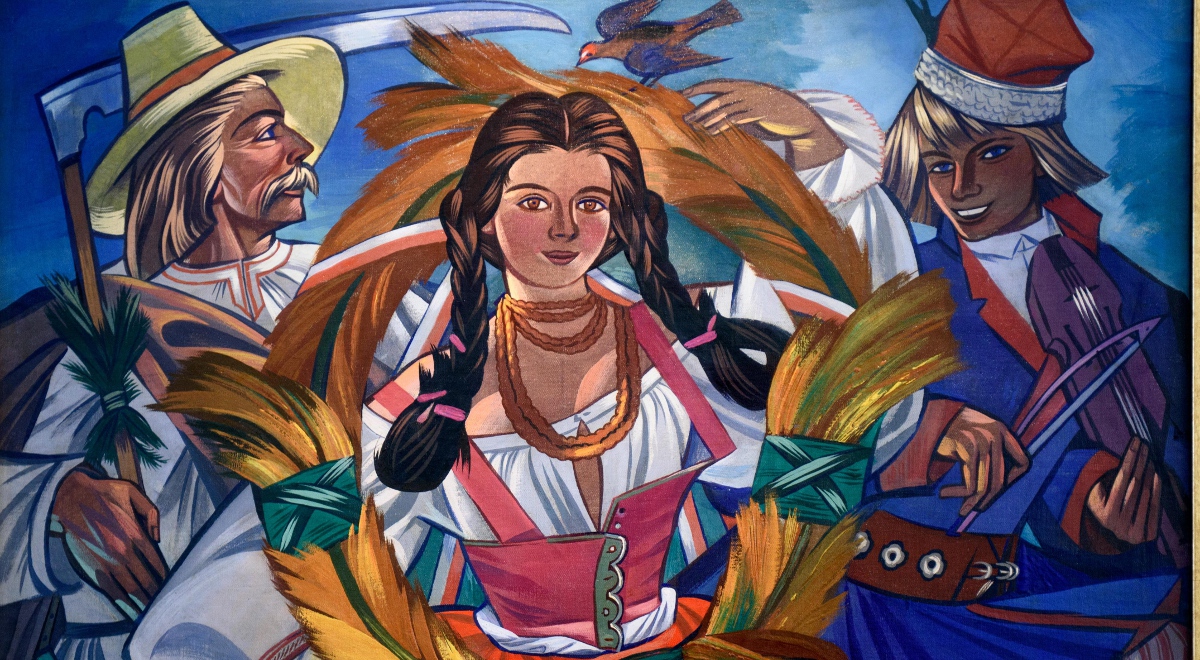
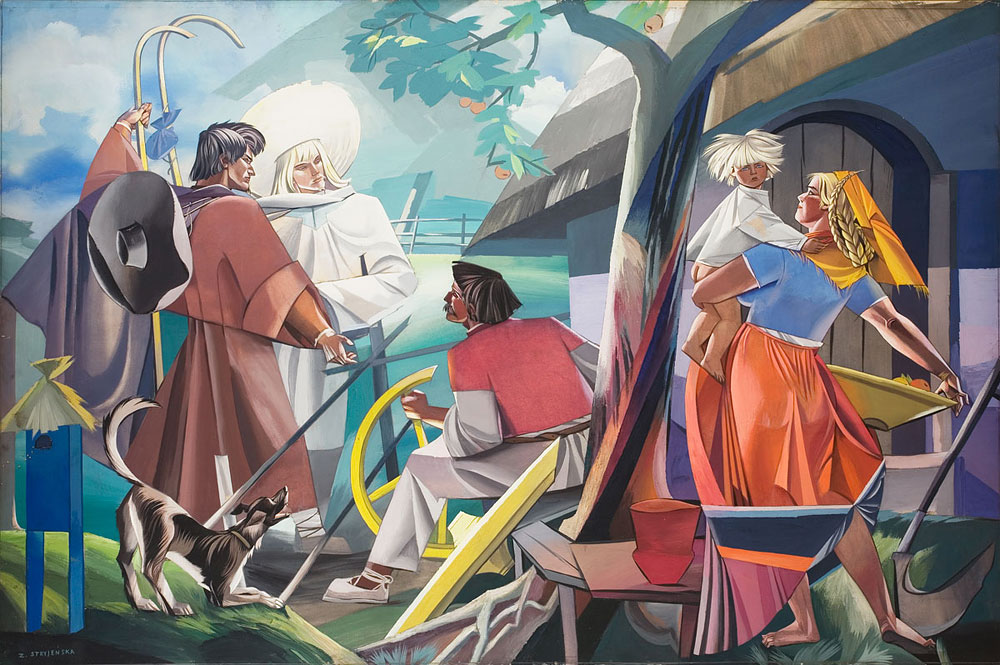
As a member of the Polish Artists’ Association “Rytm” (from 1922), Stryjeńska participated in the International Exhibition of Decorative Arts in Paris in 1925. She decorated the main hall of the Polish pavilion, designed by J. Czajkowski, with six panels depicting “The Ritual Year in Poland.”
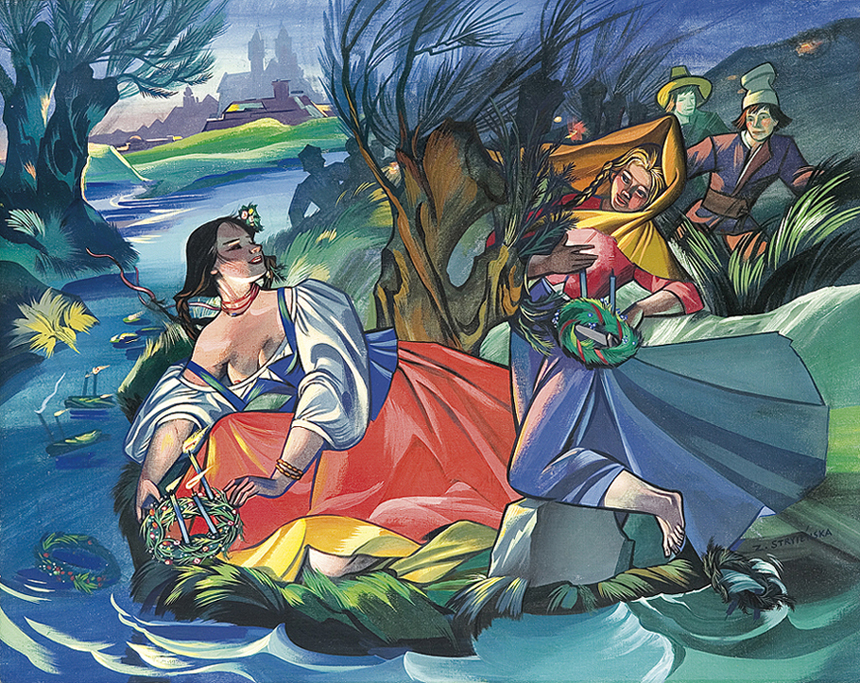
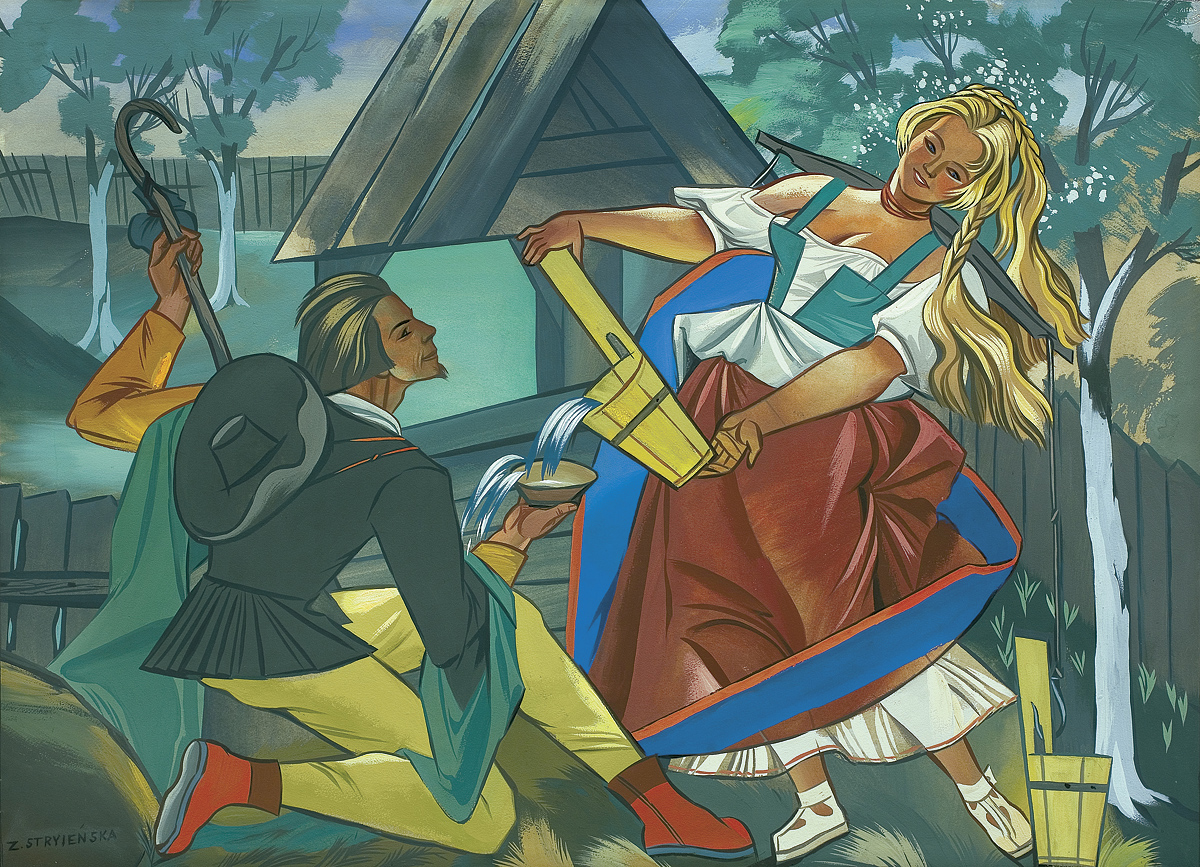
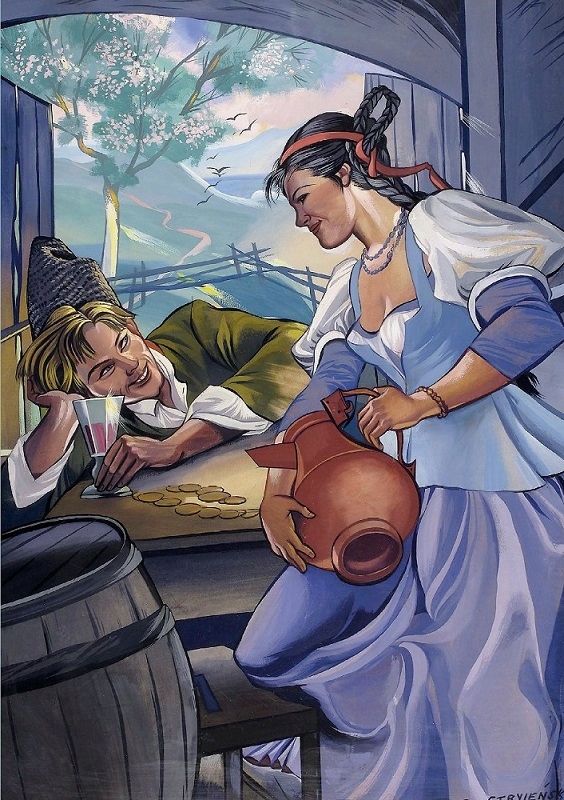
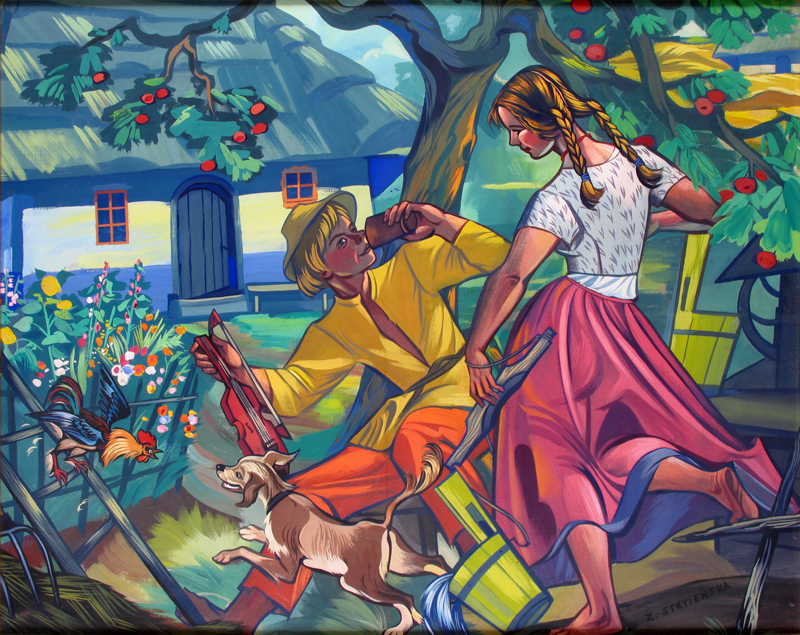
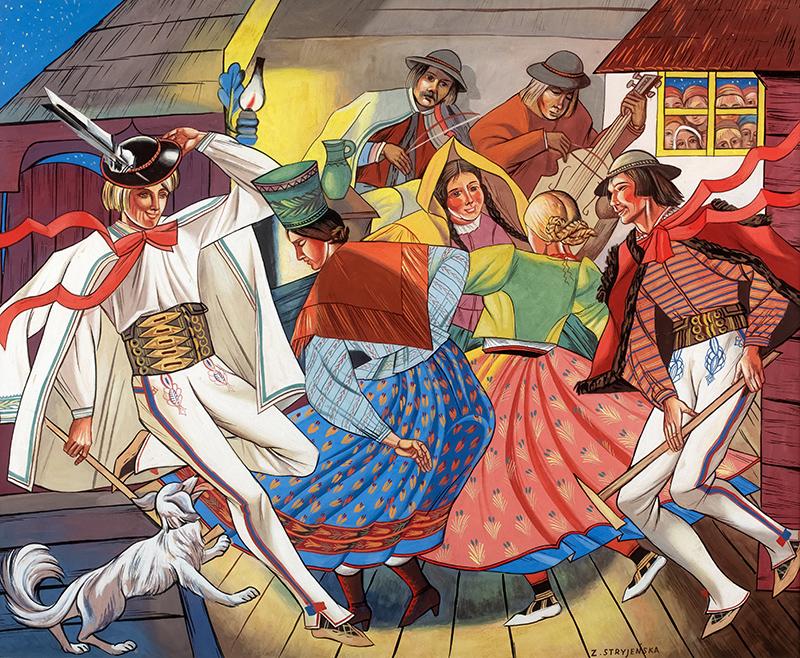
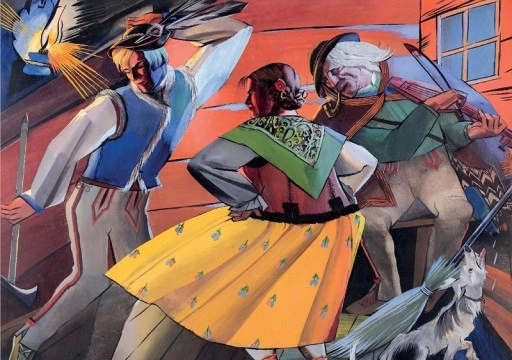
Her works, characterized by vibrant color schemes, rhythmic compositions, and folkloric themes, captured the joyful essence of Polish traditions. At the Paris exhibition, she achieved a spectacular success, winning four Grand Prix in the fields of architectural decoration, poster design, textiles, and book illustration, as well as an honorable mention in the toy design category. She was also awarded the Knight’s Cross of the Legion of Honour.
In 1928, Stryjeńska, together with S. Ostrowski, developed a design for the polychromes on the houses of the Old Town Square in Warsaw. She also participated in decorating the interiors of the ships M/S Batory (1934) and M/S Piłsudski (1935), as well as the Warsaw Wedel confectionery (1935).
As an illustrator, she contributed to luxurious publications such as:
“Pastorałka złożona z 7 kolęd” (1915)
“Sielanki Szymonowica” (1926)
“Treny Kochanowskiego” (1930)
“Muzyka Podhala” by S.A. Mierczyński
Her illustrated books reached bibliophilic standards, including “Monachomachia or The War of the Monks” by Krasicki, “Jak baba diabł wyonacyła” by Tetmajer (1921), and “Rymy dziecięce” by Iłłakowiczówna (1922).
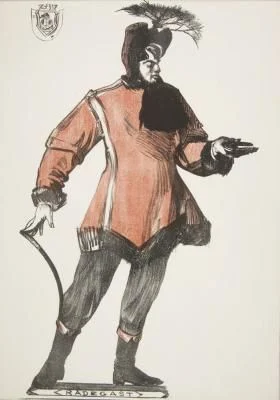
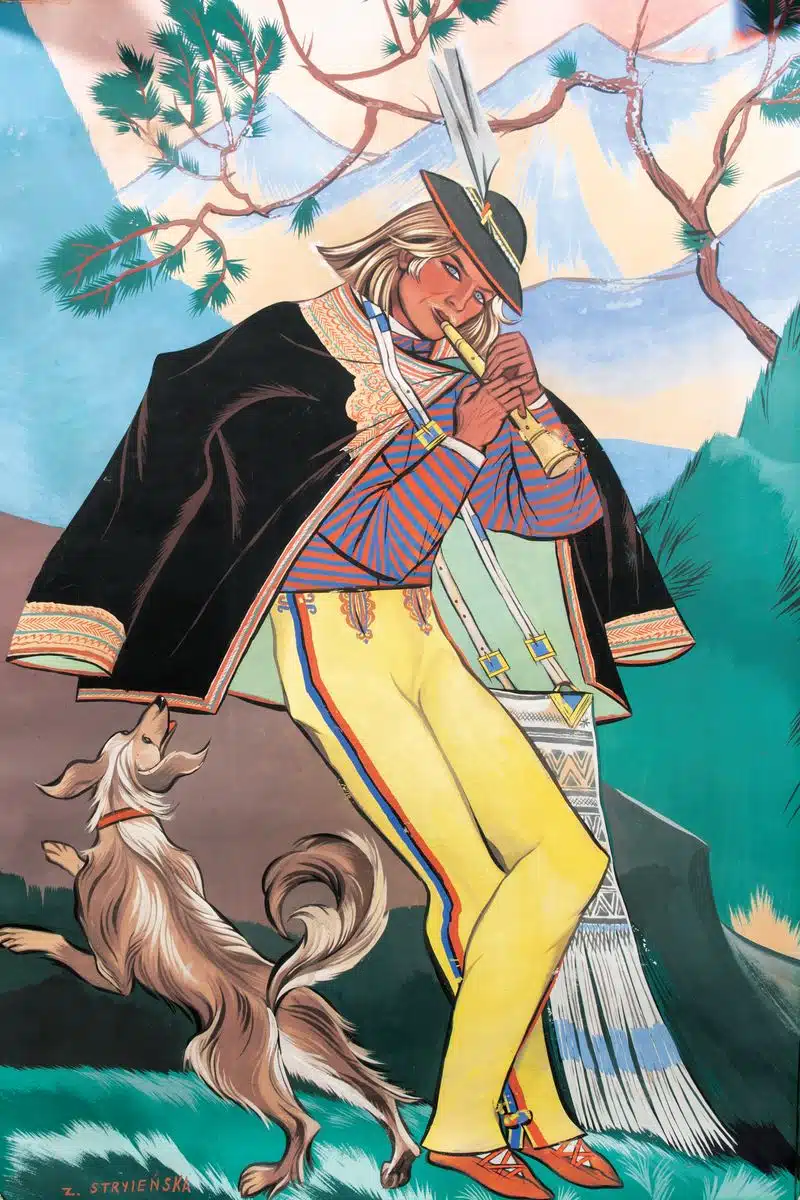
In 1927, she became a corresponding member of the Verein der Deutschen Buchkünstler. As a set designer, she collaborated with the Juliusz Słowacki Theatre in Kraków and designed decorations and costumes for the ballet “Harnasie,” staged in Warsaw (1938), Brussels, Paris, and New York (1939).
During the Nazi occupation, Stryjeńska remained in Kraków. In 1945, she decided to leave Poland and eventually settled in Switzerland, where she lived in extreme poverty despite her artistic achievements. She passed away in Geneva and was buried at the Chêne-Bourg cemetery.
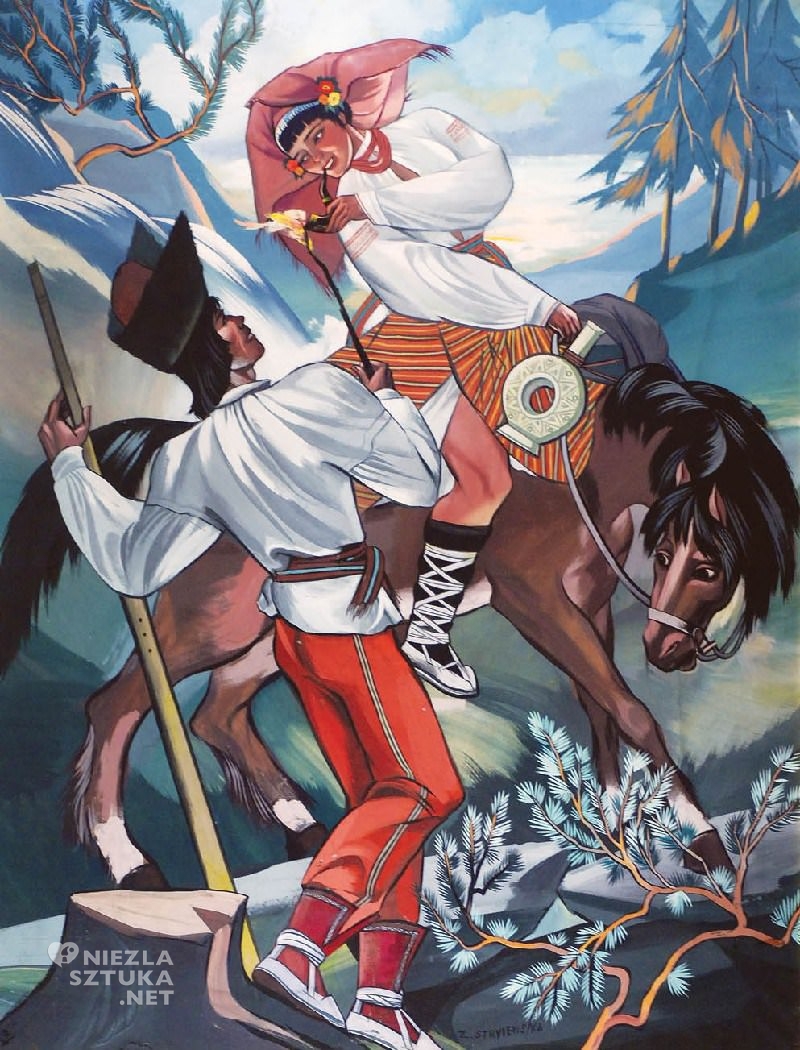
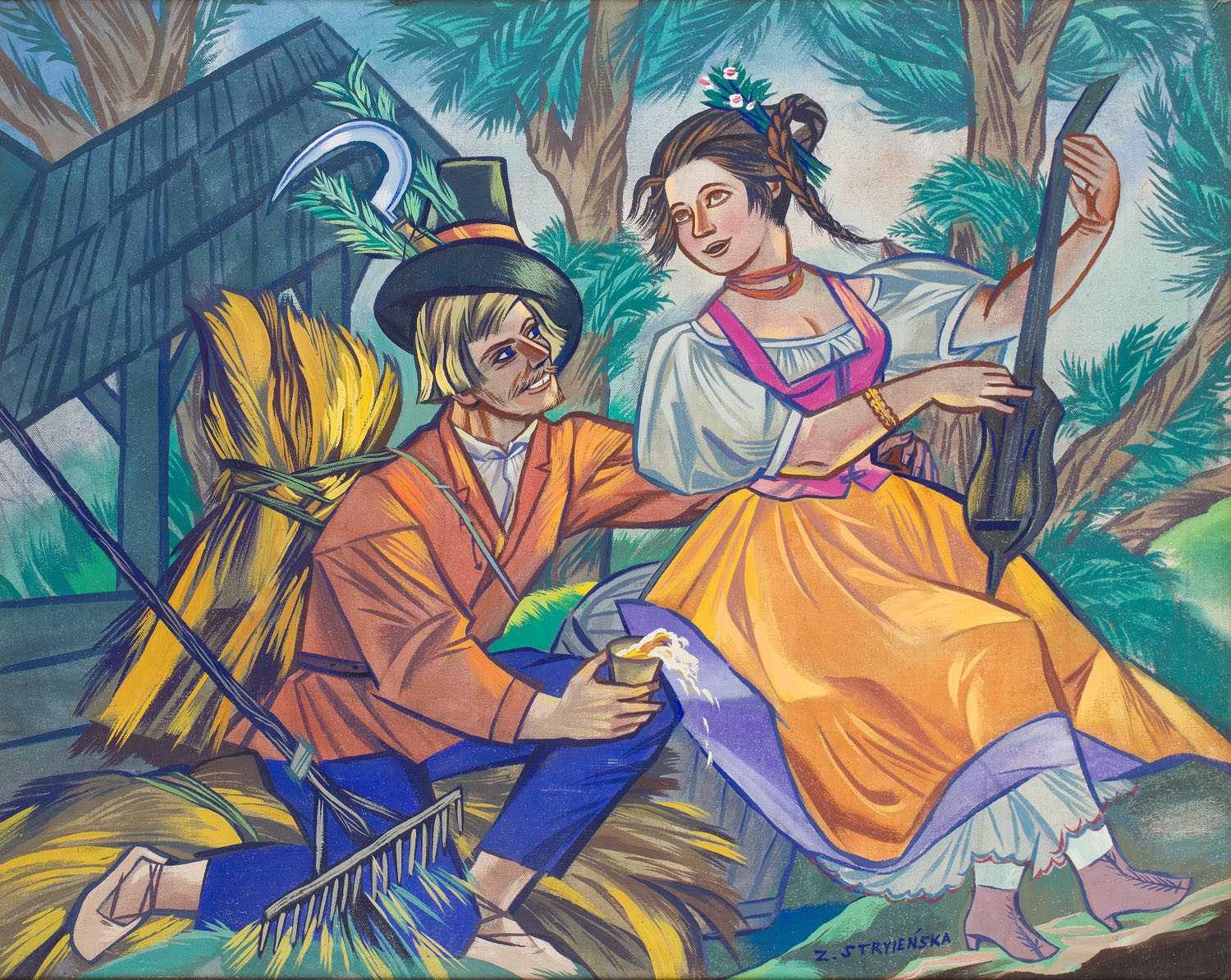
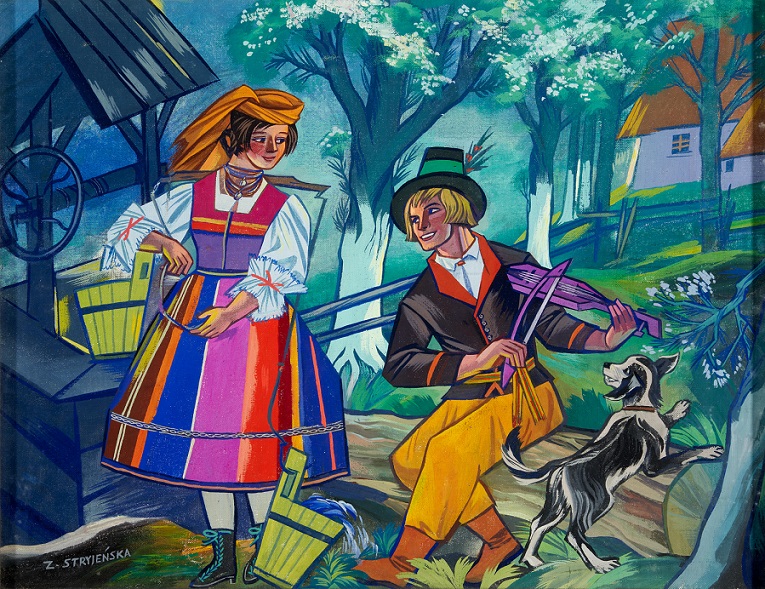
Stryjeńska’s painting style fused elements of Art Deco with Polish folklore, making her works instantly recognizable and unique in both Polish and international contexts. Her work was deeply rooted in Polish, particularly highland, folklore. She approached traditional folk motifs with a modern, imaginative twist, combining various themes and playing with decorative patterns.
She was one of the founders of the post-war national style in Poland.
Her primary medium was tempera, but she also worked in lithography, drawing, and posters.
Solo exhibitions of Stryjeńska’s work were held at:
The Society for the Encouragement of Fine Arts in Warsaw (1919, 1926)
Galerie Crillon in Paris (1921)
New Art Salon in London (1927)
Museum of Artistic Industry in Lviv (1932)
Institute for the Promotion of Art in Warsaw (1935)
Internationally, she exhibited at the Venice Biennale (1920, 1930, 1932) and other exhibitions organized by the Society for the Promotion of Polish Art Abroad between 1927 and 1939.
In 2008, the National Museum in Kraków organized the first comprehensive retrospective exhibition of her works since 1945. The exhibition was later shown at the National Museum in Poznań and the National Museum in Warsaw in 2009.
The Paris Exhibition was one of the greatest successes of Polish art. The Polish pavilion received nearly 200 awards, establishing Art Deco as the official state style of the Second Polish Republic. The event, officially titled “L’Exposition Internationale des Arts Décoratifs et Industriels Modernes,” attracted millions of visitors and became a turning point in the history of art and design.
The Polish exhibition was housed in three galleries – the Polish Pavilion, Grand Palais, and the Invalides Gallery, which featured two additional structures designed by Karol Stryjeński: a tower topped with a figure of the Lajkonik and a stage for folk performances. Zofia Stryjeńska won four Grand Prix at the exhibition.
1932 – Gold Medal at the XVIII Venice Biennale
1971 – Lifetime Achievement Award from the Alfred Jurzykowski Foundation, New York
Officer’s Cross of the Order of Polonia Restituta (November 8, 1930)
Golden Laurel of the Polish Academy of Literature (November 1936)
Knight’s Cross of the Legion of Honour